How to Fix a Tangled or Broken Taylor Swift Necklace
Learn how to clean, untangle, and repair your Taylor Swift necklace. Expert troubleshooting tips for tarnished pendants, broken chains, and loose clasps.
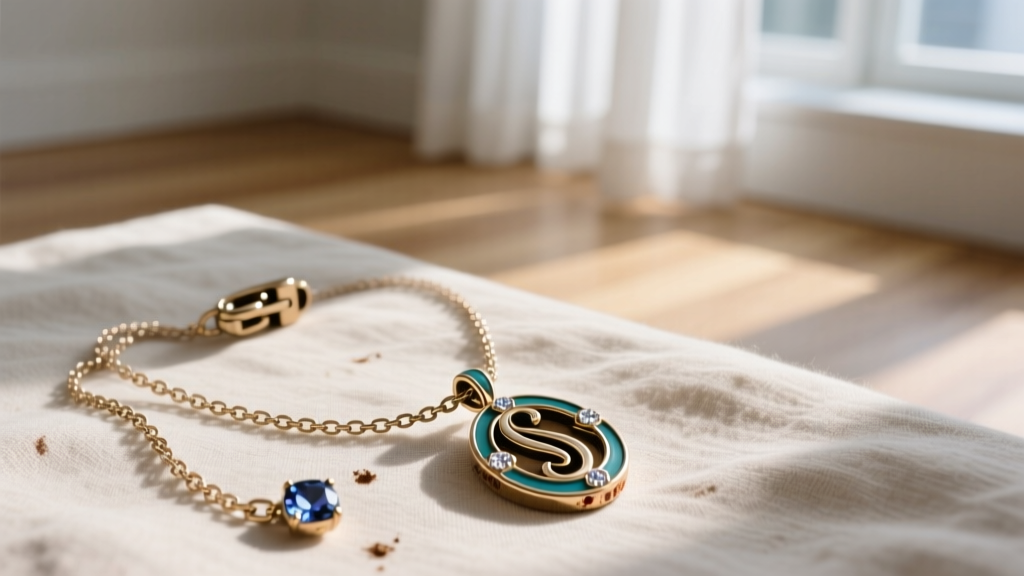

The cultural phenomenon of the Eras Tour left behind more than just record-breaking ticket sales; it sparked a massive secondary market for fan memorabilia, trading bracelets, and commemorative jewelry. However, as the initial excitement settles, many fans are facing a common problem: their beloved jewelry is showing signs of wear. If you own an official merchandise piece or a handcrafted fan replica, you might be dealing with a green neck, a hopelessly knotted chain, or a snapped clasp. Troubleshooting a taylor swift necklace requires an understanding of the specific metals and manufacturing techniques used in concert merchandise.
Unlike fine jewelry bought from a traditional atelier, tour merchandise is often produced rapidly in high volumes, prioritizing visual impact over metallurgical longevity. In this comprehensive troubleshooting guide, we will break down exactly how to identify your necklace's materials, reverse severe tarnish, untangle micro-chains without snapping them, and repair broken findings.
Identifying Your Taylor Swift Necklace Materials
Before applying any cleaning solutions or bending any metal, you must correctly identify what your necklace is actually made of. The cleaning method that restores a sterling silver "13" pendant will instantly strip the gold plating off a brass "Reputation" snake choker. Concert merchandise is typically manufactured using base metals with flash plating, while independent fan-made replicas often utilize solid alloys.
| Material Type | Common Uses in Fan Jewelry | Primary Failure Modes | Skin Reaction Risk |
|---|---|---|---|
| Brass with Gold Plating | Official tour merch, mass-market replicas | Plating rubs off, severe green oxidation | High (Copper content) |
| 925 Sterling Silver | Etsy fan-made pendants, luxury replicas | Black sulfide tarnish, soft metal bending | Low (Hypoallergenic) |
| Stainless Steel (316L) | Durable everyday fan necklaces | Clasp mechanism failure, stiff chains | None (Surgical grade) |
| Zinc Alloy (Pot Metal) | Cheap novelty pendants, costume pieces | Pitting, irreversible corrosion, snapping | Moderate to High |
To test for sterling silver, look for a "925" stamp on the back of the pendant or the clasp. If the necklace is magnetic, it contains iron or steel (likely stainless steel or a cheap alloy), as neither brass, silver, nor gold are magnetic. According to the Gemological Institute of America (GIA), identifying the base metal is the single most critical step in jewelry care, as improper chemical baths can cause irreversible pitting in zinc and brass alloys.
Troubleshooting Tarnish and Discoloration
If your necklace has left a green or black ring around your neck, you are experiencing a chemical reaction between the metal alloys and the acids in your sweat, combined with lotions or perfumes. Brass contains high levels of copper, which oxidizes rapidly in the presence of moisture and salt, creating copper chloride—the culprit behind the dreaded green skin.
How to Clean Gold-Plated Brass Merch
Never use silver dip, baking soda pastes, or ultrasonic cleaners on gold-plated brass. The plating on tour merchandise is often less than 0.5 microns thick (flash plating). Aggressive polishing will strip the gold entirely, exposing the raw brass beneath.
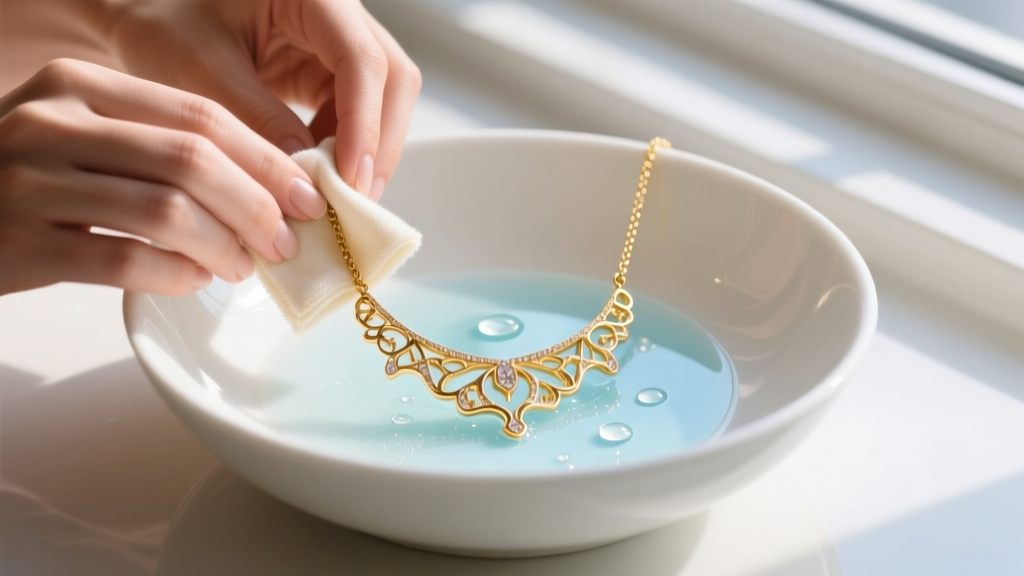
- Step 1: Mix a few drops of pH-neutral dish soap (like Dawn) into a bowl of lukewarm distilled water.
- Step 2: Submerge the necklace for exactly 3 minutes to loosen body oils and cosmetic buildup.
- Step 3: Use a baby-hair brush or a lint-free microfiber cloth to gently wipe the pendant. Do not scrub the chain, as this will snap the delicate links.
- Step 4: Rinse in distilled water and pat dry immediately. Air drying will leave water spots that etch into the thin plating.
The Aluminum Foil Bath for Sterling Silver
If your fan-made pendant is solid sterling silver and has turned black due to sulfur exposure, you can reverse the tarnish using ion exchange. Line a glass bowl with aluminum foil (shiny side up). Place the silver necklace on the foil. Pour boiling water over it, add two tablespoons of baking soda, and watch the sulfur transfer from the silver to the aluminum. Remove after 5 minutes, rinse, and buff. The UK Assay Office confirms that this electrochemical method safely removes silver sulfide without stripping the underlying precious metal.
Untangling Micro-Chains Without Breaking Them
Many Taylor Swift themed necklaces feature ultra-fine cable chains (typically 22 to 24-gauge wire, measuring around 1.0mm to 1.2mm in width). While these chains look delicate and dainty, their elongated oval links are notorious for folding in on themselves and creating microscopic, rock-hard knots. Pulling on these knots will permanently stretch the wire, leading to structural failure.
The Baby Powder and Needle Technique
To solve this without snapping the chain, you need to eliminate friction.
- Lay the knotted necklace flat on a hard, non-porous surface like a glass table or ceramic plate.
- Generously dust the knot with talcum powder or cornstarch. The powder acts as a dry lubricant, coating the microscopic grooves of the metal links.
- Take two fine sewing needles (or a 0.8mm jewelry awl). Insert the tips of the needles into the center of the knot.
- Gently wiggle the needles in opposite directions to loosen the central link. Do not pull the chain ends; instead, push the links inward to create slack.
- Once the central node is loose, use the needles to guide the chain links out one by one.
- Brush off the excess powder with a soft makeup brush.
Fixing Broken Clasps and Jump Rings
The most common point of failure on any lightweight pendant necklace is the jump ring—the tiny circular loop that connects the chain to the clasp. On mass-produced merchandise, jump rings are often machine-cut and simply pushed together rather than soldered. Over time, the tension of taking the necklace on and off pulls the gap open, allowing the pendant to slip off and get lost.
Proper Jump Ring Repair
If you notice the gap on your jump ring has widened, do not try to push it closed by squeezing it from the sides. This will warp the circle into an oval and weaken the metal's crystalline structure. Instead, use two pairs of flat-nose jewelry pliers. Grip the ring on either side of the split, and twist one hand toward you and the other away from you. This lateral twisting motion preserves the perfect circular shape. Once the gap is aligned, twist it back and forth slightly until you feel the metal "click" into place, ensuring a flush seal.

Upgrading the Clasp Mechanism
Official merchandise often utilizes cheap spring-ring clasps. These contain a microscopic internal steel spring that is highly susceptible to rust from sweat, eventually causing the lever to stick or the spring to snap. If your clasp is failing, consider taking the necklace to a local jeweler to have it swapped for a 316L stainless steel lobster claw clasp. A lobster clasp features a solid internal mechanism and a heavier trigger, vastly reducing the risk of accidental unclasping during crowded concert environments or daily wear.
Long-Term Storage for Concert Memorabilia
Prevention is always easier than repair. To preserve the sentimental and monetary value of your tour jewelry, you must control its environment. Humidity and airborne sulfur are the enemies of both brass and silver.
Expert Storage Tip: Never store your necklaces in cardboard boxes or wrapped in newspaper. The acids and inks in paper products accelerate oxidation. Always use anti-tarnish cloth pouches or ziplock bags with silica gel packets to maintain a zero-moisture environment.
Furthermore, always store chains vertically or laid perfectly flat. Hanging a heavy brass or steel pendant on a delicate chain for months at a time will cause the wire at the nape of the neck to permanently stretch and thin out due to gravity and metal fatigue. By understanding the metallurgy of your jewelry and employing these targeted troubleshooting techniques, you can ensure your memorabilia remains in pristine condition for years to come.


