Custom John Pork Necklace: Technical Guide to 3D Character Pendants
Master the art of the John Pork necklace with our technical guide on 3D modeling, investment casting, and metal finishing for complex character pendants.

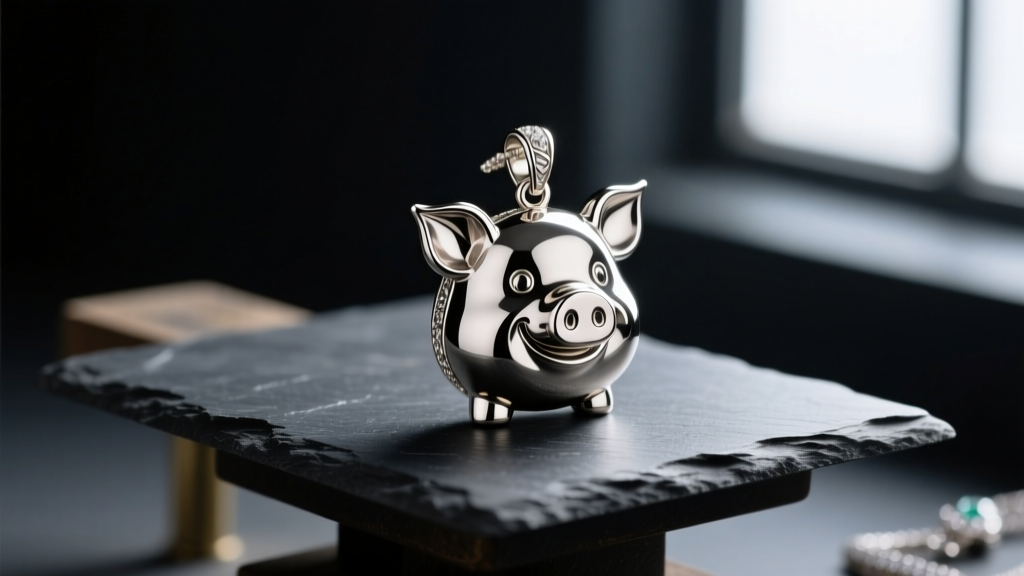
The internet's fascination with virtual influencers and surreal meme culture has birthed a highly specific niche in custom jewelry: the novelty character pendant. Among the most requested commissions in 2026 is the john pork necklace, a tribute to the anthropomorphic pig-man virtual influencer. While mass-market producers might slap a 2D enamel image onto a cheap alloy disc, serious collectors and jewelry artisans approach a John Pork necklace as a complex exercise in 3D sculpting, investment casting, and metallurgical finishing. This guide provides a technical deep dive into manufacturing a premium, three-dimensional John Pork pendant, addressing the unique geometric challenges of blending human and porcine anatomy into a wearable metal artifact.
The Anatomy of a Meme: Translating John Pork to 3D Jewelry
Designing a high-fidelity John Pork pendant requires navigating severe geometric contradictions. The character features a human-like jawline and neck, a pronounced porcine snout, and his signature sunglasses. In jewelry CAD and digital sculpting software like ZBrush, this combination creates a nightmare of undercuts and varying thermal masses. When sculpting the master model, artisans must maintain a minimum wall thickness of 0.8mm to ensure structural integrity during the casting and tumbling phases. The transition zone between the human jaw and the pig snout is particularly vulnerable to stress fractures if the topology is not reinforced. Furthermore, the sunglasses present a deep undercut; if the model is not properly keyed or split into a two-part assembly for the lenses, the master pattern will be destroyed during the vulcanization process if a rubber mold is used. For one-off custom pieces, direct-to-cast 3D printing bypasses the rubber mold entirely, preserving the sharpest details of the character's iconic eyewear.
Master Pattern Creation: SLA Resin vs. CNC Wax
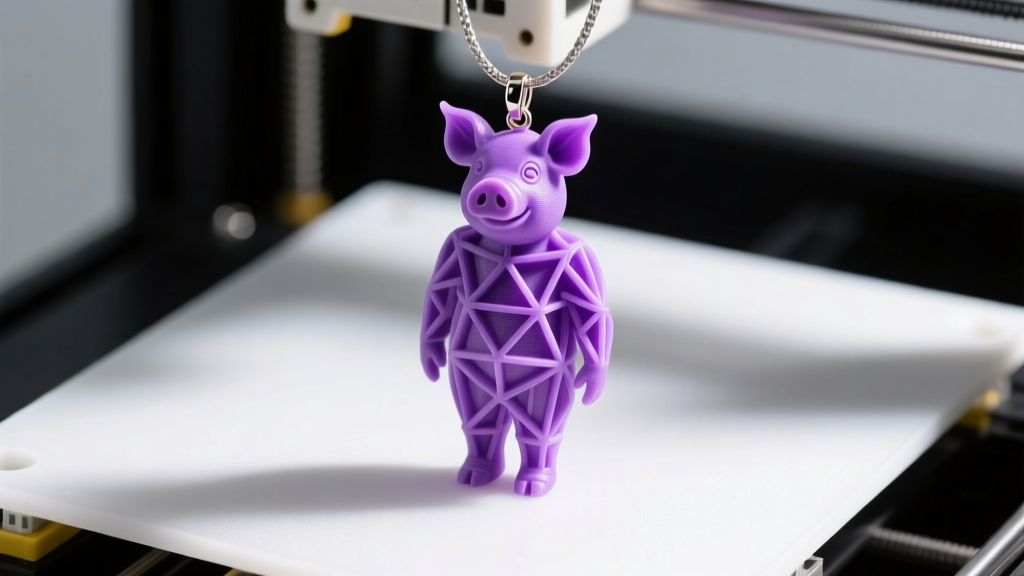
Creating the master pattern for a John Pork necklace has evolved significantly. Traditional CNC-milled wax struggles with the extreme depth variations of the character's snout and the delicate hinges of the sunglasses. Today, jewelers rely on Stereolithography (SLA) 3D printing using specialized castable photopolymer resins, such as Siraya Tech Cast or Formlabs Castable Wax 40. These resins contain wax emulsions that allow for a clean burnout. However, transitioning from standard PMMA carving wax to photopolymer resin requires a modified burnout schedule. According to metallurgical guidelines outlined by the Ganoksin Project, resin masters require a slower temperature ramp and an extended hold time at 732°C (1350°F) to completely vaporize the carbon ash. If the flask is pulled from the kiln too early, residual ash will become trapped in the snout's nostrils or the bridge of the sunglasses, resulting in catastrophic surface inclusions on the final metal casting.
Investment Casting Complex Geometries
Spruing a John Pork model is a masterclass in thermal dynamics. The pig snout acts as a massive thermal sink compared to the thin, flat temples of the sunglasses. If the main sprue is attached to the back of the head, the molten metal will freeze in the thin arms of the glasses before the snout is fully packed, leading to incomplete fills or severe shrinkage porosity. Expert casters utilize a Y-sprue system, attaching a 1.5mm main sprue to the top of the head (where a bail will eventually be placed) and utilizing 0.8mm auxiliary feeders directly into the snout and the lower jaw to maintain directional solidification. The choice of alloy also dictates the casting parameters, as different metals shrink at varying rates, which must be compensated for in the initial 3D scaling phase.
| Alloy | Shrinkage Rate | Melt Temp | Best Application |
|---|---|---|---|
| 925 Sterling Silver | 1.25% - 1.5% | 893°C | High-detail, premium finishes |
| Silicon Bronze | 1.3% - 1.6% | 1040°C | Durability, warm vintage tones |
| 14k Yellow Gold | 1.2% - 1.4% | 879°C | Luxury commissions, heirloom pieces |
Post-Casting Finishing and Patina Techniques
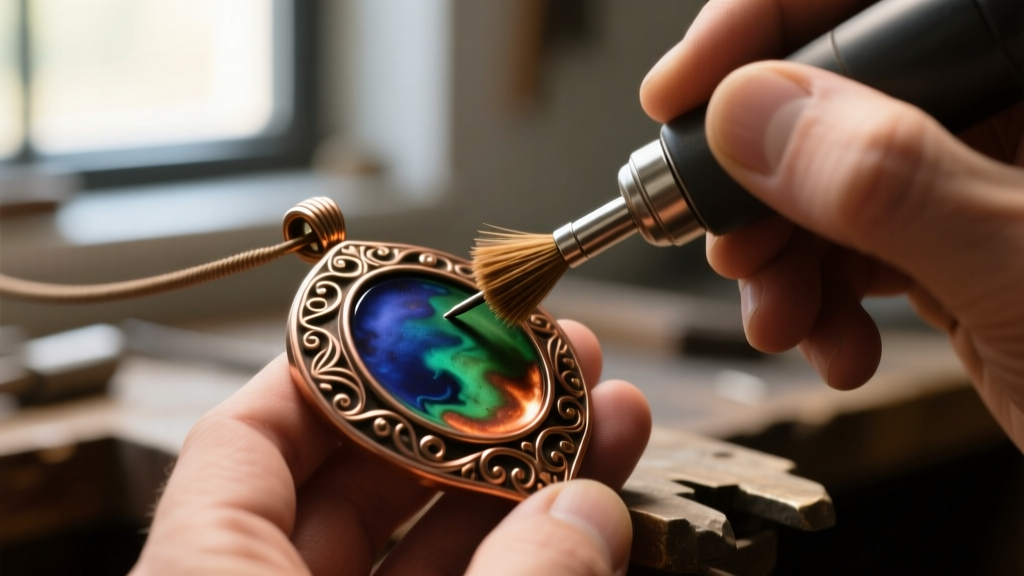
Once the investment is quenched and the sprues are cut flush, the John Pork pendant requires meticulous finishing to separate the anatomical features. The goal is to create visual contrast between the character's skin texture, the smooth snout, and the reflective lenses of the sunglasses. Artisans typically begin with a light tumble in stainless steel shot to work-harden the metal and burnish the surface. Next, a liver of sulfur (LOS) solution is applied to oxidize the entire piece, turning it pitch black. Using a flexible shaft rotary tool equipped with a bristle brush and a mild abrasive compound, the jeweler selectively polishes the high points. The sunglasses lenses are polished to a mirror finish using rouge on a muslin wheel, while the skin texture is left with a matte, oxidized patina to accentuate the 3D topography. For collectors seeking a more modern aesthetic, rhodium plating the entire piece provides a brilliant, tarnish-resistant white-metal finish that mimics platinum, though this obscures some of the finer skin textures.
Chain Selection and Bail Engineering
The final, often overlooked component of a premium john pork necklace is the bail and chain pairing. Because the character's head is front-heavy and asymmetrical due to the protruding snout, a standard soldered loop bail will cause the pendant to tilt forward awkwardly against the wearer's chest. To counteract this, custom jewelers engineer a 'hidden' or 'tube' bail that routes the chain directly through the top-back of the character's head. This shifts the center of gravity backward, allowing the pendant to hang perfectly perpendicular to the body. For the chain itself, a 4mm to 5mm Figaro or Cuban link chain in matching metal provides the necessary tensile strength and visual weight to support a solid bronze or silver casting, which typically weighs between 18 and 25 grams. Lightweight rope chains should be strictly avoided, as the pendulum effect of the heavy 3D snout will quickly fatigue and snap the thin links. By treating internet culture with the utmost metallurgical respect, artisans elevate the John Pork necklace from a fleeting meme into a permanent, wearable artifact of digital-age folklore.


