Why Your Pearl Necklace Twisted: Fixes & Care Guide
Discover why your pearl necklace twisted out of shape. Learn expert fixes, untangling tips, and styling advice for multi-strand and rope pearl designs.

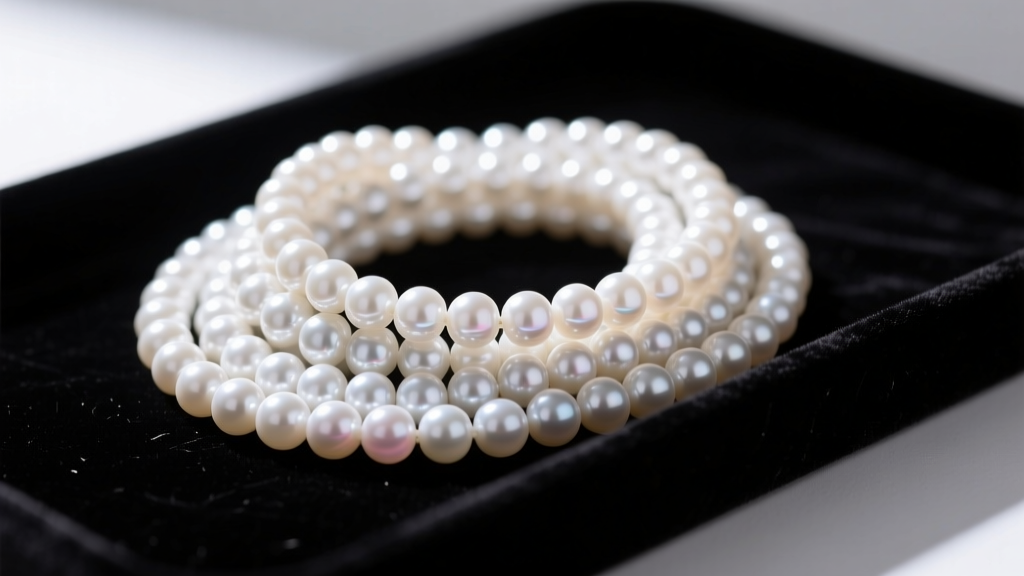
There are few things more frustrating for a jewelry lover than reaching into your jewelry box, pulling out your favorite strand of pearls, and finding a tangled mess. If you have ever asked yourself why your pearl necklace twisted into an unwearable knot, or why the clasp constantly migrates to the front of your neck while you wear it, you are not alone. This is one of the most common issues beginners face when transitioning from costume jewelry to fine, organic gemstones.
In this comprehensive guide, we will break down the physics behind why pearl necklaces twist, how to safely untangle severe knots without damaging the delicate nacre, and the specific restringing specifications you need to prevent it from happening again. Whether you are dealing with an accidental single-strand tangle or trying to maintain an intentional multi-strand twisted rope (torsade), this beginner-friendly explainer has you covered.
The Physics of the Spin: Why Necklaces Twist
To solve the problem, we first need to understand the mechanics of a necklace. A necklace is essentially a flexible pendulum resting on a curved surface (your neck and chest). When a pearl necklace twists or the clasp slides to the front, it is almost always a matter of center of gravity.
The Clasp Weight Ratio
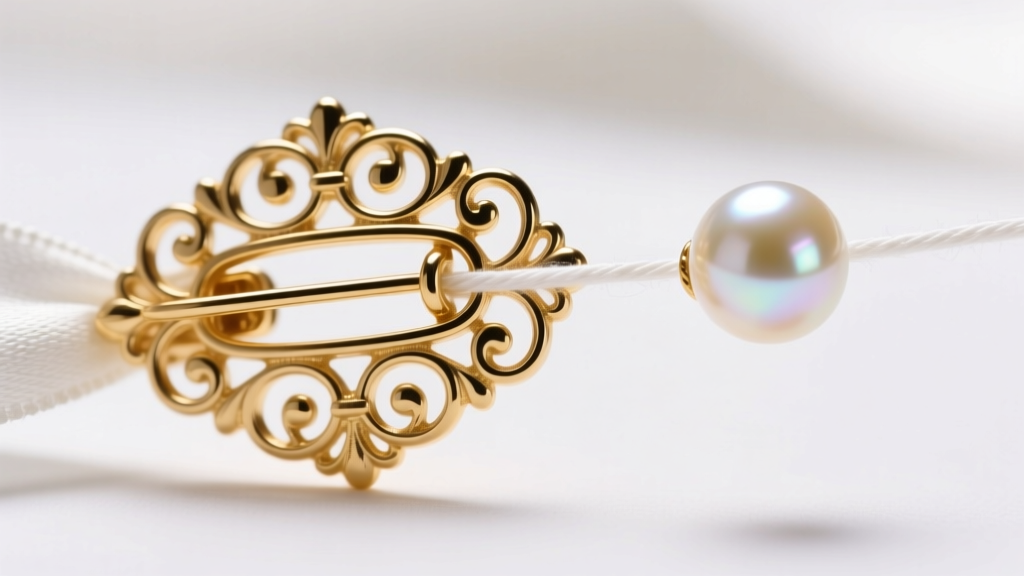
The most common culprit for a spinning necklace is a clasp that is too heavy. If your decorative gold or gemstone clasp weighs more than 1/10th of the total weight of the pearl strand, gravity will naturally pull the heaviest point to the lowest possible position—which is the center of your chest. According to master jewelers, a standard 18-inch strand of 7mm Akoya pearls weighs roughly 28 grams. If your ornate filigree clasp weighs 4 grams or more, it will inevitably drag the necklace forward, causing the silk thread to twist upon itself over time.
Neck Sizing and Friction
A necklace that is sized too loosely (e.g., a 20-inch opera length worn on a narrow neck) has too much slack. This excess movement allows the strand to roll over your skin and clothing, building up static and torsion in the silk thread. Furthermore, wearing pearls over high-friction fabrics like wool or heavy knits can catch the microscopic scales of the silk thread, forcing the necklace to rotate and eventually knot.
How to Untangle a Severely Twisted Pearl Strand
When your pearl necklace twisted into a tight, multi-loop knot, your first instinct might be to pull the ends. Never pull a knotted pearl strand. Pearls are organic gems with a Mohs hardness of just 2.5 to 3.0. Pulling a tight knot forces the hard drill holes of adjacent pearls to grind against each other, which can chip the nacre or even crack the bead entirely. Instead, use the jeweler's cornstarch method.
The Cornstarch Untangling Method
This technique relies on reducing the friction between the silk thread and the pearl nacre, allowing the knot to slip apart naturally.
- Lay it flat: Place the twisted necklace on a smooth, hard surface like a glass table or a ceramic plate. Avoid fabric, which can create drag.
- Apply powder: Generously dust the knot with baby powder, cornstarch, or talcum powder. The powder acts as a dry lubricant.
- Use precision tools: Take two straight sewing pins or fine-tipped tweezers. Gently insert the tips into the center of the knot.
- Wiggle, don't pull: Use a gentle wiggling motion to loosen the powder into the fibers of the silk. Slowly work the pins outward to expand the loops until the knot collapses.
- Wipe clean: Once untangled, use a soft, dry microfiber cloth to gently buff away the powder from the pearls. Never use water or liquid cleaners to remove the powder, as it can create a paste that gets trapped in the drill holes.
Intentional vs. Accidental: The Multi-Strand Torsade
Not all twisted pearl necklaces are accidents. In fine jewelry, a deliberately twisted multi-strand pearl necklace is known as a torsade. These pieces consist of multiple strands (usually 3 to 8) of pearls that are intentionally twisted together and secured at the ends with specialized multi-strand clasps or cone findings.
Understanding the difference between a tangled single strand and an intentional torsade is critical for proper care and styling.
| Feature | Accidental Single-Strand Tangle | Intentional Multi-Strand Torsade |
|---|---|---|
| Construction | Single strand, knot-per-pearl on silk | Multiple unknotted strands, twisted and secured at ends |
| Thread Type | 100% Silk (Griffin or similar) | Nylon, Beadalon, or heavy-duty silk without intermediate knots |
| Clasp Requirement | Lightweight single-ring spring or lobster | Multi-ring clasp, cone ends, or magnetic tube clasp |
| Maintenance | Requires annual restringing if worn frequently | Requires careful un-twisting before storage to prevent thread memory |
Prevention: Sizing, Clasps, and Restringing Specs
If your pearl necklace twisted because of poor construction, no amount of careful untangling will stop it from happening again. To permanently fix a spinning or tangling necklace, you must address the structural integrity of the piece. The Gemological Institute of America (GIA) emphasizes that proper stringing materials and techniques are vital for the longevity of organic gems.
Thread and Knotting Standards
When taking your necklace to a professional for restringing, ensure they adhere to these industry standards:
- Thread Sizing: The silk thread must perfectly match the drill hole size to prevent excess movement. For 5mm to 6mm pearls, use Size #2 or #4 silk. For 7mm to 8mm pearls, use Size #6 or #8. Using a thread that is too thin allows the pearls to slide and bunch up, leading to twists.
- Knotting: Every pearl must have a hand-tied knot immediately following it. This not only prevents pearl loss if the strand breaks but also maintains uniform spacing, which stabilizes the necklace's drape and prevents torsion.
- French Wire (Gimp): The final three pearls near the clasp must be protected by French wire—a tiny, coiled metal spring that covers the silk where it rubs against the metal clasp ring. Without this, the metal will slice through the silk over time.
Upgrading the Clasp
Swap out heavy, ornate clasps for lightweight alternatives. A small diamond-accented barrel clasp, a lightweight 14k gold fishhook clasp, or a simple spring ring will keep the center of gravity balanced. If you absolutely love your heavy decorative clasp, ask your jeweler to add a small, discreet gold counterweight bead to the opposite side of the necklace (near the nape of the neck) to balance the tension.
Styling and Storing Your Pearls
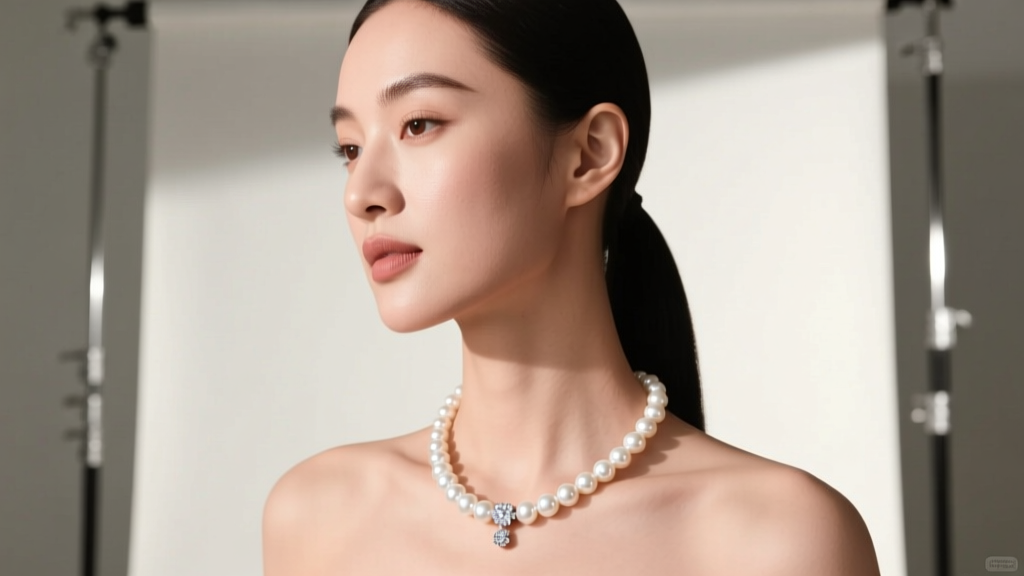
How you wear and store your pearls directly impacts their tendency to twist. The American Gem Society (AGS) notes that pearls require specific environmental conditions to maintain their luster and structural integrity.
Styling for Stability
To prevent a single-strand necklace from twisting while worn, pair it with the right neckline. A 16-inch choker or 18-inch princess length rests securely on the collarbone, minimizing movement. Avoid wearing loose 24-inch opera lengths over slippery fabrics like silk blouses, as the lack of friction allows the strand to spin freely. If you are wearing a torsade (intentional twist), pair it with a simple V-neck or scoop neck to let the textured layers of pearls stand out without competing with busy patterns.
The Flat Storage Rule
Never hang a pearl necklace on a jewelry tree or hook. Hanging stretches the silk thread over time, creating gaps between the knots and making the necklace highly susceptible to twisting and tangling. Always store your pearls flat in a soft, anti-tarnish cloth pouch. If you are storing a multi-strand torsade, gently untwist the strands and lay them flat so the thread does not develop a permanent 'memory' of the twist, which can weaken the fibers.
Final Thoughts
Dealing with a tangled or spinning strand is a rite of passage for pearl enthusiasts. By understanding the physics of jewelry design, utilizing the cornstarch method for safe untangling, and insisting on proper silk sizing and lightweight clasps during restringing, you can keep your pearls perfectly draped. Remember that pearls are living gems that respond to their environment and how they are worn; treat them with structural respect, and they will remain elegant and tangle-free for generations.


