Faith of a Mustard Seed Necklace Buying Guide & Styles
Discover how to choose the perfect faith of a mustard seed necklace. Compare glass vs. resin encasements, verify real seeds, and select durable chains.

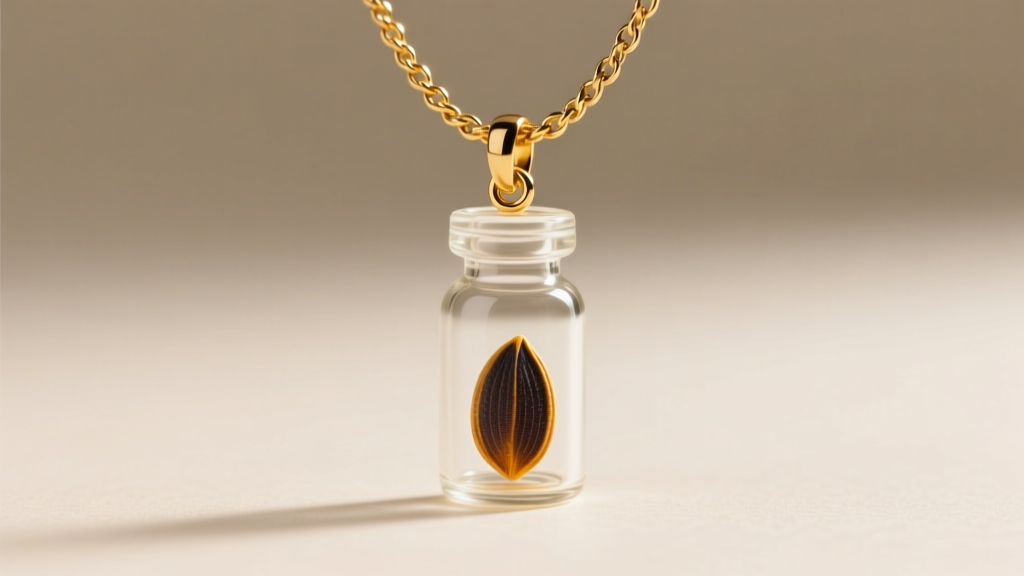
The 'faith of a mustard seed' necklace has evolved from a simple religious token into a sophisticated piece of meaningful jewelry. Inspired by the biblical verse Matthew 17:20, this necklace symbolizes the immense power of even the smallest amount of faith. However, as the popularity of these pendants has surged, the market has become saturated with varying qualities of craftsmanship. From synthetic seeds encased in cheap plastics to heirloom-quality borosilicate glass vials, knowing what to look for is essential for making a lasting investment.
In this comprehensive 2026 buying guide, we break down the metallurgy, botany, and jewelry-making techniques that separate a fragile novelty item from a durable, everyday piece of fine jewelry.
Decoding the Encasement: Glass Vials vs. Resin
The most critical decision when purchasing a mustard seed necklace is the material used to encase and protect the seed. Because the seed is organic and highly susceptible to moisture and UV degradation, the encasement acts as its micro-environment. There are three primary methods used by jewelers today.
1. Borosilicate Glass Vials (The Gold Standard)
Borosilicate glass is highly resistant to thermal shock and completely impervious to UV yellowing. High-end pendants use tiny, hand-blown or precision-molded borosilicate vials. The glass offers optical clarity similar to sapphire crystal, ensuring the seed remains perfectly visible for decades. The primary drawback is fragility; if dropped on a hard tile floor, the glass can shatter.
2. Epoxy Resin (The Budget Option)
Epoxy resin is poured into silicone molds and cured around the seed. While it is shatterproof and allows for unique, bezel-less shapes, standard epoxy resin is highly prone to UV oxidation. Within 6 to 18 months of daily wear, cheap resin will develop a noticeable yellow or amber tint, obscuring the seed and giving the pendant an aged, dirty appearance.
3. Advanced UV-Stable Resins (The 2026 Compromise)
Recent advancements in jewelry-grade resins (such as specialized polyurethane and UV-inhibited epoxies) have vastly improved clarity retention. While still not as optically pure as glass, premium UV-stable resins offer a shatterproof alternative that maintains its transparency for years, provided the jeweler uses a high-grade, non-yellowing formula.
| Encasement Material | Optical Clarity | UV Yellowing Risk | Impact Resistance | Average Price Range |
|---|---|---|---|---|
| Borosilicate Glass | Exceptional | None | Low (Shatters) | $45 - $120 |
| Standard Epoxy | Good (Initial) | High (6-18 mos) | High | $15 - $35 |
| UV-Stable Resin | Very Good | Low (3-5 yrs) | High | $30 - $70 |
Authenticating the Mustard Seed
Not all 'mustard seeds' in jewelry are created equal. To ensure you are getting an authentic piece, it helps to understand the botany behind the seed. According to botanical archives like Kew Gardens, the black mustard plant (Brassica nigra) produces seeds that are historically and biblically accurate to the parables. These seeds are tiny, measuring between 1.0mm and 1.5mm in diameter, and feature a dark, reddish-brown to black coloration with a slightly pitted, asymmetrical surface.
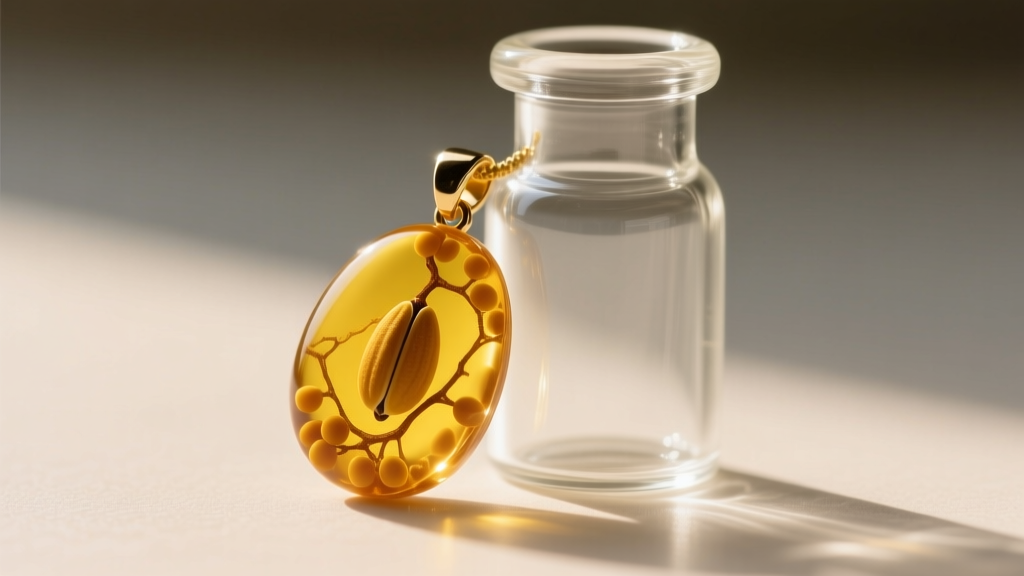
Conversely, many mass-produced necklaces use Sinapis alba (white or yellow mustard), which is larger (1.5mm to 2.5mm) and easier for factory workers to handle with tweezers. While still a real mustard seed, it lacks the historical specificity of Brassica nigra.
How to Spot Synthetic or Fake Seeds
- Perfect Sphericity: Real mustard seeds are slightly oval or asymmetrical. If the seed is a mathematically perfect sphere, it is likely a dyed clay bead or a plastic micro-ball.
- Uniformity: Organic seeds have a visible 'hilum' (the seed scar where it attached to the pod). Synthetic beads lack this microscopic indentation.
- Color Consistency: Natural seeds have subtle color gradients and speckles. Dyed beads will have an unnaturally uniform, opaque color.
Metal Hardware: Bails, Bezels, and Chain Gauges
The hardware connecting the seed encasement to the chain is a frequent point of failure in poorly manufactured necklaces. When evaluating a faith of a mustard seed necklace, pay close attention to the bail (the loop that holds the pendant) and the chain gauge.
The Bail: Screw-Top vs. Glue-On
For glass vial pendants, the cap and bail mechanism is critical. Glue-on caps rely on cyanoacrylate or jewelry epoxy to bond the metal to the glass. These adhesives degrade rapidly when exposed to everyday chemicals like hand sanitizers, perfumes, and lotions, eventually causing the pendant to detach and the seed to be lost. Screw-top bails with a microscopic silicone O-ring create a hermetic, mechanical seal. This not only prevents moisture from entering the vial (which would cause the organic seed to mold) but also ensures the bail will never unglue.
Chain Gauge Recommendations
Because mustard seed pendants are exceptionally lightweight (usually under 3 grams), they do not require heavy chains. However, chains that are too thin will easily snap from the tension of getting caught on clothing. Jewelry manufacturing standards, as outlined by suppliers like Rio Grande, suggest specific gauges for lightweight pendants:
- 0.8mm (Delicate): Visually beautiful and barely there, but prone to kinking and breaking. Best for occasional wear.
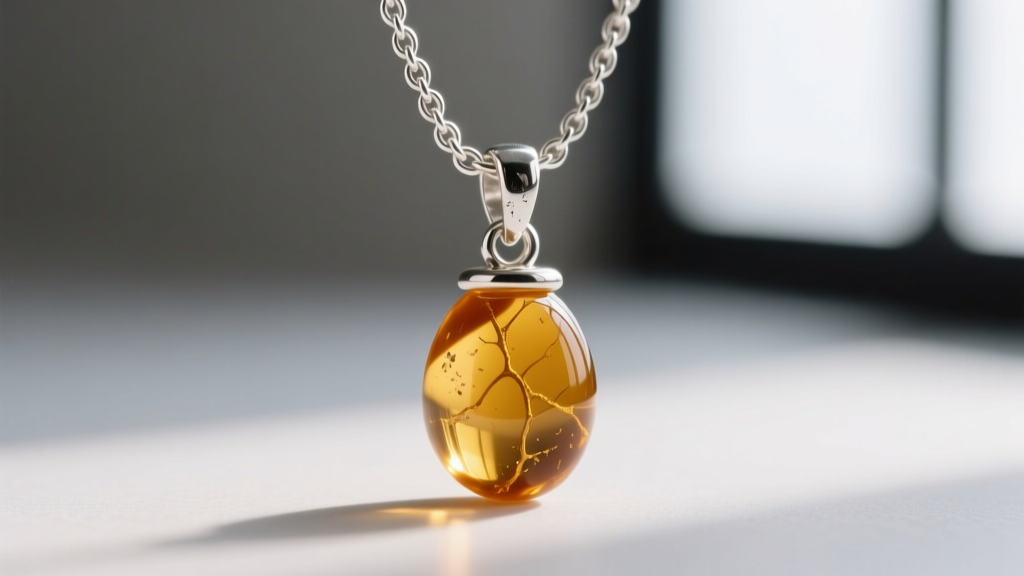
- 1.0mm to 1.2mm (Ideal): The sweet spot for daily wear. A 1.2mm cable or rolo chain offers excellent tensile strength while remaining visually proportionate to a 10mm glass vial.
- 1.5mm+ (Heavy): Too visually dominant. A thick chain will overpower the tiny, minimalist nature of the mustard seed pendant.
Sizing, Proportions, and Layering Techniques
The physical dimensions of the pendant dictate how it sits on the chest and how it can be styled. Mustard seed glass vials typically range from 8mm to 14mm in diameter.
Pendant Sizing Guide
- 8mm - 10mm (Micro): Best for a subtle, 'barely-there' look. Ideal for younger wearers or those who prefer ultra-minimalist jewelry.
- 11mm - 13mm (Standard): The most popular size. It provides enough surface area to appreciate the clarity of the glass and the texture of the seed without looking bulky.
- 14mm+ (Statement): Often features a larger seed pod or multiple seeds. Better suited for resin encasements rather than glass vials.
Mastering the Layered Look
The faith of a mustard seed necklace is an exceptional layering piece due to its small footprint. To create a balanced, modern stack in 2026, pair an 18-inch mustard seed necklace with a 20-inch or 22-inch chain featuring a slightly heavier pendant, such as a minimalist cross, a tiny initial, or a textured gold disc. Ensure the metals match (e.g., all 14k gold-filled or all 925 sterling silver) to maintain a cohesive, intentional aesthetic.
Care, Maintenance, and Moisture Prevention
Even the highest-quality mustard seed necklace requires specific care to ensure the organic material inside remains preserved. If you are purchasing a glass vial pendant, ensure the manufacturer includes a tiny desiccant (silica gel) packet inside the vial during assembly to absorb any trapped ambient moisture.
Cleaning Protocols
- Never use ultrasonic cleaners: The high-frequency vibrations can shatter borosilicate glass vials and cause micro-fractures in cured resin.
- Avoid chemical dips: Silver cleaning solutions can seep into the microscopic gap between a glass vial and its metal cap, tarnishing the seed and clouding the interior glass.
- Polishing: Use a dry, lint-free microfiber cloth to gently wipe the glass or resin. For resin pendants that have developed minor surface scratches, a tiny drop of plastic polish buffed in circular motions will restore the optical clarity.
Final Buying Checklist
Before adding a faith of a mustard seed necklace to your cart, verify these four critical E-E-A-T (Expertise, Experience, Authoritativeness, and Trustworthiness) markers of quality jewelry:
- Encasement: Is it borosilicate glass or UV-stable resin? (Avoid standard epoxy).
- Seed Authenticity: Does the seed show natural asymmetry and a visible hilum?
- Seal Mechanism: Does the glass vial use a screw-top cap with an O-ring rather than glue?
- Chain Gauge: Is the chain between 1.0mm and 1.2mm for optimal durability and proportion?
By prioritizing these structural and botanical details, you ensure that your necklace remains a beautiful, enduring symbol of faith for years to come. For further reading on identifying precious metals and jewelry findings, consult the educational resources provided by the Gemological Institute of America (GIA).


