Interchangeable Charm Necklace Engineering: A Technical Deep Dive
Explore the metallurgy, clasp mechanics, and gauge tolerances that define a premium interchangeable charm necklace. Expert technical guide.

The Modularity Paradox in Jewelry Design
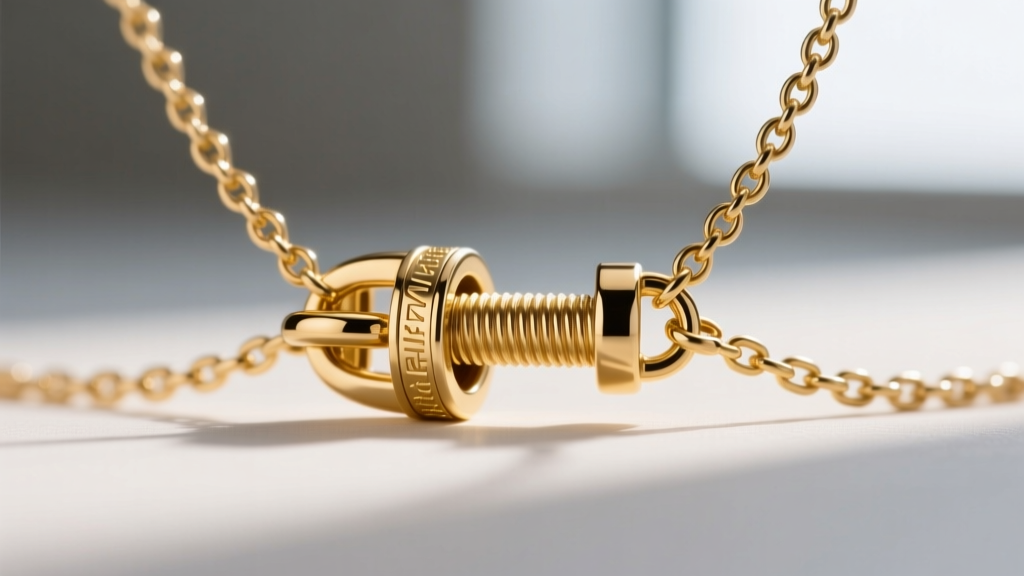
The modern interchangeable charm necklace represents a significant engineering challenge that bridges the gap between static adornment and modular utility. Unlike a traditional pendant suspended from a fixed bail, a modular system requires the wearer to repeatedly attach, detach, and swap components of varying weights and dimensions. This constant mechanical manipulation introduces dynamic stress points that standard jewelry findings are simply not designed to withstand. To create a premium interchangeable charm necklace, jewelers and metallurgists must carefully balance user-friendly modularity with absolute structural rigidity, ensuring that the chain, clasp, and charm bails can endure thousands of articulation cycles without suffering from metal fatigue or catastrophic failure.
Chain Metallurgy and Tensile Requirements
The foundation of any reliable modular necklace is the chain. When a chain is tasked with bearing the uneven, dynamic load of multiple interchangeable charms, the metallurgical properties of the alloy become the primary determinant of longevity. Standard 925 sterling silver, while highly popular, possesses a relatively low Vickers Hardness (HV) of approximately 60 to 70 in its fully annealed state. Even when work-hardened during the drawing process, it rarely exceeds 140 HV. Under the concentrated stress of a heavy enameled charm sliding along the links, sterling silver is prone to link elongation and eventual deformation.
For high-end interchangeable systems, 14k and 18k gold alloys offer superior yield strength. According to GIA research on jewelry metal alloys, 14k yellow gold typically exhibits a hardness of 130 to 150 HV, while 18k white gold, alloyed with nickel or palladium, can reach upwards of 160 HV. This increased hardness provides the necessary tensile strength to resist the micro-abrasions and lateral torsion caused by heavy, swapping charms. Furthermore, premium manufacturers often utilize laser-welded links rather than traditional soldered seams. Laser welding creates a localized, high-purity fusion zone that eliminates the brittle silver-copper eutectic phases found in standard solder joints, drastically reducing the risk of link separation under load.
Gauge Tolerances and Link Geometry
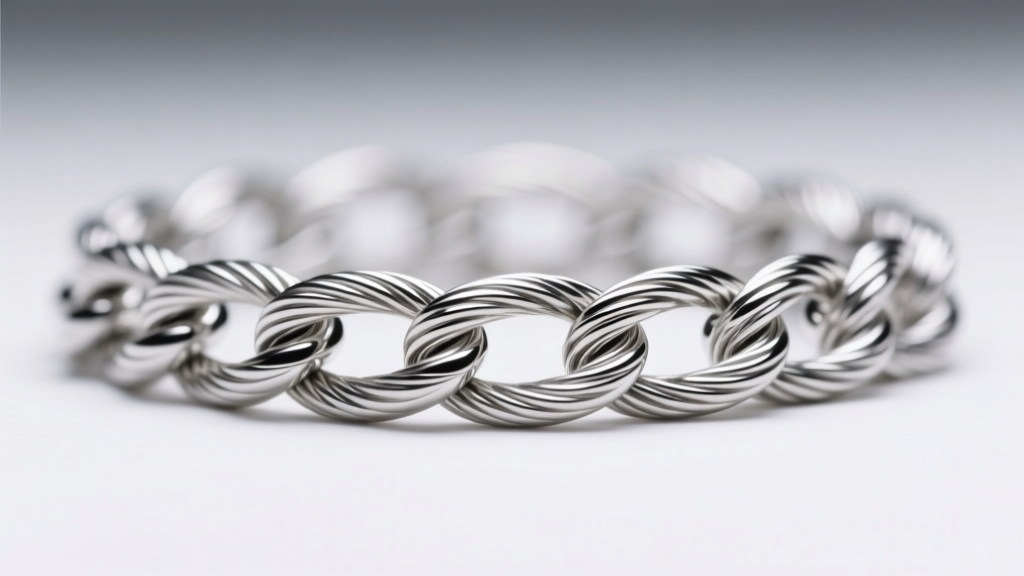
The geometry of the chain link must perfectly complement the charm bail. A standard rolo or cable chain measuring 1.2mm to 1.5mm in outer width is generally considered the optimal baseline. If the wire gauge is too thick (e.g., 2.0mm), the internal diameter of the link becomes too small to accommodate the pin of a snap-lock bail. Conversely, if the chain is too thin (e.g., 0.8mm), the cross-sectional area of the wire lacks the sheer strength to support charms weighing more than 5 grams. The ideal tolerance for a modular chain link ensures a maximum clearance of 0.3mm between the chain wire and the bail pin, allowing for fluid articulation without excessive lateral play.
The Anatomy of Interchangeable Bails and Locks
The true innovation of an interchangeable charm necklace lies in its locking mechanism. Traditional jump rings and standard lobster clasps are entirely unsuited for modular systems due to their vulnerability to lateral torsion and accidental snags. High-end modular jewelry relies on specialized bails engineered with micro-mechanical components.
- Threaded Barrel Bails: These utilize a precision-machined screw mechanism. The male and female components are threaded with a fine pitch (typically 0.5mm to 0.75mm) to maximize friction and prevent accidental unspooling. While highly secure, they require careful alignment to avoid cross-threading, which can strip the soft gold or silver threads.
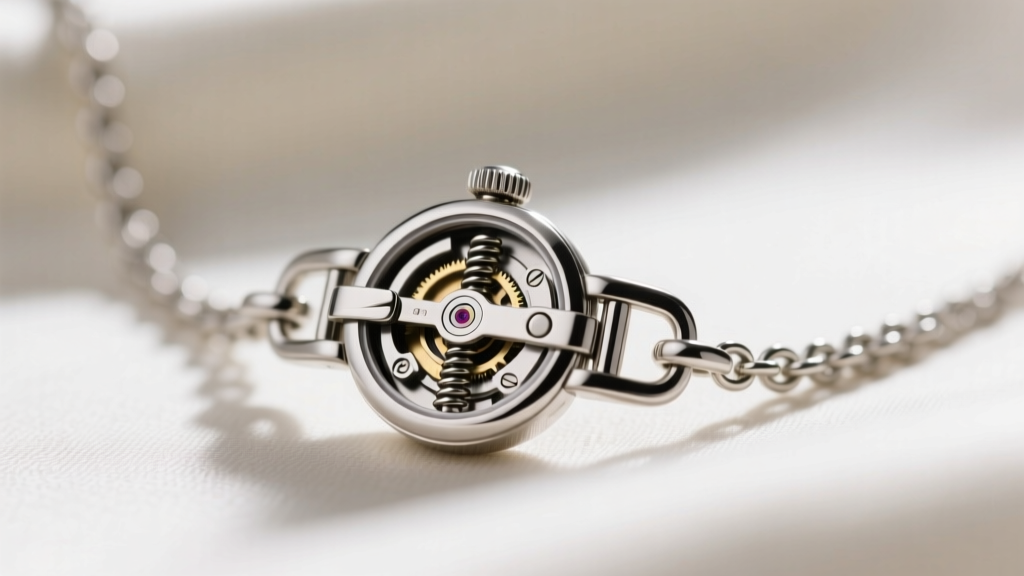
- Snap-Lock / Click Bails: The most common mechanism in premium systems, featuring a hinged lever secured by an internal spring detent. The spring is almost exclusively manufactured from beryllium copper, an alloy chosen for its exceptional fatigue resistance and ability to maintain tension over tens of thousands of compression cycles.
- Magnetic-Mechanical Hybrids: Emerging designs incorporate a neodymium core to guide the bail into place, followed by a physical mechanical latch that snaps shut. This dual-action system provides the ease of use of magnets with the sheer-strength security of a physical lock.
Compatibility Matrix: Sizing Charms to Chains
One of the most frequent failure modes in modular jewelry occurs when users mismatch the chain gauge with the charm bail diameter, or exceed the tensile limits of the alloy. The following compatibility matrix serves as a technical guideline for pairing components based on material science and load-bearing capacities.
| Chain Type & Width | Wire Gauge (mm) | Bail Inner Diameter (mm) | Max Charm Weight (g) | Recommended Alloy |
|---|---|---|---|---|
| Small Cable (1.0mm) | 0.25 - 0.30 | 1.2 - 1.5 | 5g | 18k White Gold / Platinum |
| Standard Rolo (1.5mm) | 0.35 - 0.45 | 1.8 - 2.2 | 12g | 14k Yellow Gold / 925 Silver |
| Heavy Curb (2.5mm) | 0.60 - 0.80 | 3.0 - 3.5 | 25g+ | 14k Gold / Argentium Silver |
Failure Modes and Longevity Troubleshooting
Even the most meticulously engineered interchangeable charm necklace will degrade if subjected to adverse environmental or mechanical conditions. Understanding these failure modes is critical for both manufacturers and collectors.
Galvanic Corrosion in Mixed Metals
When a sterling silver chain is frequently paired with charms cast from base-metal alloys (such as brass or nickel-silver) and exposed to high humidity or sweat, a galvanic cell is formed. The more anodic metal will corrode rapidly, leading to pitting and structural weakening of the bail pin. To prevent this, modular systems should strictly enforce material homogeneity, or utilize inert plating barriers like rhodium or ruthenium on the contact surfaces.
Dynamic Loading and Link Elongation
Static weight is only half the equation. When a wearer jogs or moves vigorously, the charms exert dynamic, multi-directional forces on the chain. This dynamic loading can cause the links of a standard cable chain to stretch and ovalize. To mitigate this, structural chains like the box chain or the wheat chain are preferred for heavy modular setups, as their interlocking, multi-directional link geometries distribute kinetic energy across multiple planes, preventing localized stress concentrations. For further insights into advanced chain manufacturing and structural integrity, the Santa Fe Symposium regularly publishes peer-reviewed papers on jewelry metallurgy and link mechanics.
Spring Fatigue in Click-Locks
The beryllium copper springs inside snap-lock bails are rated for a specific number of compression cycles. Exposure to chlorinated water, lotions, or ultrasonic cleaners can cause micro-fractures in the spring housing or degrade the lubrication, leading to a 'soft' click and eventual failure. Users should be advised to depress the lever fully before attaching the charm to avoid dragging the pin across the tension spring, which can cause severe scoring.
Conclusion: Investing in Precision Engineering
The interchangeable charm necklace is far more than a versatile fashion accessory; it is a feat of micro-engineering. By prioritizing high-yield alloys, precision-machined locking mechanisms, and strict gauge tolerances, jewelers can create modular systems that endure a lifetime of daily manipulation. For the discerning collector, evaluating the Vickers hardness of the chain, the articulation geometry of the links, and the spring mechanics of the bail is just as important as assessing the aesthetic brilliance of the charms themselves.


