The True Cost of a Protection Necklace: Value & Budget Guide
Discover the real value of a protection necklace. We break down material costs, chain gauges, and pricing tiers to help you invest wisely.

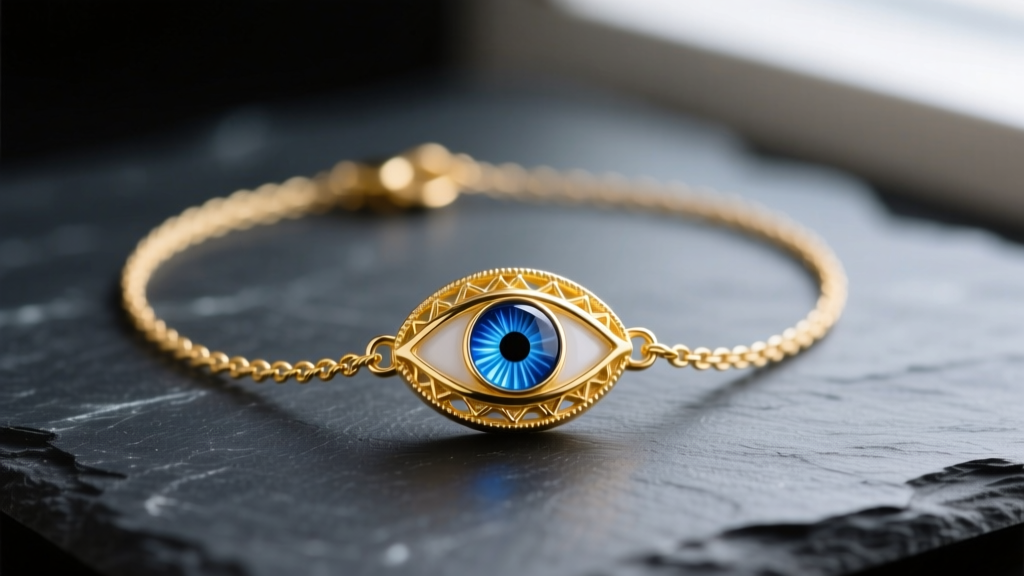
Protection necklaces—ranging from the iconic evil eye and hamsa hand to saint medallions and runic pendants—carry immense sentimental, cultural, and spiritual weight. However, when you are investing in a talisman meant to be worn daily, the physical durability of the piece must match its spiritual intent. As gold and silver prices continue their upward trajectory in 2026, understanding the intrinsic value of your jewelry is more critical than ever.
Many consumers overpay for poorly constructed 'spiritual' jewelry, while others under-invest in base metals that degrade within months. This comprehensive budget and value assessment will help you decode material grades, chain mechanics, and pricing tiers to ensure your protection necklace is a lasting heirloom, not a fleeting expense.
The Material Hierarchy: What Are You Actually Paying For?
The foundation of any pendant's value lies in its metallurgy. The market is flooded with vague terms like 'gold tone' or 'silver finish,' which often mask cheap base metals. Here is the true breakdown of what you are paying for.
Base Metals and Flash Plating ($15 - $45)
Most entry-level protection necklaces are cast from brass, copper, or zinc alloys and coated with a microscopic layer of gold or silver. This is known as 'flash plating,' typically measuring less than 0.5 microns thick. While the upfront cost is low, the failure mode is rapid: the plating wears off at the friction points (like the bail and jump ring) within weeks, exposing the base metal which can cause contact dermatitis and turn your skin green.
925 Sterling Silver ($50 - $150)
Sterling silver (92.5% pure silver, 7.5% copper) is the baseline for respectable, entry-level fine jewelry. It offers excellent value for intricate evil eye or hamsa designs. However, the copper alloy makes it susceptible to sulfide tarnish. If you plan to wear your protection necklace in the shower or ocean, sterling silver will require monthly polishing with a jeweler's cloth to maintain its luster.
Gold Vermeil vs. Standard Gold Plating ($90 - $250)
This is where budget buyers often get tricked. According to the Federal Trade Commission (FTC) Jewelry Guides, for an item to be legally marketed as 'Gold Vermeil' in the United States, it must have a sterling silver base and a gold plating of at least 2.5 microns thick. Many brands sell 'heavy gold plated' brass for $150, which lacks the structural integrity and hypoallergenic properties of true vermeil. Always verify the micron thickness and base metal before purchasing.
Solid 14k and 18k Gold ($300 - $800+)
For a piece meant to offer lifelong protection, solid gold is the ultimate investment. 14k gold (58.5% pure gold) offers the perfect balance of rich color and tensile strength, making it highly resistant to bending and scratching. While the initial capital outlay is high, the cost-per-wear over a lifetime approaches zero, and the piece will retain intrinsic scrap and resale value.
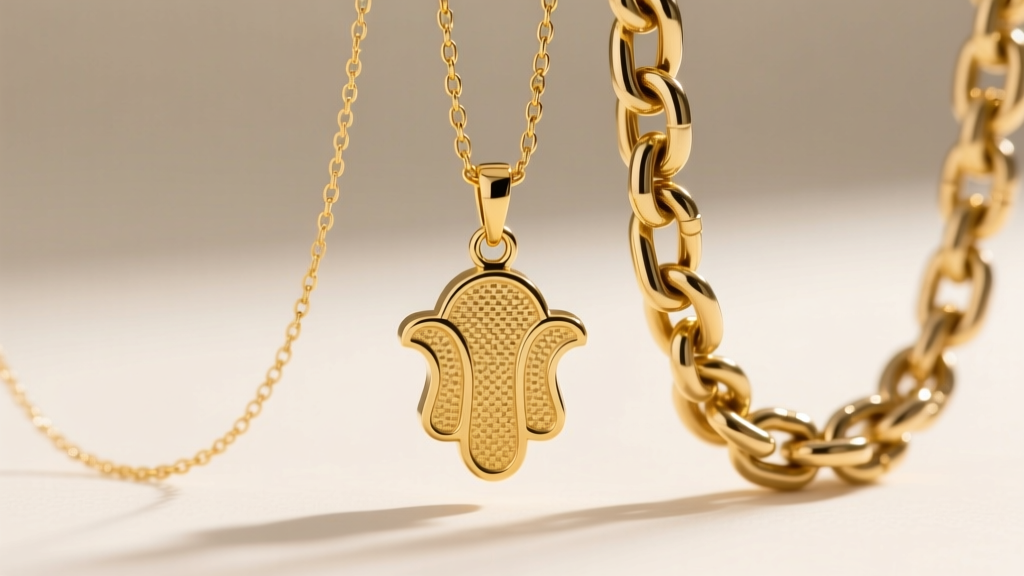
Chain Gauges and Clasp Mechanics: The Hidden Failure Points
A common mistake when buying a protection necklace is focusing entirely on the pendant while ignoring the chain. A heavy solid gold hamsa pendant weighing 4 grams will easily snap a delicate 0.8mm cable chain. The chain and its clasp are the mechanical failure points of any necklace.
- 0.8mm - 1.0mm (Cable/Box Chains): Suitable only for lightweight, hollow, or enamel pendants under 2 grams. Highly prone to kinking.
- 1.2mm - 1.5mm (Rolo/Cable Chains): The sweet spot for standard daily-wear protection pendants (2g to 5g). Offers excellent tensile strength without looking bulky.
- 2.0mm+ (Curb/Figaro Chains): Required for heavy, solid cast medallions or large gemstone pendants exceeding 6 grams.
Furthermore, inspect the clasp and the jump ring (the small loop connecting the pendant to the chain). A standard spring-ring clasp is notoriously difficult to operate and prone to internal spring failure. Always opt for a lobster clasp, and ensure the jump ring is soldered shut or made of a thick enough gauge (at least 20-gauge wire) that it cannot be pulled open by a snagged pendant.
Budget & Value Assessment Matrix
To help you align your budget with your expectations, refer to this value assessment matrix. This framework evaluates the true ROI of your protection necklace based on material and construction.
| Material Tier | Price Range | Expected Lifespan | Maintenance Required | Value Verdict |
|---|---|---|---|---|
| Brass / Flash Plated | $15 - $45 | 3 - 6 Months | None (Disposable) | Poor. High risk of skin irritation. |
| 925 Sterling Silver | $50 - $150 | 10+ Years | Monthly Polishing | Excellent. Best entry-level fine jewelry. |
| True Gold Vermeil | $90 - $250 | 2 - 5 Years | Avoid moisture/chemicals | Good. Ideal for trend-driven layering. |
| Solid 14k Gold | $300 - $800+ | Lifetime / Heirloom | Occasional ultrasonic clean | Superior. True intrinsic and spiritual value. |
Evaluating the 'Eye' and Enamel: Glass vs. Resin vs. Gemstones
The focal point of many protection necklaces, particularly the evil eye (Nazar) or saint medallions, relies on colored inlays. The material used for these inlays drastically affects both the price and the durability of the piece.
Traditional Glass vs. Epoxy Resin
Authentic Turkish and Greek evil eye pendants utilize hand-lamped glass. While culturally accurate, glass is brittle; if dropped on a tile floor, it will shatter. (Culturally, a shattered evil eye is said to mean it has absorbed a negative curse and completed its job, but practically, it means you need a new necklace). Conversely, mass-produced commercial pendants often use painted epoxy resin. Resin will not shatter, but it is highly porous and will yellow or cloud over when exposed to UV light, sweat, and perfumes.
Gemstone Alternatives
For a high-end protection necklace that will never shatter or yellow, look for pendants that use precision-cut gemstones to create the 'eye' or medallion details. According to the Gemological Institute of America (GIA), stones like Lapis Lazuli, Turquoise, and Sapphire offer varying degrees of hardness. Sapphire (Mohs 9) is virtually scratch-proof and ideal for daily wear, whereas Turquoise (Mohs 5-6) is porous and can be damaged by cosmetics and oils. Expect to pay a 40% to 60% premium for genuine gemstone inlays over glass.
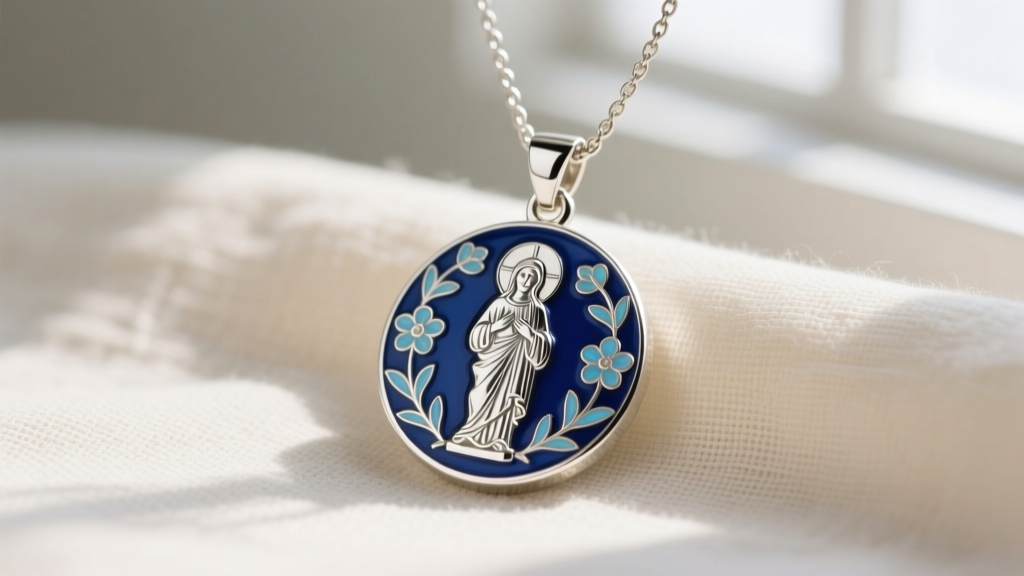
Red Flags: Spotting Overpriced 'Spiritual' Jewelry
The spiritual jewelry market is unfortunately rife with predatory pricing. Brands often leverage the emotional and protective significance of a talisman to mark up cheap materials. Watch out for these red flags:
- Vague Metallurgy: If the product description says 'Gold Dipped,' 'Silver Tone,' or 'Alloy' without specifying the exact base metal and micron count, you are likely paying for brass.
- The 'Artisan' Markup: Many dropshipping brands sell factory-cast zinc alloy hamsa pendants for $85, marketing them as 'hand-forged artisan spiritual jewelry.' Always reverse-image search the pendant; if it appears on wholesale sites for $3, the spiritual markup is unjustified.
- Unrealistic Gemstone Claims: A $60 protection necklace claiming to feature 'natural sapphire and diamond accents' is almost certainly using lab-created corundum and cubic zirconia. There is nothing wrong with lab stones, but you should not pay natural gemstone prices for them.
'A protection necklace should offer peace of mind, not anxiety over whether it will tarnish, break, or irritate your skin. True value is found where honest metallurgy meets meaningful design.'
Final Verdict: What Should You Actually Spend?
Your budget should be dictated by how you intend to wear the piece. If you are buying a protection necklace to layer with trendy fashion jewelry for a specific season, a high-quality gold vermeil piece ($100 - $180) over a sterling silver base offers the best aesthetic value without the guilt of wear-and-tear.
However, if this necklace is meant to be a daily talisman—something you never take off, sleep in, and rely on for spiritual grounding—bypass the plated options entirely. Save your budget and invest in a solid 14k gold pendant on a 1.5mm rolo chain ($350 - $600). The cost-per-wear of a solid gold protection necklace over a decade is mere pennies, and it will remain a pristine, powerful heirloom ready to be passed down to the next generation.


