Wife Necklace Troubleshooting: Fixing Tangling, Clasps, and Fit
Is your wife necklace constantly tangling or breaking? Discover expert troubleshooting tips for chain weaves, clasps, pendant flips, and metal allergies.

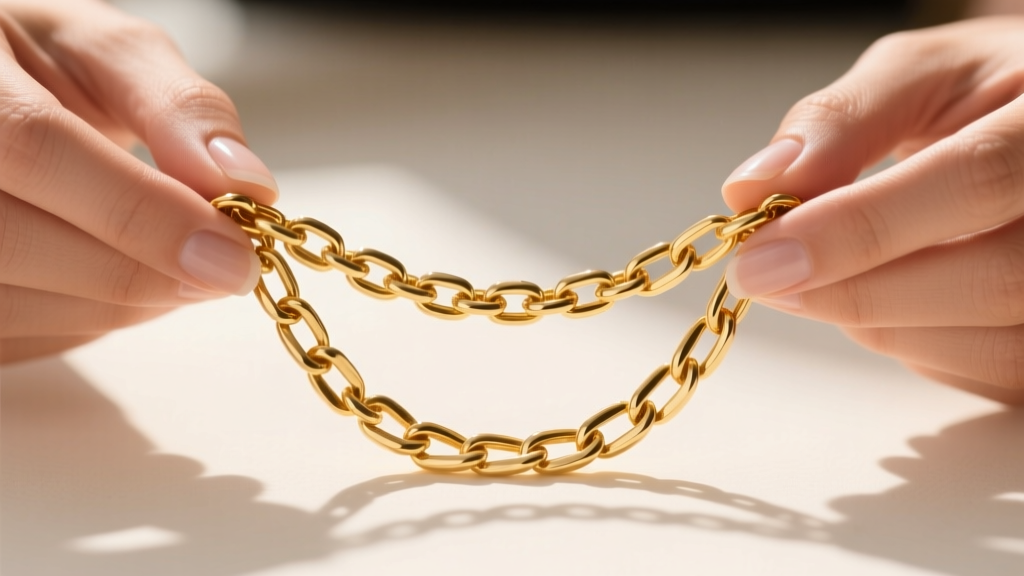
Gifting a wife necklace is a deeply personal gesture, often symbolizing milestones, anniversaries, or enduring affection. However, the emotional significance of the piece can quickly be overshadowed by frustrating mechanical failures. From chains that relentlessly tangle in hair to delicate clasps that snap under minimal tension, daily-wear necklaces are subjected to immense physical stress. As jewelry professionals, we see countless sentimental pieces relegated to the back of a jewelry box simply because they are annoying to wear.
This guide moves beyond generic buying advice to address the specific, real-world problems associated with daily-wear necklaces. Whether you are troubleshooting a recent gift or looking to upgrade an existing piece for better functionality, these expert solutions will ensure the necklace is actually worn and enjoyed.
The Tangle Trap: Choosing the Right Chain Weave
The most common complaint regarding a daily-wear wife necklace is tangling. This is rarely a user error; it is almost always a structural flaw in the chain weave. Chains with complex, multi-directional links or hollow interiors act like microscopic grappling hooks for hair and fabric fibers.
Weaves to Avoid for Daily Wear
- Rope Chains (Under 2.0mm): The twisted, multi-faceted links easily catch individual hair strands. Furthermore, hollow rope chains are notoriously fragile and prone to crushing.
- Herringbone Chains: While they lay flat and reflect light beautifully, herringbone chains lack a central wire core. If bent past a 45-degree angle, the flat interlocking links will permanently kink and weaken.
- Omega Chains: Similar to herringbone, the rigid, interlocking plates are highly susceptible to permanent kinking if slept in or pulled.
The Solution: High-Tensile, Smooth Weaves
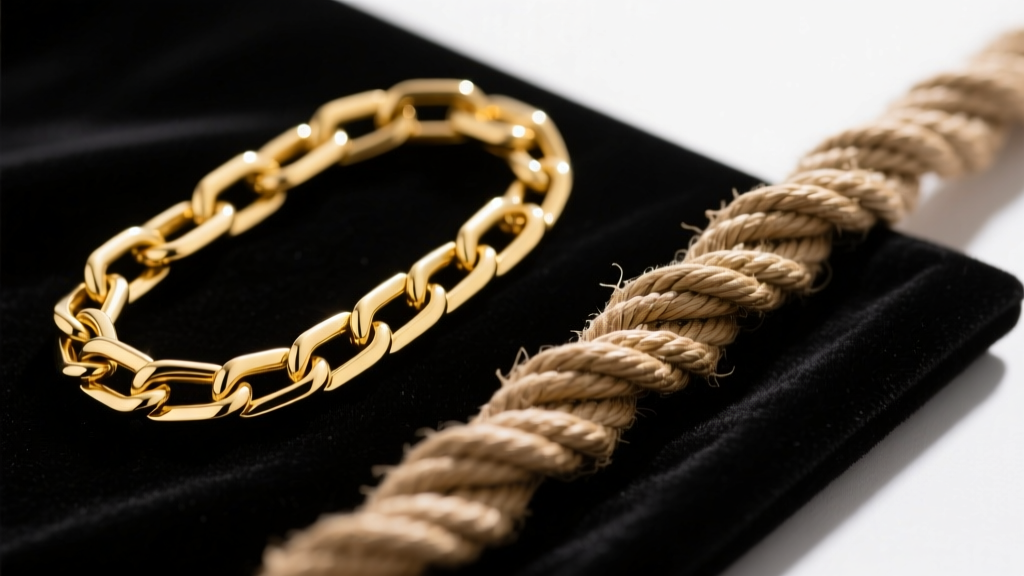
For a necklace meant to be worn 24/7, opt for a solid box chain (1.2mm to 1.5mm thickness) or a solid wheat (spiga) chain (1.5mm to 2.0mm). Box chains feature smooth, 90-degree geometric links that offer no snag points for hair. Wheat chains, composed of woven oval links, provide exceptional tensile strength and drape beautifully without twisting. Always verify the chain is "solid" and not "hollow" or "semi-solid," as hollow chains will dent irreparably if caught on a sweater.
Clasp Failures and Dexterity Solutions
A chain is only as strong as its clasp. The standard spring ring clasp—a small circular mechanism with a tiny lever—is the default on most commercial jewelry. It is also the most frequent point of failure. The internal tension spring in a standard 5mm spring ring is rated for roughly 500 to 1,000 articulation cycles before metal fatigue causes it to snap or fail to close completely.
Upgrading the Closure Mechanism
If your wife struggles with long acrylic nails, limited finger dexterity, or arthritis, a standard lobster clasp can be incredibly frustrating to operate. Here is a breakdown of superior clasp alternatives based on functionality and security:
| Clasp Type | Security Level | Ease of Use | Best Application |
|---|---|---|---|
| Lobster (Standard) | High | Moderate | Everyday chains under 15g |
| Toggle (T-Bar) | Moderate-High | Very High | Heavier chains, limited dexterity |
| Magnetic (Neodymium) | High (if locking) | Extremely High | Arthritis, long nails, quick removal |
| Box Clasp with Safety | Extremely High | Moderate | Heavy diamond tennis necklaces |
Pro Tip: If you must use a lobster clasp, upgrade to a "heavy-duty" or "trigger" lobster clasp with a wider lever (at least 12mm in length). For magnetic clasps, ensure they feature a secondary locking mechanism (like a twist-lock or a safety figure-eight wire) to prevent the magnets from sliding apart if the chain is snagged.
The Annoying Pendant Flip (And How to Stop It)
There are few things more irritating than a pendant that constantly flips upside down, hiding the design against the chest. This is a physics problem, not a defect in the jewelry. The flip occurs when the pendant's center of gravity sits higher than the natural resting curve of the chain, or when the bail (the loop connecting the pendant to the chain) is too light to counterbalance the bottom of the pendant.
Mechanical Fixes for Bail Imbalances
Before taking the piece to a jeweler for soldering, try these non-destructive troubleshooting methods:
- The Counterweight Method: Thread a small, dense bead (such as a 2mm or 3mm solid gold, tungsten, or sterling silver bead) onto the chain directly opposite the bail, at the back of the neck. This shifts the chain's center of gravity backward, forcing the heavier pendant to stay upright at the front.
- Upgrade to a V-Bail or Hidden Bail: Standard tube bails often allow too much lateral movement. A V-bail pins the pendant at two distinct points, restricting rotation. Alternatively, a hidden bail (soldered to the back of the pendant) lowers the hanging point, drastically improving stability.
- Adjust the Chain Thickness: If a heavy pendant is hung on a very thin, flexible chain (like a 0.8mm cable chain), the chain will bunch up inside the bail, causing the pendant to slide and flip. Match the chain gauge to the bail's internal diameter to ensure smooth gliding.
Metal Allergies and Skin Discoloration
If the skin beneath the necklace turns green, or if your wife develops contact dermatitis (red, itchy, flaky skin), the metal alloy is the culprit. The term "hypoallergenic" is largely an unregulated marketing buzzword. According to the Federal Trade Commission's Jewelry Guides, sellers must be careful not to misrepresent metal purity or allergy safety.
Identifying the Irritant
The Green Mark: This is a chemical reaction, not an allergy. It occurs when copper in lower-karat gold (like 10k or some 14k alloys) or sterling silver reacts with sweat, lotions, and skin acids, creating copper chloride. It is harmless but unsightly.
Contact Dermatitis: This is a true allergic reaction, almost exclusively caused by nickel. Nickel is frequently used as a whitening agent in white gold and as a hardening agent in cheap sterling silver.
The Safest Metal Grades
To permanently solve allergy and discoloration issues, upgrade the wife necklace to one of these biocompatible metals:
- 950 Platinum: Naturally white, incredibly dense, and completely nickel-free. It is the gold standard for sensitive skin.
- Palladium-Alloyed White Gold: If she prefers 14k or 18k white gold, ensure the jeweler explicitly uses palladium (not nickel) as the whitening alloy.
- ASTM F136 Titanium: For severe, reactive skin, implant-grade titanium is the ultimate solution. It is entirely inert and used in medical surgical implants.
For a deeper understanding of precious metal compositions and alloying standards, refer to the educational resources provided by the Gemological Institute of America (GIA).
Sizing and Length Troubleshooting
A necklace that sits too high feels like a choker and restricts movement, while one that is too long gets caught on buttons or lost beneath necklines. The standard "18-inch" chain does not account for individual neck circumferences or chest proportions.
Expert Rule of Thumb: Measure the neck with a soft measuring tape. Add 2 inches for a snug choker, 4 inches for a collarbone-length princess necklace, and 6 inches for a standard matinee drop. If gifting, an 18-inch chain with a built-in 2-inch extender chain is the safest, most versatile choice.
If an existing necklace is slightly too short, do not attempt to pull it forcefully over the head, as this will stretch and weaken the links. Instead, purchase a separate chain extender (a 2-inch to 3-inch snippet of matching chain with a lobster clasp on one end and an open jump ring on the other). This allows for micro-adjustments depending on the thickness of the clothing worn that day, ensuring the wife necklace sits perfectly against the collarbone regardless of the outfit.


