How to Fix and Choose the Best Types of Necklace Clasps
Discover how to troubleshoot, repair, and select the right types of necklace clasps to prevent breakage, sliding, and everyday wear frustrations.

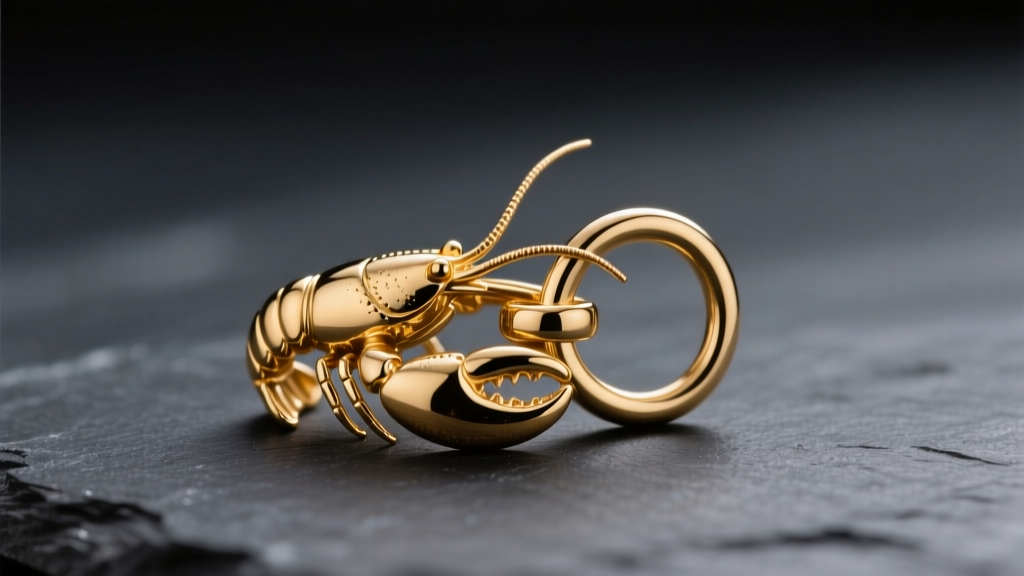
There are few things more frustrating in jewelry wear than reaching for your neck to find the chain has slipped forward, the clasp has jammed, or worse, the piece has snapped entirely. While gemstones and precious metals often get the spotlight, the hardware holding your necklace together is the true unsung hero of daily wear. Understanding the mechanical nuances of the various types of necklace clasps is essential for both troubleshooting existing issues and selecting the right hardware for future pieces.
Whether you are dealing with a slipping toggle, a jammed box clasp, or a lobster claw that refuses to snap shut, this guide dives deep into the mechanical failure points of necklace hardware. We will explore exact material grades, jump ring gauges, and actionable repair frameworks to keep your jewelry secure.
The Anatomy of Clasp Failure: Why Necklaces Break
Before troubleshooting specific clasp mechanisms, we must address the most common point of failure in necklace hardware: the jump ring. A jump ring is the small circular wire loop that connects the clasp to the chain. According to manufacturing standards outlined by the Rio Grande jewelry supply database, unsoldered jump rings are the leading cause of chain loss.
When an unsoldered jump ring is subjected to lateral tension—such as a heavy pendant pulling the chain to one side—the gap in the ring can warp open. Once the gap exceeds 1.5 millimeters, a delicate chain can easily slip through.
The Soldered Jump Ring Solution
For any chain weighing over 15 grams, or any pendant exceeding 10 grams, you must upgrade to a soldered jump ring. Soldering fuses the gap shut using a high-temperature alloy. When evaluating your jewelry, look closely at the seam of the jump ring. If you see a visible line or a slight gap, it is unsoldered. A professional jeweler can hard-solder this gap in minutes using a micro-torch and 14k yellow or white gold solder, permanently eliminating the weakest link in your necklace hardware.
Troubleshooting the Most Common Types of Necklace Clasps
Different clasps solve different problems, but they also introduce unique mechanical vulnerabilities. Here is how to troubleshoot the most prevalent hardware types on the market.
Lobster and Spring Ring Clasps: The Slipping and Sticking Problem
Lobster claws and spring rings operate on a simple internal spring mechanism that pushes a tiny lever shut. The most common failure mode here is spring fatigue or debris accumulation. If your lobster clasp feels "mushy" or fails to snap back completely, the internal spring has likely lost its tension due to work hardening, or lotion and skin oils have gummed up the track.
- The Fix: Do not pull the lever backward to force it open; this will permanently bend the internal spring wire. Instead, use a wooden toothpick dipped in isopropyl alcohol to gently clean the track. If the spring is dead, the clasp cannot be repaired and must be replaced.
- Material Note: Sterling silver (925) lobster clasps are notoriously soft. The tiny lever can bend if caught on a sweater. Upgrading to a 14k gold or platinum lobster clasp provides significantly higher tensile strength for the lever mechanism.
Toggle Clasps: The Slipping Through Problem
Toggle clasps consist of a T-bar that slides through a circular or oval ring. They are incredibly secure when properly proportioned, but they frequently fail when paired with the wrong chain weight. If your toggle keeps slipping out of the ring, the issue is almost always a mathematical ratio failure.
The T-bar must be at least 1.5 times the width of the interior diameter of the ring. If you have a heavy chain, the downward drag will pull the T-bar parallel to the ring, allowing it to slip through. Furthermore, if the ring is made of soft 22k gold or high-karat silver, it can stretch into an oval shape over time, widening the gap. If your toggle is slipping, you must either shorten the chain to reduce the drag weight or have a jeweler solder a small metal bead inside the ring to reduce its interior diameter.
Box Clasps with Safety Latches: The Jamming Problem
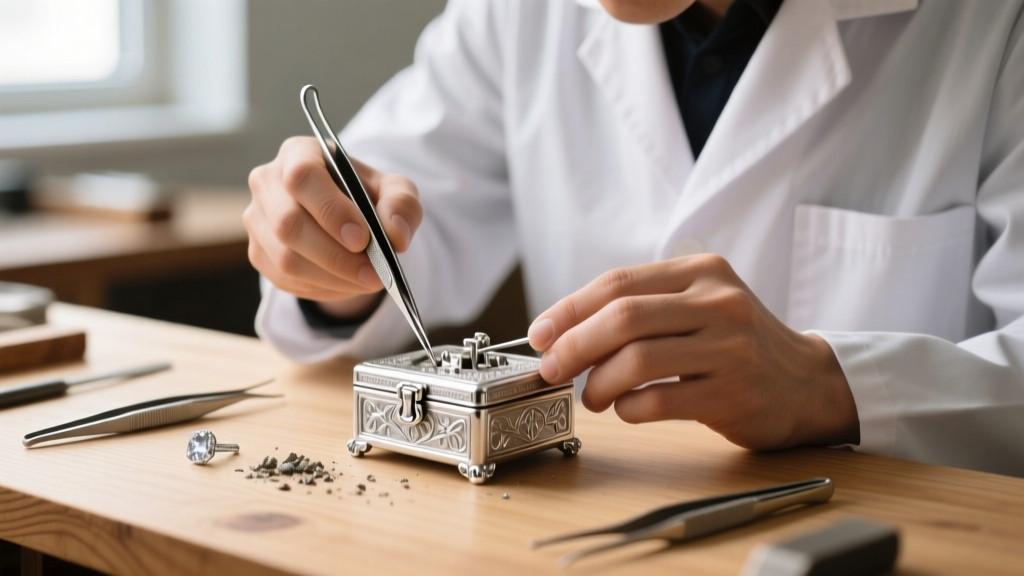
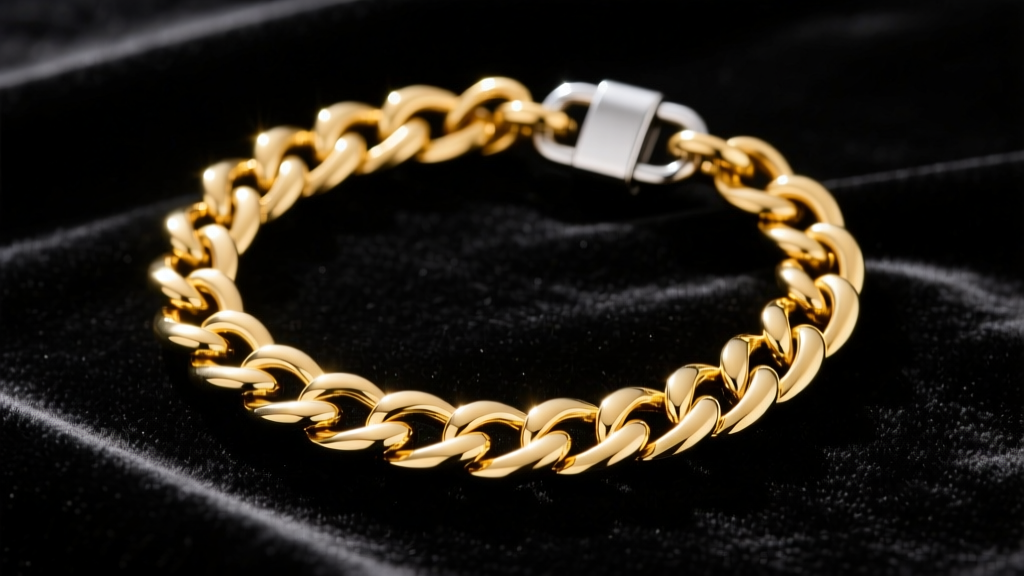
Box clasps (also known as tongue clasps) feature a folded piece of metal that compresses and clicks into a square housing. They are the gold standard for heavy tennis bracelets and thick Cuban link chains. However, they are prone to jamming.
Jamming occurs when the "tongue" loses its springiness and fails to compress fully, or when the "figure-8" safety wire—a secondary wire loop that snaps over a side peg—becomes bent. If your box clasp won't click, do not force it. Forcing it will crimp the tongue, rendering the clasp useless. Use a fine sewing needle to gently pick out any compacted debris from the housing box. If the tongue is bent, a jeweler must carefully anneal the metal and reshape it with flat-nose pliers.
Problem-Solving Matrix: Matching Clasp to Chain Weight
Selecting the correct clasp is not just about aesthetics; it is a matter of physics. The GIA Gem Encyclopedia notes that improper hardware pairing leads to accelerated metal fatigue. Use the matrix below to match your chain's weight to the appropriate hardware and jump ring gauge.
| Chain Weight | Recommended Clasp Type | Required Jump Ring Gauge | Common Failure Mode to Avoid |
|---|---|---|---|
| Under 10g (Delicate) | Spring Ring (5mm - 7mm) | 22-gauge to 20-gauge (Soldered) | Crushing the delicate ring mechanism |
| 10g - 25g (Medium) | Lobster Claw (9mm - 12mm) | 18-gauge (Soldered) | Lever bending from lateral sweater snags |
| 25g - 50g (Heavy) | Box Clasp with Figure-8 Safety | 16-gauge (Soldered) | Tongue compression failure / Jamming |
| Over 50g (Massive) | Heavy-Duty Magnetic or Custom Hook | 14-gauge or thicker (Welded) | Chain stretch from magnetic pulling |
Magnetic Clasps: Polarity and Chain Stretch
Magnetic clasps have surged in popularity for their accessibility, but they introduce a unique troubleshooting scenario: chain stretch. Many users attempt to separate a strong neodymium magnetic clasp by pulling the chain links apart rather than sliding the magnetic halves laterally. This extreme lateral force stretches the individual chain links, permanently ruining the necklace's drape.
When purchasing a magnetic clasp, look for Grade N52 neodymium magnets encased in 316L surgical stainless steel or 14k gold. Cheaper clasps use lower-grade magnets that lose their magnetic flux density over time, especially when exposed to the heat of the human body or direct sunlight. To separate a magnetic clasp correctly, always grip the metal housing directly and slide the two halves in opposite directions parallel to the magnet face.
DIY Repair vs. Professional Jeweler: When to Intervene
Knowing when to fix a clasp yourself and when to hand it over to a professional is crucial for preserving the integrity of your jewelry.
Safe for DIY Troubleshooting
- Cleaning: Using a soft toothbrush and mild dish soap to remove lotion buildup from lobster claw tracks.
- Reattaching Split Rings: Using a split ring opener tool to reattach a clasp to a double split ring (never use your fingernails, which can bend the ring and weaken the metal).
- Untangling: Using baby oil and two fine needles to untangle a knot that has pulled tight against the jump ring.
Requires a Professional Jeweler
- Reshaping Toggle Rings: If a toggle ring has stretched into an oval, a jeweler must reshape it and potentially laser-weld the seam to restore its structural memory.
- Replacing Internal Springs: Micro-springs inside spring rings cannot be repaired; the entire clasp must be laser-soldered off and replaced.
- Soldering Jump Rings: Hard-soldering requires a controlled torch environment to prevent melting the adjacent chain links.
Upgrading Your Hardware: Material Grades That Last
If you are constantly battling bent levers, warped rings, or tarnished hardware, it is time to evaluate the metallurgical grade of your clasps. The GIA Jewelry Care guidelines emphasize that the clasp is subjected to more mechanical friction than any other part of the necklace.
"A necklace is only as strong as its weakest finding. Upgrading a sterling silver clasp on a heavy chain to a platinum or 18k white gold finding reduces mechanical wear and prevents galvanic corrosion at the connection point."
For everyday wear, 14k gold offers the best balance of tensile strength and malleability. Platinum is exceptionally durable and will not wear away over decades of friction, making it the ultimate choice for heirloom pieces and heavy diamond tennis necklaces. Avoid gold-plated brass clasps entirely; once the microscopic layer of gold wears off, the underlying brass will oxidize, turning your skin green and causing the clasp mechanism to seize up entirely.
By understanding the mechanical realities behind the different types of necklace clasps, you can transition from constantly replacing broken chains to confidently curating a collection of secure, high-performance jewelry. Inspect your jump rings today, match your hardware to your chain weight, and never lose a cherished pendant to a faulty spring again.


