Flower of Life Necklace Value Guide: What to Pay in 2026
Discover the true value of a flower of life necklace. Compare materials, craftsmanship, and 2026 pricing tiers to avoid overpaying for sacred geometry.

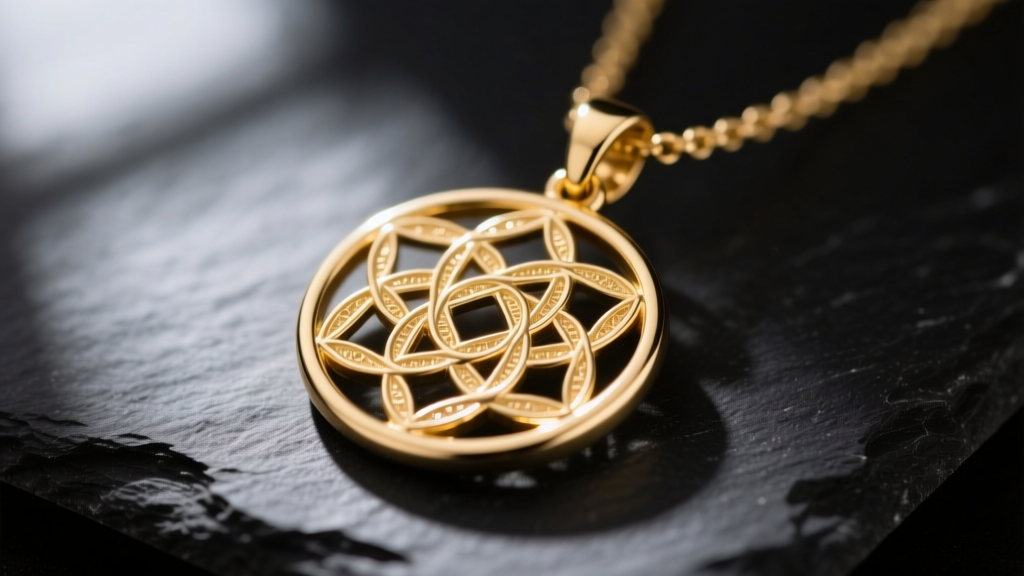
The Sacred Geometry Premium: Why Pricing Varies So Wildly
The flower of life necklace has transcended its niche spiritual roots to become a mainstream jewelry staple. Characterized by its mesmerizing pattern of 19 evenly spaced, overlapping circles, this sacred geometry motif represents the fundamental forms of space and time. However, as its popularity has surged, the market has become heavily saturated. Today, you can find a flower of life necklace priced anywhere from $12 on fast-fashion marketplaces to over $1,500 in high-end boutique displays.
For the discerning buyer, this massive price discrepancy raises a critical question: what are you actually paying for? The value of this specific pendant design is not just in the raw metal weight; it is heavily dictated by geometric precision, manufacturing methodology, and structural integrity. A poorly executed flower of life pendant will feature clunky, disproportionate circles that destroy the mathematical harmony of the design. In this comprehensive 2026 value assessment, we break down the exact material grades, manufacturing techniques, and pricing tiers to help you identify the true sweet spot for your budget.
Material Breakdown: What You Are Actually Paying For
The base material is the most obvious driver of cost, but in sacred geometry jewelry, the metal's hardness and tensile strength also dictate how well the intricate lines will hold up over time. Soft metals can easily bend, warping the perfect circles into ovals.
| Material Grade | Avg. Price Range | Durability & Tarnish | Value Verdict |
|---|---|---|---|
| Zinc Alloy / Brass | $12 - $35 | Low; high tarnish, skin reactivity | Poor long-term value |
| 925 Sterling Silver | $65 - $140 | Medium; tarnishes but easily polished | Excellent everyday value |
| Gold Vermeil (925 Base) | $90 - $180 | High; depends on micron thickness | Great if >2.5 microns |
| Solid 14k / 18k Gold | $450 - $1,200+ | Very High; heirloom durability | Premium investment piece |
The Vermeil Trap: Micron Thickness Matters
When shopping for gold-toned sacred geometry jewelry, buyers frequently fall into the 'vermeil trap.' According to the FTC Jewelry Guides, true gold vermeil must consist of a sterling silver base plated with at least 2.5 microns of gold. Many budget brands sell 'gold plated' pendants that feature a mere 0.5 microns of gold over a brass core. Because the flower of life design features numerous overlapping ridges, these high-friction intersection points will rub against your skin and clothing, causing ultra-thin plating to wear off in a matter of weeks. Always demand a micron thickness specification from the jeweler before purchasing.
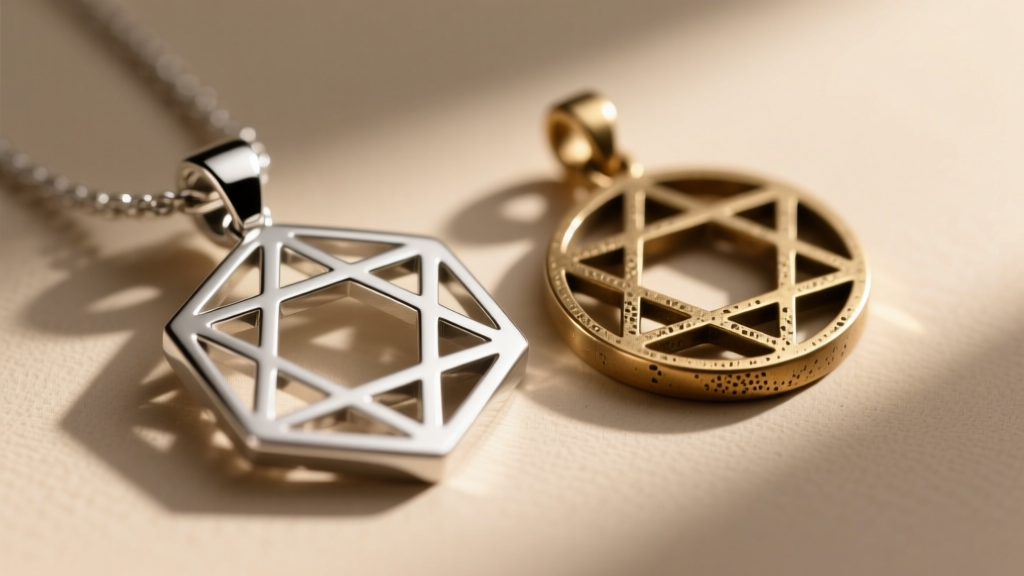
Manufacturing Methods: Cast vs. Laser-Cut vs. Hand-Soldered
This is where the true E-E-A-T (Experience, Expertise, Authoritativeness, and Trustworthiness) of a jewelry brand is tested. The manufacturing method fundamentally alters the visual crispness and the structural price point of a flower of life necklace.
1. Lost-Wax Casting (The Budget Standard)
Casting involves creating a wax model, encasing it in plaster, burning out the wax, and pouring molten metal into the cavity. While excellent for chunky, 3D shapes, casting struggles with the razor-thin, flat intersecting lines of sacred geometry. Cast flower of life pendants often suffer from 'porosity'—tiny microscopic air bubbles that leave the surface looking pitted and dull. Furthermore, the delicate inner petals of the design frequently fill in with excess metal, ruining the geometric transparency.
2. Laser-Cutting (The Value Sweet Spot)
For flat, 2D sacred geometry pendants, laser-cutting from a sheet of precious metal is vastly superior. A high-powered fiber laser slices through 14k gold or sterling silver with microscopic precision, ensuring every circle is mathematically perfect and the intersections are razor-sharp. The pendant is then tumbled to soften the edges. If you are spending between $80 and $200, laser-cutting should be the expected manufacturing standard.
3. Hand-Fabrication and Soldering (The Artisan Pinnacle)
For 3D or domed flower of life necklaces, master jewelers will individually cut, bend, and solder tiny wire rings together. This is a painstaking process that can take dozens of hours. The resulting piece has a distinct, organic warmth and structural rigidity that cast or laser-cut pieces cannot match. Expect to pay a steep artisan premium (usually $800+) for genuine hand-soldered sacred geometry.
Chain Pairing on a Budget: Don't Ruin a $100 Pendant
A common mistake buyers make is investing in a beautifully crafted, laser-cut sterling silver flower of life pendant, only to hang it on a heavy, cheap rope chain. The visual complexity of the 19 overlapping circles requires a chain that provides structural support without competing for visual attention.
- The Ideal Gauge: Opt for a chain between 1.2mm and 1.5mm in thickness. Anything heavier will overpower the delicate geometry; anything thinner risks snapping under the pendant's weight.
- The Best Styles: Box chains and cable chains are optimal. The geometric, square links of a 1.2mm box chain beautifully mirror the mathematical precision of the pendant. Avoid herringbone or snake chains, which kink easily and lack the rigidity to keep the pendant facing forward.
- Bail Sizing: Ensure the pendant's bail (the loop it hangs from) is seamlessly integrated. In cheap cast pieces, the bail is often a thick, clumsy loop that disrupts the top circle of the flower of life pattern. Look for a tapered, soldered bail that preserves the symmetry of the topmost ring.
2026 Market Pricing Tiers: A Buyer's Matrix
To help you assess whether a specific piece is fairly priced, use this matrix based on current 2026 precious metal markets and jewelry manufacturing costs.
Tier 1: Fast Fashion & Dropshippers ($15 - $40)
What you get: Zinc alloys or brass with flash plating (less than 0.5 microns). Cast manufacturing with visible seam lines and filled-in geometric petals. Spring-ring clasps that break easily.
Value Assessment: Avoid. The skin reactivity and rapid tarnishing make this a wasted purchase.
Tier 2: Mid-Market Artisan & Specialized Brands ($75 - $180)
What you get: Solid 925 sterling silver or high-quality vermeil (2.5 to 3.0 microns). Laser-cut precision with crisp, open intersections. Tumbled finishes and secure lobster clasps on 1.2mm box chains.
Value Assessment: The ultimate sweet spot. You are paying for precision engineering and skin-safe materials without the massive markup of luxury brand names.
Tier 3: Fine Jewelry & Luxury ($450 - $1,500+)
What you get: Solid 14k or 18k gold. Hand-finished edges, potentially incorporating micro-pave diamond accents at the circle intersections. Heirloom-quality construction and ethical sourcing certifications from organizations like the Responsible Jewellery Council.
Value Assessment: Justified only if you demand solid gold for daily wear or are seeking a generational keepsake. Be wary of brands charging Tier 3 prices for Tier 2 laser-cut casting methods.
Final Verdict: Where is the Sweet Spot for Value?
When evaluating a flower of life necklace, you are ultimately paying for geometric integrity. The sacred power and aesthetic beauty of this design rely entirely on the perfect, unbroken symmetry of its overlapping rings. Therefore, the best value in 2026 lies in laser-cut 925 sterling silver or heavy 3-micron gold vermeil. These methods guarantee the razor-sharp intersections and open negative space that make the design so captivating, while keeping the price firmly anchored in the $80 to $150 range. Always inspect the intersection points for porosity, verify the gold plating micron thickness, and pair your pendant with a delicate, geometric box chain to let the sacred mathematics truly shine.


