Material Guide: Choosing a 4 Way Friendship Necklace
Compare top metals for a 4 way friendship necklace. Discover durability, allergy safety, and pricing for silver, steel, and titanium puzzle pendants.


The Mechanical Stress of Interlocking Jewelry
When selecting a 4 way friendship necklace, most buyers focus entirely on the aesthetic design or the sentimental value of the four-piece puzzle. However, from a metallurgical and engineering standpoint, a multi-part interlocking pendant is a mechanical joint subjected to repetitive shear stress and friction. Every time you assemble or disassemble the pieces, the interlocking tabs experience micro-abrasions. If the metal is too soft, the tabs will deform; if the alloy is brittle, they will snap. Furthermore, the grooves trap sebum, dead skin cells, and environmental moisture, creating a micro-environment that accelerates corrosion in lower-grade metals.
In this comprehensive 2026 material guide, we break down the exact alloy compositions, Vickers hardness (HV) ratings, and long-term wearability of the most common metals used in 4-way puzzle necklaces. Whether you are buying for a group of active teens or adults with sensitive skin, understanding these properties is crucial for making an investment that lasts.
The Geometry of the Interlock: Jigsaw vs. Dovetail
Before diving into alloys, it is vital to understand how the cut geometry dictates material requirements. Most mass-produced 4 way friendship necklace sets use a standard jigsaw cut. This relies on simple friction and slight metal tension to hold the pieces together. Because the tabs are narrow, they require a metal with high tensile strength to avoid bending.
Premium sets often utilize a dovetail cut or a magnetic-assisted interlock. Dovetail joints distribute shear force across a wider surface area, meaning softer metals like sterling silver can survive longer without deforming. However, dovetail cuts require CNC machining rather than simple die-casting, which increases the baseline manufacturing cost regardless of the metal used.
Material Breakdown: Metallurgy and Wearability
316L Surgical Stainless Steel
316L stainless steel is the workhorse of modern interlocking jewelry. The 'L' stands for low carbon, but the real magic lies in the addition of 2-3% molybdenum to the standard 16-18% chromium and 10-14% nickel alloy. This molybdenum drastically increases resistance to pitting corrosion from chloride ions found in human sweat. With a Vickers hardness of roughly 150-190 HV, 316L steel is hard enough to maintain the structural integrity of puzzle tabs for years.
The Allergy Caveat: While marketed as 'surgical,' 316L steel does contain nickel. The nickel is tightly bound within the austenite crystal lattice, making it safe for the vast majority of people. However, according to the American Academy of Dermatology, individuals with severe nickel contact dermatitis may still experience reactions if their sweat is highly acidic, which can cause microscopic nickel leaching over prolonged skin contact.
925 Sterling Silver
Sterling silver (92.5% pure silver, 7.5% copper) is prized for its bright luster and precious metal status. However, pure silver is exceptionally soft, and even with the copper alloy, 925 silver only achieves a Vickers hardness of about 60-90 HV. In a 4 way friendship necklace, the repetitive friction of sliding puzzle pieces together will slowly wear down the silver tabs, leading to a loose fit after 12 to 18 months of daily assembly.
To combat tarnish caused by the copper content reacting with sulfur in the air, many jewelers apply a rhodium flash plating. While rhodium is hard and tarnish-resistant, it is typically applied at a thickness of just 0.1 to 0.5 microns. On the friction edges of a puzzle pendant, this plating will wear off within weeks, exposing the raw sterling silver underneath. As noted by jewelry supply experts at Rio Grande, rhodium plating is best suited for static surfaces, not mechanical joints.
Grade 23 Titanium with PVD Coating
For the ultimate combination of hypoallergenic safety and extreme durability, Grade 23 Titanium (Ti 6Al-4V) is the gold standard in 2026. Originally developed for aerospace and medical implants, this alloy boasts a Vickers hardness of roughly 330 HV and contains zero nickel. It will never tarnish, rust, or trigger contact dermatitis.
Because raw titanium is a dull gray, it is often colored using Physical Vapor Deposition (PVD). In a vacuum chamber, titanium nitride is bonded to the surface at a molecular level. Unlike electroplating, PVD coating will not flake or peel off the interlocking edges of a puzzle pendant, making it the superior choice for colored 4-way sets (like rose gold or 14k yellow gold finishes).
Zinc Alloy and Brass (The Fast-Fashion Trap)
Ultra-cheap puzzle necklaces (often priced under $10 for the entire 4-piece set) are typically die-cast from Zamak (a zinc-aluminum-magnesium-copper alloy) or stamped from thin brass. Zamak has a low tensile strength and is highly brittle. The puzzle tabs on these necklaces are notorious for snapping off inside the interlocking groove, permanently ruining the set. Furthermore, brass requires heavy lacquer coatings to prevent the copper from oxidizing and turning the wearer's skin green. Once the lacquer chips on the puzzle edges, rapid degradation follows.
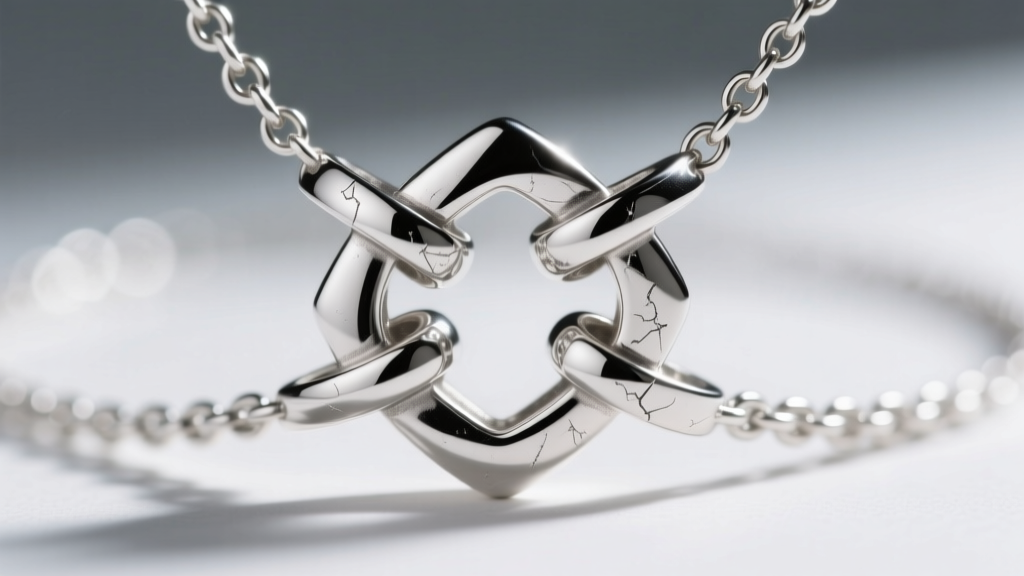
Comparative Data: Metal Properties at a Glance
Use this data table to match the material to your friend group's lifestyle and skin sensitivities.
| Material | Hardness (HV) | Nickel Content | Tarnish Risk | Avg. Price (4-Piece Set) | Best For |
|---|---|---|---|---|---|
| 316L Stainless Steel | 150 - 190 | 10 - 14% | Very Low | $25 - $60 | Active groups, water exposure |
| 925 Sterling Silver | 60 - 90 | 0% | High | $80 - $180 | Occasional wear, precious metal preference |
| Grade 23 Titanium (PVD) | ~330 | 0% | None | $45 - $120 | Hyper-allergic skin, lifetime durability |
| Zinc Alloy (Zamak) | ~80 | Trace/Varies | High (Corrosion) | $5 - $15 | Short-term costume wear only |
Chain Gauge and Clasp Mechanics
The pendant is only half the equation. A 4 way friendship necklace distributes the pendant's weight differently than a single solid charm, often causing the pendant to sit slightly lower or shift more during movement. Therefore, chain selection is critical.
- Chain Gauge: Avoid delicate 0.8mm or 0.9mm chains. The interlocking grooves of the puzzle pieces can easily catch on thin links, pulling the chain apart. Opt for a 1.2mm to 1.5mm cable or rolo chain. These offer a tensile strength capable of supporting the pendant without snapping if the puzzle pieces catch on a sweater.
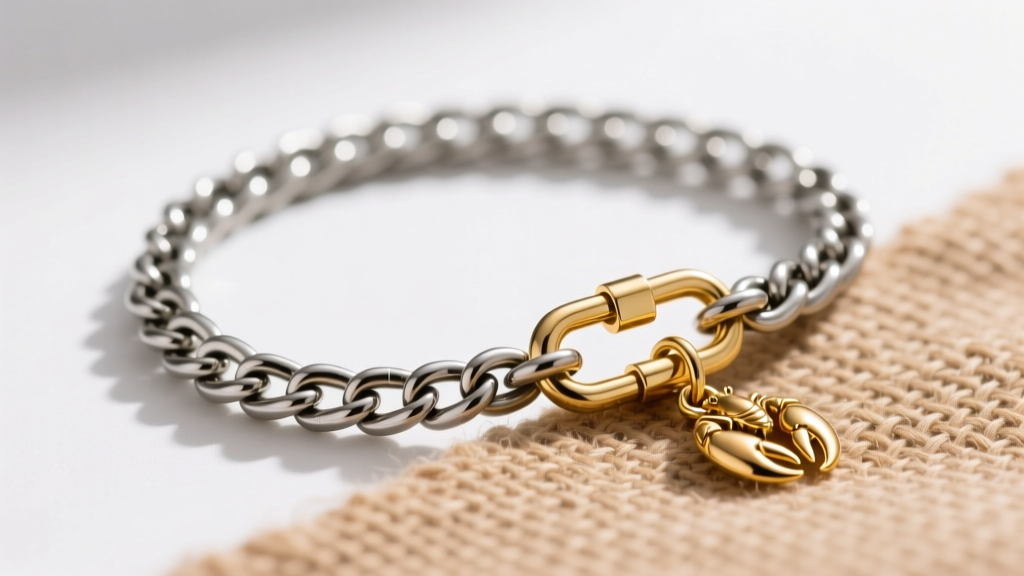
- Clasp Hardware: Spring-ring clasps are notorious for spring fatigue and misalignment. Insist on a lobster clasp (preferably 10mm or 12mm) with a stainless steel internal spring. Lobster clasps provide a secure, positive lock that won't accidentally open when the pendant shifts.
Maintenance Protocols for Puzzle Pendants
Cleaning a 4-piece interlocking necklace requires specific protocols to avoid damaging the mechanical joints.
- Disassemble Before Cleaning: Never clean the pendant while the pieces are locked together. Moisture and cleaning agents will become trapped in the internal seams, leading to hidden corrosion or skin irritation later.
- Ultrasonic Caution: While ultrasonic cleaners are excellent for 316L steel and raw titanium, they can strip oxidized antiquing finishes from sterling silver and degrade cheap epoxy enamels often used to color puzzle pieces.
- The Surfactant Method: The safest and most effective cleaning method for all metals is a warm water bath with a few drops of mild dish soap (a gentle surfactant). Use a soft-bristled baby toothbrush to gently agitate the interlocking grooves, removing trapped sebum and dead skin that cause the puzzle pieces to stick or grind together.
- Drying: Pat dry with a microfiber cloth. Do not air dry, as water spots will form in the microscopic scratches of the puzzle joints.
Final Verdict: Matching Material to Lifestyle
If your friend group plans to wear the 4 way friendship necklace daily, through showers, workouts, and sleep, Grade 23 PVD Titanium or 316L Surgical Steel are the only logical choices. They possess the Vickers hardness required to keep the puzzle tabs rigid and the corrosion resistance to survive constant skin contact. Reserve 925 Sterling Silver for groups who prefer precious metals and are willing to perform regular maintenance, accepting that the mechanical joints will eventually show friction wear. Avoid zinc alloys entirely if you want the sentimental bond to outlast the warranty.


