Garnet Necklace With Diamonds: A Material & Setting Guide
Discover the material properties, garnet varieties, and setting mechanics behind a stunning garnet necklace with diamonds. Expert gemological insights.

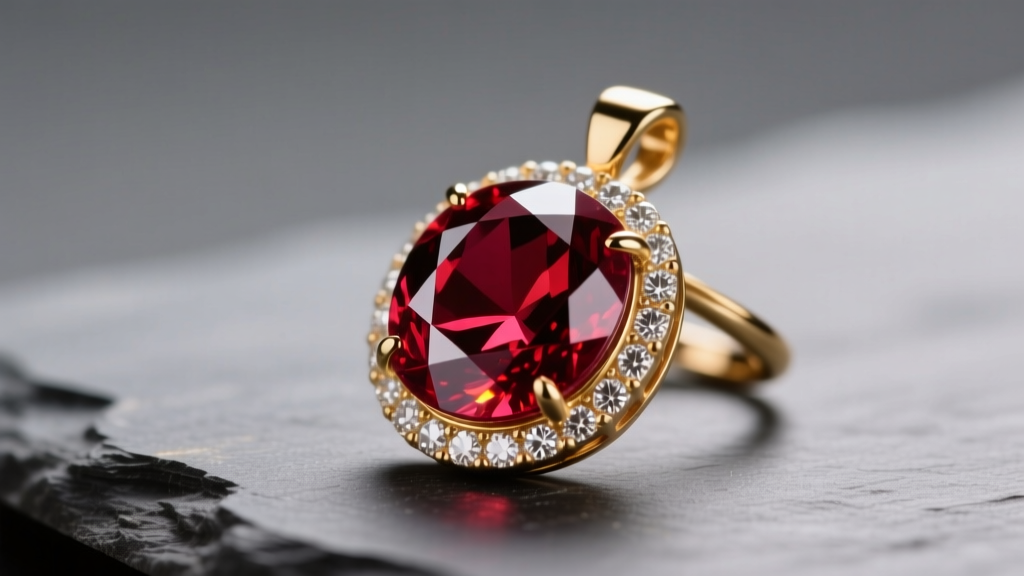
A garnet necklace with diamonds represents one of the most striking intersections of color and brilliance in fine jewelry. However, pairing these two distinct gemstones requires a deep understanding of their contrasting material properties. While diamonds are celebrated for their unmatched hardness, garnets encompass a diverse group of silicate minerals with varying degrees of durability, refractive indices, and chemical sensitivities. For jewelers and collectors alike, successfully combining these stones into a cohesive, wearable piece of neckwear goes far beyond simple aesthetics; it demands precise structural engineering and gemological foresight.
The Mineralogy of Garnet and Diamond Pairings
The most critical factor when designing or purchasing a diamond-accented garnet pendant is the disparity in hardness. On the Mohs scale, diamond sits at an absolute 10, while garnet varieties range from 6.5 to 7.5. This creates a significant risk for a specific failure mode known in the industry as the 'girdle scratch.'
In many mass-produced halo settings, the sharp, unpolished girdle of the surrounding melee diamonds can rest directly against the table or crown facets of the softer central garnet. Over years of daily wear, the microscopic vibrations and thermal expansion of the metal setting cause the diamond girdles to act like tiny saws, eventually abrading and frosting the surface of the garnet. To mitigate this, high-end custom jewelers utilize precision spacing, bezel settings for the center stone, or specialized V-prongs that elevate the diamond halo slightly above the garnet's table plane.
Garnet Varieties: Tsavorite vs. Almandine vs. Demantoid
The term 'garnet' does not refer to a single mineral, but rather a group of closely related silicate minerals. The specific variety of garnet used in your necklace dictates not only its value but also its optical performance and structural vulnerability.
| Garnet Variety | Mohs Hardness | Refractive Index | Typical Price/Carat | Durability & Setting Notes |
|---|---|---|---|---|
| Almandine (Red) | 7.0 - 7.5 | 1.76 - 1.82 | $50 - $250 | Highly durable; tolerates standard prong settings and moderate heat during jewelry repair. |
| Tsavorite (Green) | 7.0 - 7.5 | 1.73 - 1.75 | $1,500 - $8,000+ | Lacks cleavage but can be brittle; requires protective settings and extreme care during retipping. |
| Demantoid (Green) | 6.5 - 7.0 | 1.88 - 1.89 | $2,000 - $10,000+ | High dispersion but softer; prone to chipping at the girdle. Demands bezel or heavy prong protection. |
According to the Gemological Institute of America (GIA), Tsavorite and Demantoid are significantly rarer than their Almandine counterparts. When set in a necklace with diamonds, these rare green garnets require specialized setting mechanics to protect their higher per-carat value and lower relative toughness.
Metal Alloys and Setting Mechanics
The metal chosen for a garnet and diamond necklace must provide adequate tensile strength to secure the stones while complementing their optical properties. For Almandine garnets, 14k gold (58.5% pure gold) offers excellent durability and a lower price point, making it ideal for everyday pendants. However, for high-value Tsavorite or Demantoid garnets, 18k gold or 950 Platinum is strongly recommended.
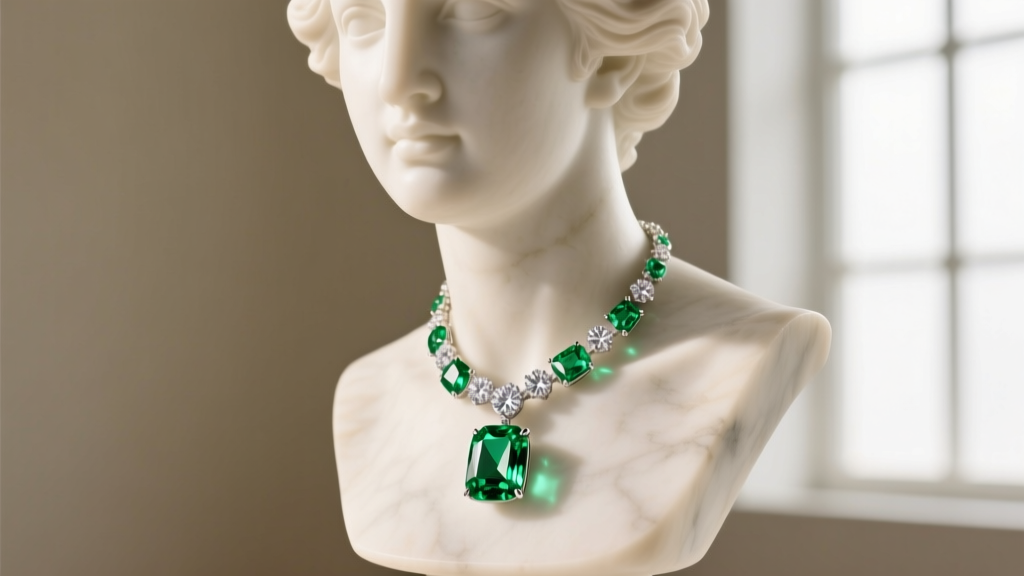
Platinum's density and resistance to wear make it the superior choice for securing softer Demantoid garnets. Unlike white gold, which requires periodic rhodium plating that involves harsh chemicals and ultrasonic cleaning (a risk to certain garnets), platinum maintains its structural integrity and color indefinitely. Furthermore, the prongs used to secure the diamond accents should be drawn from the same metal alloy as the main setting to prevent galvanic corrosion and ensure uniform wear rates over decades of use.
Diamond Accent Grading for Visual Contrast
The visual success of a garnet necklace with diamonds relies heavily on the color grading of the diamond accents. Counterintuitively, the highest color grades are not always the best choice for every garnet variety.
- Almandine Pairings: Deep red Almandine garnets possess a rich, warm body color. Pairing them with near-colorless diamonds in the J-K range introduces a subtle warmth that enhances the red spectrum of the garnet without the premium cost of D-F colorless diamonds.
- Tsavorite Pairings: Tsavorite's vivid, electric green can easily look muddy if surrounded by lower-color diamonds. To maintain the crisp, neon contrast of the green silicate, melee diamonds should be graded in the D-F (colorless) range. The Mindat mineralogical database notes that Tsavorite's color is derived from trace amounts of vanadium and chromium; colorless diamonds prevent any yellow light reflection from muddying these specific trace-element hues.
- Demantoid Pairings: Known for its 'horsetail' inclusions and fiery dispersion, Demantoid requires G-H color diamonds. This range provides enough brightness to match the garnet's high refractive index (1.89) without overpowering its natural fire.
Care, Maintenance, and Ultrasonic Risks
Maintaining a diamond and garnet necklace requires strict adherence to gem-specific cleaning protocols. While diamonds can withstand almost any cleaning method, garnets are highly sensitive to thermal shock and chemical vibrations.
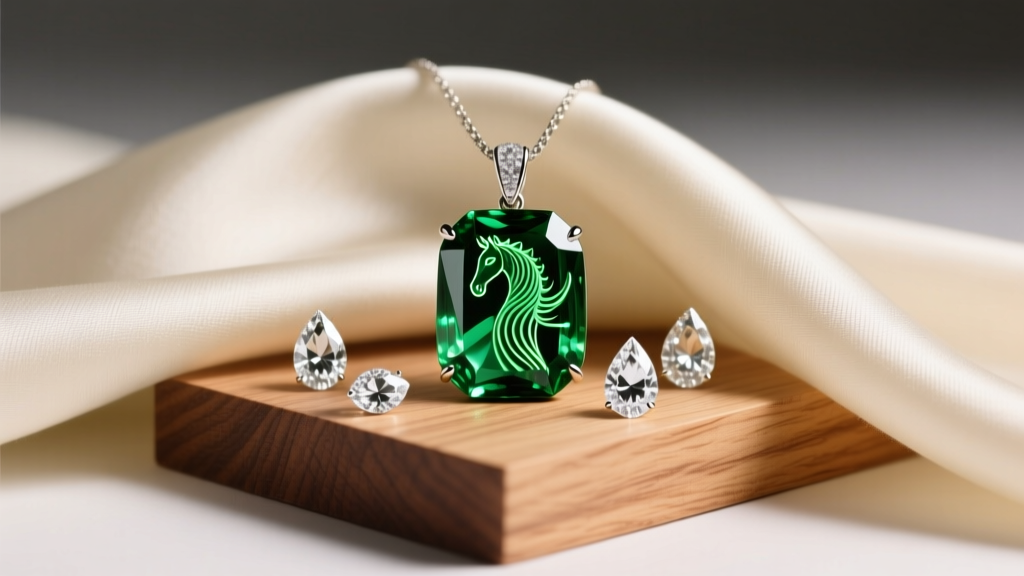
Crucial Warning: Never place a Demantoid garnet necklace in an ultrasonic cleaner. The high-frequency vibrations can cause internal fractures, particularly in stones with natural horsetail inclusions (asbestos-like fibers of chrysotile that are highly prized by collectors but structurally compromise the stone). Similarly, if an Almandine garnet has been fracture-filled with a glass-like resin to improve its clarity—a common treatment in commercial jewelry—the heat and chemicals of an ultrasonic bath or a jeweler's steam cleaner will melt or cloud the filler, permanently damaging the stone.
For safe, routine maintenance, use a soft-bristled brush, lukewarm water, and a mild, non-detergent soap. Dry the necklace with a microfiber cloth, ensuring that no moisture is trapped beneath the diamond halos or the garnet's pavilion, which can lead to localized skin irritation or metal tarnishing over time. By respecting the distinct material properties of both the garnet and the diamonds, you ensure the necklace remains a vibrant, structurally sound heirloom for generations.


