The Necklace Short Summary: Beginner's Guide to Lengths & Styles
Discover the necklace short summary for beginners. Learn chain anatomy, metal grades, exact lengths, and styling rules for everyday wear.

Introduction: Navigating the World of Necklaces
Stepping into the world of fine jewelry can feel overwhelming, especially when faced with endless variations of chains, pendants, and metal grades. If you are looking for the necklace short summary to transition from a novice buyer to an informed collector, you have found the right guide. A necklace is not merely a decorative loop; it is a carefully engineered accessory where gauge thickness, clasp mechanics, and metallurgical purity dictate both its longevity and its aesthetic impact.
In this comprehensive beginner's explainer, we will break down the exact specifications you need to know before making a purchase. From understanding why a 0.8mm chain is a structural liability to decoding the reality of sterling silver tarnish, this guide provides actionable, fluff-free insights for building a durable and stylish jewelry wardrobe.
The Core Anatomy of a Chain Necklace
Before evaluating styles, you must understand the structural components that make up a standard necklace. Every piece consists of three primary elements: the chain links, the jump rings, and the clasp assembly.
Chain Link Profiles and Durability
The link profile determines how the chain drapes, reflects light, and withstands tension. Here are the four most common profiles and their structural realities:
- Cable Chain: The most basic and classic style, featuring uniform oval or round links. While elegant, standard cable chains under 1.2mm are prone to kinking and snapping under the weight of heavy pendants.
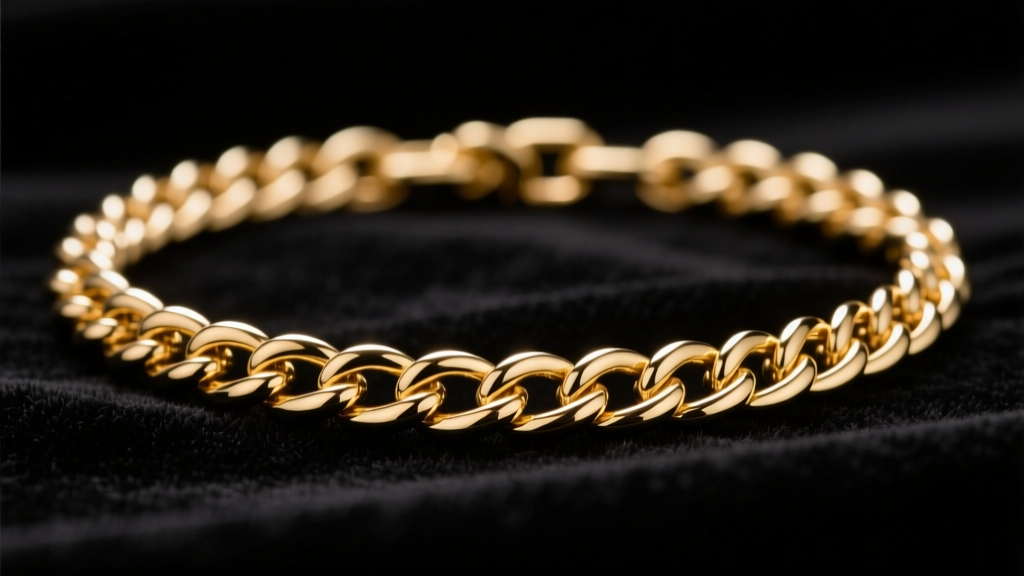
- Curb Chain: Features flattened, interlocking links that sit flush against the skin. A 2.0mm to 3.0mm curb chain offers exceptional tensile strength, making it ideal for heavy medallions or cross pendants.
- Figaro Chain: An alternating pattern of two or three short links followed by one elongated link. Originating in Italy, this style offers a vintage aesthetic but can be difficult to repair if a single link snaps due to the alternating pattern.
- Rope Chain: Twisted links that mimic a woven rope. This profile offers the highest light refraction (sparkle) but is notorious for trapping skin oils and lotions, requiring more frequent ultrasonic cleaning.
The Weakest Link: Jump Rings and Clasps
The jump ring is the small circular wire that connects the chain to the clasp. On mass-produced, budget-friendly necklaces, jump rings are often left unsoldered (meaning there is a visible slit in the metal). Over time, the tension of taking the necklace on and off will pull this slit apart, resulting in a lost pendant or chain. Always inspect the jump ring; for everyday wear, insist on soldered jump rings where the slit has been fused shut with a laser or torch.
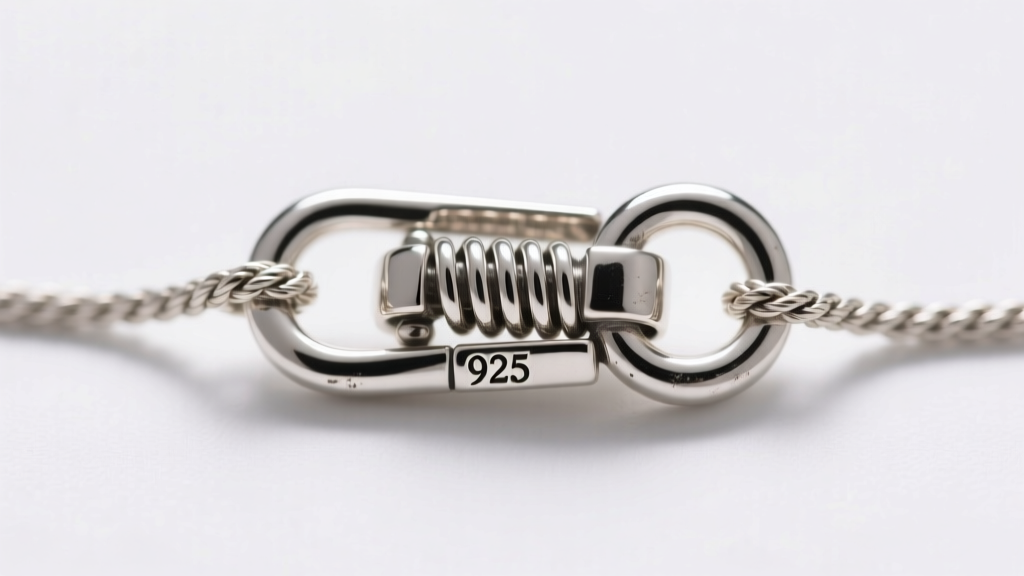
Regarding clasps, the lobster clasp is the industry standard for chains ranging from 1.0mm to 3.0mm. It features an internal spring mechanism that generally withstands about 5,000 to 7,000 actuations before the spring fatigues. For chains thinner than 1.0mm, jewelers typically use a spring ring clasp, which is lighter but significantly more prone to mechanical failure and difficult to operate with one hand.
Decoding Necklace Lengths and Proportions
Choosing the correct length is entirely dependent on your neckline, body proportions, and whether you intend to layer the piece. The jewelry industry relies on standardized length categories, though custom sizing is always recommended for optimal fit.
| Length (Inches) | Industry Name | Placement on Body | Best Suited For |
|---|---|---|---|
| 14" - 16" | Choker / Collar | Wraps tightly around the base of the neck | Open-shoulder tops, V-necks, and evening wear |
| 18" | Princess | Rests on the collarbone | The universal standard; ideal for everyday pendants and crew necks |
| 20" - 24" | Matinee | Falls between the collarbone and the bust | Business attire, high necklines, and layering over sweaters |
| 28" - 36" | Opera | Falls below the bust, often to the sternum | Bohemian styles, turtlenecks, or doubling up as a layered choker |
Expert Sizing Tip: The 18-inch Princess length is the most commonly sold size, but it fits differently depending on neck circumference. If you have a neck circumference larger than 15 inches, an 18-inch chain will sit like a choker. Always measure your neck with a soft tailor's tape and add 2 to 4 inches to find your true baseline length.

Metal Grades: What You Are Actually Paying For
Understanding metallurgy is crucial to avoiding overpriced costume jewelry or pieces that will tarnish within weeks. According to the World Gold Council, pure gold (24k) is far too malleable for daily wear jewelry, which is why it must be alloyed with other metals like copper, zinc, or silver to increase tensile strength.
Gold Karat Breakdown
- 10k Gold (41.7% Pure Gold): The most durable and affordable gold option. It has a slightly paler yellow hue and is highly resistant to scratching and bending. Ideal for heavy chain links.
- 14k Gold (58.5% Pure Gold): The sweet spot for fine jewelry. It offers a rich color, excellent durability, and is generally hypoallergenic, provided it is not alloyed with high amounts of nickel.
- 18k Gold (75.0% Pure Gold): Prized for its deep, saturated yellow color and prestige. However, it is noticeably softer than 14k and will develop a patina (micro-scratches) much faster if worn as a heavy chain.
The Reality of Sterling Silver (925)
Sterling silver is stamped "925" because it consists of 92.5% pure silver and 7.5% copper. That 7.5% copper is the culprit behind silver tarnish. Copper reacts with hydrogen sulfide in the air and the sulfur compounds in human sweat to create silver sulfide—the black film that coats neglected silver chains. To combat this, many high-end manufacturers apply a micro-thin layer of rhodium plating over the silver. Rhodium is a platinum-group metal that provides a brilliant, untarnishable white finish, though it will eventually wear off after 1 to 3 years of friction and require re-plating.
Matching Pendants, Bails, and Necklines
A pendant is only as good as the hardware connecting it to the chain. This connecting piece is called the bail. When buying a pendant separately from a chain, you must verify the bail's inner diameter. A standard 1.5mm cable chain requires a bail with an inner loop of at least 2.0mm to 2.5mm to slide on smoothly without catching. If you prefer thick curb chains (e.g., 4.0mm), you will need to look for "snap-on" bails or hidden bails that clamp over the links rather than threading through them.
Neckline Pairing Rules
- V-Neck: Pair with a Y-necklace or a Princess-length (18") chain featuring a teardrop or geometric pendant that mirrors the V-shape of the fabric.
- Crew Neck: Requires a Matinee-length (20"-24") chain that rests entirely below the collar of the shirt, or a bold, short choker that sits entirely above it. Avoid 18" chains, as they will tangle awkwardly with the shirt's hem.
- Scoop Neck: The most forgiving neckline. Layering a delicate 16" choker with an 18" pendant chain creates a cascading effect that fills the negative space perfectly.
Troubleshooting and Everyday Maintenance
Even the highest-quality necklaces require specific maintenance protocols to preserve their structural integrity and luster. The Gemological Institute of America (GIA) strongly advises against using harsh household chemicals, particularly bleach, which can instantly dissolve the copper alloys in lower-karat gold and permanently pit the surface of sterling silver.
How to Safely Untangle a Micro-Chain
If a delicate 0.8mm or 1.0mm chain becomes knotted, do not pull it. Place the chain on a flat, hard surface and apply a single drop of baby oil or mineral oil directly to the knot. Using two fine sewing needles, gently work the center of the knot outward. The oil eliminates the microscopic friction between the metal links, allowing them to slide apart without warping the metal.
Storage and Tarnish Prevention
Never store your necklaces in the bathroom, where high humidity and aerosolized cosmetics accelerate oxidation. Store silver chains in anti-tarnish cloth pouches infused with silver sulfide-absorbing compounds. For gold chains, hang them vertically on a jewelry tree or lay them flat; tossing multiple chains into a single drawer guarantees a tangled, frustrated mess the next time you attempt to wear them.
By mastering these foundational elements—from clasp mechanics and gauge thicknesses to metallurgical realities—you are no longer just buying jewelry; you are investing in engineered accessories designed to last a lifetime.


