Silver Ball Necklace Anatomy: Metallurgy & Construction Guide
Explore the technical anatomy of a silver ball necklace. We analyze 925 vs Argentium alloys, solid vs hollow construction, and clasp engineering.

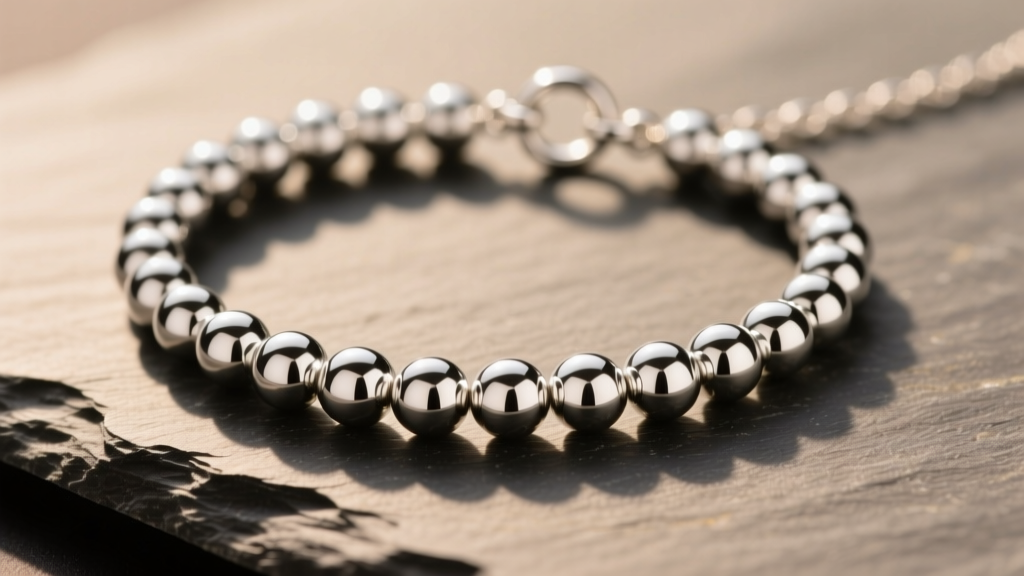
The Metallurgy of the Sphere: 925 Sterling vs. Argentium
When evaluating a high-quality silver ball necklace, the first point of failure or success lies in the base alloy. Pure silver (999 fine) is too soft for functional jewelry, possessing a Vickers hardness (HV) of merely 25. To achieve structural integrity, alloying metals are introduced. The industry standard is 925 Sterling Silver, comprising 92.5% silver and 7.5% copper. This copper addition raises the hardness to approximately 65 HV in an annealed state, and up to 110 HV when work-hardened during manufacturing. However, copper is highly reactive with sulfur and moisture, leading to the formation of copper sulfide—the black tarnish that plagues traditional sterling pieces.
For premium silver ball necklaces, modern metallurgy offers Argentium Silver (typically 935 or 960 grade). By replacing a portion of the copper with germanium, the alloy develops a transparent, self-healing layer of germanium oxide on the surface. This layer acts as a formidable barrier against tarnish-causing pollutants. From a manufacturing standpoint, Argentium also exhibits superior fusion-welding capabilities, meaning the seams on hollow silver spheres or the jump ring attachments can be laser-welded without the visible oxidation firescale that standard sterling requires aggressive pickling to remove.
Manufacturing Techniques: Solid vs. Hollow Spheres
The structural engineering of the spherical bead dictates the necklace's weight, durability, and price point. Manufacturers generally employ one of two primary methods to create the silver balls: solid machining/casting or hollow stamping.
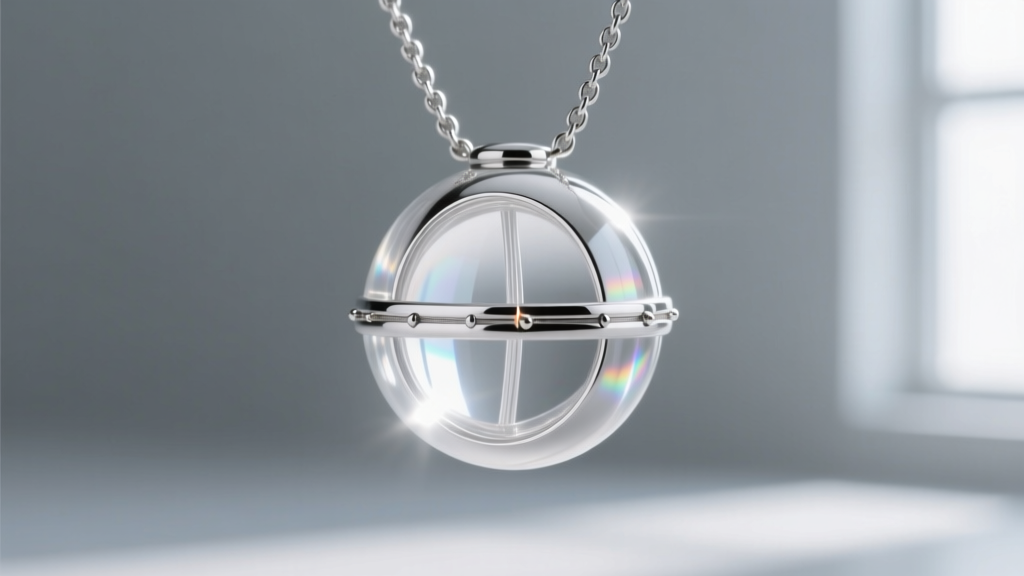
Solid Sphere Production
Solid silver balls are either centrifugally cast from wax models or CNC-machined directly from sterling silver bar stock. CNC machining yields the highest precision, with diameter tolerances held to ±0.02mm. These spheres are incredibly durable and can withstand significant compressive force without deforming. However, the material cost is high, and the weight can cause thinner chains to stretch or suffer from clasp fatigue over time.
Hollow Sphere Engineering
To reduce weight and material costs without sacrificing visual volume, hollow spheres are produced by stamping two precise hemispheres from 0.6mm to 0.8mm gauge silver sheet stock. These hemispheres are then joined at the equator. Historically, this was done with torch soldering, which often left a visible, porous seam. Today, premium manufacturers utilize precision laser welding. The laser's concentrated heat fuses the silver at the seam without melting the surrounding thin-walled structure, resulting in a virtually invisible equator line.
| Feature | Solid CNC-Machined | Hollow Stamped & Laser-Welded |
|---|---|---|
| Weight (for 8mm bead) | ~3.2 grams | ~0.8 grams |
| Diameter Tolerance | ±0.02mm | ±0.10mm |
| Compressive Strength | Extremely High | Low (Prone to denting) |
| Repairability | High (Can be polished/sanded) | Poor (Seam splitting risk) |
| Relative Cost | $$$ | $ |
Chain Integration and Clasp Engineering
A silver ball necklace is only as strong as its weakest mechanical link. The integration of the sphere to the chain, and the chain to the clasp, requires careful consideration of torsion physics. When a necklace is worn, the natural movement of the body introduces continuous twisting forces (torsion) into the chain links.
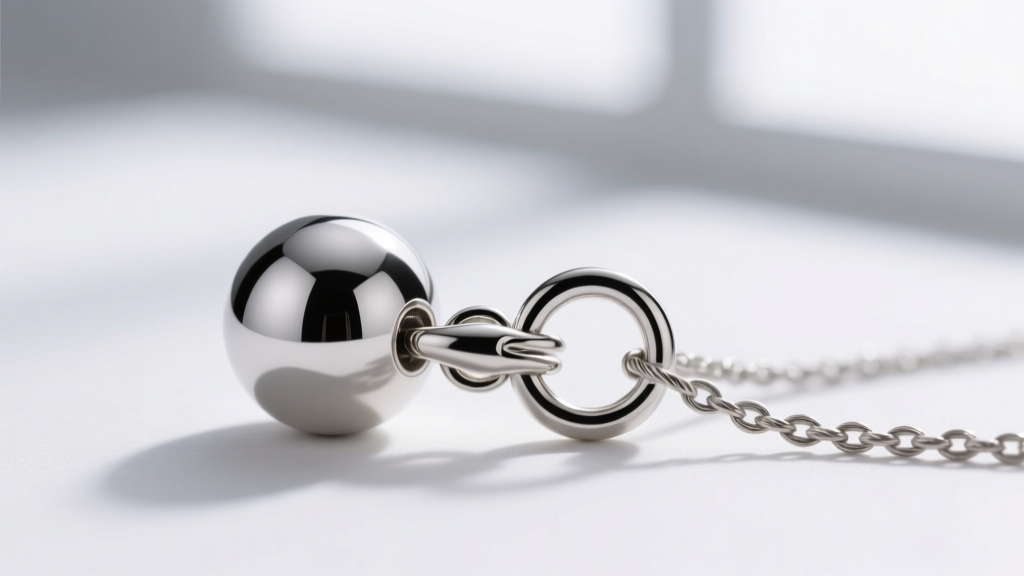
The Swivel Joint Imperative
If the silver ball pendant or the terminal jump rings are soldered rigidly to the chain, torsion fatigue will eventually cause the wire of the chain links to snap. High-end silver ball necklaces utilize a micro-swivel jump ring at the clasp connection. This allows the clasp to rotate 360 degrees independently of the chain, dissipating rotational kinetic energy and extending the lifespan of the cable or box chain by a factor of three or more.
Clasp Mechanics: Spring Ring vs. Lobster Claw
While spring rings are common on lightweight hollow ball necklaces, their internal steel springs are prone to moisture-induced corrosion and mechanical failure. A solid cast sterling silver lobster claw, featuring an integrated tension spring machined from a single piece of beryllium copper or stainless steel, offers vastly superior tensile strength. For a 6mm to 10mm silver ball necklace paired with a 1.2mm to 1.5mm chain, a 12mm lobster claw is the optimal specification for secure retention without overwhelming the visual balance of the piece.
Tolerances, Sizing, and Quality Control
In mass-market jewelry, a "6mm" silver ball might actually range from 5.8mm to 6.3mm due to inconsistent casting shrinkage and poor mold maintenance. In precision jewelry, quality control dictates strict adherence to sizing tolerances. When multiple silver balls are used in a graduated necklace or a station chain, a variance of just 0.15mm between adjacent beads is easily detectable by the human eye and disrupts the visual cadence of the design.
Surface finishing is equally critical. Achieving a true mirror polish on a spherical surface requires multi-stage tumbling. Manufacturers first use ceramic media to deburr the laser-welded seams, followed by stainless steel pin tumbling in a magnetic tumbler to burnish the surface and close the microscopic pores of the silver. Finally, the spheres are hand-polished or robotically buffed using a fine rouge (iron oxide) compound to achieve a reflective surface that resists micro-scratches.
Maintenance, Failure Modes, and Repair Limitations
Understanding the failure modes of a silver ball necklace is essential for both the consumer and the bench jeweler. The most common catastrophic failure for hollow spheres is impact denting. Unlike solid silver, which can be filed and re-polished, a dent in a 0.8mm hollow sphere cannot be easily popped out. Attempting to push the dent out from the inside using a specialized tapered mandrel often results in the laser-welded equator seam splitting open due to the extreme localized stress.
Furthermore, hallmarking regulations dictate how these pieces are stamped for purity. According to the Birmingham Assay Office and international standards, small hollow beads often cannot bear a traditional struck hallmark without risking structural deformation. In these cases, the hallmark is legally applied to the clasp tag or the terminal jump ring, provided the entire piece meets the 925 fineness requirement. Consumers should always inspect the clasp tag for a laser-engraved or struck "925" or "Argentium" stamp to verify the metallurgical claims of the manufacturer.
For routine maintenance, ultrasonic cleaners are generally safe for solid silver ball necklaces. However, for hollow spheres with microscopic seam porosity, ultrasonic cavitation can force cleaning chemicals inside the bead, leading to trapped moisture and internal corrosion that is impossible to rinse out. For these pieces, gentle hand-washing with a mild, phosphate-free surfactant and a microfiber drying cloth remains the safest, most technically sound maintenance protocol.


