Troubleshooting Your Gold Dove Necklace: Repairs and Care
Is your gold dove necklace damaged or dull? Learn expert troubleshooting tips for fixing broken bails, cleaning feather engravings, and restoring gold plating.

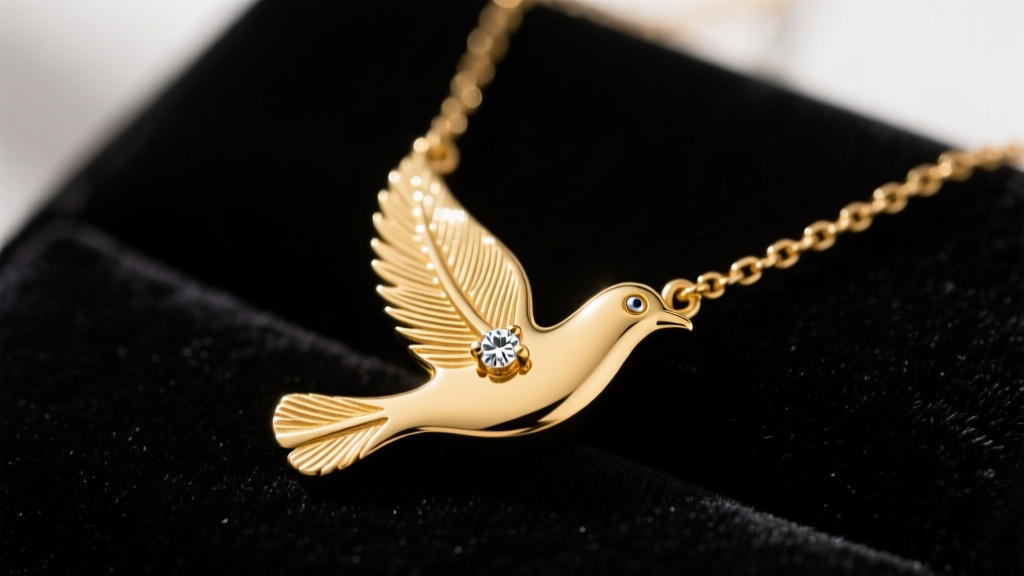
The dove is a timeless symbol of peace, love, and spiritual elevation, making the gold dove necklace a cherished staple in both vintage and contemporary jewelry collections. However, the unique anatomy of a dove pendant—characterized by asymmetrical wings, delicate tail feathers, and intricate milgrain detailing—creates specific structural vulnerabilities. Whether you are dealing with a bent bail, trapped cosmetic grime in the feather engravings, or fading gold plating on a vintage piece, troubleshooting these issues requires a targeted approach.
In this comprehensive 2026 repair and care guide, we break down the most common failure points of dove pendants and provide actionable, metallurgically sound solutions to restore your jewelry to its original glory.
Issue 1: Bail Deformation and Chain Friction
The bail—the loop that connects the pendant to the chain—takes the brunt of the mechanical stress. Because dove pendants are often bottom-heavy or asymmetrical, they swing and pull on the bail at awkward angles. If your pendant frequently flips upside down or the bail feels loose, you are likely dealing with a gauge or friction issue.
The 'Jeweler's File' Effect of Box Chains
One of the most common, yet overlooked, causes of bail failure is chain selection. Popular chain styles like box chains and herringbone chains feature microscopic metallic edges. Over three to five years of daily wear, these edges act like a jeweler's file, slowly grinding away the gold at the top of the bail loop. If you notice your bail thinning, immediately switch to a smooth, round-profile chain, such as a classic cable or wheat chain, to eliminate friction.
Upgrading the Bail Wire Gauge
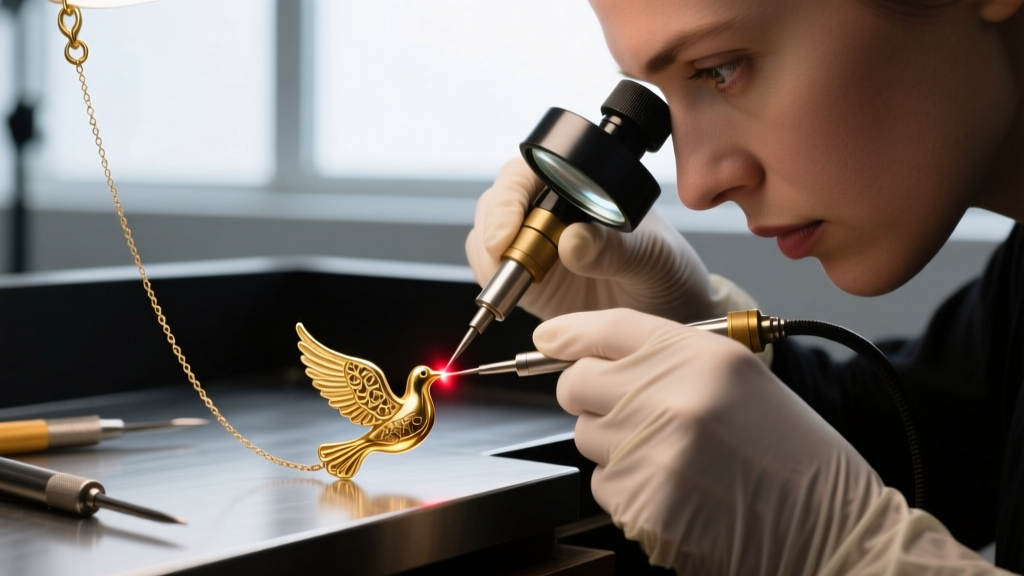
Many mass-produced dove pendants are fitted with 22-gauge jump rings, which are far too soft to support a 3-to-5-gram gold pendant. According to repair standards highlighted by Jewelers of America, a pendant of this weight requires a minimum of 18-gauge or 20-gauge solid wire. If your bail is bent, do not simply bend it back into place; repeated flexing will cause metal fatigue and eventual snapping. Have a master jeweler cut the weakened loop and laser-weld a new, heavier-gauge 14k gold loop in its place.
Issue 2: Grime Buildup in Intricate Feather Details
Dove pendants rely on deep engraving, milgrain edges, and sometimes pave diamond accents to simulate the texture of feathers. Unfortunately, these microscopic crevices are magnets for sebum, lotions, and airborne dust, which can make the gold look dull and brownish over time.
The Ultrasonic Cleaner Warning
While ultrasonic cleaners are fantastic for plain gold chains, they can be disastrous for certain dove pendants. If your vintage dove features pave-set diamonds, the high-frequency vibrations (typically 40kHz) can easily shake loose the delicate prongs. Furthermore, if your dove incorporates inlay materials like turquoise, mother-of-pearl, or enamel, the ultrasonic waves and harsh chemical baths will fracture or cloud the stones.
The Safe DIY Deep-Cleaning Protocol
For a safe, thorough clean that protects both the gold and any accent stones, follow this expert-approved method:
- The Soak: Mix 1 cup of lukewarm water with 3 drops of mild, phosphate-free dish soap (like Dawn) in a glass bowl. Let the pendant soak for exactly 15 minutes to soften the sebum.
- The Agitation: Use an extra-soft baby toothbrush. Brush strictly in the direction of the feather engravings, never in circular motions, which can pack dirt deeper into the milgrain.
- The Rinse: Rinse under a gentle stream of distilled water. Avoid tap water, as heavy minerals can leave microscopic water spots on high-polish gold surfaces.
- The Dry: Pat dry with a lint-free microfiber cloth. Never use paper towels, as wood fibers can scratch 18k gold and catch on tiny prongs.
For more foundational knowledge on precious metal care, the Gemological Institute of America (GIA) offers excellent guidelines on maintaining the luster of fine gold jewelry without damaging secondary materials.
Issue 3: Gold Plating Wear and Discoloration
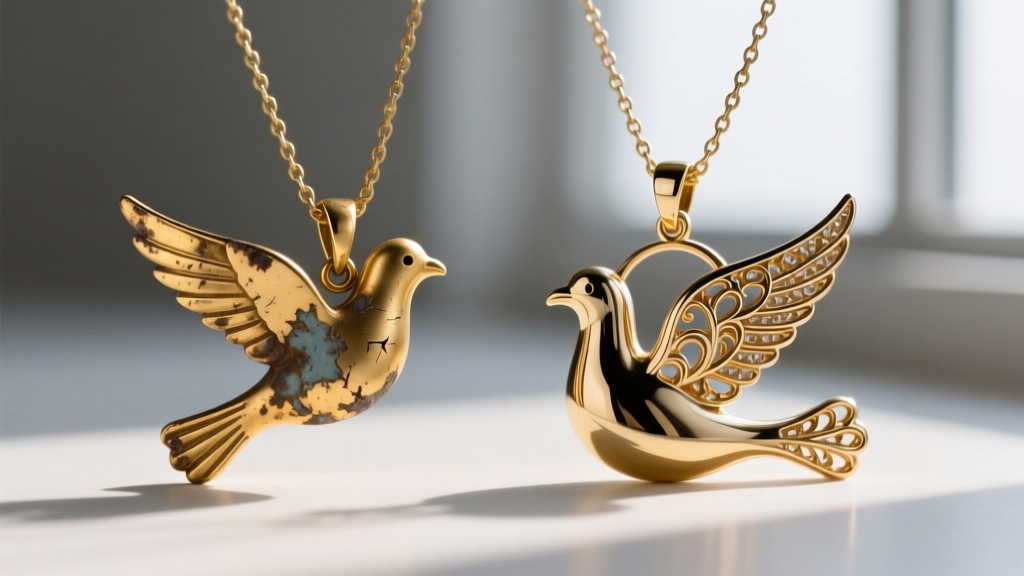
Many mid-century and vintage 'gold' dove necklaces are not solid gold, but rather gold electroplated over a brass or copper base. Over decades of wear, the gold layer (often less than 0.5 microns thick) wears away, particularly on the high-contact areas like the wingtips and the tail feathers, revealing the dark or reddish base metal beneath.
Diagnosing the Base Metal
Inspect the high points of the dove under a 10x jeweler's loupe. If you see a brassy yellow or coppery pink hue bleeding through, the piece is plated. Do not attempt to polish these spots with a silver polishing cloth or abrasive rouge; you will only strip away more of the remaining gold.
The Replating Process
To restore a vintage plated dove necklace, it must be sent to a specialist for re-electroplating. The jeweler will first chemically strip the remaining old gold, polish the brass base, and then submerge it in a gold plating tank. For a durable, long-lasting finish, request a 'heavy vermeil' or 'flash' plating of at least 2.5 microns of 18k or 24k gold. This thickness ensures the pendant can withstand another decade of friction against the skin and clothing without immediate wear-through.
Troubleshooting Matrix: Quick Reference Guide
Use the table below to quickly diagnose your necklace's issue and determine the most cost-effective path to restoration in today's market.
| Issue | Root Cause | DIY Solution | Professional Fix | Est. Cost (2026) |
|---|---|---|---|---|
| Bail Deformation | Soft 18k gold or thin gauge wire | Carefully reshape with nylon-jaw pliers | Replace with 18-gauge 14k solid loop | $45 - $85 |
| Feather Grime | Sebum and cosmetic buildup | Baby toothbrush and mild dish soap soak | Professional steam cleaning | $15 - $30 |
| Wingtip Discoloration | Gold plating wearing through to brass | None (avoid abrasives) | Chemical strip and 2.5-micron replating | $75 - $150 |
| Pendant Flipping | Asymmetrical weight distribution | Switch to a lighter, thinner chain | Add a hidden counterweight bead to chain | $20 - $40 |
When to See a Master Jeweler
While basic cleaning and chain-swapping can be handled at home, structural repairs on a gold dove necklace require professional intervention. If the pendant features a cracked wing, a missing diamond eye, or a bail that has worn more than 50% through, cease wearing the piece immediately. Take it to a certified bench jeweler who utilizes laser welding technology. Traditional torch soldering can easily melt the delicate, thin-cast wings of a dove pendant or cause thermal shock to any inset gemstones, whereas a laser welder offers pinpoint accuracy without heat transfer.
By understanding the specific mechanical and chemical vulnerabilities of dove pendants, you can ensure your necklace remains a pristine, meaningful heirloom for generations to come.


