2026 Gift Guide: The Perfect Pearl and Rhinestone Necklace
Discover the ultimate 2026 gift guide for pearl and rhinestone necklaces. Learn how to match styles, materials, and lengths for every occasion.

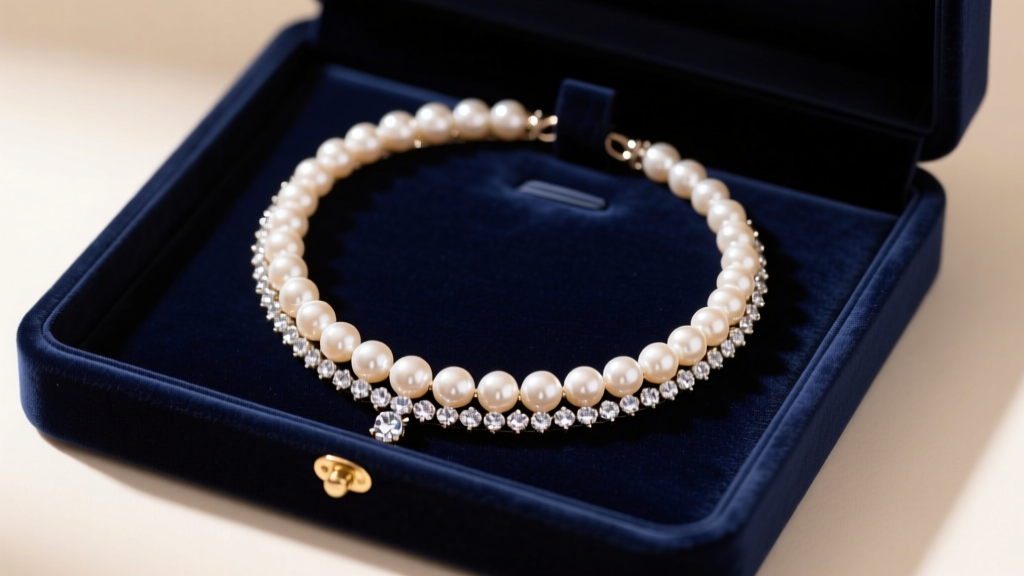
The Renaissance of Mixed Media Elegance
Gifting jewelry is an exercise in translating emotion into tangible form, and few combinations capture the duality of modern elegance quite like a pearl and rhinestone necklace. In 2026, the juxtaposition of organic, luminous pearls with the sharp, geometric brilliance of cut rhinestones has moved from vintage reproduction to the forefront of contemporary demi-fine and fine jewelry design. Whether you are shopping for a bride, a milestone anniversary, or a holiday gala, understanding the material grades, structural integrity, and stylistic nuances of these mixed-media pieces is critical. This comprehensive guide will help you navigate the market, ensuring your gift is both visually stunning and structurally enduring.
Decoding the Materials: What to Look for in 2026
The longevity and visual impact of a pearl and rhinestone necklace depend entirely on the specific grades of materials used. Mass-market fashion jewelry often masks poor components behind clever photography, so knowing what to look for is your first line of defense.
Pearl Grades: Akoya vs. Freshwater
When paired with the high-refraction facets of rhinestones, the pearl must possess enough luster to hold its own. According to the Gemological Institute of America (GIA), luster is the most critical value factor for pearls.
- Akoya Pearls: The gold standard for round, classic strands. High-quality Akoya pearls feature a mirror-like luster and a minimum nacre thickness of 0.4mm. They are the ideal match for precision-cut crystal rhinestones. Expect to pay $300 to $800 for a well-crafted demi-fine Akoya and crystal piece.
- Freshwater Pearls: Modern nucleated freshwater pearls (often called 'Edison' pearls) offer incredible metallic luster at a fraction of the cost. They frequently feature baroque or near-round shapes, which pair beautifully with asymmetrical, avant-garde rhinestone clusters. Price ranges typically sit between $80 and $250.
Rhinestone Quality: Glass vs. Crystal vs. Acrylic
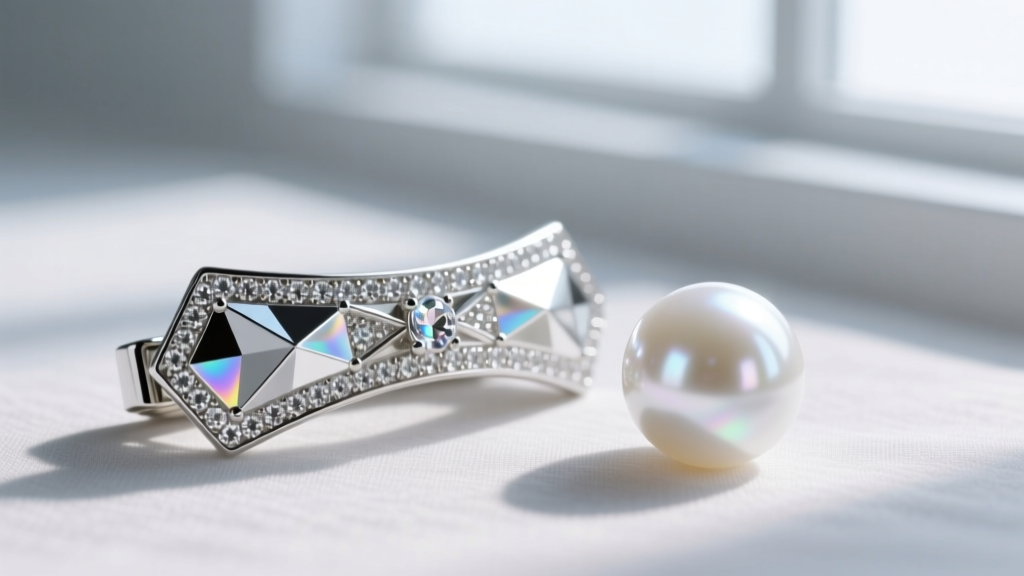
Not all rhinestones are created equal. The term 'rhinestone' originally referred to rock crystals gathered from the Rhine River, but today it encompasses a wide array of simulated gems.
- Lead-Free Crystal (Preciosa/Swarovski): These offer the highest refractive index, mimicking the fire of real diamonds. They are machine-cut with precise facets and are the only acceptable choice for fine or high-end demi-fine gifting.
- Glass with Foil Backing: Often used in vintage-inspired or artisan pieces. The glass is painted with a metallic foil backing to reflect light. While beautiful, they are highly susceptible to moisture damage.
- Acrylic/Resin: Lightweight and inexpensive, but they scratch easily and develop a cloudy patina within months. Avoid these for meaningful gifts.
Occasion Matching: Which Style Fits the Event?
Matching the necklace to the recipient's specific event ensures the piece will be worn and cherished. Use the matrix below to align your purchase with the occasion.
| Occasion | Ideal Length & Style | Material Grade Recommendation | Estimated Price Range |
|---|---|---|---|
| Bridal / Wedding | 16" Princess (Single strand with crystal spacers) | AAA Akoya + Lead-Free Crystal | $350 - $850 |
| Holiday Gala / NYE | 14" Choker (Multi-row or bib style) | Freshwater + Glass Rhinestones | $120 - $250 |
| Milestone Anniversary | 20" Matinee (Graduated pearls with diamond-accented rhinestone clasp) | South Sea or Hanadama Akoya + Preciosa | $1,200 - $3,500+ |
| Prom / Formal Dance | 15" Collar (Y-drop or lariat style) | Near-Round Freshwater + Crystal | $80 - $180 |
The Science of the Drop: Sizing and Necklines
A pearl and rhinestone necklace will only look as good as the neckline it rests upon. The interplay between the rigid sparkle of the rhinestones and the soft curve of the pearls requires precise length selection.
The 16-Inch Princess Length
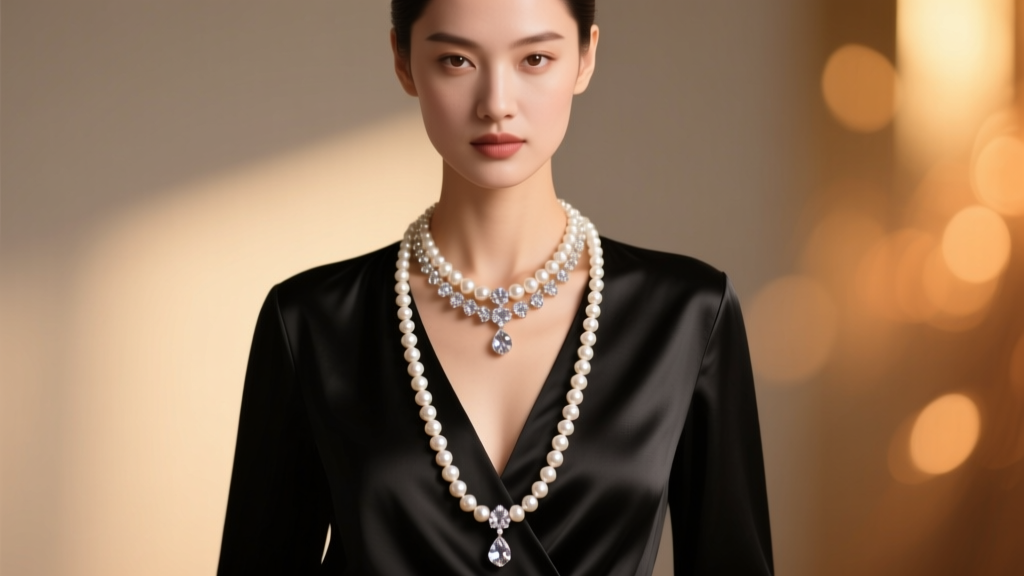
This is the most universally flattering length, resting perfectly on the collarbone. It is the optimal choice for V-neck, sweetheart, and scoop necklines. The downward angle of a V-neck mirrors the visual weight of a pearl and rhinestone pendant or graduated center cluster, drawing the eye elegantly.
The 14-Inch Choker and Collar
Chokers sit snugly against the base of the neck. They are spectacular when paired with boatneck, off-the-shoulder, or strapless gowns. Because the necklace sits high, the rhinestones catch ambient light directly in the giver's line of sight. However, avoid gifting chokers unless you know the recipient's exact neck circumference; a 14-inch choker will be uncomfortably tight on anyone with a neck measurement over 13.5 inches.
The 20 to 24-Inch Matinee
Matinee lengths fall between the collarbone and the bust. They are the secret weapon for high-neck garments, turtlenecks, and tailored blazers. A matinee pearl and rhinestone necklace breaks up the solid block of fabric, adding a necessary focal point to conservative or business-formal attire.
Structural Integrity: Failure Modes and Craftsmanship
When evaluating a pearl and rhinestone necklace as a gift, you must look past the aesthetics and examine the engineering. Mixed-media jewelry presents unique structural challenges that cheap manufacturers frequently ignore.
Adhesive Degradation
The most common failure point in these necklaces is the adhesive bond securing the rhinestones to their settings or the pearl caps. Mass-produced pieces often use cyanoacrylate (super glue), which becomes brittle and degrades when exposed to the natural pH of human sweat or the alcohol in perfumes. High-end demi-fine and fine jewelers utilize two-part jeweler's epoxy or UV-cured resins, which offer a flexible, waterproof bond that withstands decades of wear. If you can see crusty white residue around the base of the rhinestones, put the piece back on the shelf.
Foil Oxidation and Moisture Breach
Chaton-cut glass rhinestones rely on a delicate silver or gold foil backing to create their mirror-like refraction. If moisture breaches the setting, this foil oxidizes and turns black, effectively 'killing' the stone's sparkle. Always check that the rhinestones are set in closed-back bezels or feature a protective lacquer coating over the foil. For the Jewelers of America certified retailers, proper sealing of foil-backed stones is a standard quality control metric.
Silk Thread Stretching
If the pearls and rhinestones are strung rather than wire-wrapped, they should be knotted on pure silk thread. Silk provides the necessary flexibility and prevents the beads from rubbing against one another. However, silk stretches over time. A high-quality gift should include a note about professional restringing every 2 to 3 years if worn weekly.
Final Gifting Tips for the Modern Buyer
Presentation and provenance elevate a beautiful necklace into an unforgettable gift. When purchasing your pearl and rhinestone necklace, insist on a certificate of authenticity that details the pearl origin, nacre thickness, and the specific type of crystal or glass used for the rhinestones.
Finally, package the necklace in an anti-tarnish-lined box. Rhinestone settings—particularly those made of sterling silver or brass alloys—can oxidize in high-humidity environments. Including a small silica gel packet and a treated anti-tarnish strip inside the gift box demonstrates a level of care and foresight that matches the brilliance of the necklace itself.


