2026 Gift Guide: Pendants and the Perfect Necklace Jump Ring
Discover our 2026 gift guide to pendant necklaces. Learn how choosing the right necklace jump ring ensures your precious jewelry gift stays secure.

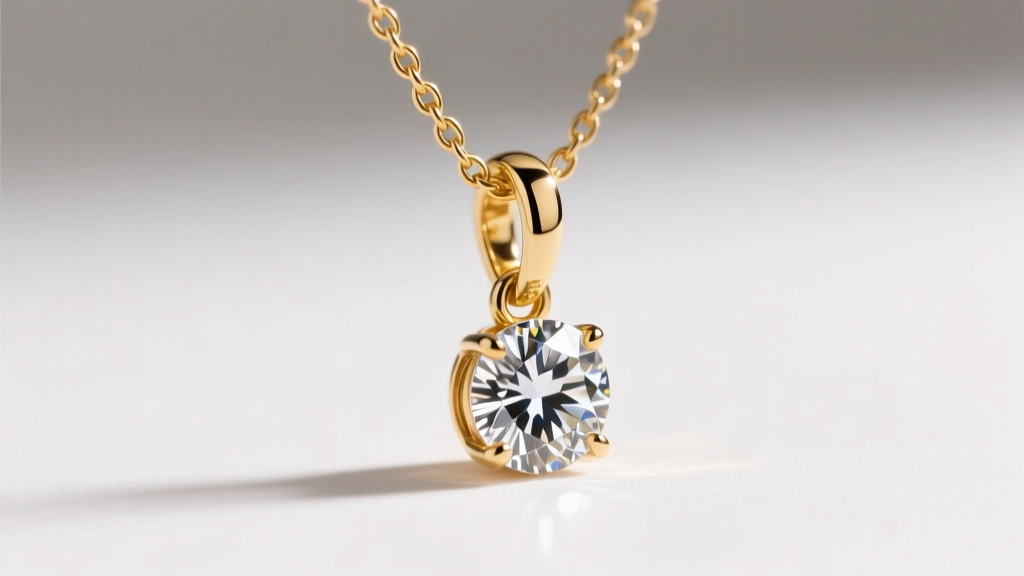
The Hidden Hero of Jewelry Gifting: Why the Necklace Jump Ring Matters
When selecting a meaningful jewelry gift in 2026, buyers often obsess over the 4Cs of a diamond, the karat weight of the gold, or the intricate design of a pendant bail. Yet, the most critical component of the entire assembly is frequently an afterthought: the necklace jump ring. This tiny metal loop is the sole physical link between a precious heirloom and the chain that secures it to the wearer. According to repair data from the Jewelers of America, nearly 70% of lost pendants are the direct result of jump ring failure, metal fatigue, or improper gauge sizing.
A high-quality necklace jump ring is not merely a functional finding; it is an insurance policy for your gift. Whether you are gifting a heavy gemstone pendant for an anniversary or a delicate initial charm for a graduation, understanding the metallurgy, gauge thickness, and closure mechanisms of jump rings will ensure your present remains safely around your loved one’s neck for decades.
2026 Occasion Guide: Matching Security to Lifestyle
The ideal jump ring configuration depends entirely on the recipient’s lifestyle and the occasion for the gift. Here is how to match the hardware to the wearer.
The Anniversary Heirloom: Seamless Soldered Rings
For high-value gifts like diamond solitaires or sapphire pendants, an open jump ring is an unacceptable risk. You must opt for a soldered jump ring. In this process, the ring is formed, and the seam is fused using a laser welder or precision torch, creating a continuous, unbroken circle of metal. Laser welding is particularly vital for 18k gold and platinum, as it prevents heat damage to nearby gemstones while providing maximum tensile strength. If the chain breaks, a soldered ring ensures the pendant stays attached to the broken chain rather than slipping off and disappearing.
The Active Everyday Wearer: Split Rings
If your recipient is an active professional, a fitness enthusiast, or someone who frequently wears layered clothing that can snag on jewelry, a split ring is the ultimate utilitarian choice. Resembling a miniature keychain ring, the split ring requires the chain and pendant to be threaded through a double loop of metal. This design completely eliminates the risk of the ring pulling open under lateral tension. While slightly bulkier than a seamless ring, a well-polished 14k gold split ring offers unparalleled peace of mind for everyday wear.
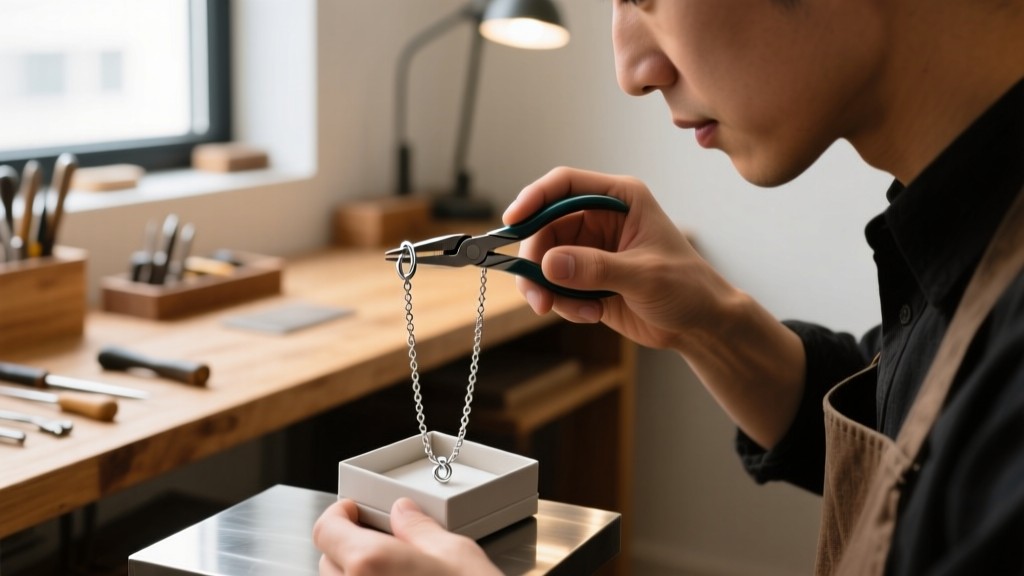
The Interchangeable Charm Lover: Lobster & Open Rings
For the fashion-forward recipient who loves to swap pendants to match different necklines, an unsoldered open jump ring paired with a small lobster clasp is the most practical gift. However, the open ring must be properly work-hardened and closed with a flush seam to prevent the delicate clasp from slipping through the gap.
Technical Specifications: Gauge, Diameter, and Metallurgy
To make an informed purchase, you must speak the language of jewelry findings. The strength of a necklace jump ring is dictated by its wire gauge (thickness) and its inner diameter (ID). According to manufacturing standards outlined by Rio Grande, a leading jewelry supplier, selecting the wrong gauge for a specific chain can lead to catastrophic failure.
| Wire Gauge (AWG) | Thickness (mm) | Best Use Case | Tensile Risk Profile |
|---|---|---|---|
| 20-Gauge | 0.81mm | Ultra-finite chains, lightweight pearl enhancers | High risk of pulling apart if snagged |
| 18-Gauge | 1.02mm | Standard cable/box chains, 1-carat diamond pendants | Moderate; requires proper flush closure |
| 16-Gauge | 1.29mm | Heavy gemstone pendants, thick rope chains | Low; highly resistant to lateral pulling |
| 14-Gauge | 1.63mm | Statement pieces, heavy gold medallions | Very Low; virtually indestructible by hand |
The Diameter Dilemma: The inner diameter (ID) of the jump ring must be large enough to allow the pendant bail to move freely, preventing metal-on-metal friction wear. However, if the ID is too large, the end-link of the chain can slip through the gap, especially if the ring is unsoldered. A 5mm outer diameter (OD) ring made from 18-gauge wire yields a 3mm ID, which is the industry standard for most commercial pendant bails.
Material Matching: Avoiding Galvanic Corrosion
A frequently overlooked aspect of gifting custom or semi-custom necklaces is material compatibility. If you are pairing an 18k yellow gold pendant with a sterling silver chain, the necklace jump ring becomes the bridge between two dissimilar metals. In the presence of an electrolyte—such as human sweat or ocean water—galvanic corrosion occurs. The less noble metal (sterling silver) will act as an anode and corrode rapidly at the point of contact, eventually causing the jump ring to become brittle and snap.
Expert Rule of Thumb: Always match the metal alloy of the necklace jump ring to the pendant bail, not necessarily the chain. If the pendant is 14k gold, use a 14k gold jump ring, even if the chain is gold vermeil or plated brass, to protect the structural integrity of the heaviest component.
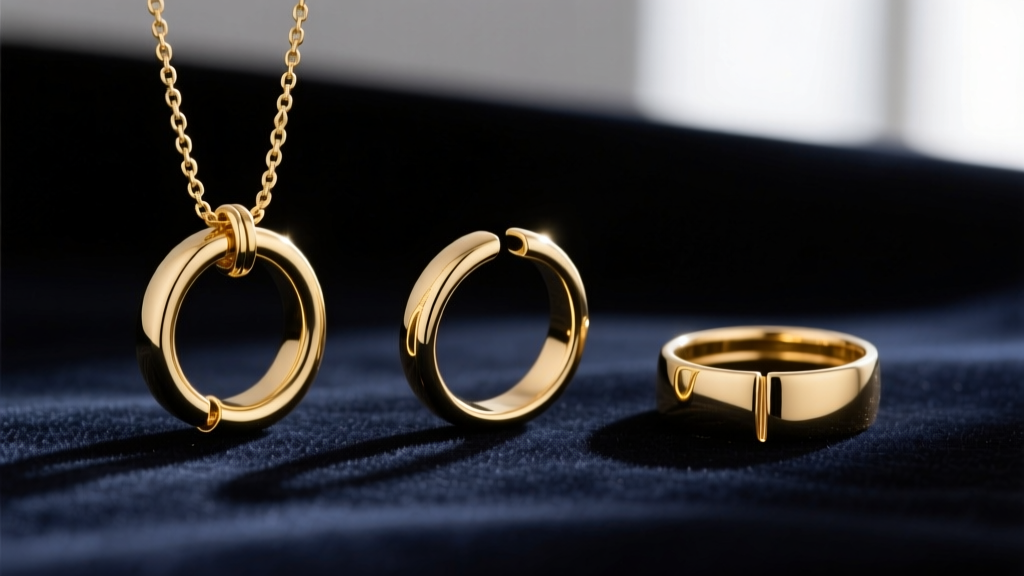
The Gifter’s Inspection Checklist
Before wrapping your jewelry gift, perform this rigorous 4-point inspection on the necklace jump ring to ensure it meets professional standards:
- The Flush Seam Test: If the ring is unsoldered, run your fingernail over the closure seam. It should be completely invisible and smooth. If you feel a catch, the ring was pinched closed rather than twisted closed, leaving a micro-gap that will eventually snag on silk or knitwear.
- The Spring-Back Check: Look at the ring from a side profile. It should be a perfect circle. If it looks slightly oval, the jeweler suffered from 'spring-back'—a metallurgical reaction where the metal remembers its original straight wire form and warps the circle, weakening the structural integrity.
- The Bail Clearance Test: Ensure the pendant bail can rotate a full 180 degrees on the jump ring without binding. Friction wear from a tight jump ring will eventually saw through the bail of the pendant.
- The Polishing Verification: The interior of the jump ring should be polished. Rough, unpolished interiors act like micro-files, slowly wearing down the chain’s end-link over years of movement.
Expert Troubleshooting & Maintenance Advice
Even the finest jewelry requires maintenance. Advise your gift recipient to have the necklace jump ring inspected by a professional jeweler every 18 to 24 months. For unsoldered rings, the jeweler will check for metal fatigue and work-harden the silver or gold by slightly twisting the ring to align the metal grains, restoring its tension and strength. For soldered rings, they will check the laser weld under magnification to ensure no micro-fractures have developed from repetitive stress.
By paying attention to the necklace jump ring, you elevate your gift from a simple accessory to a masterfully engineered heirloom. In 2026, true luxury is defined not just by the brilliance of the stones, but by the uncompromising security of the hardware that holds them close to the heart. For further education on precious metal durability and jewelry care, consult the comprehensive guides provided by the Gemological Institute of America (GIA).


