Troubleshooting a Box Necklace Holder to Stop Chain Tangles
Is your jewelry getting ruined in storage? Learn how to troubleshoot a box necklace holder to prevent chain tangles, clasp damage, and metal tarnish.

The Hidden Physics of Chain Entanglement in Storage
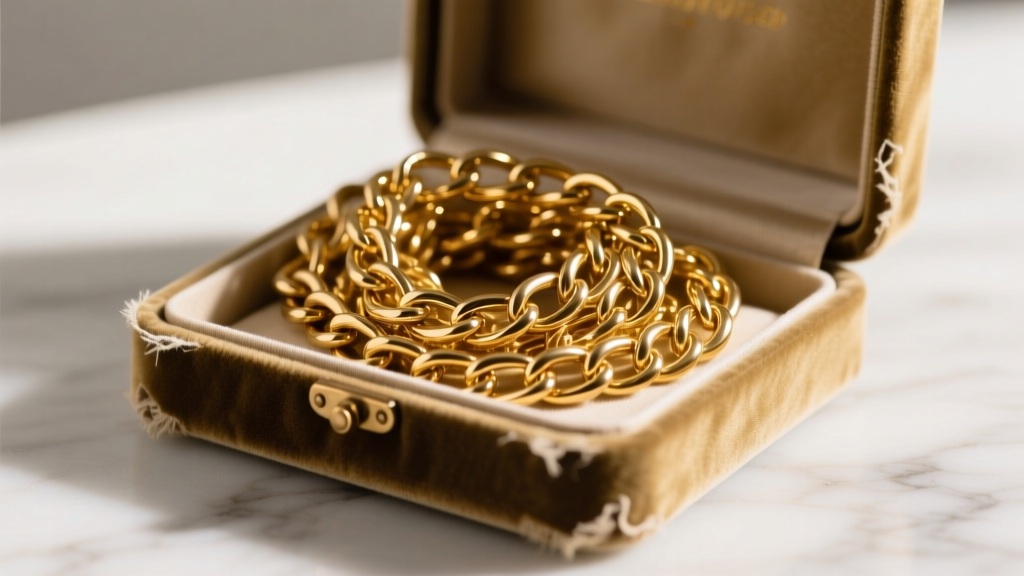
There are few things more frustrating in jewelry care than opening a beautifully crafted case only to find a bird's nest of precious metal. While many collectors blame the chain design, the true culprit is often the storage environment itself. When troubleshooting a box necklace holder, we must first understand the physics of entanglement. According to studies on knot theory, when a flexible string is confined in a space smaller than its contour length and subjected to minor kinetic agitation (like a drawer opening or a box being moved), it will spontaneously form complex knots. This is known as the 'random walk' model of tangling.
If your current storage setup allows the chain to pool, slide, or compress, you are practically guaranteeing a tangle. Furthermore, improper storage accelerates mechanical wear on delicate links and exposes reactive metals to corrosive off-gassing. As of 2026, modern archival standards demand that we treat jewelry storage not merely as a display method, but as a micro-climate preservation system. Below, we break down exactly how to diagnose, troubleshoot, and retrofit your storage solutions to protect your investment.
Diagnosing Common Box Necklace Holder Failures
Before you can fix the problem, you must identify the specific failure mode of your current setup. Most commercial jewelry boxes suffer from three critical engineering flaws.
Failure 1: Tension Roll Degradation and Slippage
The primary mechanism designed to prevent tangling is the tension roll—the padded cylinder at the top of the box where the chain is anchored. Most mass-produced boxes use cheap polyurethane (PU) foam wrapped in synthetic velvet. Over time, PU foam degrades, losing its elasticity and becoming brittle. When the foam compresses permanently, it loses the friction required to hold the chain's weight, causing the necklace to slip down and pool at the bottom of the box. Worse, degrading PU foam releases plasticizers that can leave an oily, damaging residue on porous gemstones like pearls and opals.
Failure 2: Clasp Snagging on Directional Pile
Velvet and suede linings have a 'pile' or directional grain. If the lining is applied without considering the orientation of this grain, the microscopic hooks in the fabric will catch on the open mechanisms of spring ring and lobster clasps. Every time you pull the necklace out, you risk bending the delicate internal spring or warping the clasp jaw, eventually leading to catastrophic failure and lost jewelry.
Failure 3: Accelerated Tarnishing from Off-Gassing
Tarnish is not just a product of ambient humidity; it is heavily influenced by the materials touching your jewelry. The Smithsonian Museum Conservation Institute warns that many commercial jewelry boxes utilize adhesives, PVC-based faux leathers, and acidic cardboard substrates that emit sulfur dioxide and volatile organic compounds (VOCs). In an enclosed box necklace holder, these gases become trapped, creating a highly corrosive micro-environment that turns sterling silver black and degrades copper alloys within weeks.
Material Breakdown: What Your Lining is Doing to Your Chains
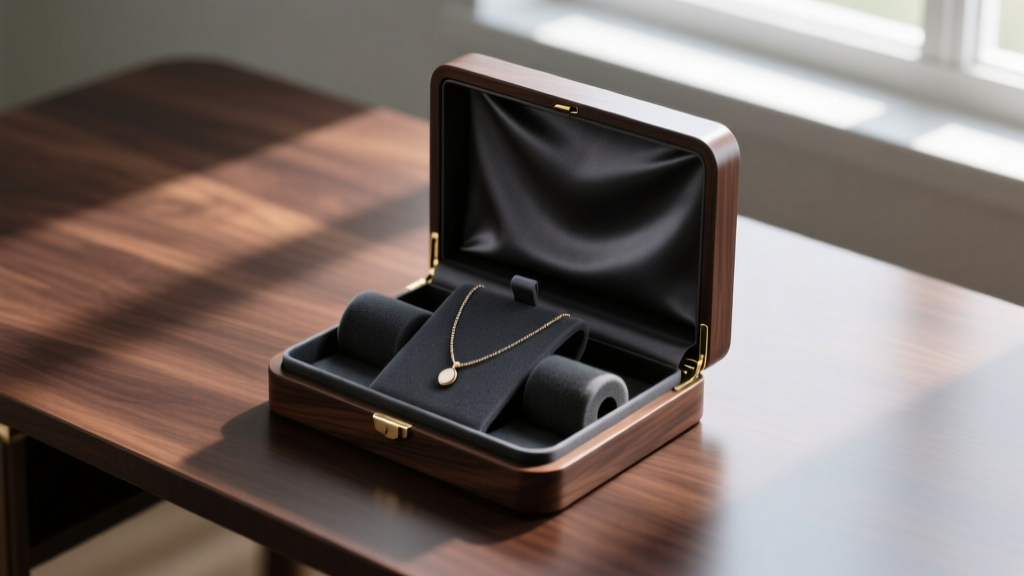
Upgrading or retrofitting your box requires a strict understanding of material chemistry. The Victoria and Albert Museum (V&A) recommends using only inert, archival-quality materials for long-term textile and metal storage. Below is a comparison of common lining and insert materials used in jewelry storage.
| Material | Chemical Stability | Tarnish Risk | Best Application |
|---|---|---|---|
| Standard Polyurethane Foam | Poor (Off-gasses plasticizers) | High | Short-term retail display only |
| Cross-Linked Polyethylene (PE) Foam | Excellent (Inert, closed-cell) | None | Archival tension rolls and inserts |
| Standard Cotton Velvet | Moderate (Holds moisture) | Moderate | Display boxes in climate-controlled rooms |
| Pacific Silvercloth / Treated Flannel | High (Embedded silver particles) | Prevents Tarnish | Lining for silver and copper alloys |
| Acid-Free Unbuffered Tissue | Excellent | None | Wrapping pearls, opals, and porous stones |
Step-by-Step Troubleshooting & DIY Modifications
You do not necessarily need to throw away a beautifully crafted wooden box if the interior mechanics are failing. With a few archival-grade supplies, you can retrofit almost any box necklace holder to museum standards.
Step 1: The Tension Roll Retrofit
If your necklaces are slipping, replace the degrading foam. Purchase a sheet of 1/2-inch thick, cross-linked polyethylene (PE) foam (often sold under the brand name Volara). Cut a strip to the exact width of your box's interior. Roll it tightly and secure it with archival-quality linen tape—never use standard tape or rubber bands, which contain sulfur and acids. This new PE roll will provide consistent, inert tension without off-gassing.
Step 2: Installing Silicone Clasp Anchors
To prevent clasp snagging and provide a secondary anchor point, install a silicone clasp anchor. You can purchase small, adhesive-backed silicone jewelry dots. Place one near the top hinge and one at the bottom base of the box. Press the lobster clasp or spring ring firmly into the silicone. The high-friction, non-reactive nature of medical-grade silicone will hold the clasp securely in place, keeping the chain under perfect tension and preventing the clasp mechanism from catching on the fabric lining.
Step 3: Neutralizing the Micro-Climate
To combat off-gassing and ambient humidity, introduce Vapor Phase Corrosion Inhibitors (VpCI). Cut a 3M Anti-Tarnish strip to size and adhere it to the inside of the box lid, ensuring it does not physically touch the metal chains. These strips absorb sulfur compounds and neutralize the air inside the box. According to the Gemological Institute of America (GIA), managing the immediate storage environment is the most effective way to prevent silver sulfide formation without resorting to harsh, abrasive chemical polishes that strip metal from your chains over time.
Sizing and Drop Length Calculations
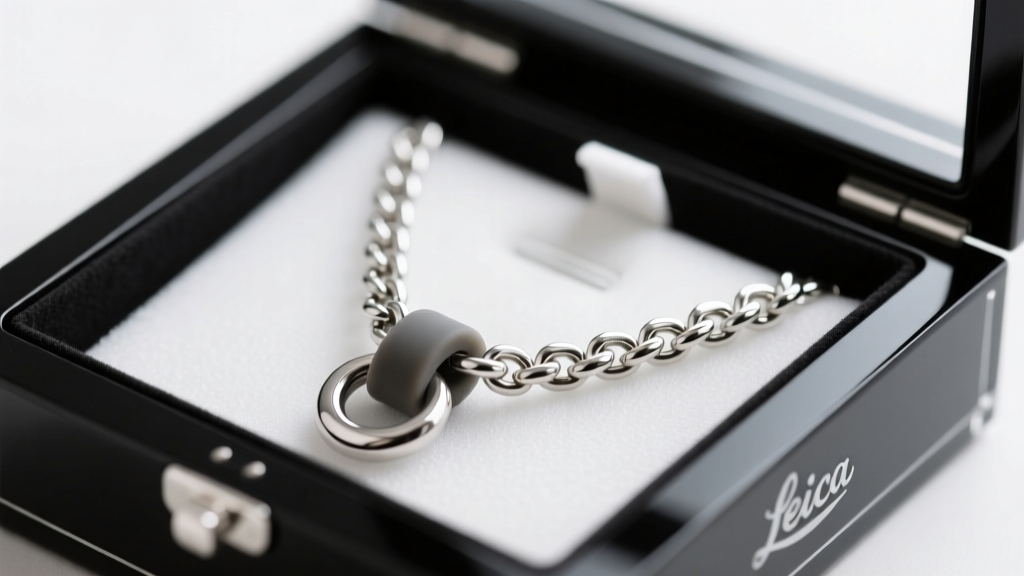
A frequent cause of tangling is a mismatch between the necklace's drop length and the box's physical dimensions. If a 24-inch opera-length chain is forced into a box designed for a 16-inch choker, the excess chain has nowhere to go but to pool and knot at the bottom.
Use this simple formula to determine if your box necklace holder is appropriately sized:
- Minimum Box Width: (Necklace Drop Length in inches) × 0.65. For example, an 18-inch princess necklace requires a box interior width of at least 11.7 inches to lay flat without excessive compression.
- Minimum Box Depth: The depth of the box (from the lid to the base) must accommodate the largest pendant or clasp assembly plus 0.5 inches of clearance to prevent the lid from crushing the components when closed.
If your box fails these dimensional requirements, you must transition to a hanging storage method or a larger, flat archival tray rather than forcing the chain into an undersized compartment.
When to Upgrade: Signs Your Current Holder is Beyond Repair
While DIY modifications can solve many issues, some boxes suffer from terminal structural or chemical failures. It is time to replace your box necklace holder entirely if you observe the following:
- Flaking or Sticky Linings: If the interior fabric is peeling away or feels tacky, the underlying adhesives are breaking down and will permanently ruin your jewelry finishes.
- Warping of the Outer Shell: Wood or MDF boxes that have warped due to humidity fluctuations will no longer close flush, breaking the micro-climate seal and allowing dust and moisture to enter.
- Deep Sulfide Staining: If the interior lining itself has turned black or yellow, it has absorbed heavy sulfur compounds and is now actively tarnishing your jewelry rather than protecting it.
By understanding the mechanics of entanglement and the chemistry of storage materials, you can transform a frustrating, damaging box necklace holder into a secure, archival-grade preservation system. Protecting your necklaces requires looking past the aesthetic exterior of the box and critically evaluating the functional engineering within.


