Beginner's Guide to Buying a Rose Gold Necklace with Heart
Discover how to choose the perfect rose gold necklace with heart. Learn about karats, chain styles, and care tips in this beginner-friendly guide.

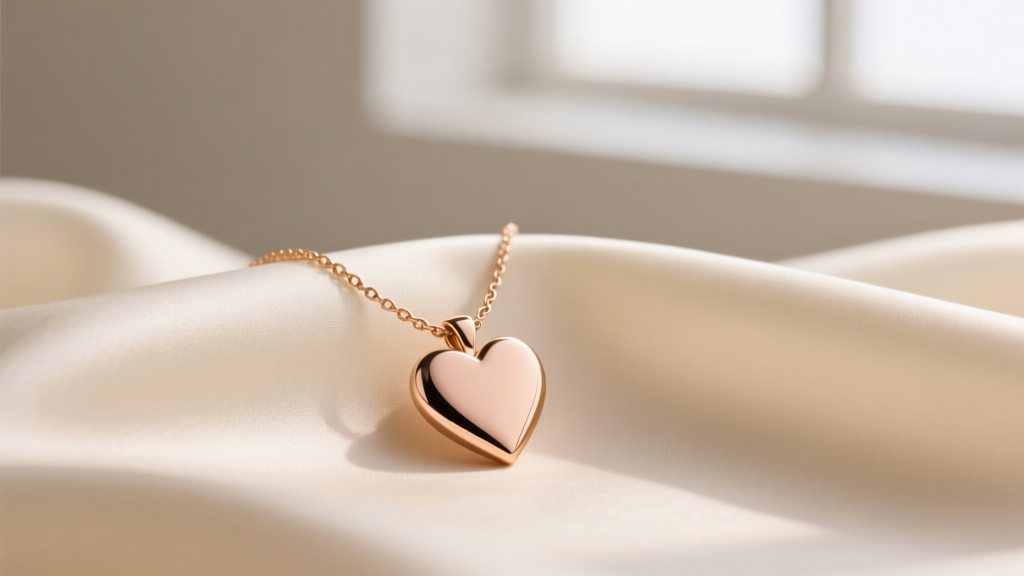
When shopping for a rose gold necklace with heart, the sheer volume of options can be paralyzing. From ultra-thin minimalist outlines to diamond-encrusted lockets, this specific jewelry silhouette bridges the gap between sentimental keepsake and everyday fashion staple. However, the romantic blush tone of rose gold comes with a complex metallurgical reality that every beginner must understand before purchasing. In 2026, the jewelry market has heavily saturated with 'rose gold' pieces that range from $20 plated brass to $2,000 solid 18-karat gold. This guide will strip away the marketing jargon and teach you exactly how to evaluate alloys, select the right chain mechanics, and style your pendant for maximum impact.
Decoding Rose Gold: Karats, Alloys, and Plating
Pure gold (24k) is naturally yellow and too soft for daily wear jewelry. To create rose gold, metallurgists alloy pure gold with copper, and occasionally a touch of silver or zinc. The copper is what gives the metal its signature pinkish-red hue. According to the Gemological Institute of America (GIA), the higher the copper content, the deeper and more reddish the gold will appear. Understanding the karat system is your first line of defense against overpaying for inferior metals.
| Metal Type | Gold Purity | Copper Content & Color | Durability | Estimated Price Range |
|---|---|---|---|---|
| 18k Rose Gold | 75.0% | ~25% (Lighter, peachy pink) | Moderate (prone to scratching) | $450 - $1,200+ |
| 14k Rose Gold | 58.3% | ~41% (Deeper, vibrant pink) | High (ideal for daily wear) | $150 - $400 |
| 10k Rose Gold | 41.7% | ~58% (Very red, almost copper) | Very High (rigid) | $80 - $180 |
| Rose Gold Vermeil | Sterling Silver Base | N/A (Plated layer) | Moderate (can wear off over years) | $60 - $150 |
| Rose Gold Plated | Brass/Copper Base | N/A (Micro-plated layer) | Low (tarnishes and fades quickly) | $20 - $50 |
For beginners, 14k rose gold is the undisputed sweet spot. It offers a rich, romantic color while possessing enough copper to make the chain highly resistant to bending and snapping. If you are on a budget, look for rose gold vermeil. The Federal Trade Commission (FTC) strictly regulates vermeil, requiring a sterling silver base and a gold plating thickness of at least 2.5 microns. Avoid standard 'gold plated' or 'gold dipped' brass pieces, as the copper and zinc in the base metal will react with your sweat and turn your skin green within weeks.
Choosing the Right Heart Pendant Style
The anatomy of the heart pendant dictates its visual weight and appropriate occasions. While trends shift, the core categories remain structurally distinct.
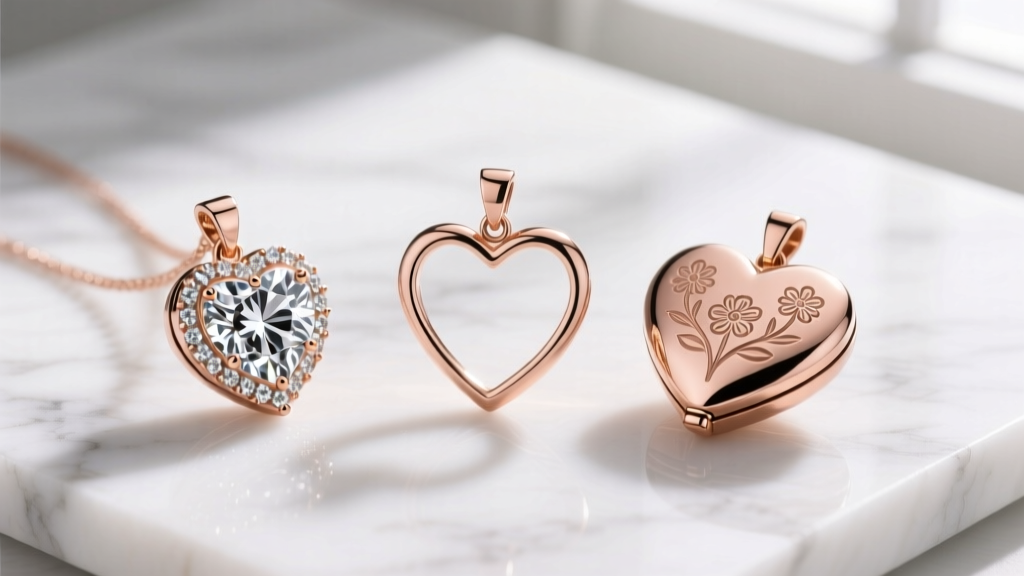
- The Solid Silhouette: A fully filled-in heart. This style catches the light beautifully and feels substantial on the chest. It is best suited for smaller dimensions (8mm to 12mm) so it doesn't look overly juvenile.
- The Minimalist Outline: Just the perimeter of the heart, hollow in the center. This is a hallmark of modern 'quiet luxury' styling. It pairs exceptionally well with ultra-thin 14k cable chains and layers easily with other geometric pendants.
- The Pave Diamond Heart: A solid metal heart encrusted with melee diamonds (typically under 0.10 carats each). For rose gold, SI1-SI2 clarity diamonds are perfectly adequate, as the warm metal reflects through the stones, masking minor inclusions while amplifying brilliance.
- The Functional Locket: A hinged heart that opens to hold a photograph. Because of the mechanical hinge and interior depth, lockets are inherently thicker. Look for models with a secure snap clasp and a bail large enough to slide over a 1.5mm rolo chain.
Chain Lengths and Clasp Mechanics
A pendant is only as good as the chain that holds it. The chain's weave and length determine how the heart sits against your collarbone and how well it withstands daily friction.
Optimal Lengths for Heart Pendants
- 16 Inches (Choker/Collarbone): Sits high on the collarbone. Best for delicate outline hearts and deep V-necklines.
- 18 Inches (Princess Length): The industry standard for women's necklaces. The heart will rest just below the collarbone, making it visible above most crewneck and scoop-neck shirts.
- 20 to 24 Inches (Matinee Length): Sits on the upper chest. Ideal for larger, heavier lockets or wearing over winter sweaters and turtlenecks.
Chain Weaves and Clasps
Avoid 'snake chains' for heart pendants; their tight, smooth links are notorious for kinking and trapping chest hair. Instead, opt for a box chain (which lies flat and resists tangling) or a cable chain (the classic oval-link design). For the clasp, insist on a lobster claw. Spring ring clasps, while common on cheaper jewelry, lack the internal spring tension to securely hold a pendant bail and frequently pop open when caught on clothing.
Styling Your Rose Gold Heart Necklace for Any Neckline
Rose gold is uniquely versatile because its warm undertones complement both cool and warm skin tones, but it requires specific fabric pairings to truly pop. Here is a practical framework for styling your necklace based on your wardrobe.
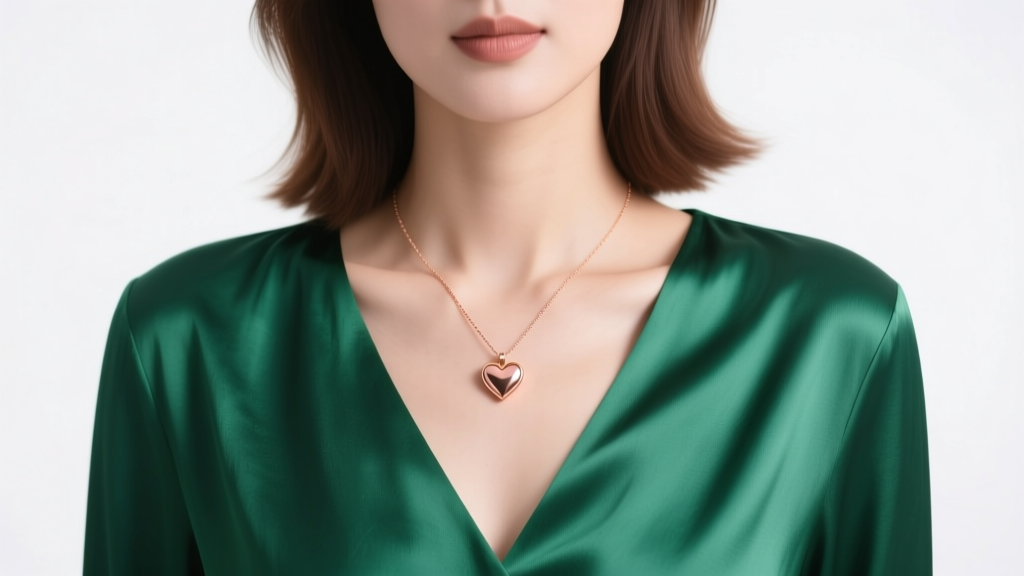
- The V-Neck: The natural geometry of a V-neck perfectly frames a heart pendant. Choose an 18-inch chain so the heart sits roughly one inch above the apex of the V. Pair rose gold with deep jewel tones like emerald green, sapphire blue, or amethyst to create a striking, high-contrast look.
- The Crew Neck: A high, round neckline can make a small pendant look lost. If wearing a crew neck t-shirt or sweater, opt for a larger, solid heart pendant or a locket on a 20-inch chain so it rests visibly on the fabric itself.
- The Scoop Neck: This wide, curved neckline offers a broad canvas. This is the ideal scenario for layering. Pair your 18-inch rose gold heart necklace with a 16-inch plain rose gold choker and a 22-inch chain featuring a small diamond solitaire to create a cascading effect.
- Off-the-Shoulder: With the collarbone fully exposed, a delicate 16-inch outline heart pendant draws the eye horizontally, accentuating the neckline without overwhelming the bare skin.
Care and Maintenance: Preventing Tarnish and Damage
While solid 14k and 18k rose gold will not tarnish (because pure gold and copper do not oxidize in normal atmospheric conditions), they are susceptible to surface dullness from lotions, perfumes, and sebum. The Jewelers of America recommends a simple, non-abrasive cleaning routine to maintain the metal's luster.
Create a cleaning solution using warm water and a few drops of mild, phosphate-free dish soap. Let the necklace soak for 15 to 20 minutes to break down body oils. Gently agitate the chain and pendant with a baby toothbrush, paying special attention to the back of the heart pendant where it rests against the skin. Rinse thoroughly under lukewarm water and pat dry with a microfiber cloth. Never use paper towels, as the wood pulp fibers can cause micro-scratches on the polished copper alloy.
Finally, always practice the 'last on, first off' rule. Your rose gold necklace should be the final accessory you put on after applying cosmetics, hairspray, and perfume, and the very first thing you take off when you return home. Store it flat in a sealed anti-tarnish pouch to prevent the chain links from knotting and to protect the pendant from environmental humidity.


