Name Necklace Men: Material Comparison & Durability Guide
Compare top metals for your custom name necklace. Men's style guide covering titanium, steel, silver, and gold durability and skin safety.

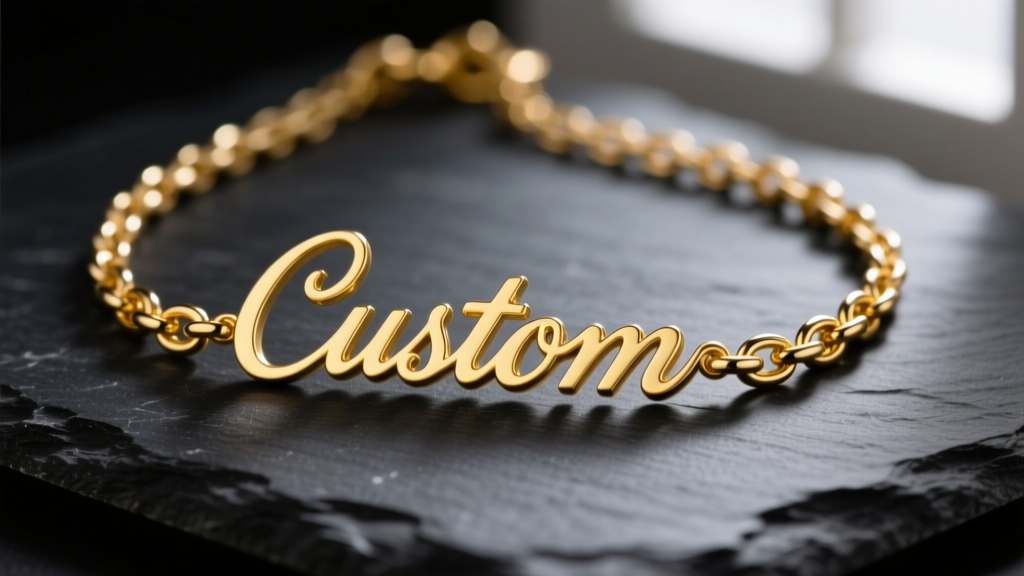
Why Metal Choice Dictates the Lifespan of Custom Name Jewelry
When commissioning or purchasing a custom name necklace, men often focus entirely on the typography—whether to choose a bold block letter, a sleek minimalist bar, or a classic cursive script. However, the structural integrity and longevity of the piece are entirely dictated by the base metal. A men's name necklace is subjected to unique mechanical and chemical stresses: it rests against the sternum where sweat pools, catches on collars and shirts, and endures the friction of daily movement.
The pH level of human sweat typically ranges from 4.5 to 7.0, making it mildly acidic. Over time, this acidity, combined with environmental sulfur and friction, will degrade inferior alloys. Choosing the right material is not just an aesthetic decision; it is a metallurgical one. In this comprehensive guide, we break down the exact properties, hardness scales, and real-world wearability of the five most common metals used for men's name necklaces in 2026.
The Big Five: Material Breakdown for Men's Custom Pendants
Surgical Stainless Steel (316L): The Budget Workhorse
Not all stainless steel is created equal. While cheaper jewelry uses 304-grade steel, high-quality men's name necklaces should be crafted from 316L surgical stainless steel. The addition of molybdenum in the 316L alloy drastically increases resistance to pitting and crevice corrosion, particularly in chloride environments (like sweat or saltwater).
- Hardness: Mohs 5.5 - 6.3 (Highly scratch-resistant)
- Pros: Zero tarnish, extremely affordable, hypoallergenic for 95% of the population.
- Cons: Difficult to solder or repair if a script letter snaps; heavier than titanium.
- Best For: Intricate laser-cut script names and budget-conscious buyers seeking a permanent, low-maintenance piece.
Sterling Silver (925): The Classic with a Tarnish Caveat
Sterling silver is an alloy consisting of 92.5% pure silver and 7.5% copper. The copper is necessary to give the soft silver enough structural rigidity to hold the shape of custom-cut letters. However, copper reacts with hydrogen sulfide in the air and on the skin, creating silver sulfide—the black tarnish that plagues unworn silver jewelry.
To combat this, modern jewelers often apply a microscopic flash of rhodium over the sterling silver. When buying a 925 silver name necklace, always verify if it is rhodium-plated. If it is not, be prepared to polish the recessed areas of the letters monthly using a treated jeweler's cloth.
Solid Gold (10K, 14K, 18K): The Heirloom Standard
Gold remains the premier choice for luxury name necklaces, but the karatage drastically alters the pendant's durability. According to the Gemological Institute of America (GIA), pure 24K gold is far too soft for jewelry. Therefore, it is alloyed with metals like zinc, copper, and nickel.
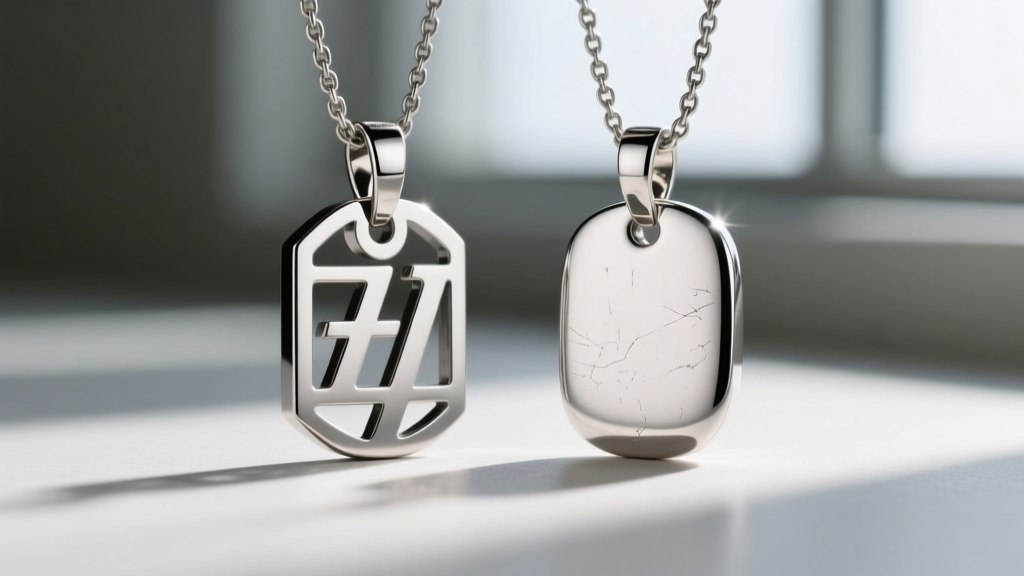
- 10K Gold (41.7% pure): The hardest gold alloy. Excellent for thin, delicate script letters that might otherwise bend. Color is slightly pale.
- 14K Gold (58.3% pure): The optimal sweet spot for men's daily wear. Offers rich color, high Vickers hardness (approx. 130 HV), and excellent resistance to deformation.
- 18K Gold (75% pure): Deep, luxurious yellow hue, but significantly softer. Best reserved for thick, block-letter dog tags rather than thin cursive scripts.
Titanium (Grade 5 / Ti-6Al-4V): The Lightweight Titan
Titanium has surged in popularity for men's jewelry due to its incredible strength-to-weight ratio. However, buyers must distinguish between Grade 2 (Commercially Pure) and Grade 5 (Ti-6Al-4V, an aerospace alloy). Grade 5 is nearly twice as strong as Grade 2 and can be polished to a mirror finish that rivals white gold. Furthermore, the Mayo Clinic frequently cites titanium as a premier biocompatible metal, making it the ultimate choice for men with severe nickel allergies or contact dermatitis.
Tungsten Carbide: The Scratch-Proof Monolith
Tungsten carbide is exceptionally hard, ranking between 8.5 and 9 on the Mohs scale. It will never scratch, bend, or lose its polish. However, its extreme hardness makes it incredibly brittle. Warning: Tungsten cannot be used for intricate, laser-cut cursive name necklaces; the thin connection points between letters will shatter under minor impact. Tungsten is strictly reserved for engraved block-letter dog tags or solid bar pendants where the name is laser-etched into the surface rather than cut out of the metal.
Comparative Data: Weight, Hardness, and Pricing
To make an informed decision, it is crucial to look at the empirical data governing these metals. The table below outlines the physical properties and estimated market pricing for a standard 1.5-inch custom name pendant in 2026.
| Metal / Alloy | Mohs Hardness | Vickers (HV) | Tarnish Resistance | Avg Custom Price |
|---|---|---|---|---|
| 316L Stainless Steel | 5.5 - 6.3 | 150 - 190 | Excellent | $35 - $85 |
| 925 Sterling Silver | 2.5 - 3.0 | 60 - 70 | Poor (unless plated) | $90 - $220 |
| 14K Solid Gold | 3.5 - 4.0 | 125 - 140 | Excellent | $450 - $1,200 |
| Grade 5 Titanium | 6.0 | 330 - 350 | Excellent | $75 - $160 |
| Tungsten Carbide | 8.5 - 9.0 | 1500+ | Excellent | $50 - $110 |
Manufacturing Realities: Laser Cutting vs. Engraving
The material you choose directly limits the manufacturing technique available for your name necklace. Understanding this prevents disappointment when ordering custom pieces.
Fiber Laser Cutting (For Script & Silhouette Names)
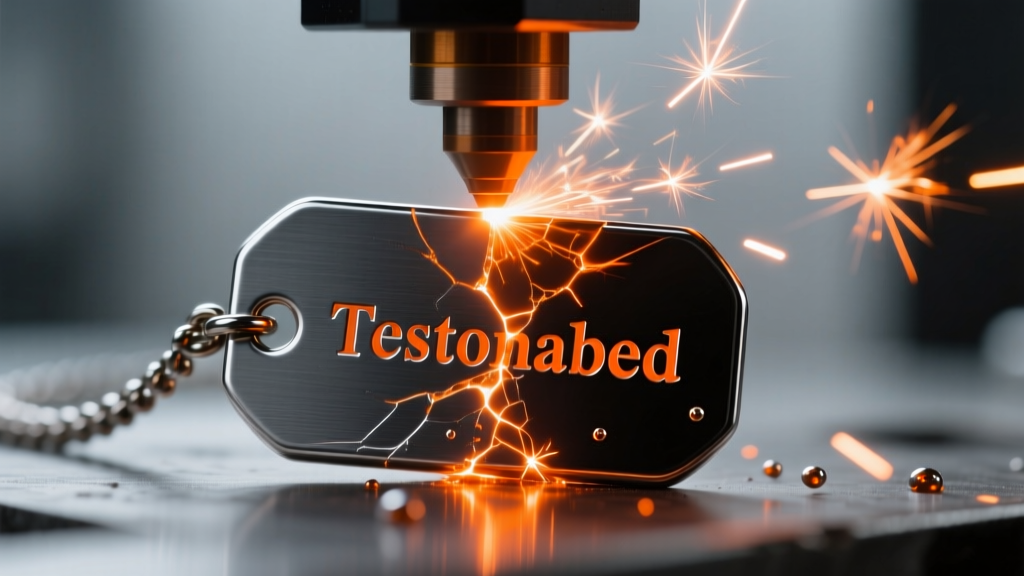
For classic cursive name necklaces, the letters are cut entirely out of a flat sheet of metal. Fiber lasers operate at a 1064 nm wavelength, which is perfectly absorbed by metals like steel, silver, gold, and titanium. This allows for micro-welds and ultra-thin connection points (down to 0.8mm) without warping the metal. Tungsten, however, reflects this wavelength and absorbs too much heat, causing it to fracture during the cutting process.
CNC Engraving & Deep Etching (For Block Letters & Bars)
If you prefer a solid bar or dog tag with your name engraved into it, tungsten and titanium shine. Deep laser etching removes the top layer of oxidized metal, revealing the raw, unoxidized core. On tungsten, this creates a permanent, high-contrast mark that will never fade or rub off, unlike surface-level laser marking on softer metals like silver.
Chain Pairing: The Rule of Galvanic Compatibility
A critical mistake many men make is pairing a pendant and a chain made of dissimilar metals. When two different metals rest against each other in the presence of an electrolyte (like sweat), a galvanic cell is formed. The less noble metal will corrode at an accelerated rate.
- Never pair Sterling Silver with Stainless Steel: The steel will act as a cathode, forcing the silver to oxidize and tarnish rapidly at the connection ring.
- Never pair Solid Gold with Base Metals: The gold will remain pristine, but the friction will grind down the softer base metal chain, leaving dark metallic dust on your chest.
- The Golden Rule: Always match the pendant metal to the chain metal. If you buy a 14K gold name pendant, invest in a 14K gold rope or Cuban chain. If budget constraints prevent this, use a high-quality, non-metallic alternative like a braided Kevlar cord or a black leather thong, which completely bypasses galvanic corrosion.
Final Verdict: Which Metal Fits Your Lifestyle?
Choosing the right material for a men's name necklace requires balancing budget, aesthetics, and lifestyle. If you work in a physical trade, gym daily, or frequently swim in chlorinated pools, 316L Stainless Steel or Grade 5 Titanium are your undisputed best options. They will survive the harshest environments without losing their structural integrity or skin safety.
For the professional seeking a luxury statement piece that will eventually be passed down as an heirloom, 14K Solid Gold offers the perfect synthesis of rich color and mechanical durability. Avoid sterling silver unless you are committed to a rigorous monthly polishing routine, and reserve tungsten strictly for heavy, engraved block-letter dog tags. By respecting the metallurgical properties of your chosen metal, your custom name necklace will remain a sharp, meaningful staple of your wardrobe for decades to come.


