The Complete Care Guide for a Wire Necklace with Beads
Learn how to properly clean, store, and maintain your wire necklace with beads. Expert tips on wire gauges, bead porosity, and preventing tarnish.

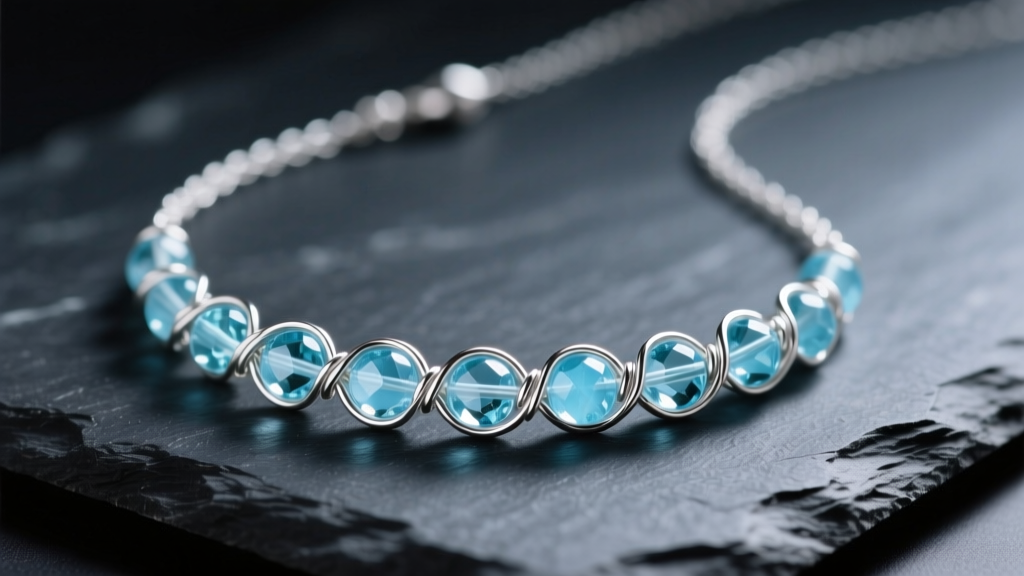
A handcrafted wire necklace with beads is a stunning intersection of structural metalwork and natural gemstone beauty. However, the intricate weaves, wraps, and coils that define wire-wrapped jewelry also create microscopic crevices where oils, lotions, and environmental tarnish accumulate. Unlike solid cast pendants, a wire necklace requires a nuanced approach to maintenance. The tension of the wire, the temper of the metal, and the chemical porosity of the beads all dictate how you should care for the piece.
This comprehensive guide breaks down the exact methodologies for cleaning, preserving, and storing your wire-wrapped jewelry, ensuring the metal retains its structural integrity and the stones maintain their optical brilliance.
Understanding Wire Temper and Gauge Vulnerabilities
Before applying any cleaning solution, you must understand the physical properties of the wire used in your necklace. According to Rio Grande, jewelry wire is categorized by its temper (hardness) and gauge (thickness). Most artisan wire necklaces utilize 24-gauge (0.51mm) or 26-gauge (0.40mm) wire for structural wrapping, and 28-gauge (0.32mm) for delicate weaving.
Wire is typically work-hardened during the wrapping process. If you use a stiff brush or apply aggressive pressure while cleaning, you risk stressing the metal at the bend points. This can lead to metal fatigue, causing the wire to snap. Furthermore, if your necklace is crafted from gold-filled wire (such as 14/20 GF), you must avoid abrasive polishing cloths. Gold-filled wire features a thick outer layer of karat gold bonded to a brass core; aggressive rubbing can eventually wear through this layer, exposing the brass underneath and leading to rapid oxidation.
Bead Porosity: The Golden Rule of Gemstone Cleaning
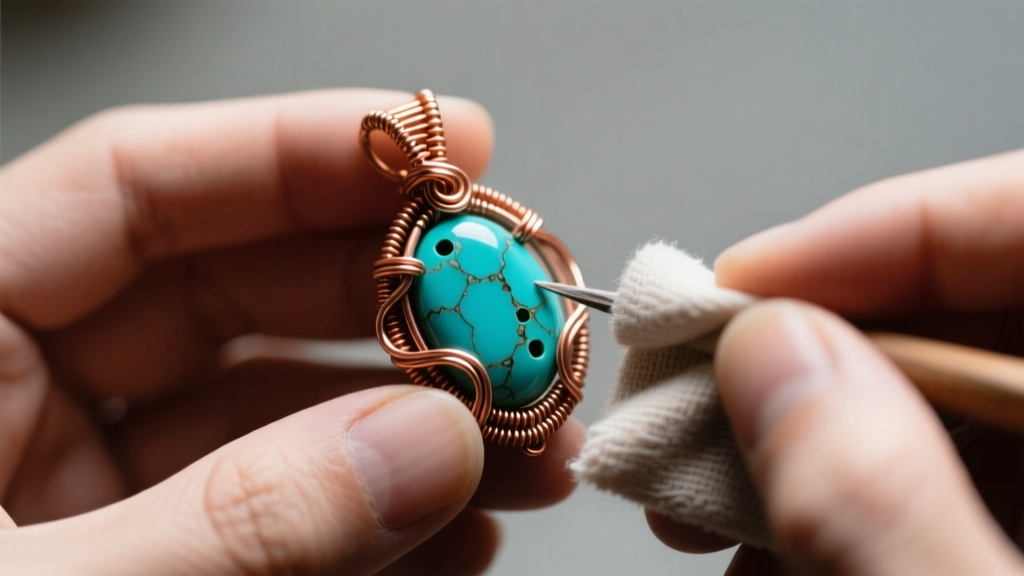
The most common mistake owners make is treating all beads equally. The Gemological Institute of America (GIA) emphasizes that a gemstone's porosity and chemical composition dictate its cleaning tolerance. A solution that will make a quartz crystal sparkle can permanently etch or dissolve a turquoise cabochon.
Bead Material Cleaning Matrix
| Bead Material | Porosity Level | Mohs Hardness | Safe Cleaning Agent | Agents to Strictly Avoid |
|---|---|---|---|---|
| Turquoise / Malachite | High | 3.5 - 6 | Dry microfiber cloth only | Ultrasonic, ammonia, acids, soaps |
| Pearl / Coral (Organic) | Very High | 2.5 - 4 | Damp soft cloth, dry immediately | All liquids, ultrasonic, acids |
| Lapis Lazuli | Moderate | 5 - 6 | Slightly damp cloth | Acidic cleaners (dissolves calcite) |
| Amethyst / Quartz | Low | 7 | Mild dish soap + distilled water | Prolonged UV exposure, harsh chemicals |
| Glass / Crystal | None | 5.5 - 7 | Isopropyl alcohol, mild soap | Hydrofluoric acid (rare but fatal) |
Step-by-Step Cleaning Process for Non-Porous Beads
If your wire necklace with beads features non-porous stones (like amethyst, garnet, or glass) and sterling silver or bare copper wire, follow this meticulous cleaning protocol to remove sebum and environmental grime without damaging the wire weaves.
1. Prepare a pH-Neutral Bath
Mix exactly two drops of a pH-neutral, lotion-free dish detergent (such as original Dawn) into eight ounces of distilled water. Tap water contains chlorine and dissolved minerals that can leave microscopic water spots on the beads and accelerate silver tarnishing.
2. The Baby Toothbrush Technique
Submerge the necklace for no more than three minutes. Using an extra-soft baby toothbrush, gently agitate the wire weaves. Do not scrub the beads themselves; let the soapy water do the work. The ultra-fine bristles can reach into 28-gauge wire coils without bending the metal or scratching the stone's polish.
3. The Distilled Rinse and Air Dry
Rinse the necklace under a gentle stream of distilled water. Shake off excess moisture, then lay the piece flat on a lint-free paper towel. Use a hair dryer on the "cool" setting to blow water out of the tight wire wraps. Trapped moisture at the base of a bead is the primary cause of localized wire corrosion.
Managing Tarnish and Intentional Patina
Sterling silver (925) contains 7.5% copper, which reacts with sulfur in the air to form black silver sulfide. When this tarnish builds up inside the intricate weaves of a wire necklace, it can look like dirt. However, many wire artists intentionally oxidize the wire using liver of sulfur to create a dark patina, which is then polished off the high points to create visual contrast.
Critical Warning: Never use commercial liquid silver dips on a wire necklace with beads. These dips contain harsh thiourea-based acids that will strip the intentional patina from the deep wire weaves, leaving the necklace looking flat and lifeless. Furthermore, if not rinsed perfectly, the chemical residue gets trapped in the wire coils and causes delayed flaking and bead degradation.
Instead, use a treated silver polishing cloth. Fold the edge of the cloth to create a thin wedge, and gently run it through the wire loops. For heavy tarnish on bare copper wire (without beads), a #0000 super-fine steel wool pad can be used gently, but keep it far away from any gemstones, as the microscopic steel fibers will permanently scratch the polish of almost any bead.
Preventing Wire Fatigue and Proper Storage
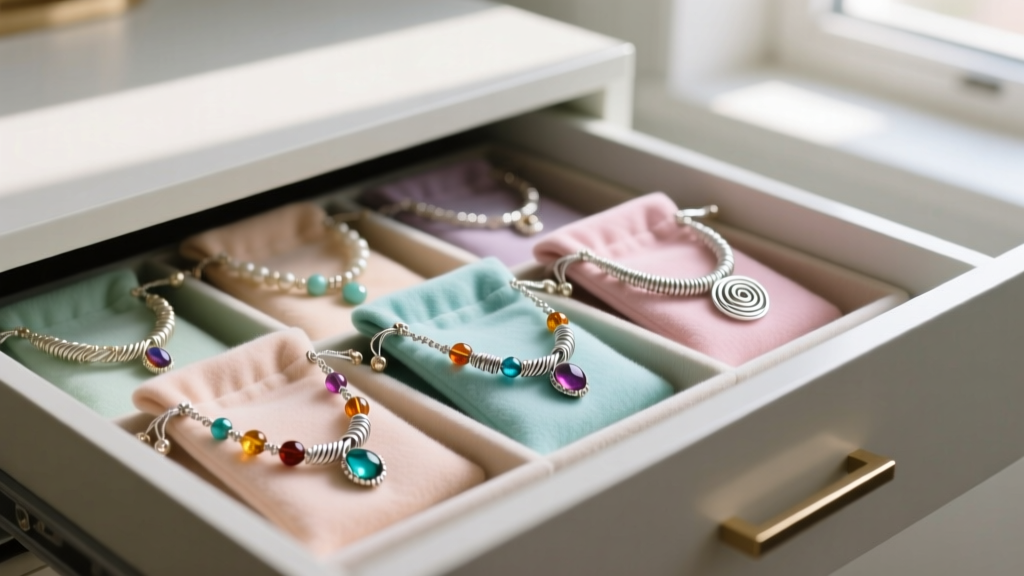
The physical storage of your wire necklace is just as critical as the cleaning process. Wire wrapping relies on tension to hold beads in place. If the necklace is tossed into a jewelry box, the wire can catch on other pieces, bend, and kink.
The Danger of Kinks and Work-Hardening
If a 24-gauge or 26-gauge wire develops a sharp kink, do not bend it back and forth to straighten it. Bending wire causes it to work-harden. Repeatedly flexing a kinked wire will rapidly induce metal fatigue, causing it to snap cleanly in half. If a structural wire kinks, use nylon-jaw pliers to gently coax it back into alignment with a single, smooth motion.
Anti-Tarnish Storage Protocols
According to Fire Mountain Gems, minimizing a necklace's exposure to ambient humidity and airborne sulfur is the best way to prevent tarnish. Follow these storage rules:
- Individual Pouches: Store each wire necklace in its own soft flannel or anti-tarnish cloth pouch. Never store multiple wire pieces together, as the wire weaves will tangle and pull beads out of their settings.
- Silica and Chalk: If you live in a high-humidity environment, place a small silica gel packet inside the storage pouch to absorb ambient moisture.
- Avoid Plastic Bags: Never store sterling silver or copper wire necklaces in standard polyethylene plastic bags. These plastics can emit sulfur compounds as they degrade, actually accelerating the tarnishing process.
- Lay Flat or Hang: If the necklace features a heavy pendant suspended on a delicate wire chain, hang it on a velvet-lined hook. If it is a rigid wire collar, lay it flat to prevent gravity from warping the wire's shape over time.
When to Seek Professional Rewiring
Even with meticulous care, wire is a consumable material. Inspect your wire necklace with beads every six months. Look for fraying at the clasp loops, thinning of the wire at high-friction contact points, or any loosening of the bead seats. If a bead rattles within its wire cage, the wire has stretched. Do not attempt to squeeze the wire tighter with standard pliers, as this will mar the metal and potentially crack the bead. Take the piece to a professional wire artist or jeweler who can safely re-tension the wrap or replace the fatigued wire entirely.


