The Traditional Hawai Necklace: Expert Guide to Heirloom Gold
Discover the technical details, gold grades, and enamel techniques behind the traditional hawai necklace in this expert Hawaiian heirloom jewelry guide.

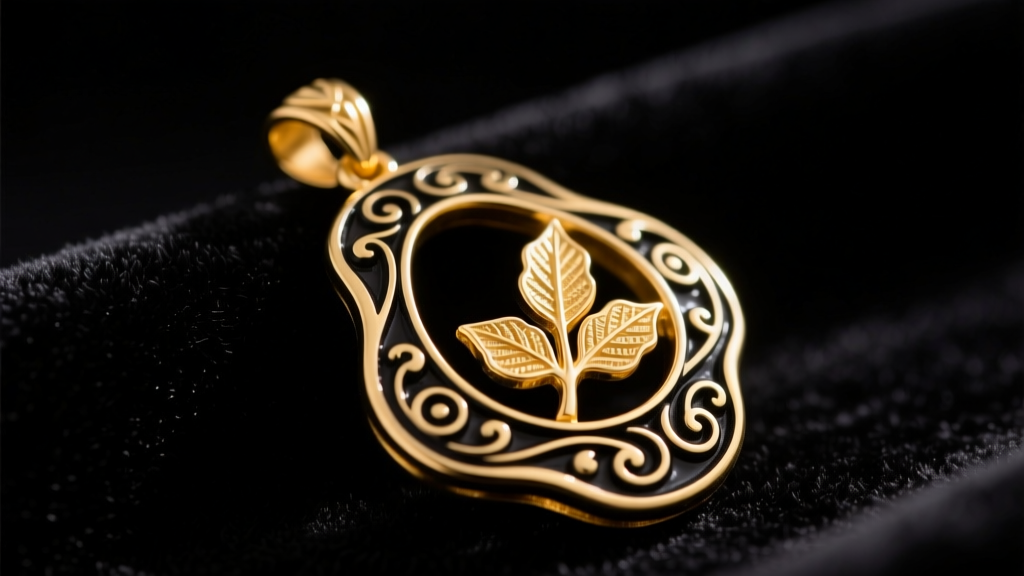
The Anatomy of the Traditional Hawai Necklace
When collectors and master jewelers refer to a traditional hawai necklace, they are referencing the iconic Hawaiian heirloom jewelry style characterized by deep scrollwork, cultural motifs, and stark black enamel inlays. Originating in the late 19th century as mourning jewelry following the death of Queen Liliʻuokalani's loved ones, this style has evolved into a premier symbol of Hawaiian heritage. However, the modern market is flooded with mass-produced imitations. Understanding the metallurgical and structural nuances of authentic heirloom pieces is critical for both collectors and everyday buyers in 2026.
Authentic Hawaiian heirloom pendants are not merely stamped sheets of metal; they are structural marvels requiring precise gold alloy formulations to withstand deep engraving without compromising the integrity of the piece. A standard 1-inch oval pendant typically weighs between 4.8 grams and 7.2 grams, with a sheet thickness ranging from 1.2mm to 1.6mm. This specific gauge is mandatory to allow engravers to carve channels deep enough to hold vitreous enamel without piercing the backplate.
Metallurgy: Gold Alloys and Enamel Techniques
The foundation of any high-quality hawai necklace is its gold alloy. While 24k pure gold is too soft (Vickers hardness of ~25 HV) for deep engraving, 14k and 18k yellow gold are the industry standards. According to the Gemological Institute of America (GIA), 14k yellow gold consists of 58.5% pure gold, typically alloyed with 25% silver and 16.5% copper. This precise ratio yields a Vickers hardness of approximately 130 HV, providing the optimal balance of malleability for the engraver's burin and structural rigidity to prevent the pendant from warping over decades of wear.
The Science of Vitreous Enamel
The stark black lettering and scrollwork are achieved through vitreous enamel, not paint or epoxy. Vitreous enamel is essentially finely ground glass (silica, soda ash, and metal oxides for coloration) that is sifted into the engraved channels and fired in a kiln at temperatures between 1,350°F and 1,500°F. The glass melts, flows into the microscopic grooves of the gold, and fuses at a molecular level upon cooling.
- Vitreous Enamel (Authentic): Fused glass, highly scratch-resistant, permanent, requires multiple kiln firings.
- Cold Enamel / Epoxy (Imitation): A two-part resin poured into shallow grooves. It yellows over time, chips easily, and degrades when exposed to UV light or cosmetics.
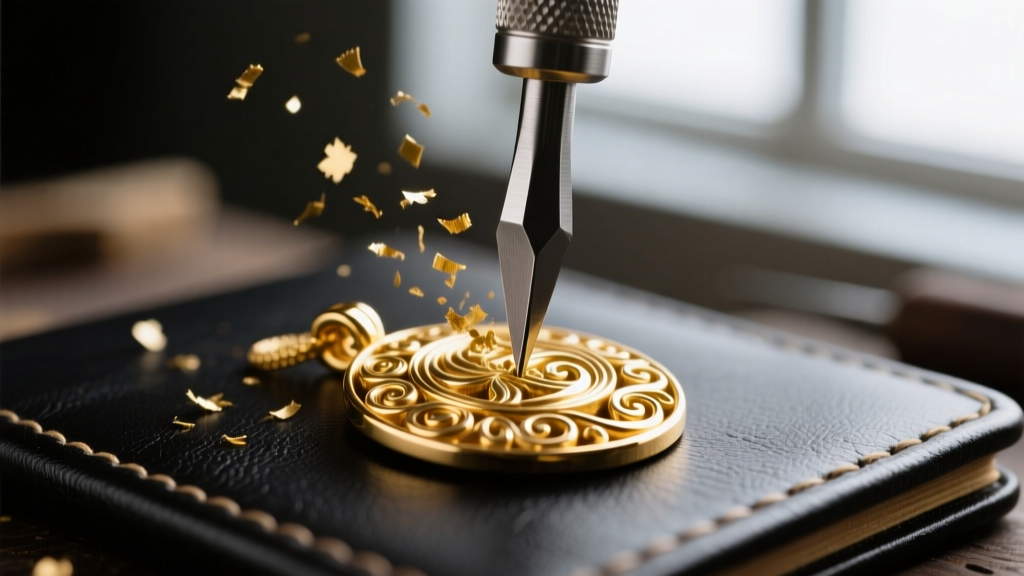
Hand-Engraving vs. Machine Engraving
The value and aesthetic depth of a hawai necklace are dictated by the engraving method. Hand-engraving utilizes a pneumatic-assisted steel burin to carve V-shaped and U-shaped channels directly into the gold. This removes metal entirely, creating sharp, reflective facets that catch the light. Conversely, CNC milling and laser engraving merely etch or burn the surface, resulting in shallow, flat-bottomed channels that lack optical brilliance.
| Technical Feature | Hand-Engraved Heirloom | CNC / Laser Engraved |
|---|---|---|
| Cut Depth | 0.4mm - 0.8mm (Deep V-cut) | 0.1mm - 0.2mm (Shallow etch) |
| Enamel Adhesion | Excellent (Mechanical lock in deep grooves) | Poor (Prone to chipping and flaking) |
| Light Refraction | High (Faceted walls reflect light) | Low (Flat walls absorb light) |
| Production Time | 4 to 12 hours per pendant | 5 to 15 minutes per pendant |
| Relative Cost (2026) | $650 - $1,400+ | $150 - $350 |
Cultural Motifs and Scrollwork Accuracy
Authentic pieces rely on specific botanical and cultural motifs, each requiring distinct engraving techniques. The maile leaf, symbolizing respect and honor, requires deep, sweeping U-channels to mimic the organic curl of the vine. The pikake (jasmine) flower demands precise, shallow radial cuts to simulate delicate petals. The kalo (taro) motif, representing family and sustenance, features broad, overlapping leaves that test the engraver's ability to manage depth transitions without weakening the gold substrate.
Furthermore, the traditional black enamel lettering on the border (often spelling out names or phrases like "Aloha" or "Ku'u Lei") must follow the exact curvature of the pendant. In hand-cut pieces, the serif fonts are carved with a square graver, creating sharp, distinct corners that machine-routing often rounds off or blunts.
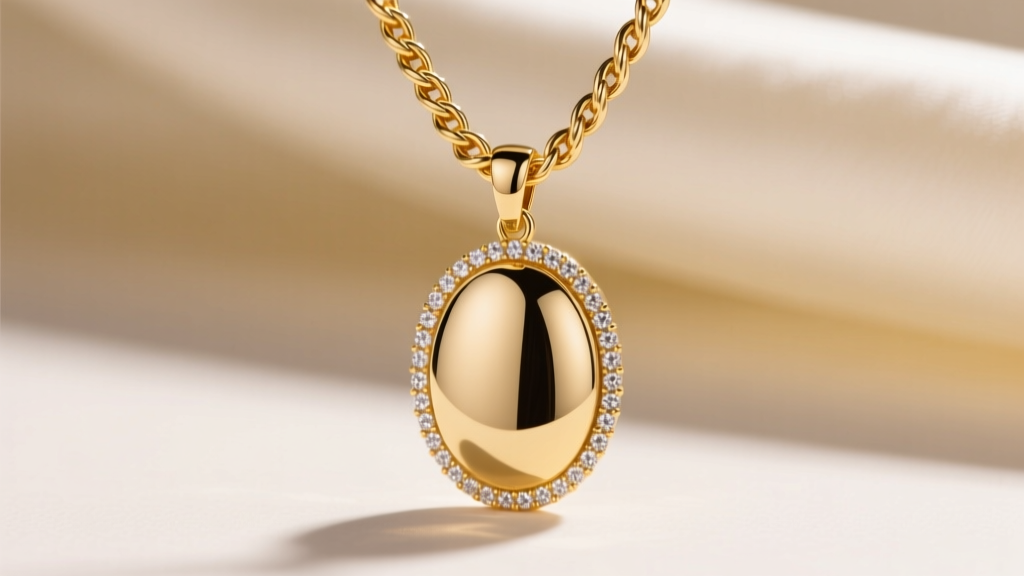
Chain Pairing and Bail Mechanics
A heavy heirloom pendant requires a chain that can support its weight without suffering from link distortion. The industry standard pairing is a 14k yellow gold diamond-cut rope chain, typically ranging from 2.5mm to 4.0mm in thickness. The diamond-cut facets on the rope chain mirror the light-reflecting properties of the hand-engraved pendant.
Hidden Bail vs. Standard Loop
Premium hawai necklace pendants utilize a "hidden bail" or "turtle bail" soldered to the backplate. This allows the chain to pass through seamlessly, giving the illusion that the pendant is floating on the gold rope. From a structural engineering perspective, the hidden bail must be laser-welded or torch-soldered using a high-temperature 14k hard solder (melting point ~1,450°F) to ensure the joint does not fail under the dynamic stress of daily wear. Buyers should inspect the solder joints under a 10x loupe for any signs of porosity or pitting, which indicate poor temperature control during assembly and can lead to catastrophic bail failure.
Authentication and FTC Compliance
When purchasing a hawai necklace, buyers must verify the maker's mark and gold purity stamps. The Federal Trade Commission (FTC) Jewelry Guides mandate that any item stamped with a karat quality mark (e.g., 14K) must also bear the registered trademark or hallmark of the manufacturer. Reputable Hawaiian makers such as Philip Rickard, Royal Crest, and Maui Divers stamp their pieces clearly on the backplate or the bail. If a pendant features a "14K" stamp but lacks a maker's mark, it is highly likely to be an imported mass-production piece lacking authentic vitreous enamel and hand-engraving.
Expert Tip: To test the authenticity of the enamel on a vintage piece, gently run a warmed sewing needle across an inconspicuous black-enamelled edge. Vitreous glass will not scratch or melt under a warm needle, whereas cold epoxy enamel will dent, smear, or emit a faint chemical odor.
Investing in a genuine, hand-engraved hawai necklace is an exercise in preserving both cultural history and master-level metallurgy. By prioritizing vitreous enamel, precise 14k/18k alloy formulations, and deep hand-carved scrollwork, collectors ensure their heirloom pieces will withstand generations of wear while retaining their structural and aesthetic brilliance.


