Glass Bottle Necklace Engineering: Materials and Seals
Explore the technical anatomy of a glass bottle necklace. Learn about borosilicate vs soda-lime glass, stopper seals, and bail tensile strength.

The Material Science of Pendant Vials
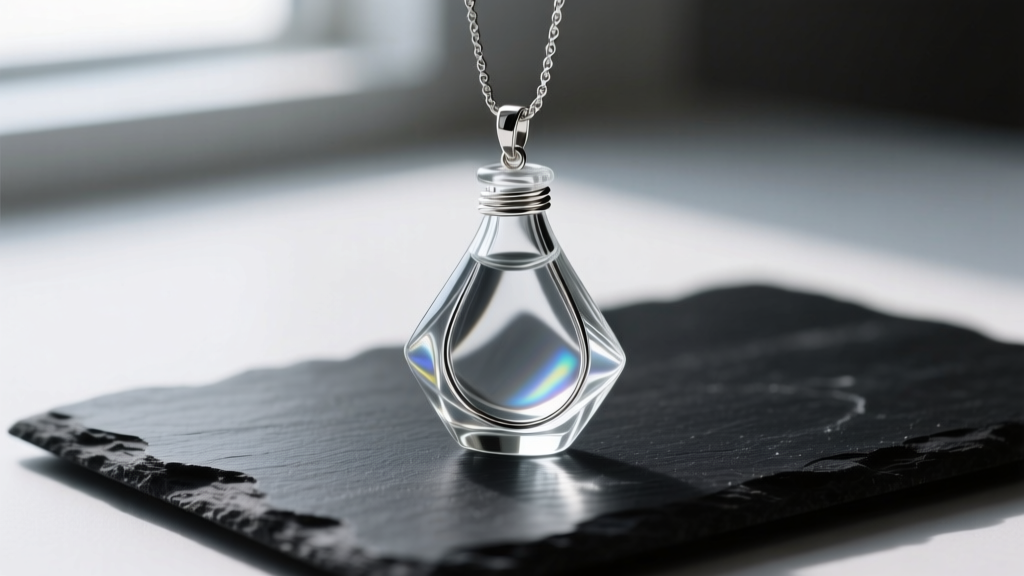
When evaluating a glass bottle necklace, most consumers focus purely on the aesthetic silhouette or the sentimental value of the contents. However, from a jewelry engineering perspective, a functional vial pendant is a complex assembly of materials science, fluid dynamics, and tensile mechanics. Whether the vessel is designed to hold cremation ashes, essential oils, or liquid perfumes, the structural integrity of the glass and the hermetic seal of the stopper dictate the lifespan of the piece. In this technical deep dive, we deconstruct the anatomy of high-performance glass bottle necklaces, examining the exact material grades and failure modes that separate heirloom-quality artifacts from disposable novelty items.
Borosilicate vs. Soda-Lime Glass
The foundation of any premium glass bottle necklace is the silica matrix. Mass-produced pendants typically utilize soda-lime glass due to its low manufacturing cost and lower melting point. However, soda-lime glass possesses a relatively high coefficient of thermal expansion (CTE) of approximately 9.0 × 10⁻⁶ /K. This makes it highly susceptible to thermal shock; a sudden temperature change—such as stepping from a freezing winter environment into a heated room while the vial rests against the skin—can induce micro-fractures or catastrophic shattering.
Conversely, expert jewelers and specialized glassblowers utilize borosilicate glass for high-end vial pendants. By incorporating boron trioxide (B2O3) into the silica matrix, the CTE is drastically reduced to roughly 3.3 × 10⁻⁶ /K. This molecular alteration grants borosilicate vials superior impact resistance and near-total immunity to the thermal shocks encountered during daily wear.
| Glass Type | CTE (10−6 /K) | Impact Resistance | Chemical Inertness | Best Use Case |
|---|---|---|---|---|
| Soda-Lime | ~9.0 | Low | Moderate | Dry contents (sand, ashes) |
| Borosilicate | ~3.3 | High | Exceptional | Liquids, essential oils, perfumes |
| Lead Crystal | ~8.5 | Very Low | Poor (Leaches) | Display only (Not for skin contact) |
Stopper Mechanics and Seal Integrity
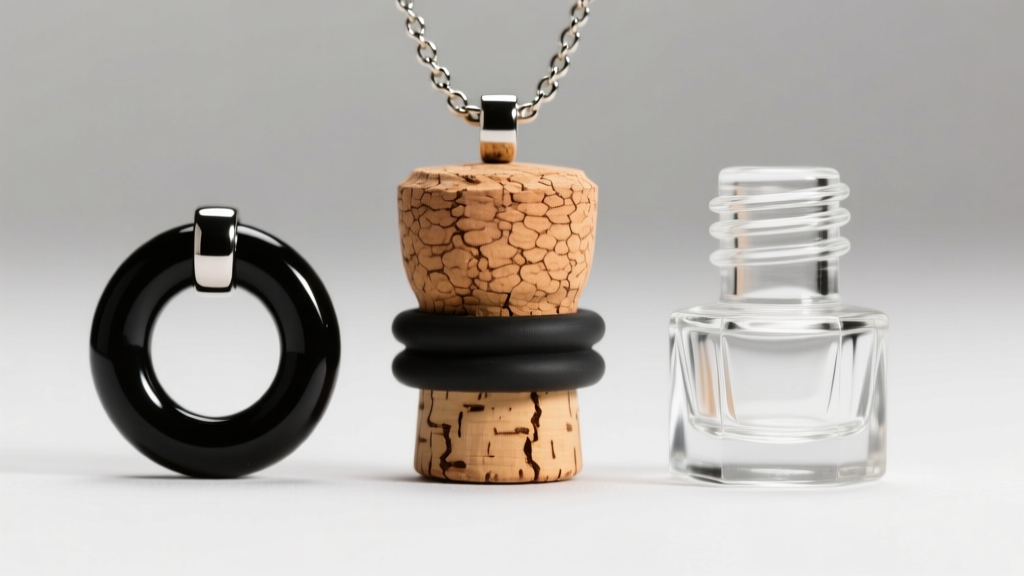
The most common point of catastrophic failure in a glass bottle necklace is the stopper mechanism. A compromised seal not only ruins the contents but can cause skin irritation if volatile compounds like essential oils leak onto the wearer's chest. Selecting the correct stopper requires an understanding of chemical compatibility and compressive memory.
Cork vs. Silicone O-Rings
Traditional cork stoppers offer a rustic aesthetic and possess natural compressive memory, allowing them to form a tight initial seal. However, cork is highly porous and chemically vulnerable. Terpenes found in essential oils (such as limonene in citrus oils) will rapidly degrade the suberin and lignin in natural cork, causing it to dry rot, crumble, and fail within months. Furthermore, cork absorbs moisture, making it a breeding ground for mold if used with water-based perfumes.
For liquid-bearing vials, precision-machined stoppers utilizing a 50A to 70A Shore durometer silicone O-ring are the industry standard. Silicone is chemically inert to almost all organic compounds, including highly concentrated essential oils and alcohol-based perfumes. The O-ring creates a hermetic seal that accommodates minor fluctuations in internal air pressure caused by body heat, preventing the 'popping' effect that often plagues rigid glass-on-glass stoppers.
Threaded Glass and PTFE Tape
Some advanced apothecary-style pendants feature a threaded glass neck and a matching threaded glass or metal cap. While visually striking, glass-on-glass threads require precise lapping to seal effectively. Jewelers often recommend wrapping the male threads with a single layer of PTFE (Teflon) thread seal tape to ensure a watertight barrier without over-torquing and snapping the fragile glass neck.
Bail Attachments and Chain Tensile Limits
The bail—the component that connects the glass vial to the chain—must support the dynamic load of the pendant. A standard 5ml borosilicate vial filled with liquid can weigh between 15 and 25 grams. While this seems light, the kinetic force generated when the wearer walks, bends, or catches the pendant on clothing can multiply this static load by a factor of three or four.
Adhesive Caps vs. Wire Wrapping
Cheap glass bottle necklaces often rely on a metal cap glued directly to the glass rim using cyanoacrylate (super glue) or basic two-part epoxy. Over time, UV exposure and the natural oils from the wearer's skin degrade these adhesives, leading to the pendant detaching and shattering on the floor. According to metallurgical and jewelry fabrication guidelines from Rio Grande, mechanical connections are always superior to chemical adhesives in wearable art.
Expert artisans utilize 20-gauge or 22-gauge half-hard sterling silver or 316L stainless steel wire to create a structural cage or a tightly wrapped bail around the vial's neck. This wire-wrapping technique distributes the tensile stress evenly across the glass shoulder, eliminating shear stress points that could cause the glass to snap.
Chain Gauge and Jump Ring Security
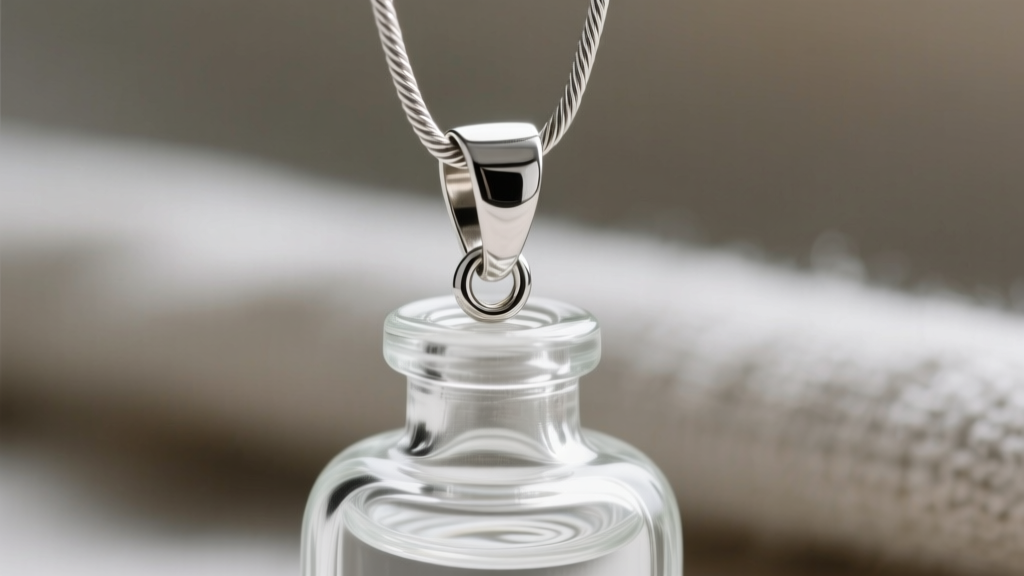
The chain and jump rings must be rated for the pendant's dynamic weight. A delicate 1.0mm cable chain may have a tensile breaking point of under 5 pounds, making it a liability for heavier, liquid-filled vials. A 1.5mm to 2.0mm rope or box chain constructed from 316L surgical steel provides a breaking strength exceeding 20 pounds. Furthermore, the jump ring connecting the chain to the bail must be soldered closed or utilize a heavy-gauge split ring; an open, unsoldered jump ring will inevitably pull apart under lateral stress.
Maintenance and Degradation Protocols
Proper maintenance of a glass bottle necklace extends beyond simple polishing. The intersection of glass, metal hardware, and organic contents requires a specific cleaning protocol to avoid structural degradation.
Expert Warning: Never place a sealed glass bottle necklace in an ultrasonic jewelry cleaner. The high-frequency cavitation bubbles can induce microscopic stress fractures in the glass and will rapidly degrade silicone O-rings and loosen wire-wrapped bails.
To clean the exterior of the vial, use a microfiber cloth dampened with isopropyl alcohol. Avoid ammonia-based glass cleaners, as they can cause galvanic corrosion if they pool around the metal bail or jump rings. If the vial needs to be emptied and refilled, always use a sterile glass syringe with a blunt-tip needle to inject liquids, preventing airlocks and minimizing the risk of contaminating the inner threads or stopper seat.
By prioritizing borosilicate glass, chemically inert silicone seals, and mechanically sound wire-wrapped bails, jewelers can elevate the glass bottle necklace from a fragile trinket to a robust, heirloom-grade vessel capable of safely preserving its contents for decades.


