How to Clean and Maintain a Glass Pendants Necklace
Learn how to safely clean, store, and maintain your glass pendants necklace. Expert tips for lampwork, dichroic, and fused glass jewelry care.

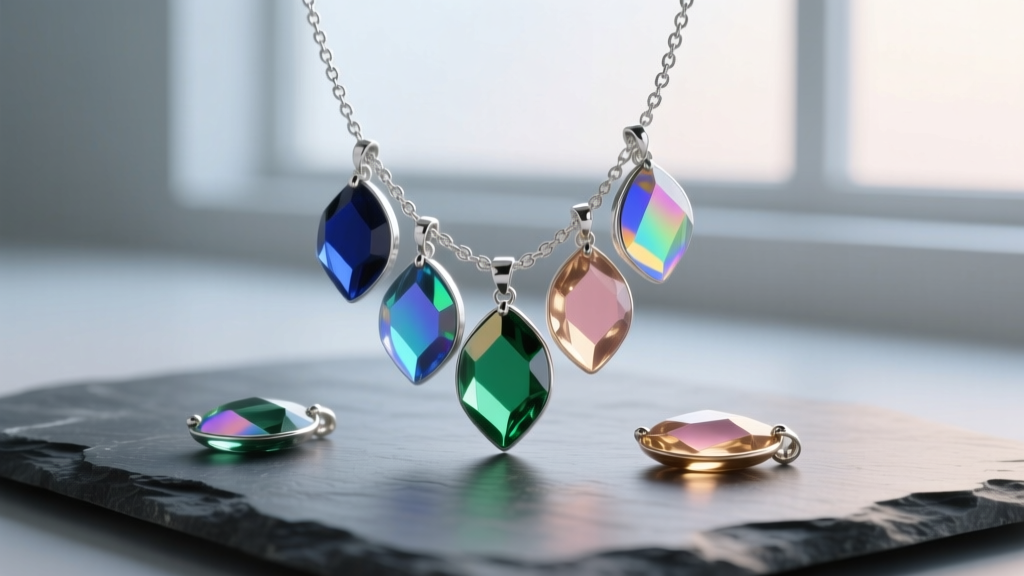
The Anatomy of a Glass Pendants Necklace: Why It Needs Special Care
A glass pendants necklace is a striking fusion of artisanal craftsmanship and wearable art. Unlike crystalline gemstones such as quartz or sapphire, which rank high on the Mohs hardness scale and possess uniform internal structures, art glass is an amorphous solid. This means its molecular structure lacks a long-range repeating pattern, making it uniquely susceptible to thermal shock, chemical etching, and mechanical chipping. When you combine the fragility of the glass with the mixed metallurgy of the chain and the adhesive vulnerability of the bail, a specialized care regimen becomes mandatory.
According to conservation guidelines published by the Gemological Institute of America (GIA), non-crystalline jewelry materials require pH-neutral cleaning environments and strict avoidance of ultrasonic frequencies. To properly maintain your piece, you must first identify the specific type of glass used in your pendant, as the manufacturing process dictates its primary vulnerabilities.
Understanding Your Glass Type and Vulnerabilities
Not all glass is created equal. The coefficient of expansion (COE) and the annealing process determine how your pendant will react to temperature fluctuations and physical stress.
| Glass Type | Manufacturing Process | Primary Vulnerability | Cleaning Restriction |
|---|---|---|---|
| Lampwork | Torch-melted rods (usually COE 104) | Thermal shock, internal stress fractures | No extreme temperature changes |
| Dichroic | Kiln-fused with micro-layers of metal oxides | Surface scratching, coating degradation | No ammonia or abrasive pastes |
| Fused | Kiln-formed sheets (usually COE 90) | Edge chipping, devitrification (cloudiness) | No ultrasonic cleaners |
| Blown | Hollow glassblowing techniques | Impact shattering, pressure cracks | No submersion if unsealed |
Step-by-Step Cleaning Protocol for Glass Pendants
When your glass pendants necklace accumulates skin oils, lotions, or environmental dust, it loses its optical clarity and vibrant color transmission. The safest and most effective way to restore its brilliance is through a manual, low-impact washing method.
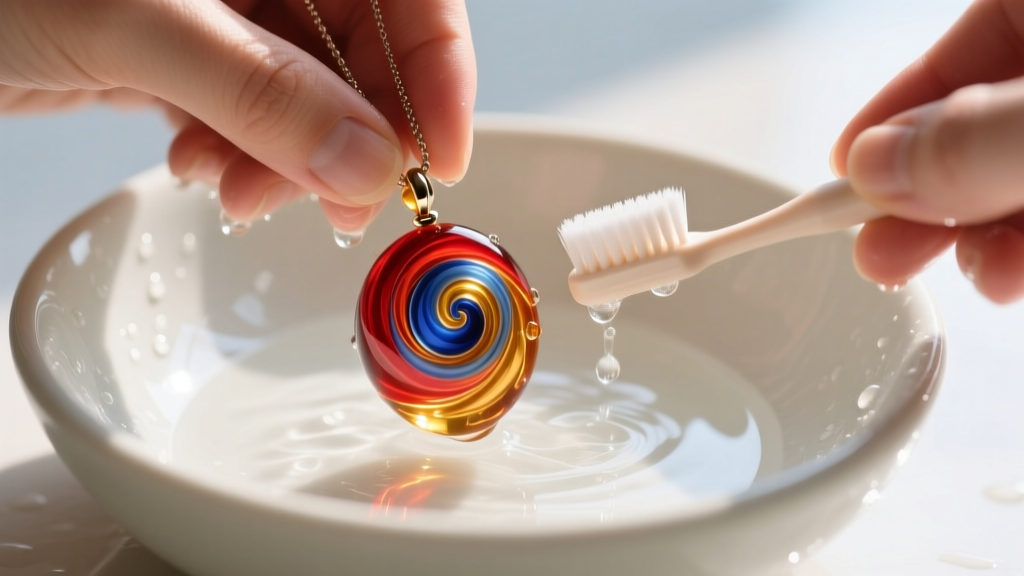
- Prepare the Solution: Fill a shallow ceramic or glass bowl with lukewarm distilled water. Tap water contains dissolved minerals like calcium and magnesium that can leave hard water spots on the glass surface. Add two drops of a pH-neutral, lotion-free dish soap (such as original blue Dawn).
- Isolate the Chain: Drape the metal chain over the edge of the bowl to keep it out of the water, especially if it is made of oxidizable metals like raw brass or unsealed copper. Submerge only the glass pendant and the metal bail.
- Gentle Agitation: Let the pendant soak for exactly three to five minutes to loosen sebum and cosmetic residues. Do not exceed this time if the bail is glue-set.
- Targeted Brushing: Using a brand-new, ultra-soft baby toothbrush, gently sweep the bristles across the surface of the glass and into the crevices of the bail. Never apply downward pressure.
- Rinse and Dry: Rinse the pendant under a gentle stream of lukewarm distilled water. Immediately pat it dry with a lint-free microfiber cloth, ensuring no moisture remains trapped between the glass and the bail.
What NEVER to Do: The Danger Zone
Many standard jewelry cleaning practices will permanently ruin a glass pendants necklace. The Jewelers of America frequently warns against using generic jewelry dips on porous or treated materials, and glass falls into a highly sensitive category.
- Ultrasonic Cleaners: These devices use high-frequency sound waves (typically 40 kHz) to create microscopic bubbles that implode (cavitation). While great for diamonds, this implosive force will exploit microscopic annealing stress points in kiln-formed or torch-worked glass, causing it to shatter instantly.
- Ammonia-Based Solutions: Commercial silver dips and window cleaners contain ammonia. Ammonia will chemically etch the surface of dichroic glass, permanently clouding the metallic oxide layers and stripping the iridescent finish.
- Toothpaste and Baking Soda: These are common DIY jewelry hacks, but they are highly abrasive. Glass ranks around 5.5 to 6.5 on the Mohs scale, meaning abrasive pastes will leave a web of micro-scratches that diffuses light and makes the pendant look permanently foggy.
- Steam Cleaners: The sudden, localized heat from a jewelry steam cleaner will induce severe thermal shock, particularly in lampwork beads and pendants that may not have been perfectly annealed in the kiln.
Bail and Chain Maintenance: The Hidden Weak Points
The glass itself is only half the equation. The findings that connect your glass pendants necklace together are frequent points of failure. Most artisan glass pendants utilize a glued-on metal bail (often a pad bail or a tube bail) rather than wire wrapping, due to the difficulty of drilling thick art glass without causing blowouts.
Fixing a Loose Glass Bail
If you notice the metal bail shifting or wiggling on the glass surface, stop wearing the necklace immediately. The adhesive bond has failed. Do not attempt to re-glue it with cyanoacrylate (Super Glue). Cyanoacrylate cures rigid and brittle; the natural expansion and contraction of the glass and metal against the skin will cause it to snap off again within weeks.
Instead, carefully clean the old adhesive residue from both the glass and the bail pad using a wooden toothpick dipped in isopropyl alcohol. Apply a microscopic drop of E6000 jewelry adhesive or a specialized UV-curing jewelry resin to the pad. Press it firmly against the glass, wipe away any squeeze-out with an alcohol swab, and let it cure undisturbed on a flat surface for 72 hours. E6000 remains slightly flexible, absorbing the kinetic shock of daily wear.
Long-Term Storage and Environmental Controls
How you store your glass pendants necklace when it is not being worn is just as critical as how you clean it. Glass is highly resistant to tarnish, but the metal chain is not, and the two materials must be managed separately to prevent cross-damage.
Expert Insight: Never store a glass pendant in a humid environment like a bathroom. The constant fluctuations in humidity and temperature can degrade the epoxy bonds holding the bail, and the airborne aerosols from hairsprays and perfumes can create a stubborn, cloudy film on the glass surface that requires professional polishing to remove.
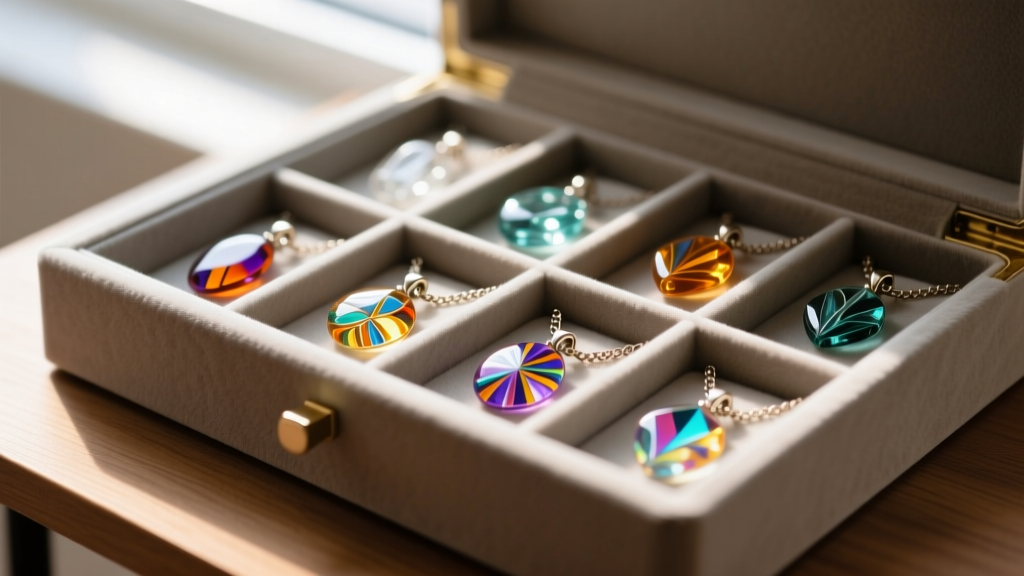
Always store your necklace in a climate-controlled room. Use a jewelry box with individual velvet compartments. The velvet prevents the metal chain from swinging and striking the glass pendant, which is the leading cause of edge chipping in fused glass pieces. If you must travel with your necklace, thread the pendant through a plastic straw before clasping the chain to prevent tangling, and wrap the glass component in a soft, acid-free tissue paper inside a hard-shell travel case to protect it from crushing forces.


