The Wishbone Necklace Meaning: Symbolism & Troubleshooting Guide
Discover the true wishbone necklace meaning and learn expert troubleshooting tips to fix flipping pendants, chain tangling, and metal tarnish.

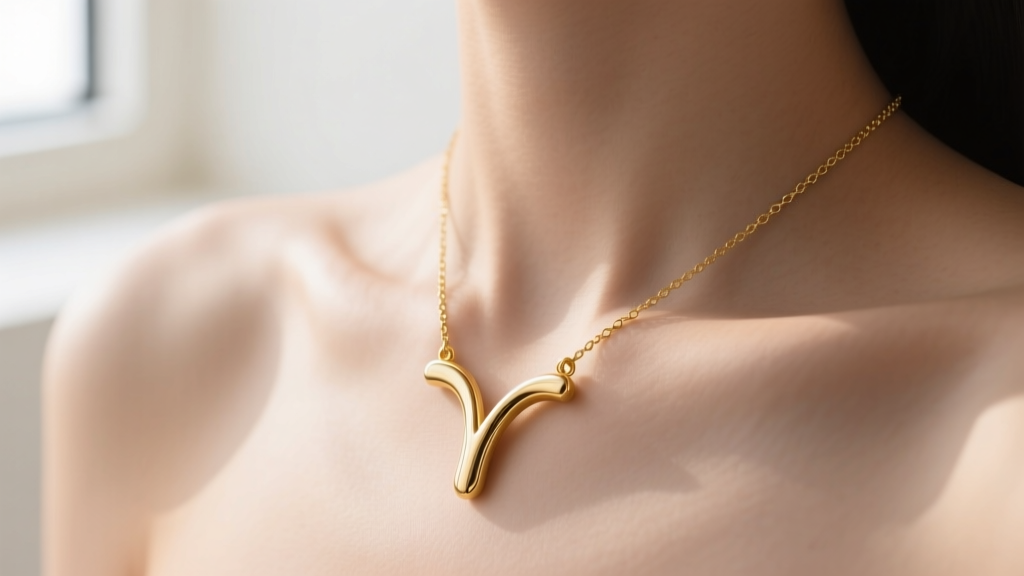
The wishbone necklace is a staple in modern jewelry boxes, celebrated for its sleek, minimalist geometry and its deep-rooted associations with luck and destiny. However, beneath its simple V-shaped silhouette lies a complex set of wearability challenges. From pendants that stubbornly flip upside down to delicate chains that snap under the wedge-like pressure of the charm, owning a wishbone necklace often requires a bit of mechanical troubleshooting. In this comprehensive guide, we will explore the historical wishbone necklace meaning and provide expert, actionable solutions to the most common structural and stylistic problems wearers face today.
Decoding the Wishbone Necklace Meaning
Before addressing the physical quirks of the jewelry, it is essential to understand the symbolism that drives its immense popularity. The tradition of breaking a bird's furcula (the wishbone) dates back to the Etruscans, who believed birds were divine oracles. By the Victorian era, this superstition had evolved into a popular motif in jewelry design. According to the Victoria and Albert Museum jewelry archives, Victorian sentimental jewelry frequently utilized the wishbone to symbolize hope, good fortune, and the sealing of a romantic pact.
Today, the wishbone necklace meaning has expanded. It is widely gifted as a talisman for new beginnings—such as graduations, new jobs, or the start of a marriage. When two people pull a physical wishbone, the one left with the larger piece gets their wish. In jewelry, the V-shape represents the convergence of two paths into one, making it a profound symbol of partnership and shared destiny. However, because it is often worn daily as a 'lucky charm,' the piece is subjected to constant friction, sweat, and movement, leading to inevitable wear-and-tear issues.
The Physics of the Flip: Troubleshooting Upside-Down Pendants
The most frequent complaint among wishbone necklace wearers is the 'pendulum effect'—the pendant continuously flips upside down, displaying the flat back or pointing the V toward the ceiling. This is not a defect in your specific piece, but rather a matter of basic physics and center-of-gravity miscalculation by the manufacturer.
Why It Happens
A standard wishbone pendant is bottom-heavy. If the bail (the loop that connects the charm to the chain) is soldered at the very top vertex of the V, the heavier bottom curve acts as a pendulum. Any slight movement causes the charm to swing forward and flip. Furthermore, if the bail is too large, it slides freely along the chain, failing to anchor the pendant in the center of the collarbone.
Expert Fixes and Workarounds
- The Silicone Stopper Hack: Purchase a 1mm silicone necklace stopper bead (often sold as 'necklace spacers'). Thread it onto the chain directly behind the wishbone bail. This creates high-friction resistance against the metal, locking the pendant in the center of your chest and limiting its swing radius.
- Opt for a Hidden or Fixed Bail: When shopping, avoid pendants with free-swinging jump rings. Look for designs where the chain threads directly through a hollowed-out top vertex (a fixed tube bail), which drastically lowers the pivot point and stabilizes the V-shape.
- The Chain Thickness Rule: Pairing a lightweight pendant with a thick chain (1.2mm or wider) increases the friction at the bail hole, naturally reducing the flipping motion.
Chain Selection: Solving the Tangling and Snapping Nightmare
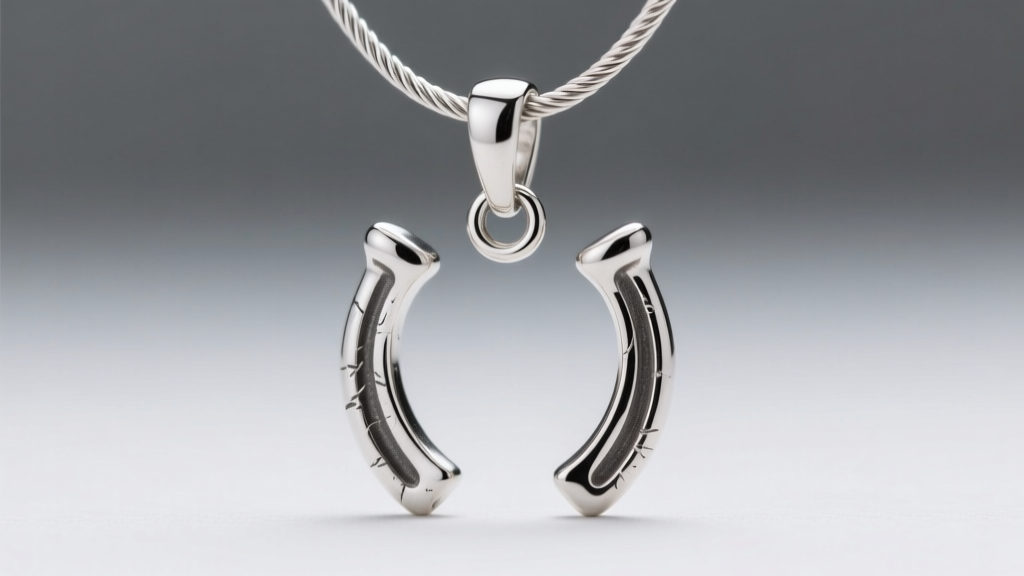
The geometry of a wishbone charm acts as a wedge. If the necklace catches on a sweater or a seatbelt, the kinetic force is funneled directly upward into the top vertex and the chain's jump ring. Delicate chains simply cannot withstand this directional stress, leading to frequent snapping. Additionally, the sharp inner angles of the V-shape are notorious for catching and tangling with certain chain link patterns.
Chain Type vs. Durability Matrix
Choosing the right chain is critical for the longevity of your lucky charm. Below is a structural comparison of popular chain types when paired with a V-shaped wedge pendant.
| Chain Type | Recommended Gauge | Tangling Risk | Tensile Strength (Wedge Stress) |
|---|---|---|---|
| Cable Chain | 0.8mm - 1.0mm | High | Low (Prone to snapping at jump ring) |
| Box Chain | 0.9mm - 1.2mm | Medium | Medium (Links can kink under pressure) |
| Wheat Chain | 0.8mm - 1.0mm | Low | High (Braided structure absorbs shock) |
| Snake Chain | 1.0mm - 1.5mm | Very Low | Very High (Smooth, rigid, resists pulling) |
Troubleshooting Tip: If your current chain keeps tangling in the crook of the wishbone, switch to a smooth Snake chain. The flush, scale-like surface of a snake chain prevents the sharp inner corners of the pendant from catching on individual links, virtually eliminating tangles.
Metal Reactions: Fixing Tarnish and Green Skin
Because the wishbone necklace meaning is tied to luck, many wearers refuse to take it off, showering, swimming, and sleeping in the piece. This 24/7 exposure accelerates metal degradation, especially in lower-tier alloys.
The Problem with Plated 'Lucky' Charms
Many affordable wishbone necklaces are crafted from brass or copper and plated with a micro-layer of gold or silver. Human sweat contains lactic acid and urea, while tap water contains chlorine. This combination strips the plating within 3 to 6 months, exposing the base metal. The copper in brass reacts with oxygen and acids to create copper chloride, which leaves a stubborn green stain on the décolletage.
Material Upgrades for 24/7 Wear
To troubleshoot tarnish and allergic contact dermatitis, you must upgrade the metallurgy. According to the Gemological Institute of America (GIA) gold guide, pure 24k gold is too soft for daily-wear pendants, but 14k gold (58.5% pure gold alloyed with silver and zinc) offers the perfect balance of tarnish resistance and structural integrity. If you prefer silver, ensure it is 925 sterling silver coated in a thick layer of rhodium, which acts as an impermeable barrier against sulfur-induced black tarnish.
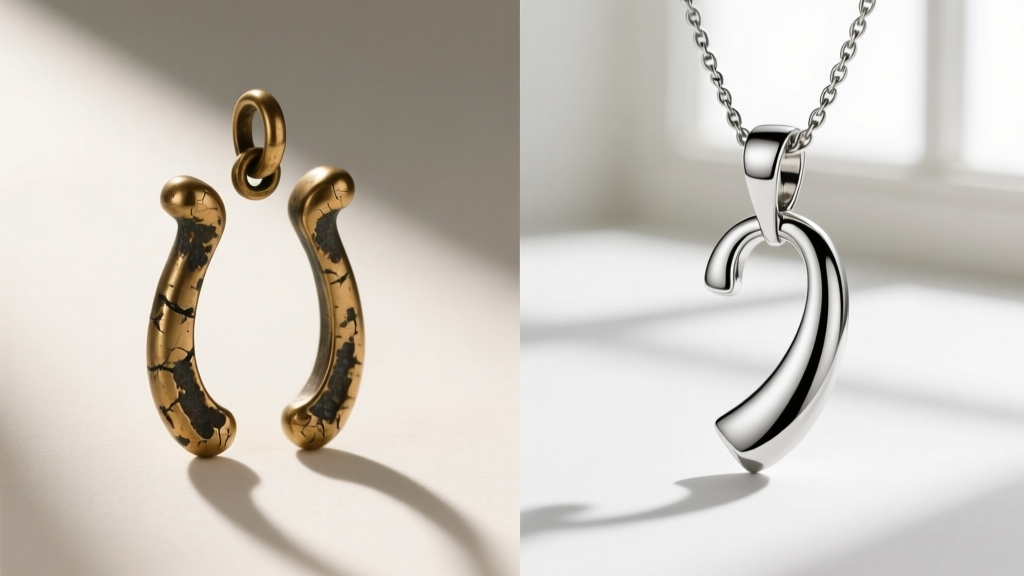
For those with severe nickel allergies or those who frequently swim in chlorinated pools, Grade 23 Titanium (Ti-6Al-4V) is the ultimate troubleshooting material. It is entirely impervious to water, sweat, and chlorine, ensuring your lucky charm never turns your skin green or loses its polish.
Gifting Framework: Navigating Superstitious Etiquette
Finally, troubleshooting the wishbone necklace meaning extends to the social realm of gifting. Because the charm is deeply tied to superstition and the concept of 'making a wish,' gifting it requires a nuanced understanding of the recipient's beliefs and your relationship dynamic.
When to Gift a Wishbone
- Romantic Partners: The V-shape symbolizes two individuals coming together at a single point. It is highly appropriate for anniversaries or Valentine's Day, provided you present it with the intention of 'building a shared future.'
- Graduates and Career Changers: As a talisman for good fortune, it is the perfect gift for someone stepping into the unknown, such as a college graduate or an entrepreneur launching a startup.
When to Avoid Gifting It
Avoid gifting a wishbone necklace to individuals who are deeply superstitious about 'bad luck' if a wish is broken, or to those who prefer highly personalized, birthstone-driven jewelry over symbolic talismans. Furthermore, in some cultural contexts, giving a symbol of 'luck' can be misconstrued as implying the recipient needs external help to succeed. Always pair the gift with a handwritten note explicitly stating your interpretation of the wishbone necklace meaning to ensure the symbolism is received exactly as you intended.


