Topaz and Diamond Necklace Trends: 2026 Style & Buying Guide
Discover 2026 trends for the topaz and diamond necklace. Expert analysis on London blue cuts, lab-grown accents, pricing, and styling.

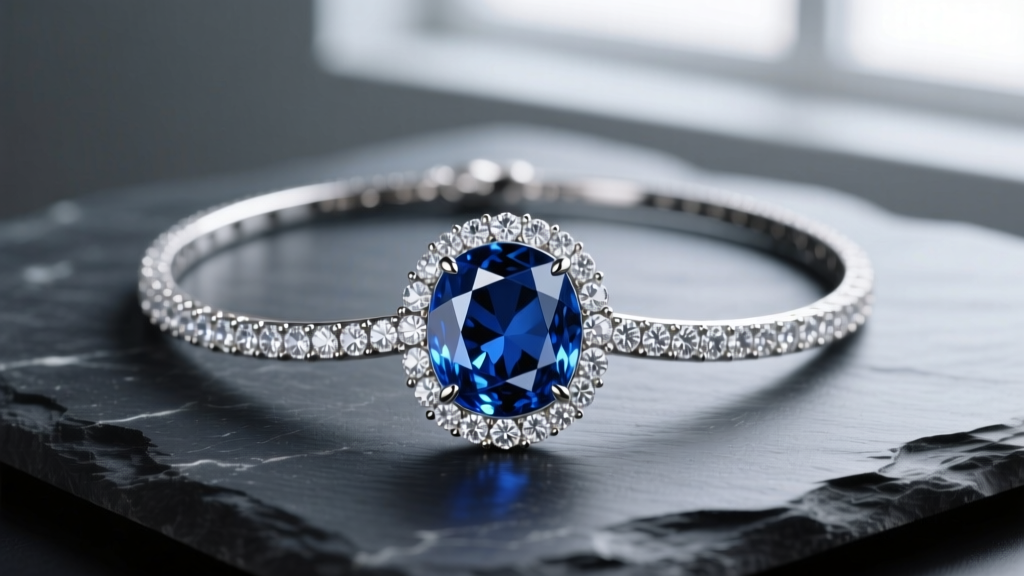
The 2026 Renaissance of Colored Gemstone Jewelry
As we navigate the 2026 fine jewelry landscape, a distinct shift in consumer preferences has emerged. The traditional dominance of sapphire and emerald centerpieces is being challenged by a highly sophisticated, accessible luxury alternative: the topaz and diamond necklace. Driven by a desire for vibrant color without the exorbitant price tags of rare corundum, modern buyers are turning to precision-cut topaz accented by brilliant diamonds. This trend analysis explores the gemological specifics, structural design innovations, and market pricing that define the topaz and diamond necklace category this year.
Decoding the Stones: Grades, Cuts, and Origins
To truly appreciate the value of a topaz and diamond necklace, one must look beyond the surface sparkle and understand the material science governing these stones. Not all topaz is created equal, and the pairing with diamonds requires careful consideration of color theory and light performance.
Topaz Color Grading: Swiss vs. London Blue
The market is currently dominated by two primary treatments of blue topaz. According to the Gemological Institute of America (GIA), naturally occurring blue topaz is exceedingly rare and typically very pale. The vivid blues seen in 2026 collections are the result of colorless topaz undergoing controlled irradiation and heat treatment.
- Swiss Blue: A bright, sky-blue hue with high clarity. It appeals to buyers seeking a vibrant, daytime-appropriate accessory that catches the light with a crisp, icy brilliance.
- London Blue: A deeper, inky blue with subtle gray or green undertones. London blue commands a 20-30% premium over Swiss blue due to the longer irradiation process required to achieve its moody, saturated depth. It is the undisputed favorite for evening wear and vintage-inspired designs.
The Lab-Grown Diamond Accent Shift
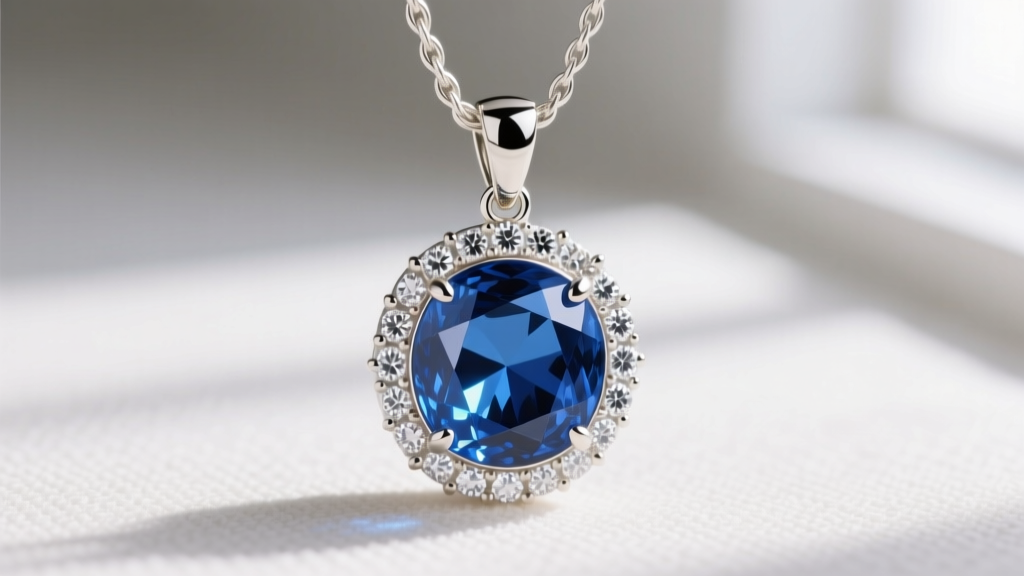
The most significant 2026 trend in this category is the wholesale adoption of lab-grown melee diamonds for halos and pavé settings. Because topaz is an affordable center stone, jewelers are reallocating budgets to maximize diamond carat weight. By utilizing lab-grown diamonds (typically VS clarity and F-G color), designers can create dense, high-sparkle halos around a 3-carat topaz center without pushing the necklace price past the $2,000 threshold. For buyers insisting on natural diamonds, the GIA's comprehensive grading reports remain the gold standard for verifying melee origins.
2026 Design Trends: Settings and Chain Mechanics
A beautiful stone is only as good as its setting. Topaz ranks an 8 on the Mohs scale of hardness, making it resistant to scratching. However, it possesses perfect basal cleavage, meaning a sharp blow to the girdle can cause the stone to split. This gemological reality has heavily influenced 2026 setting trends.
Protective Settings Take Precedence
The traditional four-prong solitaire is being phased out in favor of protective architectures. Bezel and semi-bezel settings are trending heavily, wrapping the vulnerable edges of the topaz in a continuous ribbon of gold or platinum. For those who prefer the light entry of prongs, V-prong settings are now standard at the pointed tips of pear and marquise cuts to prevent chipping.
Chain Gauges and Clasp Engineering
The chain supporting a topaz and diamond pendant must balance delicacy with tensile strength. In 2026, the industry standard for pendants weighing between 4 and 8 grams (typical for a 3ct topaz with a diamond halo) is a 1.0mm to 1.2mm cable or box chain. Thinner 0.6mm chains are prone to kinking and snapping under the pendulum weight of a topaz drop. Furthermore, the traditional spring ring clasp is being replaced by the hyper-secure lobster clasp or the innovative magnetic slide-lock clasp, which offers both ease of use and structural reliability.
Market Pricing & Value Matrix
Understanding the pricing architecture of a topaz and diamond necklace requires analyzing the intersection of metal purity, diamond origin, and topaz saturation. Below is a 2026 market matrix for a standard 18-inch princess necklace featuring a 2.5 to 3.0-carat center stone and 0.25 carats of total diamond weight (TDW).
| Specification | Material Details | Estimated 2026 Retail Price |
|---|---|---|
| Entry-Level Luxury | Swiss Blue Topaz, 0.25ctw Lab Diamonds, 10k White Gold | $450 - $700 |
| Core Market Standard | London Blue Topaz, 0.30ctw Lab Diamonds, 14k White Gold | $850 - $1,400 |
| Premium Heirloom | London Blue Topaz, 0.40ctw Natural Diamonds, 18k White Gold | $2,200 - $3,500 |
| Avant-Garde Contrast | Imperial (Orange) Topaz, 0.25ctw Natural Diamonds, 18k Yellow Gold | $4,000 - $6,500+ |
Note: Imperial topaz, which occurs naturally in vibrant peach and orange hues, bypasses the irradiation process entirely and commands a massive premium, catering to the niche collector market.
Styling the Topaz and Diamond Necklace for Modern Necklines
The versatility of the topaz and diamond necklace lies in its ability to bridge the gap between corporate boardrooms and evening galas. However, the optical properties of blue topaz require specific styling considerations to maximize light return and color saturation.
The V-Neck and Princess Length Synergy
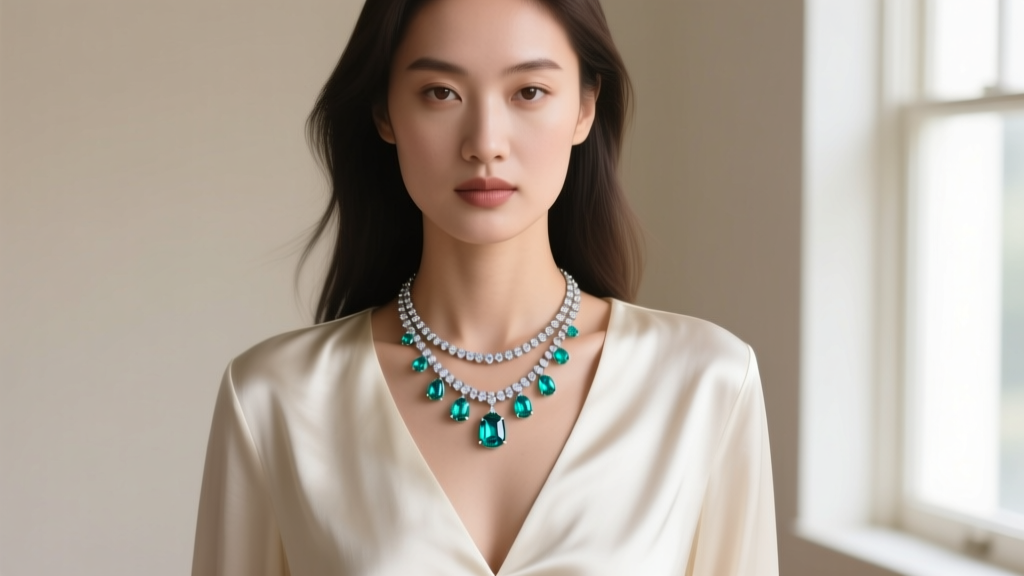
An 18-inch princess length necklace terminating in a pear-cut London blue topaz pendant perfectly mirrors the geometry of a V-neck blouse or dress. The downward point of the pendant elongates the neck, while the dark background of a navy or charcoal silk garment absorbs stray light, forcing the eye directly to the icy blue refraction of the topaz and the contrasting fire of the diamond halo.
Layering with Delicate Chains
For 2026, the 'curated neckline' remains relevant, but the rules have tightened. When layering a topaz and diamond pendant, it must serve as the anchor piece. Pair a 16-inch choker-length diamond station chain (featuring 0.05ct bezel-set diamonds) with your 18-inch topaz pendant. Ensure all chains in the stack share the same metal color; mixing white gold topaz settings with yellow gold chains dilutes the cool, striking contrast that makes blue topaz so visually arresting.
Expert Verdict: Is It a Worthwhile Investment?
While topaz does not hold the secondary market resale value of unheated Burmese rubies or Kashmir sapphires, its value proposition in 2026 lies in its unparalleled aesthetic yield per dollar. A topaz and diamond necklace offers the visual weight and prestige of high jewelry at a fraction of the cost, making it a smart acquisition for style-driven consumers rather than pure asset investors.
Ultimately, the topaz and diamond necklace has cemented its place in the 2026 jewelry lexicon as a triumph of accessible luxury. By prioritizing protective bezel settings, opting for high-clarity lab-grown diamond accents, and selecting the moody depths of London blue topaz, buyers can secure a piece that is as structurally sound as it is visually breathtaking. Whether worn as a daily signature piece or an elegant evening accent, this pairing represents the perfect synthesis of modern gemology and timeless design.


