2026 Floral Necklace Gift Guide: Match Every Occasion
Discover the perfect floral necklace for every milestone. Our 2026 gift guide covers metal grades, enamel types, and occasion-matching strategies.

Why Floral Necklaces Remain the Ultimate Sentimental Gift
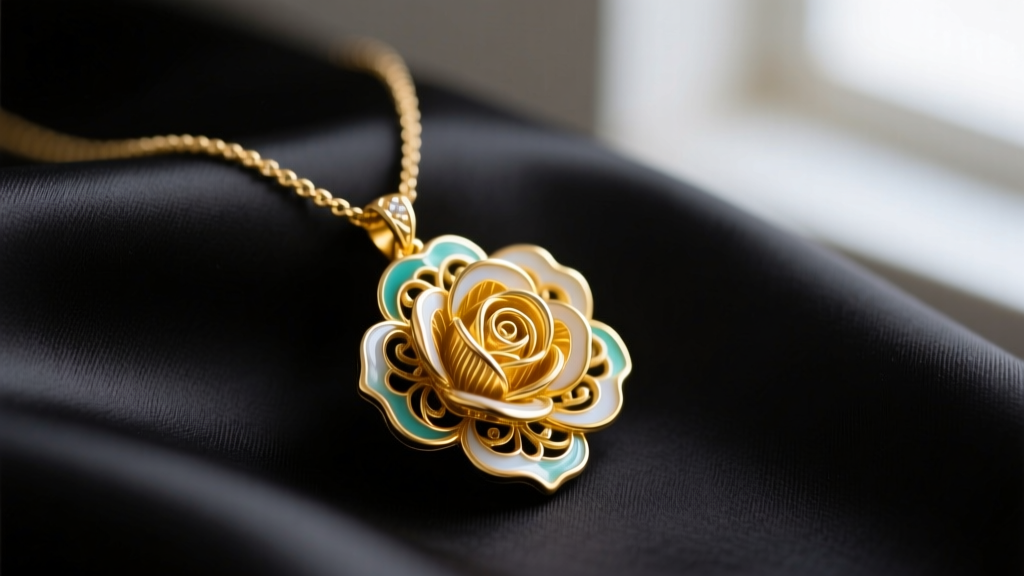
In the landscape of fine jewelry, the floral necklace occupies a unique space where botanical beauty meets deep emotional resonance. While minimalist geometric pendants have dominated the early 2020s, 2026 has seen a massive resurgence in romantic, nature-inspired motifs. According to the V&A Museum's jewelry archives, the tradition of gifting botanical jewelry traces back to the Victorian era's "language of flowers" (floriography), where specific blooms conveyed coded messages of love, grief, or resilience. Today, gifting a floral pendant is not merely a stylistic choice; it is a highly personalized gesture that speaks to the recipient's unique journey.
However, selecting the right floral necklace requires navigating a complex market filled with varying metal purities, casting techniques, and enamel finishes. A poorly constructed botanical piece can tarnish within months, while a masterfully crafted heirloom can last generations. This guide breaks down the exact specifications, material grades, and occasion-matching frameworks you need to choose a botanical pendant that truly matters.
Decoding Floral Motifs: Meanings & Occasion Matching
Before evaluating carat weights or chain gauges, you must match the floral motif to the emotional weight of the occasion. The Missouri Botanical Garden notes that historical flower symbolism still heavily influences modern jewelry design narratives. Use this framework to align the bloom with your recipient's milestone.
| Floral Motif | Floriography Meaning | Ideal Occasion | Recommended Metal |
|---|---|---|---|
| Rose | Deep romance, enduring passion | Anniversaries, Valentine's Day | 14k Rose Gold |
| Lily | Purity, motherhood, devotion | Mother's Day, Christenings | Sterling Silver or White Gold |
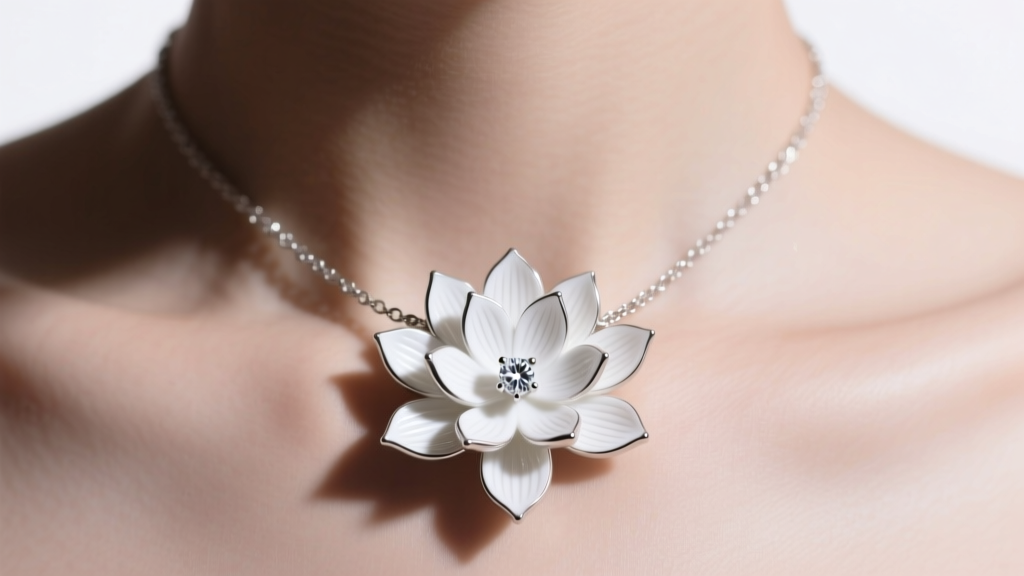
| Lotus | Resilience, rebirth, triumph | Graduations, Milestone Birthdays | 18k Yellow Gold |
| Daisy | Innocence, new beginnings | New Baby, Sweet Sixteen | Gold Vermeil or Platinum |
Material Grades & Craftsmanship: What to Look For
The structural integrity of a floral necklace depends entirely on its metal composition and manufacturing method. Floral pendants require intricate detailing—such as the delicate veining on a lily petal or the textured stamen of a rose—which dictates the ideal metal alloy.
Solid Gold vs. Vermeil: Understanding Purity and Durability
For heirloom-quality gifting, 14k solid gold (58.5% pure gold) is the industry gold standard. As noted by the Gemological Institute of America (GIA), 14k gold offers the perfect balance of rich color and tensile strength, preventing the delicate edges of stamped floral petals from bending during daily wear. If your budget requires gold vermeil, you must verify the plating thickness. By FTC guidelines, true vermeil requires a base of 925 sterling silver plated with at least 2.5 microns of gold. Anything less (often marketed as "gold dipped" or "plated") will wear through to the base metal within a year of friction against the collarbone.
The Art of Enamel: Vitreous vs. Cold Enamel
Many premium floral necklaces incorporate enamel to mimic the vibrant hues of nature. You must distinguish between vitreous enamel and cold enamel:
- Vitreous Enamel: Made from finely ground glass fired at temperatures exceeding 1400°F. It fuses permanently to the metal, resulting in a translucent, scratch-resistant finish that will not yellow over time. This is essential for high-end lotus or rose pendants.
- Cold Enamel (Epoxy Resin):strong> A painted resin that air-dries. While cheaper and capable of opaque, bright colors (ideal for daisy centers), it is prone to micro-scratches, chipping upon impact, and UV-induced yellowing after 3 to 5 years.
Pricing Tiers: Budgeting for the Perfect Botanical Piece
Understanding what your budget actually buys in the current market prevents overpaying for mass-produced inventory. Here is a realistic breakdown of pricing tiers for floral necklaces in 2026:
- Under $150 (The Fashion Tier): Expect gold-plated brass or 925 silver with cold enamel. Pendants are typically die-stamped rather than cast, meaning the back of the pendant will be flat and hollow. Chains are usually delicate 0.8mm cable chains that are prone to kinking.
- $250 - $600 (The Fine Jewelry Tier): This bracket unlocks heavy gold vermeil (3+ microns) or solid 10k/14k gold. Pendants are often cast using the lost-wax method, allowing for 3D, sculptural petals with detailed milgrain edges. You may also find small melee diamonds (0.02ct - 0.05ct) bezel-set in the flower's center.
- $800 - $2,500+ (The Heirloom Tier): Solid 18k gold or platinum, featuring hand-engraved guilloché patterns beneath translucent vitreous enamel. These pieces often include high-clarity accent stones and are finished with secure, premium clasps.
Styling & Layering Botanical Pendants for the Recipient
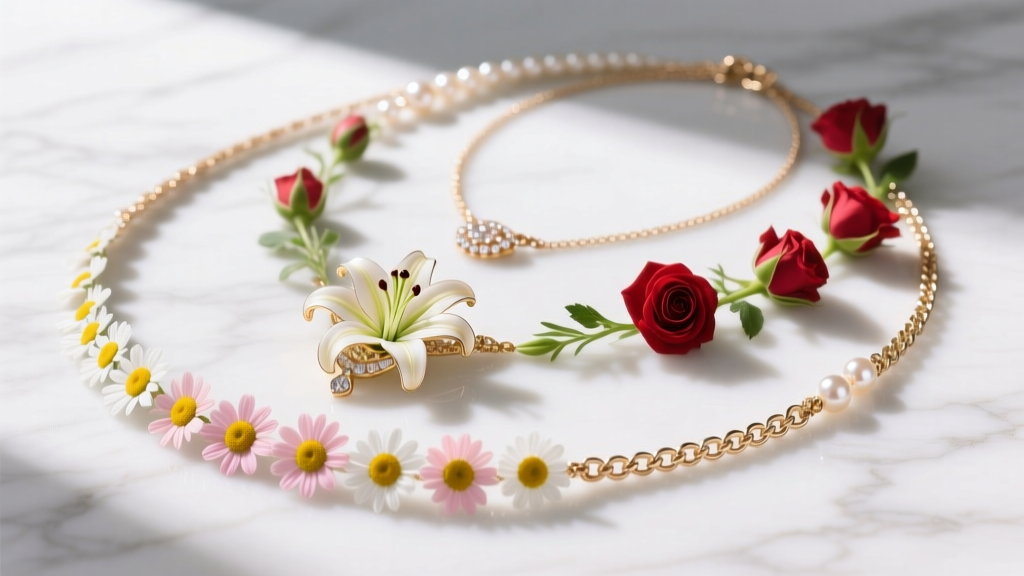
A floral necklace rarely exists in isolation. Modern styling relies on the "botanical layering" technique, which requires careful attention to chain lengths and pendant weights to prevent tangling. If you are gifting a piece intended for layering, follow these dimensional rules:
- The Base Layer (14-15 inches): A lightweight floral choker or a simple 10mm daisy pendant on a 1.0mm box chain. This sits snugly at the suprasternal notch.
- The Focal Layer (16-18 inches): The primary floral pendant (e.g., a 20mm rose or lotus). This requires a slightly heavier chain, such as a 1.2mm cable or rope chain, to support the pendant's weight without flipping upside down.
- The Anchor Layer (20-22 inches): A complementary non-floral piece, such as a simple gold signet or a birthstone solitaire, which draws the eye downward and frames the floral motif.
Pro-Tip: Never pair a floral pendant with a snake chain. Snake chains lack the flexibility to drape naturally around a sculptural 3D pendant, causing the flower to sit awkwardly flat against the chest. Always opt for a cable or curb chain.
Expert Troubleshooting: Avoiding Common Gifting Pitfalls
Even the most beautiful floral necklace can become a source of frustration if the hardware is flawed. Before finalizing your purchase, inspect these three critical failure points:
1. The Clasp Mechanism
Many mass-produced botanical necklaces utilize 4mm spring ring clasps to cut costs. These are notoriously difficult to operate with one hand and frequently fail when the internal tension spring wears out. Always ensure the necklace features a 5mm or 6mm lobster clasp, which offers superior security and ease of use.
2. Pendant Bail Proportions
The bail (the loop connecting the pendant to the chain) must be proportionate to the chain width. A common manufacturing error is pairing a wide, ornate floral bail with a chain that is too thick, causing the chain to bunch up and force the pendant to face sideways. Ensure there is at least 1mm of clearance between the chain and the interior of the bail.
3. Metal Allergies and Alloys
If your recipient has sensitive skin, avoid white gold floral pendants that are rhodium-plated over nickel-alloyed gold. Instead, opt for nickel-free 14k yellow gold or platinum. For silver pieces, ensure the earring posts or necklace solders are stamped "925" and explicitly labeled nickel-free, as cheap solder joints are the primary culprit for contact dermatitis on the neck.
Final Thoughts on Botanical Gifting
A floral necklace is a wearable garden, a permanent capture of a fleeting natural moment. By prioritizing vitreous enamel over resin, demanding proper vermeil thickness, and matching the historical floriography of the bloom to your recipient's life milestone, you elevate your gift from a simple accessory to a profound emotional artifact. Whether you are celebrating a graduation with a resilient lotus or a new romance with a classic rose, the right craftsmanship ensures your sentiment endures.


