How to Decode Mood Necklace Meanings: Step-by-Step Calibration Guide
Learn how to accurately read mood necklace meanings with our step-by-step calibration guide, exploring thermochromic science and temperature baselines.

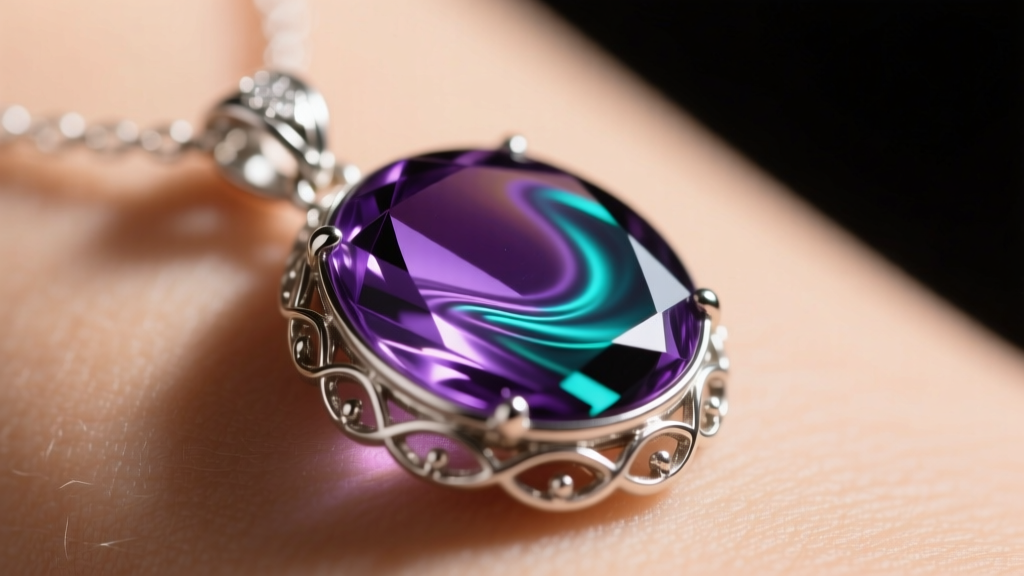
For decades, mood necklaces have captivated wearers with their seemingly magical color-shifting properties. While they cannot truly read your emotions, the mood necklace meanings we associate with these pendants are rooted in real physiological responses and advanced materials science. By understanding how thermochromic liquid crystals react to subtle fluctuations in your peripheral body temperature, you can transform your necklace from a novelty toy into a fascinating bio-feedback accessory.
In this comprehensive guide, we will walk you through the exact science of thermochromism, how to establish your unique thermal baseline, and a step-by-step calibration process to ensure your pendant provides the most accurate color readings possible.
The Thermochromic Science Behind the Colors
To accurately decode your jewelry, you must first understand the chemistry happening inside the glass or quartz dome. According to chemical education resource Compound Interest, mood pendants rely on two primary components: cholesteric liquid crystals and leuco dyes.
Liquid crystals exist in a state between solid and liquid. In their cholesteric phase, the molecules arrange themselves in a helical structure. When the temperature changes, the pitch of this helix twists or untwists, altering the specific wavelength of light that is reflected back to your eye. A tighter twist reflects shorter wavelengths (blues and violets), while a looser twist reflects longer wavelengths (reds and yellows). The leuco dyes act as a background pigment, shifting between transparent and colored states based on thermal thresholds, providing the deep, rich hues you see in modern 2026 thermochromic jewelry.
Step 1: Establish Your Baseline Skin Temperature
The most common mistake people make when interpreting mood necklace meanings is assuming the pendant measures core body temperature. Core temperature remains a stable 98.6°F (37°C). However, your necklace rests against your sternum and collarbone, measuring peripheral skin temperature.
Normal chest and neck skin temperature typically ranges from 90°F to 95°F (32.2°C to 35°C) in a comfortable room. When you experience stress or anxiety, your body initiates a mild fight-or-flight response, causing vasoconstriction. Blood is diverted away from the skin's surface and toward vital organs, dropping your skin temperature by a few degrees. Conversely, when you are relaxed or passionate, vasodilation occurs, bringing warm blood to the surface and raising the skin temperature.
Variables That Skew Your Baseline
Before reading your pendant, account for these external factors that artificially alter skin temperature:
- Ambient Room Temperature: Cold environments will force the pendant into the brown/black spectrum regardless of your mood.
- Clothing Layers: Wearing a thick wool sweater over the pendant will trap heat, forcing it into the blue/violet spectrum.
- Recent Physical Activity: A brisk walk will raise surface temperature, mimicking the 'passionate' or 'excited' color states.
- Hormonal Fluctuations: Menstrual cycles and thyroid activity can naturally shift baseline skin temperature by up to 1.5°F.
Step 2: The Definitive Mood Necklace Meanings Chart
Once you understand the physiological triggers, you can map the colors to their actual biological states. Below is the calibrated chart used by thermochromic jewelry manufacturers to map temperature ranges to traditional emotional proxies.
| Pendant Color | Temperature Range | Physiological State | Traditional Mood Meaning |
|---|---|---|---|
| Black / Gray | Below 82°F (28°C) | Extreme vasoconstriction or cold environment | Stressed, Anxious, or Cold |
| Amber / Brown | 82°F - 86°F (28°C - 30°C) | Mild vasoconstriction, resting metabolic rate | Nervous, Pensive, Uneasy |
| Green / Teal | 88°F - 92°F (31°C - 33°C) | Normal peripheral blood flow, homeostasis | Calm, Balanced, Baseline |
| Blue | 93°F - 96°F (34°C - 35.5°C) | Active vasodilation, relaxed vascular system | Happy, Relaxed, Peaceful |
| Deep Violet | 97°F+ (36°C+) | Maximum surface blood flow, elevated heart rate | Passionate, Excited, Romantic |
Note: Clear or Yellow usually indicates that the thermochromic molecules have been damaged by UV exposure or extreme heat, rather than reflecting a specific mood.
Step 3: Calibrating Your Pendant for Accurate Readings
Because every individual has a unique resting skin temperature, a 'Green' reading for one person might be a 'Blue' for another. Follow this step-by-step calibration process to personalize your pendant's baseline.
- Find a Neutral Environment: Sit in a room that is approximately 72°F (22°C) for at least 15 minutes to allow your body to acclimate.
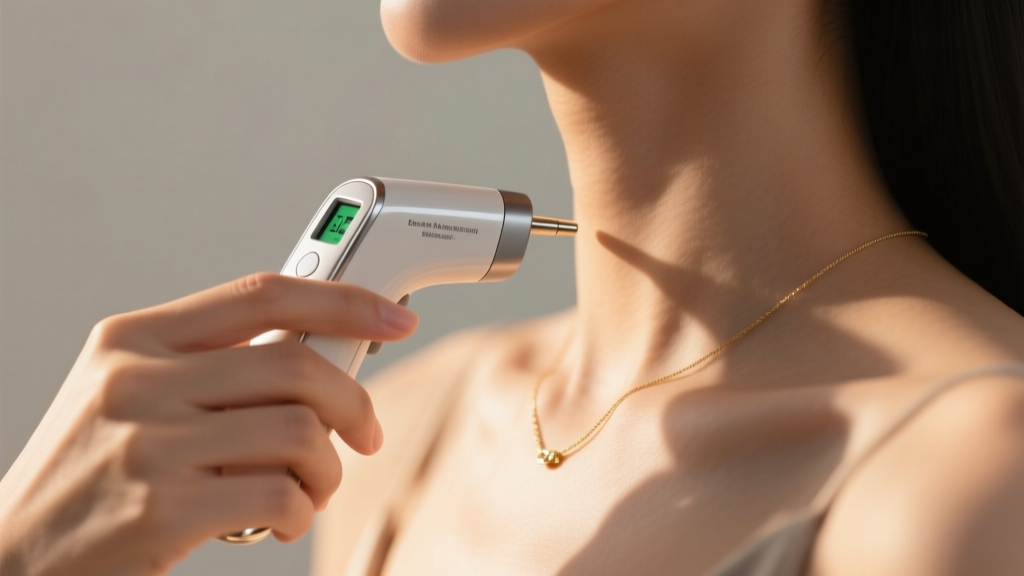
- Measure Your Skin Temp: Use a digital infrared thermometer aimed at your sternum to find your exact baseline skin temperature.
- Observe the Baseline Color: Put the necklace on and let it rest against your skin for 5 minutes. The color it settles on is your personal 'Calm/Baseline' color, regardless of what the generic chart says.
- Test the Upper Range: Gently rub the pendant between your palms or hold it against a warm mug of tea (around 100°F). Note the color it shifts to; this is your personal 'Excited/Passionate' threshold.
- Test the Lower Range: Hold an ice cube near the back of the pendant setting (do not freeze the glass directly to avoid thermal shock). The resulting color is your 'Stressed/Cold' indicator.
Troubleshooting Common Color-Stuck Issues
If your necklace refuses to change color, it is rarely a manufacturing defect and usually an environmental failure. As noted by materials science explanations on Live Science, the microcapsules housing the liquid crystals are highly sensitive to their environment.
The Pendant is Stuck on Black
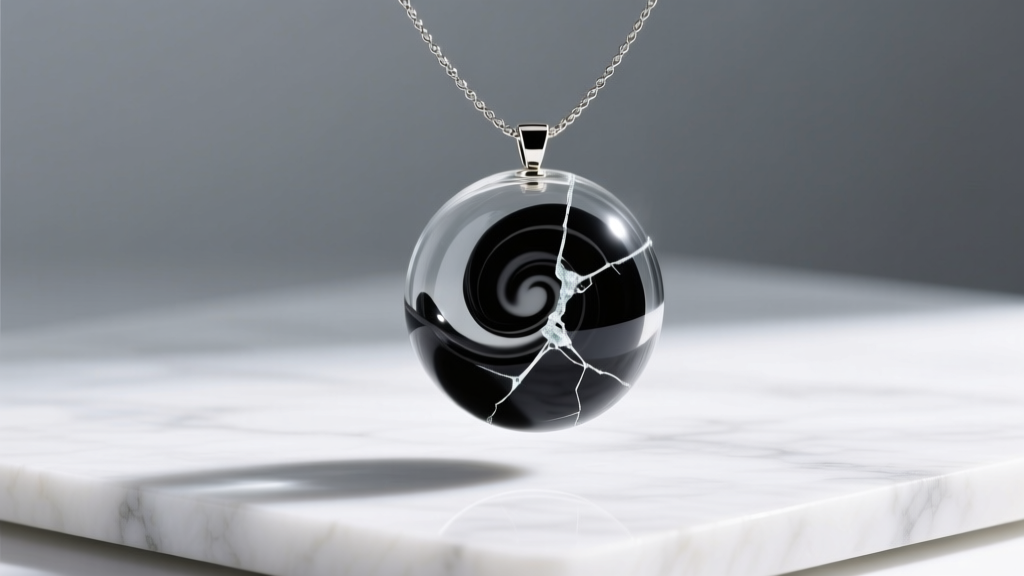
If the pendant remains pitch black even when held in a warm hand, it has likely suffered water ingress. If the glass dome or resin seal is compromised, moisture enters the capsule and destroys the alignment of the liquid crystals. Unfortunately, water damage is irreversible, and the pendant must be replaced.
The Pendant is Stuck on Yellow or Clear
This is the result of UV degradation. Prolonged exposure to direct sunlight breaks down the chemical bonds in the leuco dyes. Once the dye molecules are destroyed by ultraviolet radiation, they lose their ability to absorb and reflect light, leaving the liquid crystals visible without their colored background, resulting in a permanent cloudy yellow or clear appearance.
How to Layer Thermochromic Pendants with Traditional Chains
Integrating a mood necklace into a modern 2026 jewelry stack requires balancing the visual weight of the pendant with complementary chains. Because the pendant itself is a focal point of shifting color, you want your supporting chains to frame it without competing for attention.
- The 2-Inch Rule: Wear your mood pendant on a 16-inch choker or princess-length chain. Layer it with a 14-inch delicate cable chain and an 18-inch matte-finished rope chain. This 2-inch spacing prevents the metal from scratching the thermochromic dome.
- Metal Matching: If your pendant features a sterling silver bezel, stick to white metals (silver, platinum, white gold) for the surrounding chains to maintain a cohesive, cool-toned aesthetic that complements the blue and green color shifts.
- Texture Contrast: Pair the smooth, glossy surface of the mood stone with highly textured chains, such as a wheat chain or a paperclip link chain, to add visual depth to your neckline.
Long-Term Care for Thermochromic Jewelry
To maximize the lifespan of your thermochromic pendant and preserve the accuracy of your mood necklace meanings, strict maintenance is required. Never wear the pendant while swimming, showering, or washing dishes, as chlorine and harsh soaps will degrade the resin seal. Store the necklace in a dark, velvet-lined jewelry box when not in use to protect the leuco dyes from ambient UV light. By treating your necklace as a precision scientific instrument rather than a simple accessory, you ensure that its color-shifting magic remains vibrant and accurate for years to come.


