Purple Necklace Beads: 2026 Trend Analysis & Style Guide
Discover the 2026 trends for purple necklace beads. Learn how to layer amethyst, sugilite, and jade beads with expert styling tips and material guides.

The 2026 Resurgence of Purple Gemstone Beads
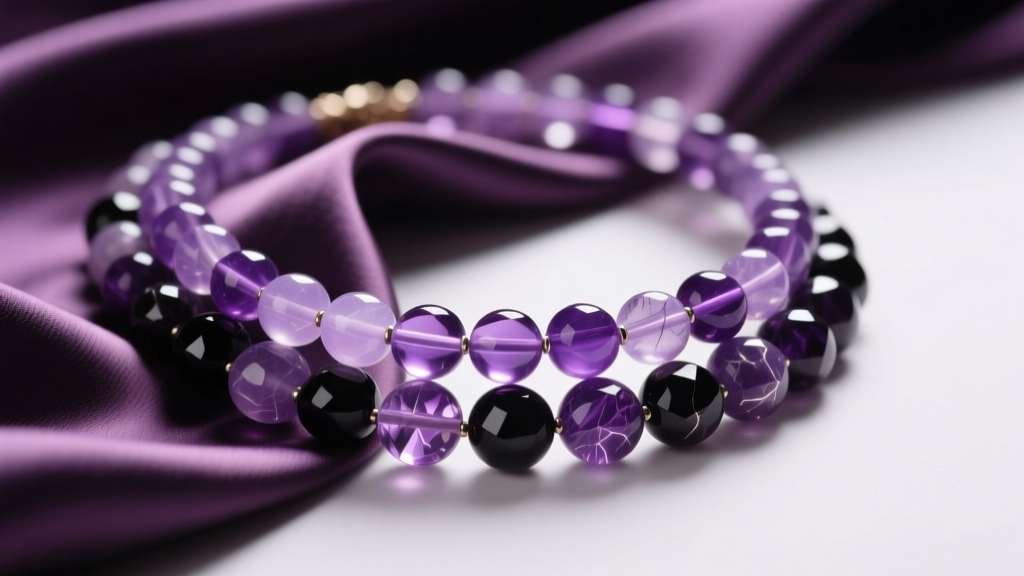
As we navigate the 2026 jewelry landscape, the maximalist metal trends of previous years have given way to a profound appreciation for organic textures and chromatic depth. At the forefront of this shift are purple necklace beads, which have transitioned from bohemian staples to high-fashion runway essentials. Design houses like Bottega Veneta and Zimmermann have recently showcased layered gemstone beads, cementing amethyst, sugilite, and lavender jade as the definitive triad of the year. But moving beyond mere aesthetics, the modern collector demands a rigorous understanding of gemological grades, bead proportions, and authentic sourcing. This comprehensive analysis breaks down exactly how to curate, layer, and verify purple bead necklaces in 2026.
Material Deep-Dive: Amethyst, Sugilite, and Lavender Jade
Not all purple beads are created equal. The market is currently saturated with varying grades of violet gemstones, and understanding the nuanced differences in Mohs hardness, color saturation, and pricing is critical for any serious jewelry enthusiast.
1. Amethyst: The Accessible Standard
Amethyst remains the most accessible purple gemstone, but the 2026 market heavily favors "Siberian" grade (AAA) stones. These beads exhibit a deep, velvety purple with secondary flashes of red and blue under natural light. According to the Gemological Institute of America (GIA), color zoning is a major factor in amethyst valuation. When purchasing beads, inspect the strand for uniform saturation; lower-grade beads (AA or A) will show visible pale banding and lack the rich, saturated core required for luxury layering. Expect to pay between $60 and $150 for a high-quality 16-inch strand of 6mm AAA amethyst beads.
2. Sugilite: The Rare Collector's Choice
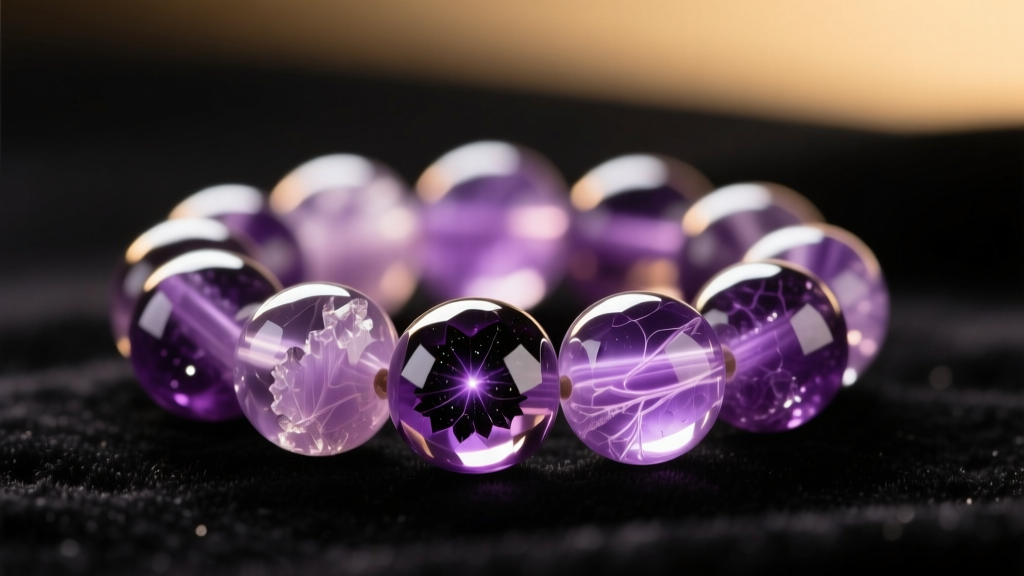
Sugilite has seen a massive surge in demand due to the depletion of the original South African Wessels Mine. True "Royal Purple" sugilite beads are highly prized and command premium prices, often ranging from $250 to over $600 per strand. As noted by Mindat.org, sugilite often contains black or brown matrix inclusions (manganese and iron). In 2026, collectors are actually seeking out beads with artistic, web-like matrix patterns rather than completely uniform stones, as these inclusions prove the material's natural origin and add a striking graphic element to the jewelry.
3. Lavender Jadeite: The Subtle Luxe
Unlike the deep violets of amethyst, lavender jadeite offers a soft, translucent pastel purple. The market is strictly focused on Type A (untreated) jadeite. Beware of Type B or C jadeite, which has been acid-bleached and polymer-impregnated or dyed. A high-quality 8mm lavender jadeite bead strand with good translucency (water head) will easily exceed $800, making it an investment-grade piece for the discerning collector.
Bead Sizing and Proportions for Modern Layering
The diameter of your purple necklace beads dictates not only the visual weight of the piece but also its structural integrity and ideal placement in a layered stack. Below is a functional framework for selecting bead sizes based on 2026 layering mechanics.
| Bead Diameter | Ideal Length | Layering Position | Recommended Hardware |
|---|---|---|---|
| 3mm - 4mm | 14" - 16" (Choker) | Base layer, sits flush on the collarbone | Lobster clasp, 14k gold-filled chain extender |
| 5mm - 6mm | 18" - 20" (Princess) | Middle layer, frames the neckline | Magnetic barrel clasp or spring ring |
| 7mm - 8mm | 22" - 24" (Matinee) | Statement layer, draws the eye downward | Heavy-duty hook clasp, reinforced silk cord |
| 10mm+ | 28" - 34" (Opera) | Outer layer, worn long or doubled up | Toggle clasp, wire-wrapped links between beads |
Expert Tip: When layering 6mm amethyst with 8mm sugilite, always place the smaller beads on the shorter chain. A minimum 2-inch length gap between layers prevents the heavier beads from grinding against and scratching the smaller ones, preserving the polish of your gemstones.
Styling Framework: Matching Beads to 2026 Necklines
Purple necklace beads possess a unique chromatic versatility. The cool undertones of amethyst pair beautifully with stark whites and silvers, while the warmer, earthier tones of sugilite complement camel, cream, and olive. Here is how to map your bead strands to this year's dominant necklines:
- The Asymmetrical One-Shoulder: Opt for a 15-inch choker of 4mm lavender jade beads. The delicate scale of the beads will not compete with the architectural drape of the fabric, providing a subtle gleam near the jawline without overwhelming the exposed collarbone.
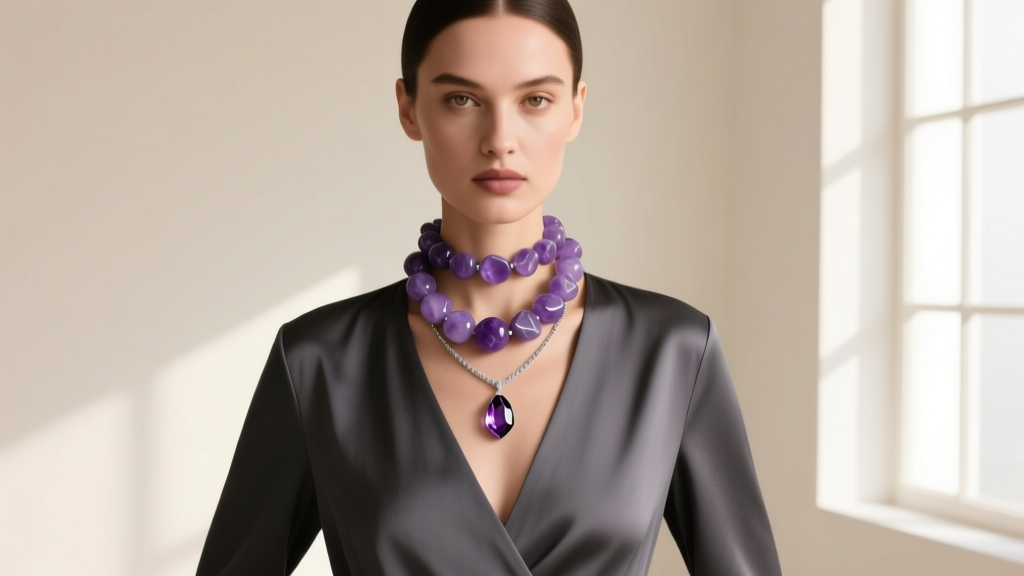
- The Deep-V Plunge: Create a cascading effect using three strands: a 16-inch 5mm amethyst, an 18-inch 7mm sugilite, and a 22-inch amethyst pendant on a gold chain. The graduated sizing mirrors the V-shape of the garment, elongating the torso.
- The High Mock-Neck: Contrast the heavy fabric with a 30-inch opera-length strand of 10mm polished amethyst beads. Worn long, it breaks up the visual block of the sweater; doubled and knotted loosely, it creates a sophisticated, textured bib effect.
Authenticity and Sourcing: Avoiding Dyed Howlite
With the skyrocketing demand for purple necklace beads, the market has seen an influx of sophisticated fakes. The most common culprit is dyed howlite or quench-crackled quartz masquerading as high-grade amethyst or sugilite. As a domain expert, I recommend a rigorous three-step verification process before purchasing premium strands.
1. The 10x Loupe Inspection
Dyed howlite and agate rely on capillary action to pull color into the stone's fractures. Under a 10x jeweler's loupe, genuine amethyst will show natural color zoning and clean, sharp internal fractures. Dyed stones will reveal concentrated webs of dark purple dye pooling along the fracture lines—a phenomenon known as "spiderwebbing."
2. UV Fluorescence Testing
While natural amethyst is generally inert under ultraviolet light, the synthetic polymer binders and organic dyes used in treated howlite often fluoresce a chalky blue or green under long-wave UV light. Carrying a portable 365nm UV flashlight is a non-destructive way to verify authenticity at gem shows or estate sales.
3. Thermal Conductivity
Genuine gemstone beads feel distinctly cold to the touch and take longer to warm up against the skin compared to glass or plastic imitations. While subjective, this tactile test is a reliable first line of defense when evaluating vintage or secondhand purple bead jewelry. For definitive proof, always consult the GIA Gem Encyclopedia or request a certificate of authenticity from a reputable gemological lab for strands priced over $500.
Final Verdict on the Purple Bead Movement
The 2026 trend of purple necklace beads is not a fleeting seasonal fad; it represents a broader consumer pivot toward mindful, gemological luxury. By prioritizing AAA-grade amethyst, matrix-rich sugilite, and untreated lavender jadeite, and by adhering to strict proportional layering frameworks, you can build a necklace wardrobe that is both structurally sound and aesthetically timeless. Invest in quality hardware, verify your sources, and let the natural depth of these violet gemstones elevate your personal style.


