Crescent Moon Gold Necklace: 2026 Budget & Value Guide
Discover the true value of a crescent moon gold necklace in 2026. We break down karat pricing, hollow vs. solid costs, and how to avoid overpaying.

The True Cost of Celestial Jewelry in 2026
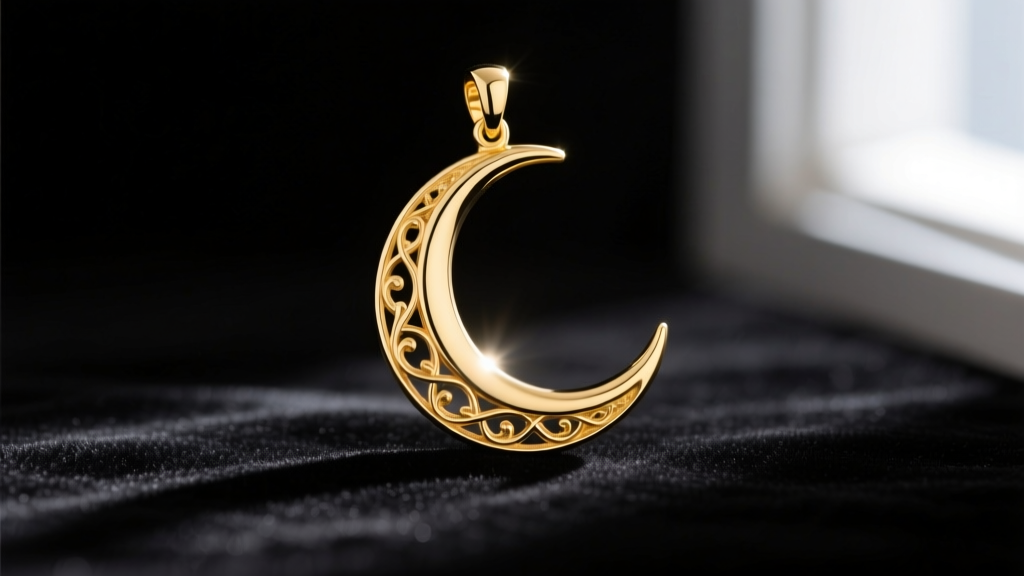
The crescent moon gold necklace remains one of the most sought-after motifs in modern jewelry, symbolizing intuition, cycles, and subtle elegance. However, as gold spot prices continue to fluctuate and hover near historic highs in 2026, the retail landscape for celestial pendants has become increasingly fragmented. Consumers are often caught between ultra-cheap fast-fashion pieces that tarnish within weeks and luxury designer markups that exceed 400% of the intrinsic melt value. Understanding the real budget and value assessment of a crescent moon gold necklace requires looking past the aesthetic and examining the metallurgy, weight, and manufacturing techniques.
When evaluating your next purchase, the primary question should not just be 'Is it real gold?' but rather 'How is it constructed?' A delicate 15-millimeter crescent moon can be cast in solid 14k gold, electroformed into a hollow 14k shell, or simply cast in brass and flash-plated. Each method drastically alters the price point, longevity, and ultimate value retention of the necklace. According to the Gemological Institute of America (GIA), the karatage and alloy composition dictate not only the color and scratch-resistance of the piece but also its long-term structural integrity.
Solid vs. Hollow: The Hidden Dent Factor
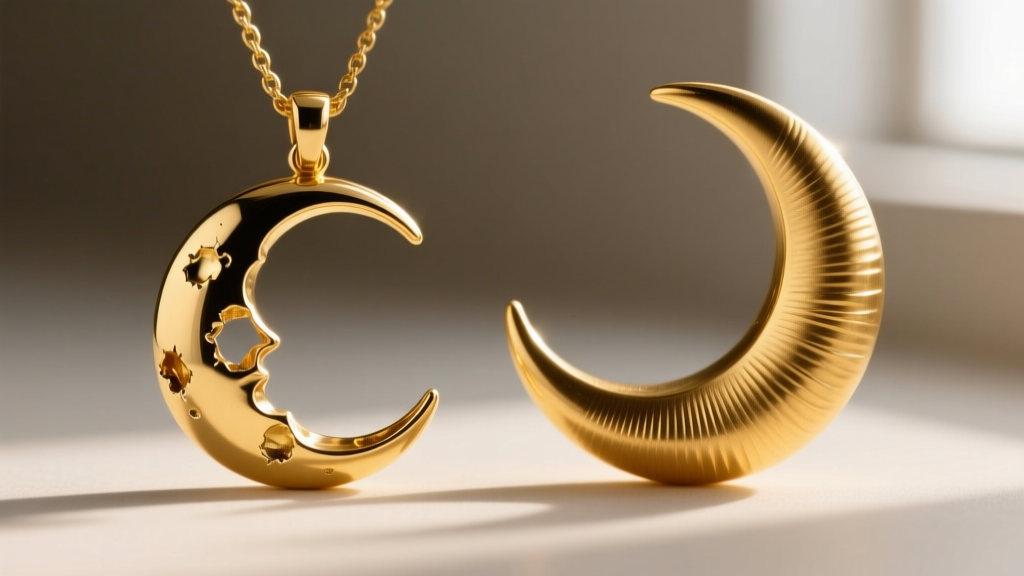
One of the most common pitfalls when shopping for a crescent moon gold necklace on a budget is the hollow pendant. Electroforming allows manufacturers to create large, visually substantial moon pendants using a fraction of the gold required for a solid cast. While this keeps the upfront cost low, it introduces a severe durability flaw. Gold is inherently a soft metal. A hollow 14k gold crescent weighing just 0.8 grams is highly susceptible to denting from everyday impacts—something as simple as leaning against a hard countertop or dropping the pendant on a bathroom floor can permanently crease the metal.
Conversely, a solid cast 14k gold crescent moon of the exact same dimensions will typically weigh between 2.8 and 4.2 grams. The density of solid gold provides structural rigidity, ensuring the pendant maintains its shape over decades of daily wear. When assessing value, always request the gram weight of the pendant. If a retailer cannot provide the exact weight, or if a seemingly large 20mm moon pendant is priced suspiciously close to the daily gold spot value, you are likely looking at a hollow or heavily alloyed piece.
2026 Price Breakdown by Material and Weight
To help you navigate the market, we have compiled a value assessment matrix based on early 2026 retail averages and intrinsic material costs. This table assumes a standard 15mm to 18mm crescent moon pendant paired with an 18-inch cable chain.
| Material / Construction | Avg. Weight (Pendant + Chain) | 2026 Retail Price Range | Intrinsic Melt Value | Value Retention Grade |
|---|---|---|---|---|
| Brass with Flash Plating | 4.0g (0g gold) | $25 - $60 | $0 | F (Disposable) |
| 14k Gold Vermeil (Sterling Base) | 5.5g (0.1g gold) | $85 - $180 | $8 (Silver value) | D (Temporary) |
| 10k Solid Gold (Hollow) | 2.5g (1.0g pure gold) | $140 - $220 | $75 | C (Fragile) |
| 14k Solid Gold (Cast) | 6.5g (3.8g pure gold) | $450 - $750 | $285 | A (Heirloom) |
| 18k Solid Gold (Cast) | 7.2g (5.4g pure gold) | $700 - $1,100 | $405 | A+ (Investment) |
As highlighted by the World Gold Council, the gap between intrinsic melt value and retail price represents the craftsmanship, brand overhead, and retail markup. A fair market markup for a high-quality, solid 14k crescent moon necklace from an independent jeweler typically ranges from 1.5x to 2.5x the melt value. Anything exceeding 4x enters the realm of luxury brand taxation, where you are paying for the logo rather than the metallurgy.
Vermeil, Plated, and Filled: Decoding the Alternatives
If a solid gold crescent moon necklace falls outside your current budget, it is vital to understand the hierarchy of gold alternatives. The Federal Trade Commission (FTC) Jewelry Guides strictly regulate how these terms can be used in the United States, yet misleading marketing remains rampant on social commerce platforms.
- Gold Vermeil: This requires a base of sterling silver (925) plated with a minimum of 2.5 microns of gold (usually 14k or 18k). It offers a premium feel and is hypoallergenic, but the friction point where the crescent bail rubs against the chain will eventually wear through the plating, exposing the silver beneath.
- Gold Filled: A mechanical bonding process where a thick layer of gold (at least 5% of the total weight) is heat-bonded to a brass core. Gold-filled crescent pendants are highly durable and can last a decade without flaking, making them the best budget alternative for daily wear.
- Flash Plated: Often labeled simply as 'gold dipped' or 'gold tone,' these pieces have a microscopic layer of gold (less than 0.5 microns). The brass or copper base will oxidize and turn your skin green within months of exposure to sweat and lotions.
How to Assess Value When Shopping
Checking the Clasp and Bail
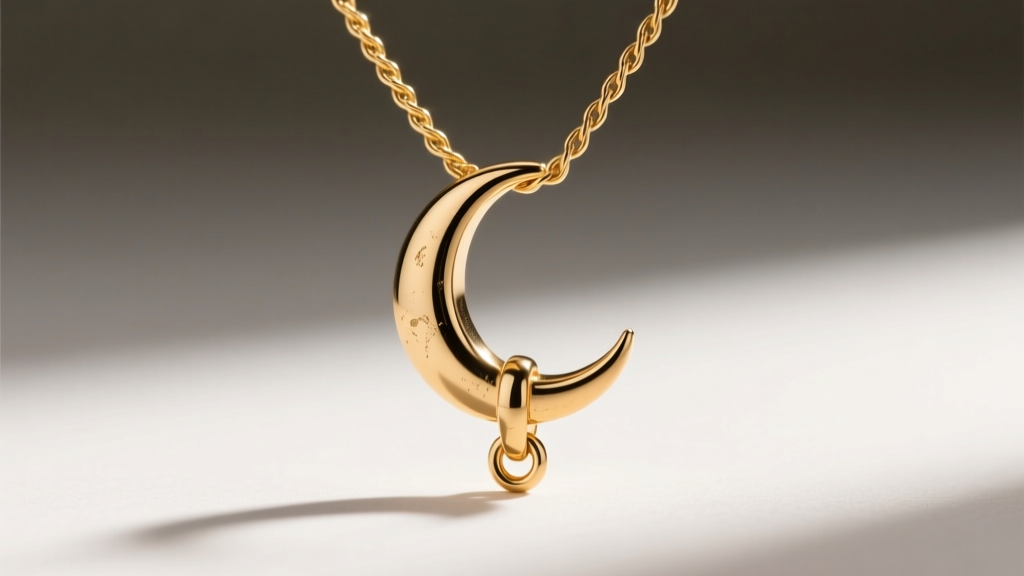
The bail—the loop that connects the crescent moon to the chain—is a critical failure point. In budget necklaces, the bail is often soldered poorly or left as a thin, unsoldered jump ring that can easily pull apart, resulting in the loss of the pendant. When inspecting a piece, look for a solid, seamlessly soldered bail. Additionally, the clasp should be stamped with a karat mark (e.g., 14K, 585) that matches the pendant. A mismatched clasp is a primary indicator that a solid gold pendant has been retrofitted onto a cheaper chain to inflate the perceived value.
Evaluating the Chain Gauge
A crescent moon pendant requires a chain that balances delicacy with tensile strength. A 0.9mm to 1.2mm cable or box chain is the optimal gauge for a standard 3-gram pendant. Chains thinner than 0.8mm are prone to kinking and snapping under the pendulum motion of a moon pendant swinging against the chest. Furthermore, ensure the chain links are individually soldered. Unsoldered links will stretch and separate over time, especially when catching on clothing.
Final Verdict: Maximizing Your Investment
When budgeting for a crescent moon gold necklace in 2026, prioritize material integrity over sheer size. A smaller, 12mm solid 14k gold crescent will outlast, outshine, and retain more resale value than a massive 25mm hollow or heavily plated alternative. If your budget restricts you to under $150, opt for a high-quality gold-filled piece on a sterling silver base rather than gambling on ultra-thin vermeil or mystery-metal fast fashion. By focusing on gram weight, karat hallmarks, and structural soldering, you can secure a celestial staple that truly holds its worth.