Troubleshooting Homemade Beaded Necklaces: Fix Breaks and Stretching
Discover why your homemade beaded necklaces break or stretch. Expert troubleshooting guide on stringing materials, crimp beads, and wire gauges.

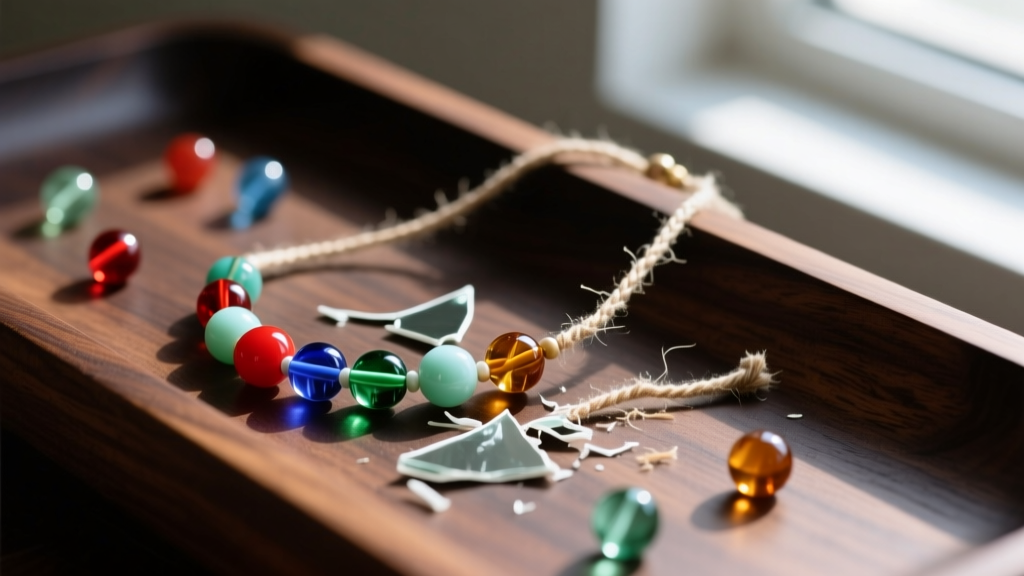
The Anatomy of a Necklace Failure
There are few things more frustrating for a jewelry maker than watching a carefully crafted piece snap the moment it is worn. When troubleshooting homemade beaded necklaces, it is crucial to understand that failure is rarely a random accident. It is almost always the result of a mechanical mismatch between the stringing material, the bead weight, and the finishing hardware. According to industry experts at Soft Flex Company, the vast majority of beading wire failures occur within two inches of the clasp, where tension, friction, and kinetic movement are highest. To build durable jewelry that withstands daily wear, we must move beyond guesswork and apply structural engineering principles to our designs, analyzing exact gauge sizes, material grades, and friction points.
Stringing Material Breakdown: Why Your Thread Snapped
Choosing the wrong stringing material is the leading cause of broken homemade beaded necklaces. Each material has a specific tensile strength, drape, and resistance to abrasion. Using silk thread for heavy turquoise stones will result in rapid stretching and eventual snapping, while using thick steel wire for delicate seed beads will cause the beads to crack from internal stress. Furthermore, the strand count of your wire matters immensely. A standard 7-strand wire is economical but stiff and prone to kinking, whereas a 49-strand nylon-coated stainless steel wire offers superior drape and resists metal fatigue, making it the gold standard for professional-grade gemstone necklaces.
| Material | Best Use Case | Recommended Size | Primary Failure Mode |
|---|---|---|---|
| Nylon-Coated Stainless Steel (49-strand) | Glass, crystal, heavy gemstones | .018 inch diameter | Kinking and abrasion at the crimp |
| Silk Thread | Pearls, lightweight coral | Size F or G | Stretching, rotting from sweat and UV |
| Nylon (Nymo) | Seed beads, loom work | Size D | Fraying from sharp bead edges |
| Elastic Cord | Stretch bracelets (rarely necklaces) | 0.8mm to 1.0mm | Dry rot and sudden snapping |
The Crimp Bead Conundrum: Slipping and Cutting
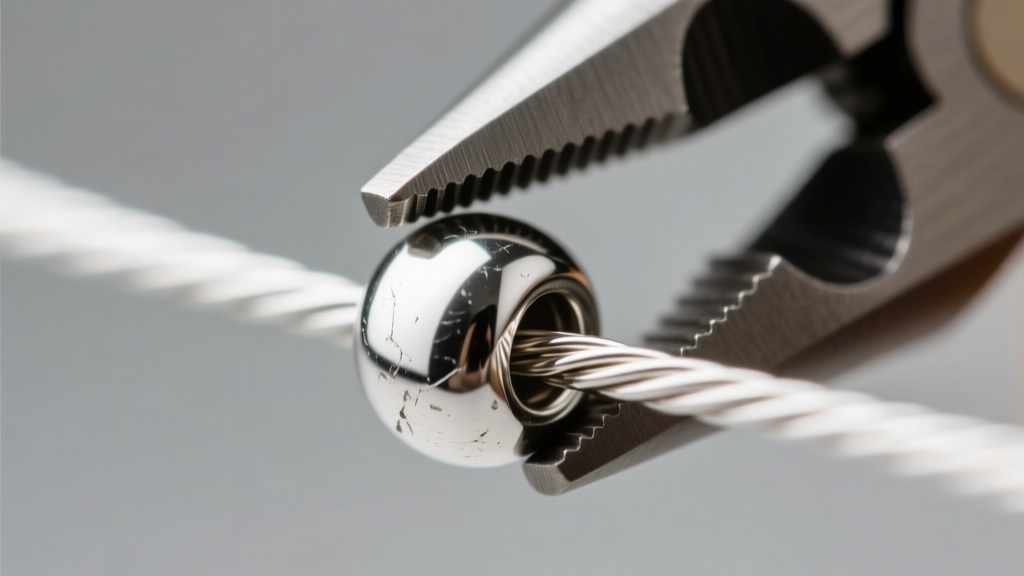
If your homemade beaded necklaces are slipping apart at the clasp, your crimping technique or hardware sizing is to blame. A crimp bead must bite into the stringing material without severing it. Round crimp beads are generally inferior to tube crimp beads because they offer less surface area for friction and are more likely to roll or slip under tension.
Sizing Your Crimp Beads Correctly
The math behind crimping is exact and unforgiving. A standard 2x2mm sterling silver tube crimp has an inner diameter of roughly 1.2mm. This perfectly accommodates two passes of .018-inch wire (0.45mm x 2 = 0.9mm), leaving just enough room for the metal to fold securely. If you attempt to use .024-inch wire in a 2x2mm tube, the wire will not pass through twice, or the tube will split when compressed. For .024-inch wire, you must upgrade to a 2.3x2.3mm crimp tube.
Jeweler's Pro Tip: Never use chain-nose pliers to flatten a crimp bead. This creates sharp, folded edges that act like a guillotine against your stringing wire, guaranteeing a future break. Always use a dedicated micro-crimper, like those manufactured by Beadalon, to fold and round the metal into a seamless bead shape.
Wire Gauge Mismatches and Clasp Fatigue
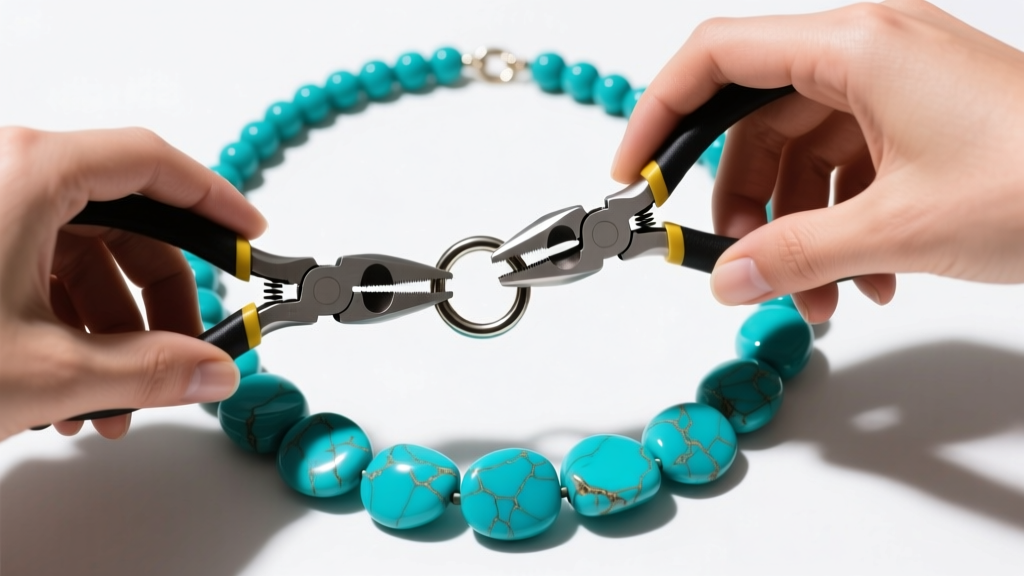
The transition point between your flexible stringing material and your rigid metal clasp is a high-stress zone. When troubleshooting homemade beaded necklaces, look closely at the jump ring. Standard split rings or poorly closed jump rings act like tiny saws against nylon-coated wire. Over time, the wire frays and snaps under the dynamic load of the wearer's movement.
The definitive solution is to implement wire guardians (also known as French wire or wire protectors). These are tiny, horseshoe-shaped metal findings that the stringing wire loops through before attaching to the clasp. The wire guardian takes 100 percent of the friction, sacrificing itself over decades to protect your structural wire. Additionally, swap standard jump rings for heavy-duty split rings or soldered rings to ensure the clasp connection never pulls apart under the weight of heavy stone beads.
The Physics of Bead Hole Abrasion
Often, the stringing material is perfectly fine, but the beads themselves are the culprits. Many natural stone, ceramic, and lampwork glass beads have sharp, unpolished drill holes. As the necklace moves, these microscopic sharp edges slowly saw through even the toughest 49-strand steel wire. Before stringing any high-value or heavy beads, inspect the holes with a jeweler's loupe. Use a diamond bead reamer to smooth the interior edges, or apply a microscopic drop of clear jewelry adhesive inside the hole to seal any jagged glass or stone fragments.
Knotting vs. Spacing: Managing Tension
How you manage the space between beads drastically affects the longevity of the piece. If beads are strung too tightly, the wire has no flexibility, causing it to bow and kink when worn. If strung too loosely, the wire rubs against the bead holes excessively. For pearl necklaces, traditional French knotting with silk is best, but for gemstones on steel wire, use silicone bead bumpers or tiny metal spacer beads to absorb impact and maintain precise, even tension across the entire strand.
Troubleshooting Matrix: Symptom to Solution
- Symptom: Beads are cutting the string from the inside.
Solution: Inspect the bead holes with a 10x loupe. Use a diamond bead reamer to smooth the interior edges before stringing. - Symptom: The necklace stretches and sags over time.
Solution: You are likely using silk or a low-quality nylon. Switch to a 49-strand nylon-coated stainless steel wire, which has zero memory and will not stretch, even under the weight of heavy jasper or agate. - Symptom: The wire kinks and weakens near the clasp.
Solution: You are leaving too much slack or too little slack at the finish. Ensure you leave exactly 1/8 inch of play before crimping so the necklace drapes naturally without pulling taut against the crimp bead. - Symptom: The clasp keeps flipping upside down.
Solution: Add a small, weighted metal tag or a decorative charm directly opposite the clasp to act as a counterweight, keeping the closure at the back of the neck.
Preventative Maintenance for Longevity
Even the most structurally sound homemade beaded necklaces require basic maintenance. The Gemological Institute of America (GIA) notes that environmental factors like perspiration, cosmetics, and UV light actively degrade organic stringing materials like silk. If you must use silk for knotted pearl necklaces, plan to restring the piece every 18 to 24 months with regular wear. For modern synthetic and steel-core wires, wipe the hardware down with a microfiber cloth after wear to remove acidic skin oils that can corrode base-metal clasps and crimp covers. By treating your jewelry construction as an exercise in material science rather than mere assembly, you guarantee your creations will be worn and cherished for a lifetime.


