Jewish Star Necklace: Metal Grades, Chains & Craftsmanship
Explore the technical details of a Jewish star necklace, from 14k vs 18k gold alloys and chain pairings to hallmark authentication.

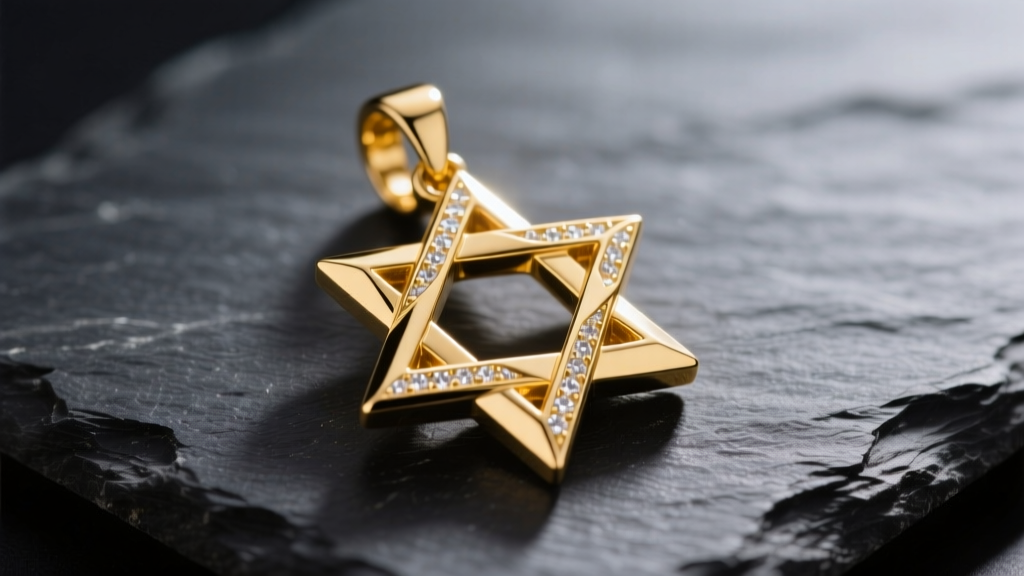
The Jewish star necklace, universally recognized as the Magen David or Star of David, is far more than a simple geometric motif. It is a profound emblem of heritage, faith, and identity. However, from a master jeweler’s perspective, translating this sacred hexagram into a durable, heirloom-quality pendant requires rigorous attention to metallurgy, structural engineering, and precise chain pairing. Many mass-produced Jewish star necklaces fail within a few years due to poor casting techniques, inadequate alloy formulations, or mismatched chain tensile strengths. In this expert deep dive, we deconstruct the technical specifications that separate a fragile, mass-market trinket from a resilient, multi-generational Jewish star necklace.
Manufacturing Methods: Cast vs. Die-Struck
The structural integrity of a Jewish star pendant relies heavily on how the metal is formed. The interlocking triangles of the hexagram create six delicate points and a complex central lattice that are inherently vulnerable to bending and snapping.
The Porosity Problem in Lost-Wax Casting
Most commercial pendants are produced via lost-wax casting. While this method captures intricate details, it often introduces microscopic gas porosity as the molten metal cools. In the thin, intersecting lines of a Star of David, these microscopic voids act as stress concentrators. If the pendant is snagged, the metal will fracture at these weak points rather than bend.
The Superiority of Die-Striking
For a daily-wear Jewish star necklace, die-striking is the superior manufacturing method. This process involves stamping sheet metal under thousands of pounds of pressure. The immense force compresses the metal’s crystalline grain structure, eliminating porosity and significantly increasing the alloy's yield strength. A die-struck 14k gold pendant will resist deformation at the star's points far better than its cast counterpart, maintaining its sharp geometric lines for decades.
Metallurgy: Choosing the Right Gold Alloy
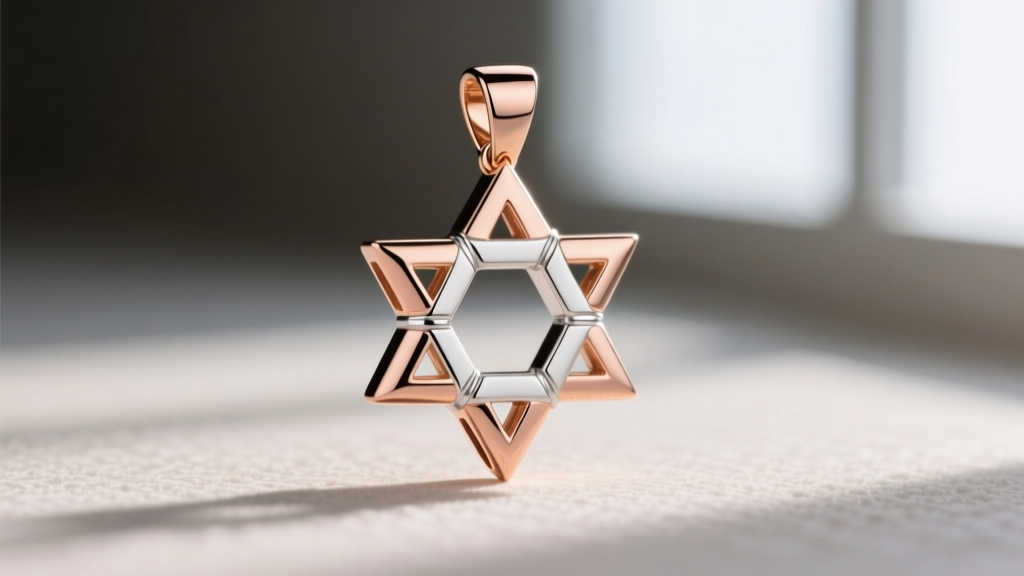
Pure 24k gold is entirely unsuitable for a Jewish star necklace due to its extreme malleability. The pendant would warp under its own weight or the friction of daily wear. Therefore, alloying is mandatory. According to the Gemological Institute of America (GIA), the specific ratio of alloying metals (such as copper, silver, zinc, and nickel) dictates not only the color but the tensile strength and corrosion resistance of the final piece.
| Metal Grade | Gold Content | Primary Alloys | Tensile Strength | Best Use Case |
|---|---|---|---|---|
| 14k Yellow Gold | 58.3% | Silver, Copper, Zinc | High (Excellent durability) | Everyday wear, active lifestyles, intricate filigree stars. |
| 18k Yellow Gold | 75.0% | Silver, Copper | Medium (Prone to scratching) | Heirloom pieces, occasional wear, rich color saturation. |
| 14k White Gold | 58.3% | Nickel/Palladium, Zinc | Very High (Rigid and strong) | Modern aesthetics, highly resistant to point-bending. |
| Platinum (950) | 95.0% | Ruthenium or Iridium | High (Dense, displaces rather than chips) | Luxury heirlooms, diamond-set Jewish star pendants. |
For a Jewish star necklace featuring pavé diamonds along the borders, 14k white gold or platinum is strongly recommended. The higher rigidity of 14k white gold secures small melee diamonds more effectively than 18k gold, reducing the risk of stone loss over time. For a classic, unadorned solid star, 14k yellow gold offers the perfect equilibrium of rich color and structural resilience.
Chain Pairing: Gauge, Link Style, and Tensile Strength
A common failure point in necklace design is the mismatch between the pendant's weight and the chain's tensile strength. A solid 14k gold Jewish star pendant measuring 18mm across typically weighs between 4.5 and 7 grams. While this static load is negligible, dynamic forces—such as the chain catching on a sweater or being pulled abruptly—can generate instantaneous tensile loads exceeding 15 pounds.
Evaluating Chain Link Architecture
- Box Chains (1.0mm - 1.5mm): Composed of interlocking square links, box chains distribute tension evenly across multiple planes. A 1.2mm 14k box chain can withstand up to 15 lbs of tensile force, making it the most technically sound choice for a solid Magen David pendant.
- Wheat Chains (1.2mm - 1.8mm): Featuring braided, directional links, wheat chains offer excellent flexibility and high tensile strength. They resist kinking, which is crucial for maintaining the drape of the necklace.
- Cable Chains (0.9mm - 1.2mm): While classic, standard oval cable chains are prone to kinking and have lower tensile thresholds. If a cable chain is used, it must be soldered at the clasp and jump ring to prevent accidental unspooling.
Bail and Jump Ring Mechanics
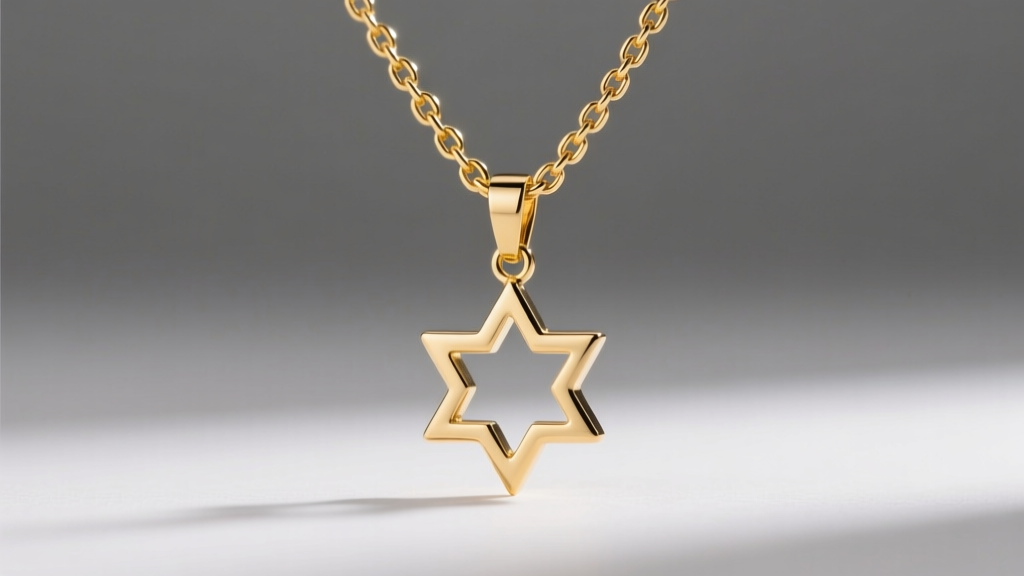
The bail—the loop connecting the pendant to the chain—is a critical stress point. Mass-produced Jewish star necklaces often feature a simple, unsoldered wire jump ring. Over time, friction from the chain will wear through the soft gold wire, causing the pendant to detach and be lost. An expertly crafted piece will utilize a soldered bail or a hidden tube bail integrated directly into the top point of the star. If a jump ring must be used, it should be a split ring (similar to a miniature key ring) or laser-welded shut to eliminate the gap entirely.
Hallmarks, Authenticity, and Sourcing
When investing in a fine jewelry Jewish star necklace, verifying the metal's authenticity is paramount. As outlined by Blue Nile's Gold Education Guide, legitimate precious metals must bear specific quality stamps. Look for the following hallmarks stamped discreetly on the pendant's bail or the reverse of the lower star point:
- 585 or 14K: Denotes 14-karat gold (58.5% pure gold).
- 750 or 18K: Denotes 18-karat gold (75.0% pure gold).
- 950 PT or PLAT: Denotes 95% pure platinum.
Beware of stamps like "14K HGE" (Heavy Gold Electroplate) or "14K GF" (Gold Filled). While these are legitimate manufacturing techniques, they represent a base metal core with a microscopic outer layer of gold. For a piece of jewelry meant to carry deep cultural and personal significance through decades of daily wear, solid gold or platinum is the only acceptable standard.
Care and Maintenance of Intricate Geometry
The sharp interior angles of the Jewish star create natural traps for sebum, lotions, and environmental dust. To maintain the pendant's optical brilliance without damaging the metal:
- Ultrasonic Caution: If your Star of David features pavé diamonds or delicate filigree, avoid ultrasonic cleaners. The high-frequency vibrations can fracture included diamonds or shake stones loose from their micro-prongs.
- Chemical Soaking: For solid, unadorned gold pendants, a 15-minute soak in a warm solution of distilled water and a few drops of ammonia-free dish detergent will dissolve lipid buildup in the star's crevices.
- Agitation: Use an extra-soft baby toothbrush to gently agitate the interior angles of the overlapping triangles. Never use hard-bristled brushes, which will inflict micro-scratches on high-polish finishes.
By prioritizing die-struck manufacturing, selecting the appropriate gold alloy for your lifestyle, and pairing the pendant with a high-tensile box or wheat chain, your Jewish star necklace will remain a structurally sound and visually striking testament to your heritage for generations to come.


