Maroon Necklace Materials Compared: Garnet, Spinel, and Enamel
Discover the best materials for a maroon necklace. We compare almandine garnet, red spinel, and vitreous enamel for durability, color, and value.

Decoding the Maroon Necklace: Beyond the Color
When curating a sophisticated jewelry wardrobe, a maroon necklace serves as a versatile anchor piece. The color maroon—a rich, brownish-red reminiscent of burgundy, oxblood, or dark cherry—bridges the gap between the fiery brilliance of pure red and the grounding neutrality of earth tones. However, in the 2026 jewelry market, the term "maroon" is a color descriptor, not a material one. Achieving this specific deep, saturated hue requires a careful selection of gemstones, enamels, or organic materials.
Choosing the right material for your maroon pendant or choker is not merely an aesthetic decision; it dictates the piece's longevity, light performance, and care requirements. A material that looks stunning in a jeweler's halogen lighting might appear muddy or black in natural daylight. Below, we conduct a deep-dive material comparison of the most prominent options used to craft maroon necklaces, evaluating their gemological properties, structural vulnerabilities, and real-world wearability.
The Gemstone Contenders: Garnet vs. Spinel vs. Carnelian
Natural gemstones are the traditional route for achieving a deep red-maroon hue. However, their crystal structures and chemical compositions vary wildly, resulting in distinct optical behaviors.
Almandine and Pyrope Garnets (The Classic Maroon)
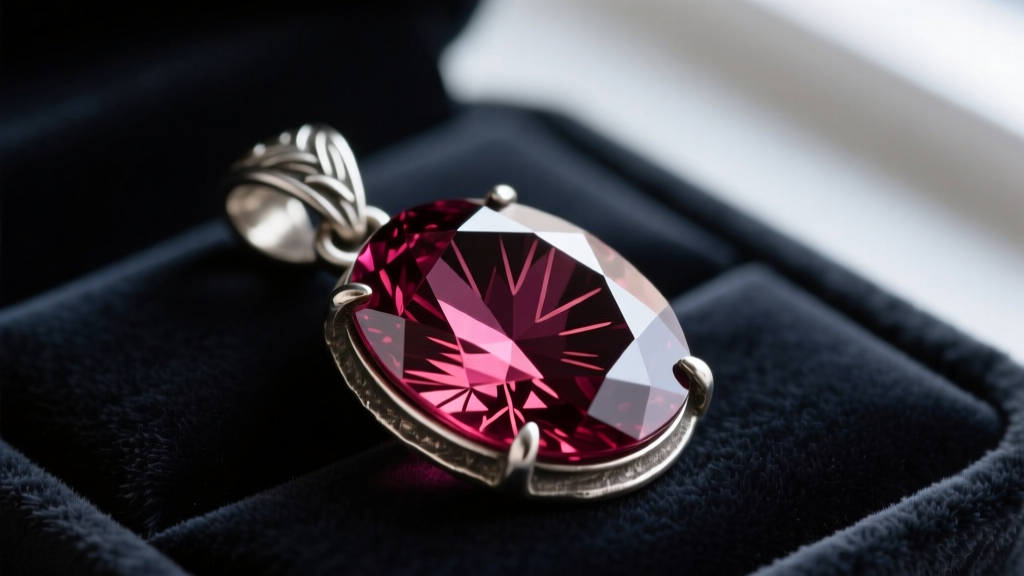
Garnet is the undisputed king of the maroon color palette. Specifically, the almandine and pyrope varieties are responsible for the deep, wine-red shades associated with vintage and antique jewelry. According to the Gemological Institute of America (GIA), almandine garnet contains iron, which gives it that signature deep maroon to brownish-red tone. Pyrope, driven by magnesium, leans slightly brighter but still achieves a rich burgundy in larger carat weights.
- Hardness: 7 to 7.5 on the Mohs scale.
- Optical Property: High refractive index (1.73 - 1.89), but almandine's high iron content can cause "extinction" (blackout) in poorly cut stones, especially in low light.
- Price Range: $20 to $150 per carat for standard commercial grades; up to $500+ for clean, custom-cut stones.
- Best For: Statement pendants and occasional-wear lockets.
Red Spinel (The Brilliant Alternative)
While often associated with vivid ruby-red, certain origins of spinel (particularly from Mahenge, Tanzania) produce stones with a gorgeous, slightly purplish-maroon saturation. Spinel is a favorite among gemologists for its exceptional durability and single-refractive nature, meaning it lacks the double-refraction that can muddy the color in some gems.
- Hardness: 8 on the Mohs scale (significantly more scratch-resistant than garnet).
- Optical Property: Excellent clarity and brilliance; does not suffer from the dark extinction seen in almandine garnet.
- Price Range: $300 to $2,500+ per carat, depending on origin and saturation.
- Best For: Everyday wear maroon necklaces and high-impact bezel settings.
Deep Carnelian (The Opaque Earthy Option)
For a maroon necklace that leans towards bohemian or rustic aesthetics, carnelian is a microcrystalline quartz that offers a cloudy, opaque, brownish-red hue. It lacks the faceted brilliance of garnet but provides a smooth, waxy luster when cut en cabochon.
- Hardness: 6.5 to 7 on the Mohs scale.
- Optical Property: Opaque to translucent; relies on surface polish rather than internal light return.
- Price Range: $2 to $15 per carat (highly affordable).
Vitreous Enamel: The Artisan Approach to Maroon
When gemstones cannot provide the exact opaque, uniform maroon required for a specific design, master jewelers turn to enamel. However, not all enamel is created equal, and understanding the difference is critical for the longevity of your necklace.
Vitreous (Fired) Enamel
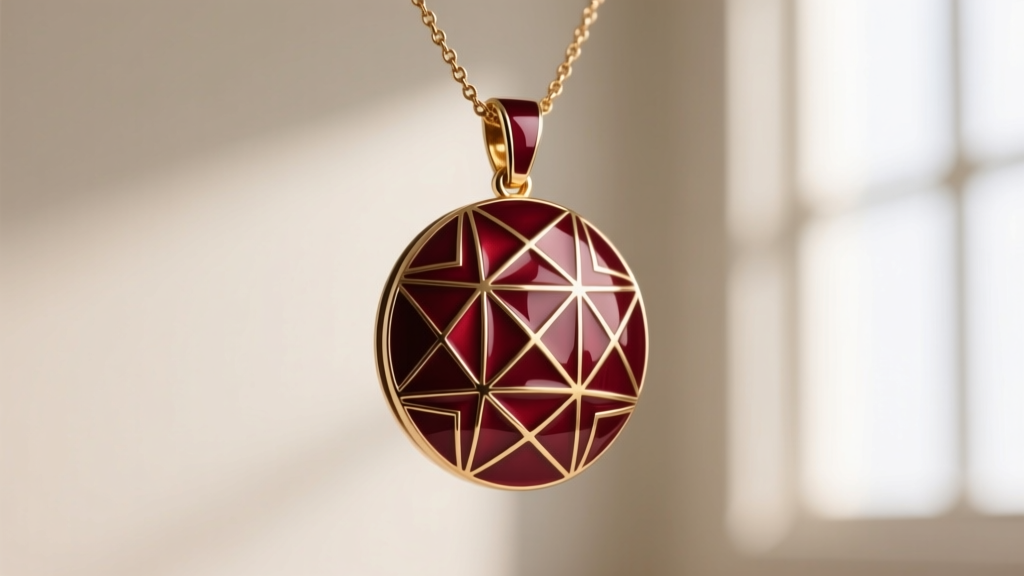
True vitreous enamel is essentially fused glass. Finely powdered glass is applied to a metal base (usually gold or silver) and fired in a kiln at temperatures exceeding 1,400°F (760°C). The result is a maroon finish with unparalleled depth, UV resistance, and a glass-like luster. The guilloché technique, where translucent maroon enamel is fired over an engine-turned geometric metal background, creates a mesmerizing 3D effect. Vulnerability: While it resists scratching (Mohs 5-6), it is brittle. A hard drop on a tile floor can cause the maroon glass to chip or craze.
Cold Enamel (Epoxy Resin)
Often found in fashion jewelry and mass-produced maroon pendants, cold enamel is actually a pigmented epoxy resin. It is cured at room temperature. Vulnerability: It is soft (Mohs 2-3), highly susceptible to scratching from everyday dust (which contains quartz, Mohs 7), and will eventually yellow or degrade when exposed to prolonged UV sunlight and skin oils.
Material Properties & Durability Matrix
To make an informed purchasing decision, reference this comparative matrix detailing the physical properties of popular maroon necklace materials.
| Material | Mohs Hardness | Light Behavior | Est. Price Range | Primary Vulnerability |
|---|---|---|---|---|
| Almandine Garnet | 7.0 - 7.5 | Faceted, High RI, Prone to dark extinction | $20 - $150 / ct | Thermal shock, heavy inclusions |
| Red Spinel | 8.0 | Faceted, Single Refractive, High Brilliance | $300 - $2,500+ / ct | Hard impacts (cleavage risk is low but present) |
| Carnelian | 6.5 - 7.0 | Opaque, Waxy Luster, Cabochon cut | $2 - $15 / ct | Thermal shock, harsh chemical cleaners |
| Vitreous Enamel | 5.0 - 6.0 | Opaque/Translucent, Glassy, Uniform Color | $500 - $5,000+ (Artisan piece) | Chipping from hard impacts, metal bending |
| Cold Enamel | 2.0 - 3.0 | Opaque, Plastic-like Luster | $20 - $150 (Finished piece) | Scratching, UV yellowing, solvent damage |
Chain Pairings: Metals and Cords for Maroon Pendants
The material of the chain or cord drastically alters the perception of the maroon centerpiece. Color theory dictates that the undertones of your metal should complement the brownish-red nature of maroon.
- Oxidized Sterling Silver: The blackened crevices of oxidized silver perfectly mirror the dark, moody undertones of almandine garnet, creating a cohesive, gothic, or vintage aesthetic.
- Rose Gold (14k or 18k): The copper alloys in rose gold pull out the warm, rusty undertones in carnelian and pyrope garnet. This is the premier pairing for romantic, skin-flush lockets.
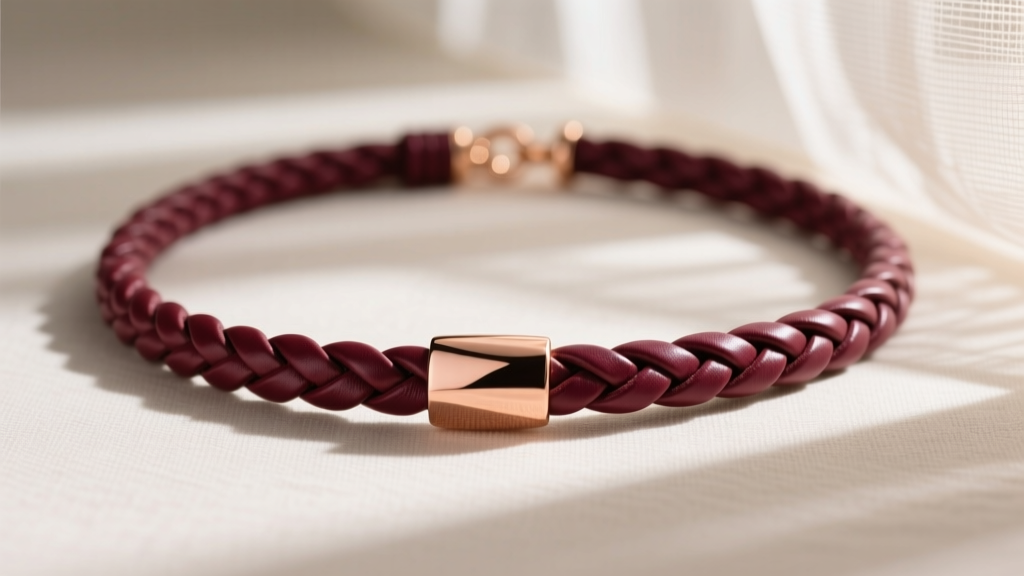
- Maroon Leather or Silk Cords: For a modern, minimalist look, suspending a geometric maroon enamel pendant on a 2mm braided leather cord (dyed to match or contrast slightly) removes metallic distractions and lets the color float on the neckline.
Real-World Troubleshooting: Fading, Chipping, and Clouding
Even high-quality materials require specific care protocols to maintain their maroon saturation over decades of wear.
"Garnet Sickness" and Clouding
Garnets are notorious for accumulating skin oils, lotions, and soap scum on their pavilion (the bottom facets). Because maroon garnets already absorb a significant amount of light, a layer of grease will cause the stone to look completely black and lifeless. The Fix: Remove your necklace and soak it in warm water with a drop of mild dish soap. Use a soft baby toothbrush to gently scrub the back of the stone. Never use ultrasonic cleaners on garnets with heavy internal fractures, as the vibrations can cause the stone to split.
Enamel Chipping and Metal Warping
Vitreous enamel is fused to metal. If the metal base (especially thin silver) bends or flexes, the rigid glass enamel cannot stretch and will crack or pop off. The Fix: Always store enamel maroon necklaces flat or hung by the chain. Never sleep in an enamel pendant, as tossing and turning can press the metal against your body weight, warping the base.
Leather Cord Degradation
If your maroon necklace features a dyed leather cord, be aware that human sweat is highly acidic. Over 12 to 18 months of daily wear, the acid breaks down the leather fibers, and the maroon dye can bleed onto light-colored clothing. The Fix: Wipe the cord with a slightly damp cloth after heavy sweating, and condition the leather bi-annually with a specialized leather balm to prevent dry rot.
Final Verdict: Choosing Your Ideal Maroon Necklace
Selecting the perfect maroon necklace requires aligning the material's physical properties with your lifestyle. If you desire a brilliant, scratch-resistant stone for daily wear and have a flexible budget, red spinel is the superior gemological choice. For those who appreciate vintage charm, deep color saturation, and historical significance, an almandine garnet set in oxidized silver remains an unbeatable classic. Finally, if your style leans toward bold, opaque, and uniform color blocks, seek out a master-crafted vitreous enamel piece, treating it with the same care you would afford fine glass art. By understanding the science behind the hue, your maroon necklace will remain a captivating staple in your wardrobe for years to come.


