Decoding a Drawing of a Pearl Necklace: A Beginner Guide
Learn how analyzing a technical drawing of a pearl necklace reveals crucial details about silk knotting, nacre thickness, and clasp durability.

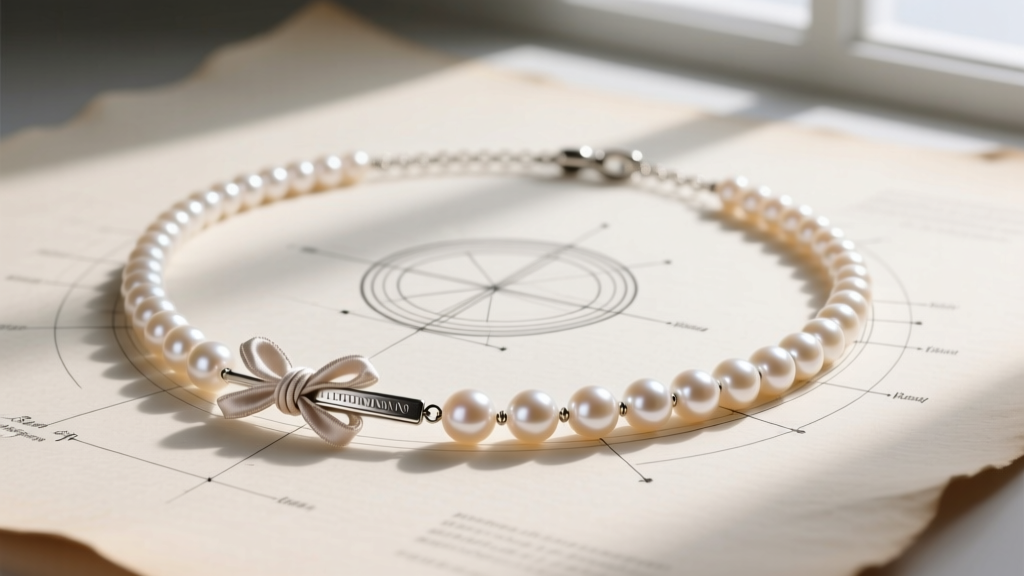
When most people think of pearl jewelry, they envision the final, lustrous product draped elegantly across a collarbone. However, for jewelers, gemologists, and serious collectors, the true story of quality begins long before the clasp is fastened. It starts with a blueprint. As of 2026, advanced CAD modeling and high-resolution X-ray imaging have made technical sketches more precise than ever. Learning how to analyze a drawing of a pearl necklace is one of the most powerful, yet overlooked, skills a beginner can develop. It strips away the distracting luster and reveals the structural engineering, material grades, and craftsmanship that dictate a piece's longevity and value.
In this beginner-friendly explainer, we will deconstruct the anatomy of a pearl strand through the lens of technical jewelry design. By understanding what these schematic drawings represent, you will never look at a strand of pearls the same way again—and you will be equipped to spot inferior craftsmanship from a mile away.
The Blueprint of Elegance: Why Technical Drawings Matter
A technical drawing of a pearl necklace is not merely an artistic sketch; it is a structural schematic. When you commission a custom strand or review a high-end jeweler's dossier, the drawing serves as a map of the necklace's internal architecture. According to the Gemological Institute of America (GIA), the structural integrity of a cultured pearl strand relies entirely on the harmony between the organic gemstones and the materials used to bind them.
A comprehensive schematic will detail the exact millimeter dimensions of the pearls, the spacing of the knots, the gauge of the stringing material, and the specific mechanics of the clasp assembly. For a beginner, learning to read these visual cues is the fastest way to transition from a casual shopper to an informed connoisseur. You are no longer just buying 'shiny beads'; you are investing in a meticulously engineered textile-gemstone hybrid.
Deconstructing the Stringing Core: Silk and Knot Spacing
The most critical element highlighted in any accurate drawing of a pearl necklace is the stringing core. While synthetic threads exist, premium strands are still strung on 100% natural silk. A technical sketch will often include a magnified inset showing the thread gauge passing through the pearl's drill hole.
Understanding Silk Gauges
Jewelers typically use Griffin silk threads, which are graded by letter and millimeter thickness. A proper schematic will specify the exact size used:
- Size E (0.325mm): The industry standard for 7.0mm to 8.5mm Akoya pearls. It provides enough tensile strength to hold the knots without stretching the 0.7mm drill holes.
- Size F (0.350mm) & Size G (0.400mm): Reserved for larger, heavier pearls like 10.0mm+ South Sea or Tahitian strands. Using a thread that is too thick for the drill hole causes friction, which can chip the delicate nacre around the hole.
The Geometry of the Knot
Look closely at the knot placement in the drawing. High-end schematics will show tight, uniform overhand knots resting flush against each pearl. This 'tight knotting' technique ensures that if the strand breaks, only one pearl is lost. Furthermore, the drawing will illustrate the 'gap'—or lack thereof—between the knot and the pearl. A microscopic gap is sometimes left in flexible drape designs, but flush knotting remains the hallmark of premium craftsmanship.
The French Wire Guard: A Mark of True Craftsmanship
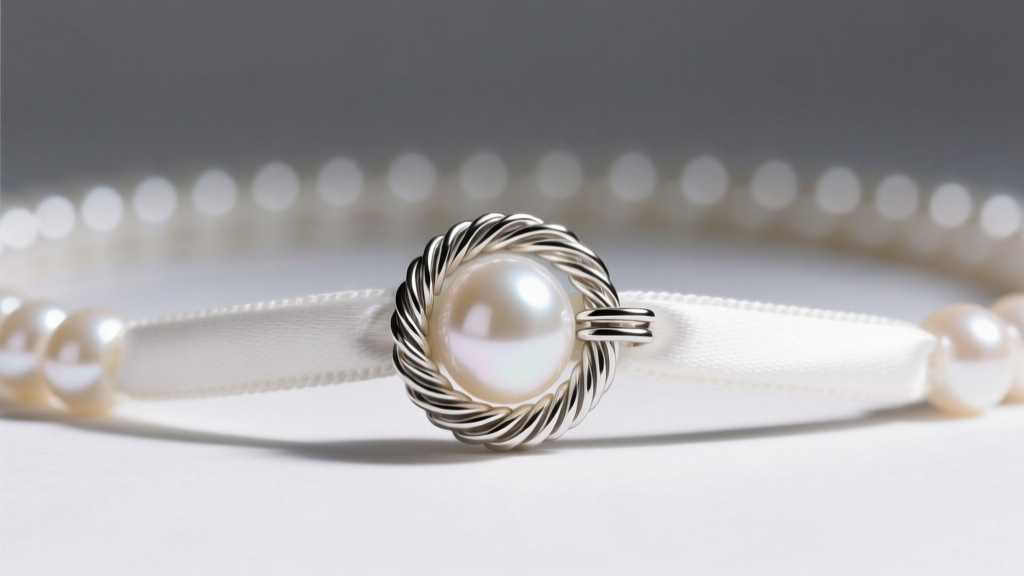
If you examine the terminal ends of a professional drawing of a pearl necklace, you will notice a small, coiled element connecting the final knot to the metal clasp. This is the French wire, also known as 'gimp.' It is a tiny, hollow coil of fine metal (usually sterling silver or gold-filled) that the silk thread passes through before looping back into the clasp ring.
Why is this vital? Metal clasps have sharp internal edges. Over years of wear, the friction of a metal ring rubbing directly against a soft silk thread will inevitably cause the silk to fray and snap. The French wire acts as a sacrificial metal-on-metal buffer. If a drawing omits the French wire and shows the silk tying directly to a metal jump ring, consider it a massive red flag. It indicates mass production and a disregard for the necklace's long-term durability.
Cross-Section Drawings: Nacre Thickness and Drill Holes
Perhaps the most educational aspect of a jeweler's dossier is the cross-section drawing of the pearls themselves. This schematic reveals what the naked eye cannot: the internal stratigraphy of the gem. The Cultured Pearl Association of America emphasizes that nacre thickness is the single most important factor in determining a saltwater pearl's durability and deep, mirror-like luster.
Reading the Nacre Layers
A cross-section sketch will show the central mother-of-pearl bead nucleus surrounded by concentric layers of nacre. Here are the minimum acceptable nacre thicknesses you should look for in a grading report or technical drawing:
| Pearl Type | Minimum Nacre Thickness | Premium Nacre Thickness | Standard Drill Hole Size |
|---|---|---|---|
| Akoya (Japan) | 0.40 mm | 0.80 mm+ | 0.70 mm - 0.80 mm |
| Tahitian (Black) | 0.80 mm (Legal Min.) | 1.50 mm+ | 0.80 mm - 0.90 mm |
| South Sea (White/Gold) | 1.00 mm | 2.50 mm+ | 0.90 mm - 1.10 mm |
| Freshwater (Beaded) | 1.50 mm | 3.00 mm+ | 0.80 mm - 1.00 mm |

The Drill Hole Red Flag
Pay close attention to the drill hole diameter noted in the drawing. Fine pearls are drilled with precision 0.7mm to 0.9mm bits to preserve as much nacre as possible. If a schematic (or a physical inspection) reveals a drill hole wider than 1.2mm, it suggests the pearls were strung on heavy synthetic wire or cheap cotton cord rather than fine silk. Oversized drill holes not only detract from the pearl's value but also create weak points where the nacre is most likely to chip or peel over time.
Translating Sketches to the Clasp Mechanism
The final component of the drawing focuses on the clasp assembly. A high-quality pearl necklace will never rely on a simple spring-ring clasp, which is prone to catching on clothing and snapping under the weight of a heavy pearl strand. Instead, technical drawings will detail a box clasp with a fishhook safety catch.
The schematic will show the 'tongue' of the clasp folding into the 'box,' secured by a secondary wire hook that loops over a safety pin. This dual-mechanism ensures that even if the primary box latch fails due to wear, the fishhook will keep the strand secured around your neck. When reviewing a custom design, always verify that the drawing includes this secondary safety mechanism.
Summary Checklist for Beginners
Armed with the knowledge of how to read a drawing of a pearl necklace, you can confidently evaluate the structural integrity of any strand you consider purchasing. Keep this quick checklist in mind:
- Verify the Thread: Ensure the schematic specifies natural silk (Size E or F) rather than synthetic nylon or wire.
- Inspect the Knots: Look for tight, uniform overhand knots between every single pearl.
- Demand French Wire: Never accept a strand where silk ties directly to a metal clasp ring.
- Check the Nacre: Use cross-section data to ensure nacre thickness meets the minimums for the specific pearl variety.
- Analyze the Clasp: Confirm the presence of a box clasp with a secondary fishhook safety catch.
By looking past the surface beauty and focusing on the engineering beneath, you ensure that your pearl necklace is not just a fleeting accessory, but a durable heirloom capable of being passed down through generations.


