14k Gold Charm Necklace: Troubleshooting Common Issues
Is your 14k gold charm necklace breaking or tangling? Discover expert troubleshooting tips for chain strength, clasps, and jump ring repairs.

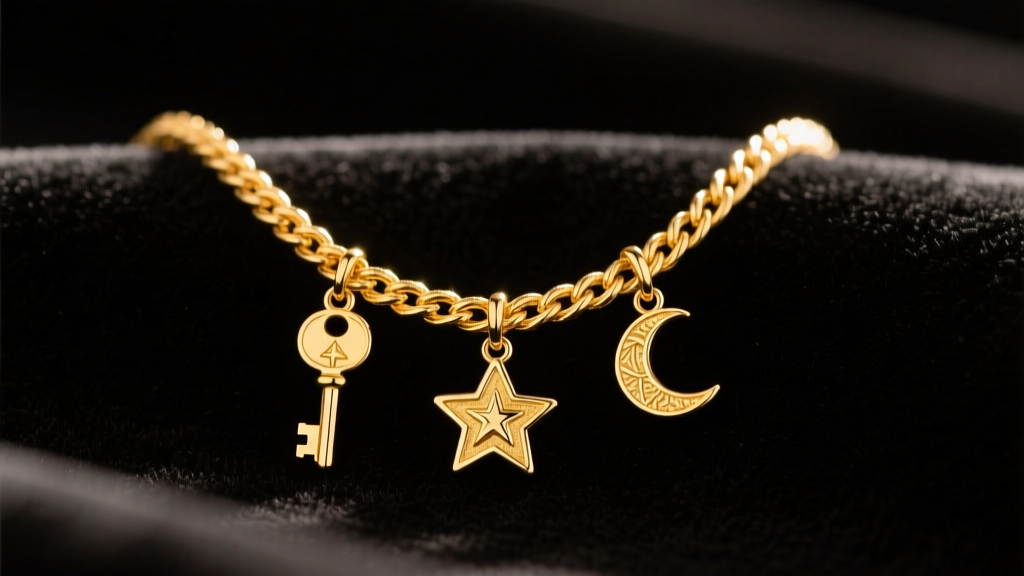
Owning a beautiful piece of jewelry is a joy, but dealing with a failing accessory is incredibly frustrating. If you are constantly untangling links, fixing broken jump rings, or dealing with a clasp that won't stay in the back, you are not alone. A 14k gold charm necklace is a staple in modern jewelry wardrobes, but the combination of delicate chains and heavy, dangling charms creates unique structural vulnerabilities. In this comprehensive troubleshooting guide, we will diagnose the most common structural failures and provide actionable, expert-level solutions to keep your necklace secure and stylish.
The Metallurgy Factor: Why 14k Gold Behaves Differently
Before diagnosing mechanical failures, it is crucial to understand the material itself. Pure 24k gold is too soft for everyday jewelry, which is why it is alloyed with other metals. 14k gold consists of 58.5% pure gold and 41.5% alloy metals (like copper, silver, zinc, or nickel). This alloy mix drastically affects the chain's tensile strength and work-hardening properties.
According to the Gemological Institute of America (GIA), the specific alloy blend dictates durability. Yellow gold (alloyed with silver and copper) offers a great balance of malleability and strength. However, white gold (often alloyed with nickel or palladium) is inherently harder but more brittle. Over time, the constant pendulum motion of a heavy charm causes "work-hardening" in white gold links, making them prone to microscopic stress fractures and sudden snapping. Rose gold, with its high copper content, is highly durable but can stiffen over time. Understanding your specific gold color helps predict where failures might occur.
Problem 1: The Chain Keeps Breaking Under Charm Weight
The most frequent complaint regarding a 14k gold charm necklace is chain breakage. This is almost always a mismatch between the chain's wire gauge and the charm's physical weight. Many fashion chains are manufactured at a delicate 0.5mm to 0.8mm thickness, which is perfectly fine for a lightweight pendant but disastrous for a solid gold charm weighing 3 to 5 grams.
Chain Style vs. Weight Capacity Matrix
Not all chain weaves distribute stress equally. Below is a structural breakdown of common 14k gold chain styles and their maximum recommended charm weights.
| Chain Style | Wire Gauge (mm) | Tensile Strength | Max Charm Weight |
|---|---|---|---|
| Cable Chain | 0.8mm - 1.0mm | Low (Single link stress points) | Up to 2.5 grams |
| Box Chain | 1.0mm - 1.2mm | Medium-High (Rigid, interlocking) | Up to 5.0 grams |
| Rope Chain | 1.2mm - 1.5mm | High (Twisted multi-link support) | Up to 8.0 grams |
| Wheat Chain | 1.0mm - 1.5mm | Very High (Woven, directional pull) | Up to 10.0 grams |
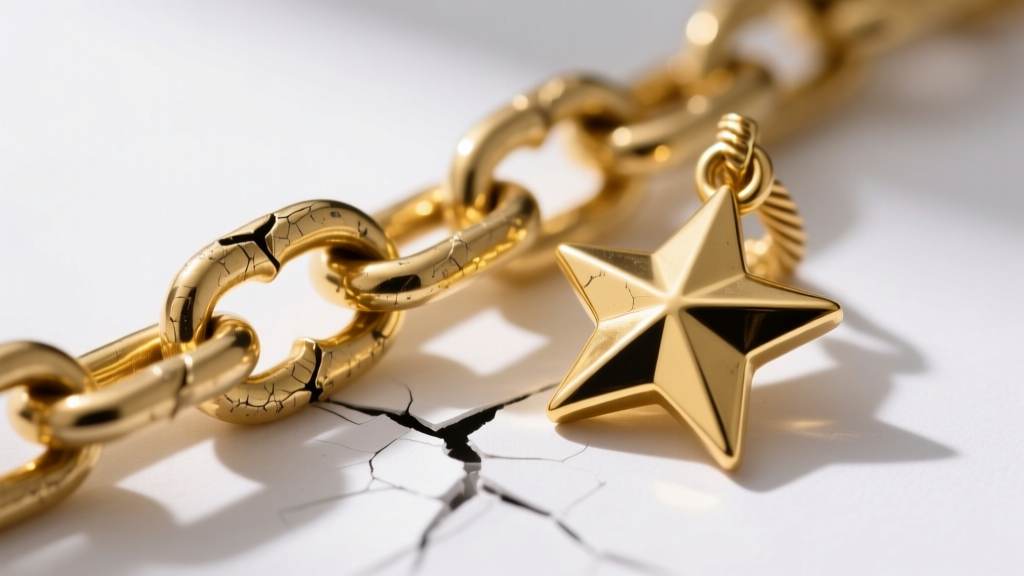
The Fix: If your cable chain keeps snapping at the link nearest to the clasp or charm, upgrade to a 1.2mm wheat or rope chain. These weaves distribute the kinetic energy of a swinging charm across multiple interlocking links, preventing localized stress fractures.
Problem 2: The Clasp Keeps Sliding to the Front
There is nothing more annoying than constantly reaching behind your neck to pull a lobster clasp back to the nape. This issue, known as "clasp migration," is a simple physics problem related to the center of mass. If the clasp and the chain segment behind your neck are heavier than the front chain and charm combined, gravity will naturally pull the heaviest component to the lowest point—the front of your chest.
Quick Fixes for Clasp Migration
- Downgrade the Clasp: Swap a heavy, oversized toggle or thick lobster clasp for a lightweight 5mm or 6mm spring-ring clasp. This reduces the rear weight significantly.
- Add a Counterweight: Attach a small, decorative 14k gold "counterweight drop" or a tiny 1-gram gold bead directly next to the clasp on the back of the neck to balance the front charm.
- Use Silicone Adjusters: For a non-permanent fix, slide a tiny, clear silicone earring back or necklace stopper onto the chain behind the clasp to create friction against the skin and hair, preventing it from sliding forward.
Problem 3: Jump Rings Are Pulling Apart
The jump ring is the critical bridge between your chain and your charm. Standard "open" jump rings have a single vertical slit. When a heavy charm swings, it creates lateral torque that easily pries this slit open, causing the charm to slide off and get lost. Even in solid 14k gold, an open jump ring will fail under just a few pounds of tension.
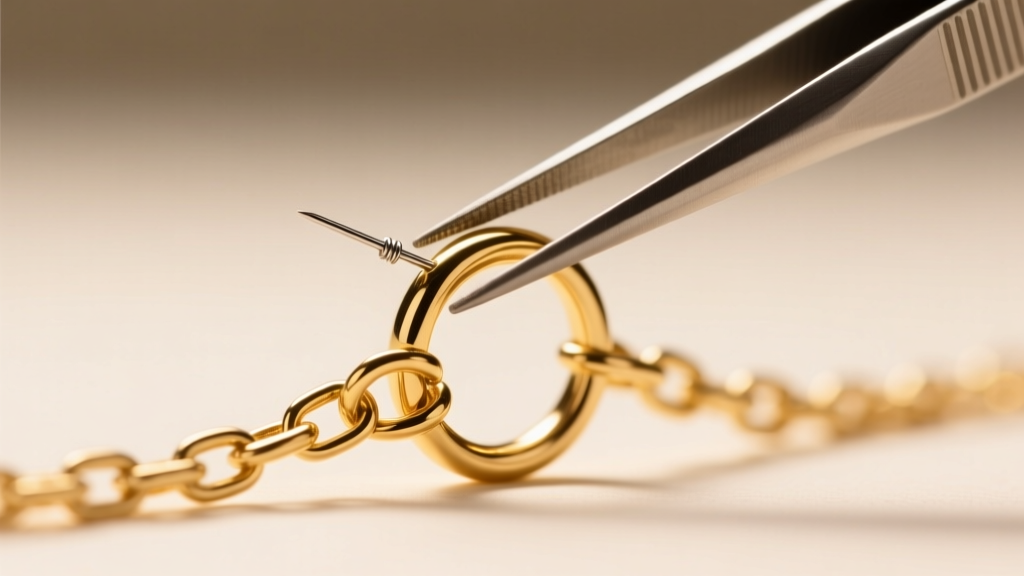
The Fix: You must replace open jump rings with soldered jump rings or heavy-gauge split rings (which look like miniature keychains). If using a split ring, ensure the wire thickness is at least 18-gauge (approx. 1.0mm thick). For a seamless look, take your necklace to a local jeweler and ask them to laser-weld or solder the jump ring shut. This creates a continuous, unbroken circle of 14k gold that is physically impossible to pull apart without cutting the metal.
Problem 4: Charms Are Tangling and Scratching
When wearing a 14k gold charm necklace with multiple pendants, the charms inevitably twist around the chain, scratch each other, and become a tangled mess. This happens when charms are attached directly via jump rings, allowing them 360-degree rotational freedom.
Expert Insight: To prevent multi-charm tangling, utilize specialized pendant bails rather than jump rings. A "pinch bail" or "glue-on bail" restricts the charm's movement to a single forward-and-backward axis, drastically reducing the chance of the charms wrapping around the chain or colliding with one another.
Additionally, ensure proper spacing. If you are stringing multiple charms on a single chain, use a chain with built-in "station" rings or attach tiny spacer beads between the charms to maintain a minimum 1.5-inch gap between each pendant.
Maintenance and Long-Term Care
Troubleshooting doesn't end with structural repairs; it requires proactive maintenance. The Tiffany & Co. Care Guide and other industry leaders recommend inspecting your jewelry every six months. Use a jeweler's loupe (10x magnification) to inspect the links nearest to the clasp and the charm bail. Look for thinning metal, which indicates friction wear.
To clean your 14k gold charm necklace, avoid harsh chemical dips that can degrade the alloy metals over time. Instead, use a few drops of mild dish soap in warm water, gently agitate with a soft-bristled baby toothbrush, and dry thoroughly with a microfiber cloth. Never pull or yank a tangled chain; instead, lay it flat on a glass surface, apply a drop of baby oil to the knot, and use two fine sewing needles to gently tease the links apart.
Final Thoughts
A 14k gold charm necklace is an investment in both style and sentimentality. By understanding the structural limitations of chain weaves, respecting the physics of clasp migration, and insisting on soldered connections for your charms, you can transform a frustrating, fragile accessory into a durable, lifelong staple. Match your chain gauge to your charm weight, secure your jump rings, and your necklace will remain as secure as it is beautiful.


