Shell Necklace Women's Material Guide: Puka, Cowrie & Abalone
Discover the material properties of a shell necklace women's love. Compare Puka, Cowrie, and Abalone durability, sourcing, and care in our expert guide.


The resurgence of organic jewelry has firmly established the shell necklace women's fashion staple as a must-have accessory for 2026 and beyond. However, beneath the effortless, beachy aesthetic lies a complex world of marine mineralogy, structural fragility, and ethical sourcing. Not all shells are created equal. While some can withstand the rigors of daily wear, others will degrade, chip, or lose their iridescence if exposed to the wrong environment.
As a jewelry material scientist and stylist, I frequently see consumers purchase delicate organic gems without understanding their physical properties. This comprehensive guide breaks down the exact material composition, Mohs hardness, and structural integrity of the most popular shells used in women's necklaces, ensuring your investment lasts a lifetime.
The Mineralogy of Shells: Aragonite vs. Calcite
To understand how a shell will wear over time, we must look at its microscopic structure. According to the Encyclopedia Britannica's overview of mollusk biology, shells are primarily composed of calcium carbonate (CaCO3). However, this compound crystallizes in two distinct forms that dictate a shell's durability:
- Calcite: A highly stable, dense crystal structure. Shells with high calcite content are generally more resistant to environmental degradation and physical impact.
- Aragonite: A denser but significantly more brittle crystal structure. Aragonite is responsible for the breathtaking iridescence of nacre (Mother of Pearl), but it is highly susceptible to thermal shock and chemical erosion.
Most commercial shells sit between 2.5 and 4.0 on the Mohs scale of mineral hardness. For context, a copper penny is about 3.5, and a steel knife is 5.5. This means almost all shell jewelry can be easily scratched by metal clasps, zippers, or harder gemstones.
Material Properties Comparison Chart
| Shell Type | Primary Mineral | Mohs Hardness | Porosity | Impact Resistance |
|---|---|---|---|---|
| Puka (Cone Snail) | Calcite | 3.5 - 4.0 | Low | High |
| Cowrie | Calcite / Aragonite | 3.0 - 3.5 | Medium | Medium |
| Abalone | Aragonite (Nacre) | 2.5 - 3.0 | High | Low (Brittle) |
| Mother of Pearl | Aragonite (Nacre) | 2.5 - 3.0 | High | Low (Prone to delamination) |
Deep Dive: The Big Three Shell Materials
Puka Shell: The Durable Classic
Authentic Puka shells are naturally occurring fragments of the cone snail's spire, tumbled by the ocean into smooth, donut-like beads. Because they are composed primarily of dense calcite and lack the fragile outer periostracum layer, Puka is the most durable shell material available. A high-quality shell necklace women's wear to the beach, gym, or office will likely be made of Puka. The natural hole in the center also reduces the need for aggressive drilling, which often causes micro-fractures in other shell types. When shopping, look for thick walls (at least 3mm) and avoid perfectly uniform, machine-drilled imitations made from thin clam shells.
Cowrie Shell: Smooth but Structurally Vulnerable
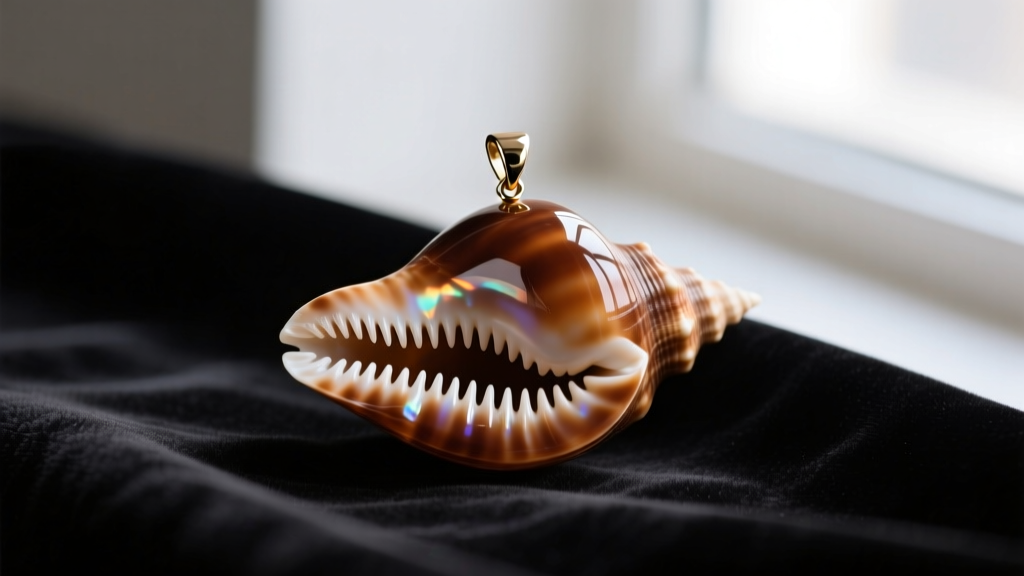
The Cowrie shell is iconic for its glossy, enamel-like dorsum (top) and serrated mouth (bottom). The glossy finish is not a synthetic lacquer; it is the highly polished mantle of the living animal. While the top of the Cowrie is quite hard, the lip of the shell is incredibly thin and fragile. If a Cowrie pendant swings and strikes a hard surface like a granite countertop, the lip will chip instantly. Furthermore, the high-gloss finish can dull over time if exposed to the natural acids in human sweat or acidic lotions.
Abalone and Mother of Pearl: Iridescent but Delicate
Abalone and Mother of Pearl (MOP) are prized for their nacreous layers, which diffract light to create stunning flashes of green, blue, and pink. However, nacre is essentially a microscopic 'brick and mortar' structure of aragonite platelets held together by organic biopolymers. This makes it highly susceptible to delamination—where the layers peel apart due to dehydration or chemical exposure. Ultrasonic jewelry cleaners will destroy an Abalone pendant in seconds by shaking the aragonite layers apart. These materials require a protective bezel setting if used as a pendant, rather than simple bail drilling.
Stringing Materials: Tension and Abrasion
The material used to string your shell necklace is just as critical as the shell itself. The wrong stringing material can act like a saw, slowly cutting through the calcium carbonate from the inside out.
- Silk Thread: The traditional choice for high-end organic gems. Silk is soft and will not abrade the bead holes. However, silk degrades rapidly when exposed to moisture, sweat, and saltwater. If you wear a silk-strung Puka necklace in the ocean, the thread will rot and snap within a year.
- Nylon (e.g., Power Pro): The modern standard for 2026. Braided polyethylene or high-denier nylon offers the softness of silk with the waterproof durability of fishing line. It is the superior choice for daily-wear shell necklaces.
- Stainless Steel Wire: Never use uncoated metal wire for soft shells like Abalone or MOP. The metal is harder than the shell (Mohs 5.5 vs 2.5) and will quickly widen the drill hole, eventually slicing through the bead entirely.
Ethical Sourcing and CITES Regulations
As the demand for organic jewelry has skyrocketed, so has the environmental toll on marine ecosystems. When selecting a shell necklace women's brands must now provide transparency regarding sourcing. The most critical regulation to be aware of involves the Queen Conch (*Strombus gigas*). Due to severe overharvesting, the Queen Conch is listed under Appendix II of the CITES (Convention on International Trade in Endangered Species) database. This means international trade is strictly monitored, and many ethical jewelers have completely banned its use.
Instead, look for brands that utilize byproduct shells from the food industry (like certain oysters and clams) or those that practice sustainable hand-harvesting of invasive species. The GIA Gem Encyclopedia frequently updates its organic gemstone entries to reflect current sustainability standards, making it an excellent resource for verifying the ethical footprint of your jewelry.
Care and Maintenance by Shell Type
To preserve the structural integrity and visual brilliance of your shell jewelry, adhere to these strict maintenance protocols:
- The 'Last On, First Off' Rule: Shells are highly porous and react poorly to the alcohol and synthetic chemicals found in perfumes, hairsprays, and sunscreens. Always put your necklace on after your beauty routine is complete.
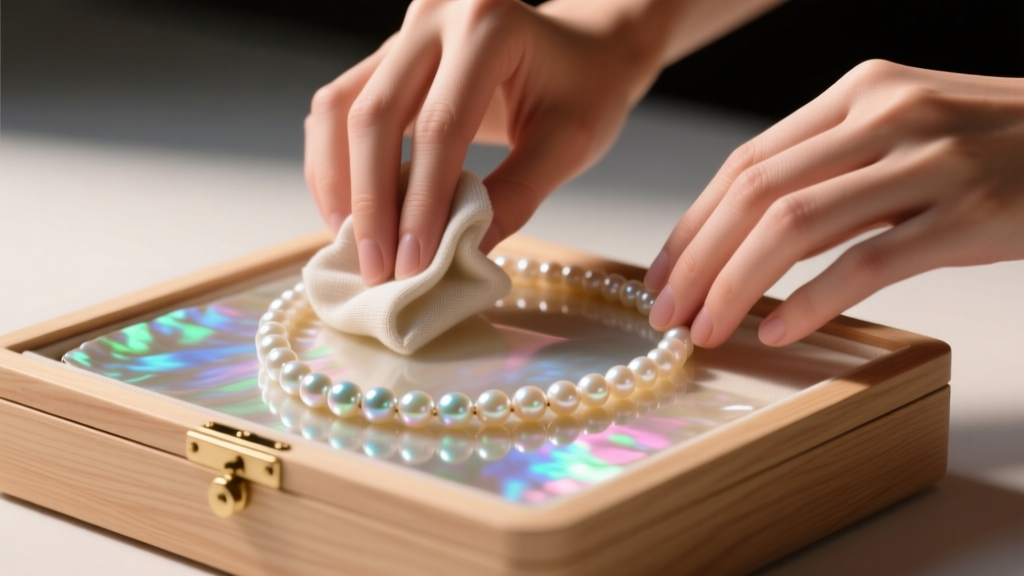
- Neutral pH Cleaning Only: Never use commercial jewelry dips, ammonia, or vinegar. The acids will literally dissolve the calcium carbonate, leaving the shell pitted and chalky. Clean your necklace using only a damp, lint-free microfiber cloth and distilled water.
- Hydration Control: While Puka can handle water, nacreous shells (Abalone, MOP) can dry out and crack in low-humidity environments or direct, prolonged sunlight. Store them in a soft pouch inside a room with stable humidity, never in an airtight plastic bag which can trap off-gassing chemicals.
Understanding the material science behind your jewelry transforms a simple accessory into a cherished, lifelong artifact. By matching the right shell species to your lifestyle and maintaining it with mineral-specific care, your organic necklaces will retain their ocean-born brilliance for decades to come.


