How to Clean & Care for a Ruby Necklace Plant Pendant
Learn expert care, cleaning, and maintenance tips for your ruby necklace plant pendant, including resin botanical jewelry and ruby gemstone pieces.

The Rise of Botanical and Gemstone Pendants
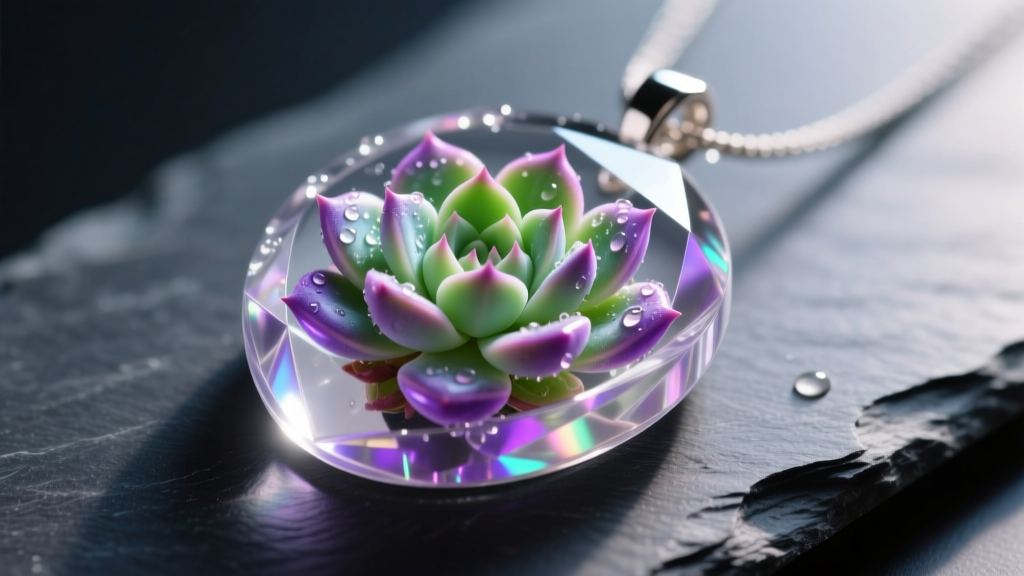
The intersection of botany and fine jewelry has given rise to some of the most unique wearable art in the 2020s. Among the most highly sought-after pieces is the ruby necklace plant pendant. This specific jewelry niche generally falls into two distinct categories: resin-encased pendants featuring the actual dried Othonna capensis (commonly known as the ruby necklace plant or little pickles), and high-end gemstone pendants featuring natural rubies carved to mimic the trailing, bead-like vines of this beloved succulent. Caring for these pendants requires a deep understanding of material science, as the maintenance protocols for organic botanical resins differ vastly from those used for corundum gemstones.
Whether you own a delicate botanical specimen suspended in crystal-clear epoxy or a luxurious 18k gold and carved ruby botanical piece, improper cleaning can lead to irreversible damage. This comprehensive guide will walk you through the exact chemical and physical care requirements to keep your pendant pristine, structurally sound, and visually striking for decades.
Identifying Your Pendant Material: Resin vs. Gemstone
Before applying any cleaning agent, you must accurately identify the primary material of your pendant. The refractive index (RI) and Mohs hardness scale dictate how a material interacts with light, water, and chemical solvents.
Resin-Encased Botanical Pendants
Authentic botanical jewelry requires the Othonna capensis to be completely desiccated before encapsulation. If the plant's moisture content exceeds 5% prior to being submerged in resin, fungal growth and internal rot will occur, turning the vibrant purple stems and green leaves into a murky brown sludge. High-quality botanical jewelers use a two-part, UV-stabilized epoxy resin with a refractive index of approximately 1.50, which closely mimics the optical clarity of glass while providing a lightweight, shatter-resistant housing. However, epoxy resins are highly susceptible to photodegradation (yellowing) and chemical micro-crazing if exposed to harsh solvents.
Carved Ruby & Gold Botanical Pendants
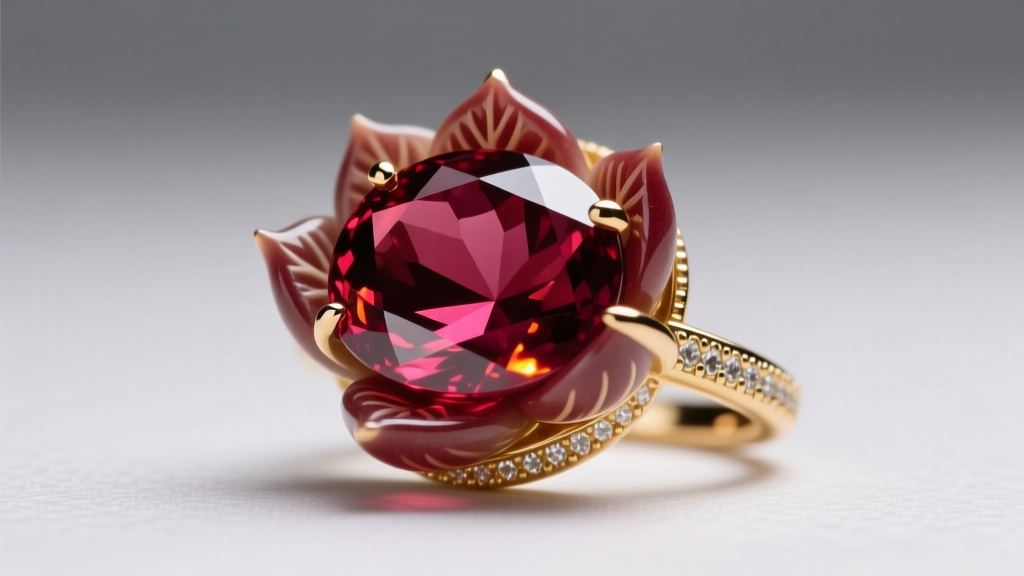
On the other end of the spectrum, fine jewelers sometimes carve natural rubies (corundum) into the shape of the ruby necklace plant's distinct trailing vines. Ruby ranks at a 9 on the Mohs hardness scale, making it exceptionally resistant to scratching. However, natural rubies often contain rutile silk inclusions and surface-reaching fractures. While the stone itself is durable, the treatments used to enhance its clarity (such as fracture-filling with lead glass or epoxy) are highly vulnerable to acidic cleaners and ultrasonic vibrations.
Step-by-Step Cleaning Guide
The cleaning methodology must be tailored to the specific material composition of your pendant. Using the wrong technique can cloud a resin finish or shatter a treated gemstone.
Cleaning Resin Botanical Pendants
Resin is a porous polymer at the microscopic level. It requires gentle, non-abrasive cleaning to maintain its optical clarity.
- The Solution: Mix two drops of pH-neutral, fragrance-free dish soap (like Dawn) into a bowl of lukewarm distilled water. Avoid tap water, as mineral deposits can leave a white film on the resin surface.
- The Application: Dip a lint-free microfiber cloth into the solution and wring it out until it is only slightly damp. Never submerge a resin pendant in water for extended periods, as moisture can seep into the microscopic boundary layer between the plant matter and the resin.
- The Polish: Gently wipe the surface of the pendant in circular motions. Use a dry, clean microfiber cloth to buff it to a high shine.
- Critical Warning: Never use isopropyl alcohol, acetone, or glass cleaners on resin. These solvents cause micro-crazing—a network of tiny internal cracks that will permanently cloud the pendant and obscure the Othonna capensis inside.
Cleaning Ruby Gemstone Pendants
For carved ruby pendants set in gold or platinum, you can employ slightly more rigorous cleaning methods, provided the stone is untreated or only heat-treated.
- The Solution: Use warm water and a mild degreasing soap. Rubies are oleophilic, meaning they attract and hold onto skin oils, which dulls their brilliance.
- The Application: Use a brand-new, ultra-soft baby toothbrush to gently agitate the soapy water around the carved crevices of the ruby vine design.
- The Rinse: Rinse thoroughly under a gentle stream of lukewarm water. Ensure the drain is closed to prevent accidental loss.
- Critical Warning: According to the Gemological Institute of America (GIA), you must avoid ultrasonic cleaners if your ruby has been fracture-filled. The high-frequency vibrations and heat can melt the filler or cause the stone to fracture completely along its internal fault lines.
Maintenance & Storage Framework
Proper storage is just as critical as active cleaning. Environmental factors like humidity, UV exposure, and sulfur in the air can degrade both the pendant and its chain.
| Material Type | Hardness / Durability | Safe Cleaning Agents | Agents to Avoid | Ideal Storage |
|---|---|---|---|---|
| Botanical Epoxy Resin | Low (Prone to scratching) | Mild soap, distilled water, microfiber | Alcohol, acetone, ultrasonic, direct UV | Dark, airtight velvet pouch |
| Natural Ruby (Untreated) | Mohs 9 (Highly durable) | Warm soapy water, soft brush, ultrasonic | Hydrofluoric acid, extreme thermal shock | Separate fabric-lined compartment |
| Ruby (Fracture-Filled) | Mohs 9 (Structurally compromised) | Damp microfiber cloth only | Ultrasonic, steam, citrus acids, bleach | Padded individual jewelry box |
| Sterling Silver Chain | Soft metal (Tarnishes easily) | Silver polishing cloth, baking soda bath | Chlorine, salt water, rubber bands | Anti-tarnish ziplock bag |
Chain and Bail Maintenance
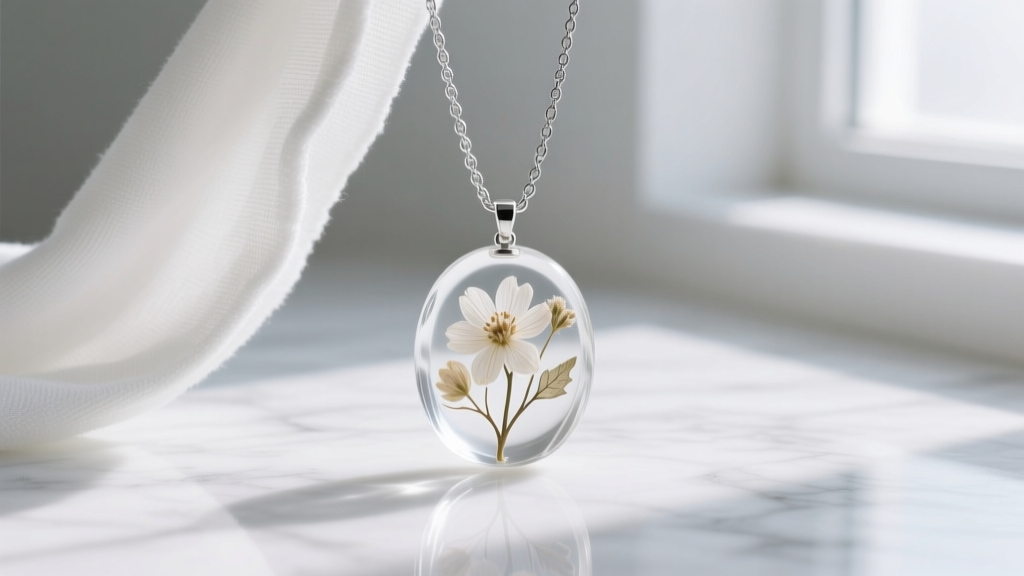
The pendant is only half the equation; the chain and bail (the connector loop) require equal attention. Botanical resin pendants are typically fitted with 4mm x 6mm glue-in tube bails or sterling silver pinch bails. Over time, the cyanoacrylate or two-part epoxy used to secure a glue-in bail can degrade when exposed to the natural acids and salts in human sweat. Inspect the bail connection monthly. If you notice any wiggle or separation, stop wearing the piece immediately and take it to a jeweler for a professional re-bonding using a jewelry-grade, UV-curing adhesive.
If your pendant hangs on a sterling silver (925) chain, you must combat tarnishing. Silver reacts with hydrogen sulfide in the air to form silver sulfide, the black layer you see on neglected chains. To maintain a 1.2mm silver rolo chain, store it in an airtight bag with a 3M anti-tarnish strip. If the chain is gold vermeil (a minimum of 2.5 microns of gold plated over sterling silver), never use abrasive silver polishing cloths, as they will strip the gold layer right off, exposing the base metal underneath.
Troubleshooting Common Issues
Resin Yellowing and Clouding
If your botanical pendant begins to take on a yellow or amber tint, it is suffering from UV-induced photodegradation. While high-end jewelers use resins infused with HALS (Hindered Amine Light Stabilizers), no epoxy is 100% immune to prolonged sun exposure. If the yellowing is severe, it cannot be polished out, as the chemical change occurs throughout the entire volume of the resin. To prevent this, never leave your pendant on a sunny dashboard or windowsill. If the surface is merely cloudy from skin oils, a gentle buff with a plastic-safe polish (like Novus No. 2) can restore the optical clarity without damaging the internal plant.
Loose Botanical Elements
In rare cases where the desiccation process was rushed, the Othonna capensis inside the resin may shrink over time, creating a tiny air gap or "halo" around the plant. This is known as delamination. While it does not immediately ruin the piece, moisture from the air can eventually seep into this gap if the resin has micro-cracks. If you notice a silver-mirrored gap forming around the succulent leaves inside your pendant, store it in a low-humidity environment (using silica gel packets in your jewelry box) to prevent internal mold growth.
Conclusion
Caring for a ruby necklace plant pendant requires a departure from standard jewelry maintenance routines. Whether you are preserving a delicate, real-world botanical specimen suspended in time, or maintaining a high-end carved ruby homage to nature's geometry, the key is understanding the chemical boundaries of your materials. By avoiding harsh solvents, respecting the Mohs scale, and storing your pieces in UV-protected, anti-tarnish environments, you ensure that your unique pendant remains a vibrant, wearable conversation piece for a lifetime. For further reading on gemstone durability, consult the GIA's comprehensive gem care guidelines before attempting any deep-cleaning procedures on fine jewelry.


