The Necklace Short Story: A Jewelry Expert's Guide To Paste
Explore the gemology behind The Necklace short story. Learn the difference between 19th-century paste, real diamonds, and modern simulants.

The Tragic Gemology of Guy de Maupassant’s Masterpiece
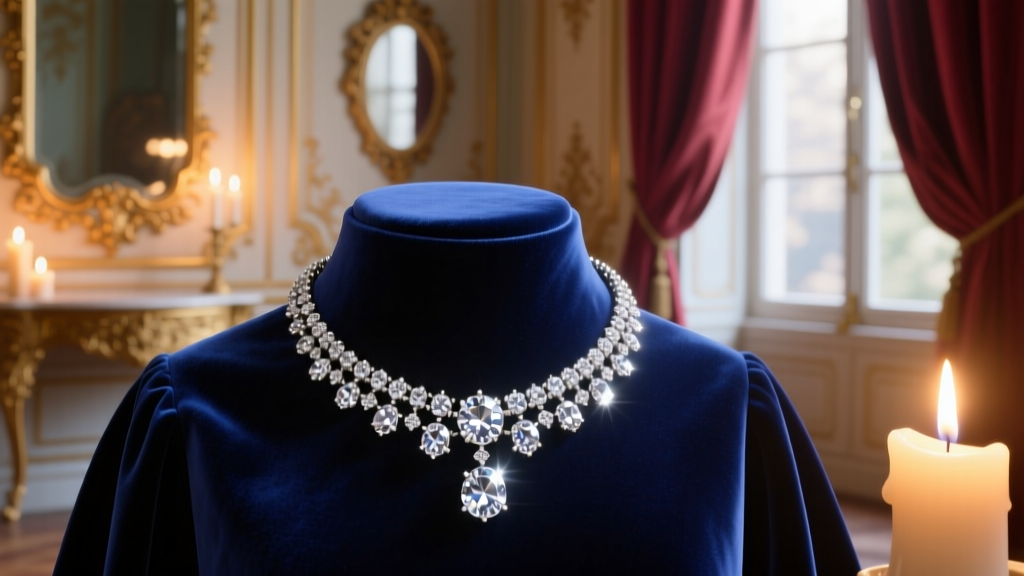
If you have ever studied French literature, you are likely familiar with La Parure, widely known in English as the necklace short story. Written by Guy de Maupassant in 1884, the tale follows Mathilde Loisel, a middle-class woman who borrows what she believes to be a breathtaking diamond necklace from her wealthy friend, Madame Forestier. After losing the piece, Mathilde and her husband ruin their lives with a decade of grueling labor to replace it with a real diamond necklace costing 36,000 francs. The story’s infamous twist ending reveals that the original borrowed piece was merely "paste" (fake), worth at most 500 francs.
While literary scholars focus on the story's themes of vanity and class struggle, jewelry historians and gemologists look at this narrative and see a fascinating case study in 19th-century jewelry manufacturing, the evolution of diamond simulants, and the perilous nature of unverified appraisals. As a modern jewelry buyer, understanding the actual materials involved in the necklace short story can completely change how you shop for diamond alternatives today.
What Exactly Was "Paste" in 19th-Century Paris?
When Madame Forestier casually reveals that her necklace was false, she uses the term pâtes (paste). In the late 19th century, "paste" did not mean cheap plastic or low-grade glass. It referred specifically to strass, a highly refined, leaded glass invented in the 1730s by Georges Frédéric Strass, the jeweler to the King of France.
According to historical archives and the Gemological Institute of America (GIA), strass glass contained up to 40% lead oxide. This high lead content dramatically increased the glass's refractive index (RI) from a standard 1.5 to approximately 1.7 to 1.9, allowing it to bend light in a way that closely mimicked the brilliance of a real diamond (which has an RI of 2.42).
The Secret of the Foil Backing
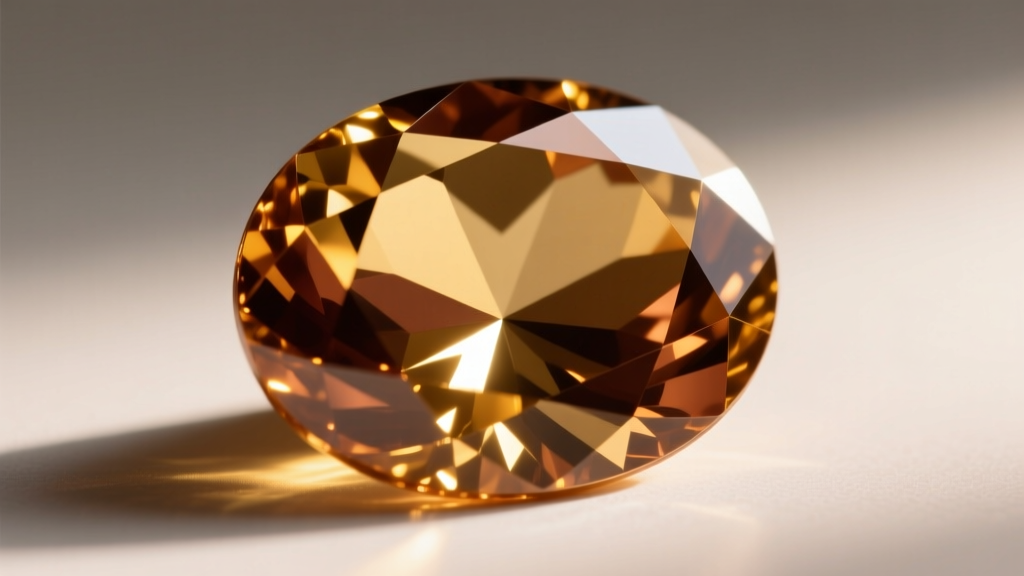
Strass alone was not enough to fool a high-society Parisian. The true deception lay in the setting. Jewelers of the era utilized closed-back settings lined with delicate foils made of silver, copper, or even peacock feathers. This foil acted as a mirror, reflecting light back through the stone and creating a fiery brilliance that could easily pass for diamond in the dim, candlelit ballrooms of 1880s Paris. Because the setting was sealed, the moisture and oils from the wearer's skin could not tarnish the foil, preserving the illusion perfectly.
The Anatomy of an 1880s Diamond Rivière
When Mathilde and her husband purchased the replacement necklace, they bought a diamond rivière (French for "river"). A rivière is a continuous strand of matched gemstones, typically graduating slightly in size toward the center, with no visible clasp or metalwork interrupting the flow of stones.
To understand the financial ruin of 36,000 francs (roughly equivalent to a middle-class clerk's salary for 10 to 15 years), we must look at the diamond market of 1884. The South African Kimberley diamond mines had recently flooded the market, but large, matched stones were still exceedingly rare. The replacement necklace would have featured Old Mine Cut diamonds. These antique cuts were squarish with rounded corners, featuring a high crown, a small table, and a very deep pavilion designed to maximize carat weight rather than modern optical symmetry.
Furthermore, because platinum was not yet widely used in jewelry fabrication (a trend that wouldn't peak until the Edwardian era of the 1900s), the diamonds would have been set in silver-topped gold. The silver held the white diamonds and enhanced their color, while the gold backing prevented the silver from tarnishing against the wearer's skin. This specific metallurgical technique was a hallmark of high-end 19th-century French jewelry.
Modern Simulants: If Mathilde Lived Today
If the necklace short story were rewritten in 2026, Mathilde would not be dealing with leaded strass glass. Today's diamond simulants are vastly superior in durability and optical performance. However, the core lesson of the story—knowing the difference between intrinsic value and perceived brilliance—remains highly relevant.
Below is a gemological comparison of real diamonds against the historical and modern "paste" equivalents you will encounter in today's jewelry market.
| Material | Mohs Hardness | Refractive Index (RI) | Dispersion (Fire) | Typical Necklace Price Range |
|---|---|---|---|---|
| Natural Diamond | 10 | 2.42 | 0.044 | $5,000 - $50,000+ |
| 19th C. Paste (Strass) | 5 - 6 | 1.70 - 1.90 | 0.035 | $200 - $800 (Antique) |
| Cubic Zirconia (CZ) | 8 - 8.5 | 2.15 | 0.058 | $50 - $300 |
| Moissanite | 9.25 | 2.65 | 0.104 | $400 - $1,500 |
As noted in the GIA's Cubic Zirconia Encyclopedia, modern CZ actually exhibits higher dispersion (rainbow fire) than a natural diamond. This means that to a trained eye, a high-quality CZ rivière necklace might actually look "too perfect" and overly colorful compared to the subtle, icy white brilliance of an Old Mine Cut diamond.
How to Buy "Fake" Diamond Necklaces Without the Tragedy
The ultimate irony of the necklace short story is that Mathilde suffered for her vanity, yet she failed to appreciate the craftsmanship of the original piece. Today, there is absolutely no shame in purchasing a diamond simulant necklace, provided you do so with transparency, safety, and an eye for quality metals.
1. Prioritize the Metal Over the Stone
If you are buying a CZ or moissanite rivière necklace, do not settle for cheap brass or copper-plated bases. These base metals will oxidize, turn your skin green, and cause the prongs to snap. Always choose solid 925 sterling silver (preferably rhodium-plated to mimic white gold) or 10k/14k gold. The setting should be durable enough to outlast the simulated stones.
2. Choose the Correct Length and Weight
A true rivière necklace sits snugly against the collarbone. When shopping, look for a 16-inch (choker/princess hybrid) or 17-inch (princess) length. Avoid overly long chains, as the weight of continuous simulated stones can cause thin chains to stretch and break at the clasp.
3. Demand Transparency
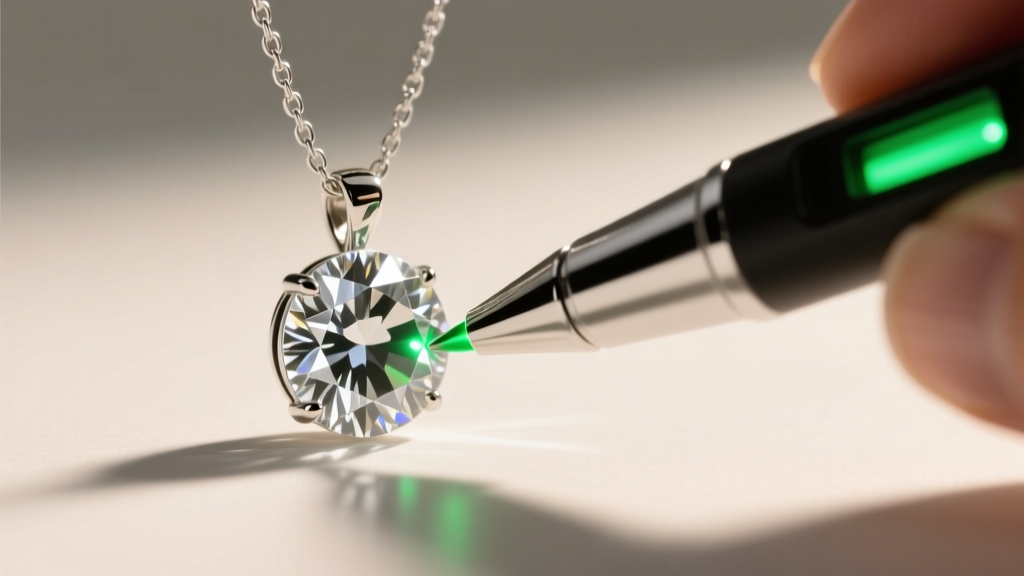
Never pass off a simulant as a natural diamond, whether in a high-society ballroom or a modern jewelry appraisal. Reputable jewelers will clearly label lab-grown diamonds, moissanite, and CZ. If a deal seems too good to be true—such as a 15-carat diamond necklace for $300—you are likely looking at modern paste.
Conclusion: The Enduring Lesson of Perceived Value
More than a century after its publication, the necklace short story remains a masterclass in the psychology of jewelry. It reminds us that the value of a necklace is not solely dictated by its chemical composition, but by our perception of it. Whether you are investing in a genuine, GIA-certified diamond rivière or confidently rocking a high-grade moissanite piece set in 14k gold, the true elegance lies in knowing exactly what you are wearing—and never paying the price of ignorance.


