The Ultimate Name Plate Necklace Gold Guide: 10k vs 14k vs 18k
Discover the best name plate necklace gold for daily wear. We compare 10k, 14k, 18k, and gold-filled options for durability, pricing, and tarnish resistance.

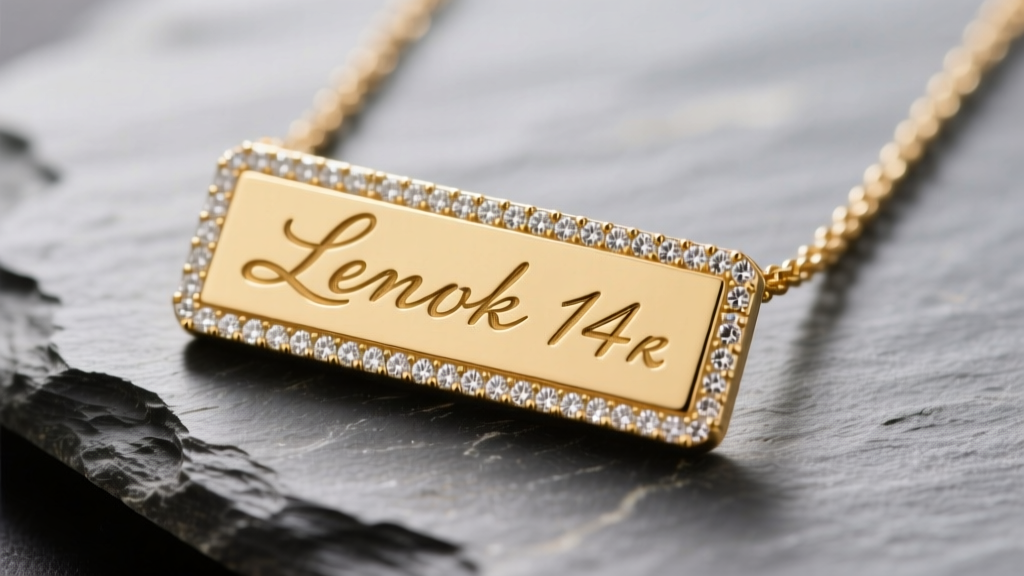
The Anatomy of a Gold Nameplate Necklace
When shopping for a custom name plate necklace, gold is the undisputed metal of choice. However, not all gold jewelry is created equal, especially when it comes to the unique structural demands of a nameplate. Unlike a solid cast pendant or a simple chain, a nameplate features intricate, die-cut or laser-cut letters with thin connecting bridges, delicate cursive loops, and sharp angles. These structural vulnerabilities mean that the metallurgical properties of the gold you choose will directly dictate the lifespan of your jewelry.
Most modern custom nameplates are manufactured using CNC laser cutting from flat sheets of gold alloy. This process ensures precision but leaves the structural integrity entirely dependent on the sheet metal's gauge (thickness) and the Vickers hardness (HV) of the specific gold karat. Choosing the wrong purity for a delicate script font can result in bent letters, snapped loops, and permanent deformation. In this comprehensive guide, we break down the material properties of different gold types to help you select the perfect name plate necklace gold for your lifestyle.
Solid Gold Karats Explained: 10k, 14k, and 18k
Pure gold (24k) is far too malleable for everyday jewelry; it would bend under its own weight. To create durable alloys, gold is mixed with metals like copper, silver, zinc, and sometimes nickel. The ratio of pure gold to alloy metals determines the karat, the color, and the tensile strength of the final piece.
10k Gold: The Budget-Friendly Workhorse
Comprising 41.7% pure gold and 58.3% alloy metals, 10k gold is the lowest karat that can legally be sold as 'solid gold' in the United States. Because it contains a high percentage of copper and zinc, 10k gold is exceptionally hard and highly resistant to scratching and bending. For a nameplate with an incredibly thin, minimalist font, 10k provides the necessary rigidity to prevent the letters from warping. However, the high copper content makes it prone to tarnishing and oxidation, and it carries a higher risk of causing contact dermatitis for those with nickel or copper allergies.
14k Gold: The Industry Standard for Nameplates
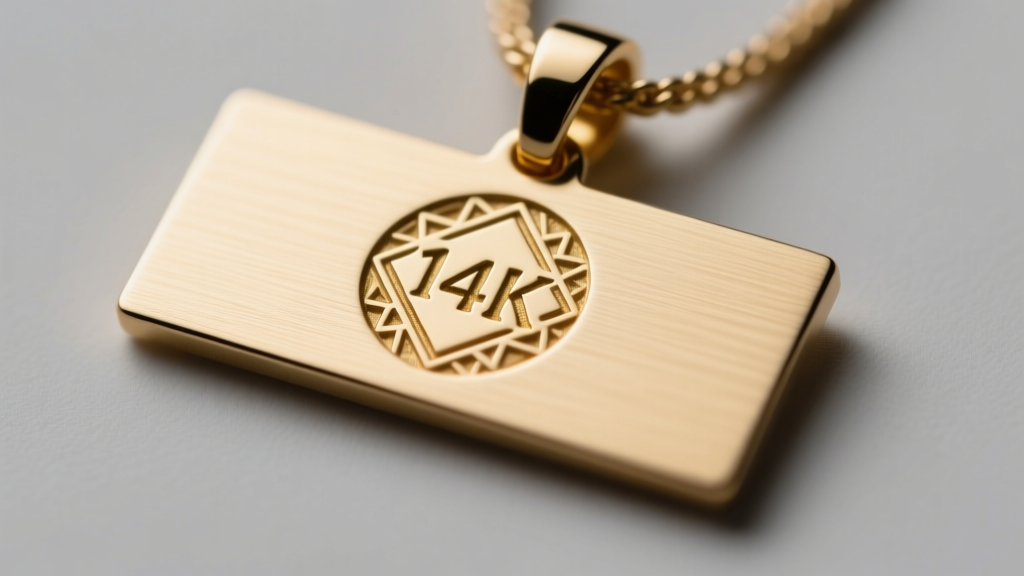
At 58.3% pure gold, 14k gold is the undisputed sweet spot for custom nameplates. According to the Gemological Institute of America (GIA), 14k gold offers an ideal balance of rich color, tarnish resistance, and structural durability. The Vickers hardness of standard 14k yellow gold is approximately 135 HV, making it stiff enough to hold the shape of delicate cursive loops (like the cross of a 't' or the tail of a 'y') without snapping. It is hypoallergenic for the vast majority of wearers and retains its luster with minimal maintenance.
18k Gold: Luxury with Structural Trade-offs
Containing 75% pure gold, 18k gold offers a deep, buttery yellow hue that is highly prized in luxury jewelry. However, this higher purity comes with a metallurgical trade-off: it is softer. With a Vickers hardness of around 125 HV, 18k gold is more susceptible to bending and scratching. If you choose an 18k name plate necklace gold, you must ensure the jeweler uses a thicker gauge of sheet metal (at least 1.2mm) to compensate for the softer alloy. Otherwise, the connecting bridges between letters may warp when the necklace is pulled or snagged on clothing.
Solid vs. Plated: Gold Vermeil, Gold-Filled, and PVD
If solid gold exceeds your budget, the market offers several plated and bonded alternatives. Understanding the Federal Trade Commission (FTC) guidelines on gold jewelry labeling is critical to avoiding low-quality pieces that will quickly degrade.
- Gold Vermeil: This requires a sterling silver base plated with at least 2.5 microns of 10k, 14k, or 18k gold. Vermeil is an excellent choice for nameplates because the silver core provides good rigidity, and the thick gold layer resists rapid wear. However, the thin edges of laser-cut letters can eventually reveal the silver core over years of friction.
- Gold-Filled: Created by mechanically bonding a thick layer of solid gold (usually 5% of the total weight) to a brass core. Gold-filled nameplates are highly durable and tarnish-resistant, often lasting decades. The brass core makes the pendant slightly stiffer than pure silver, which is beneficial for maintaining font shapes.
- PVD Plated Stainless Steel: Physical Vapor Deposition (PVD) coats surgical steel with a microscopic layer of gold titanium nitride. While the gold color will not rub off easily, the underlying steel is incredibly stiff. This makes PVD excellent for sharp, geometric, block-letter nameplates, but it lacks the traditional prestige and resale value of solid gold.
Material Comparison Chart: Durability and Pricing
To help you make an informed decision, we have compiled a comparison of the most common materials used for nameplate necklaces. Pricing estimates are based on a standard 5-letter, 1.5-inch wide cursive nameplate.
| Material Type | Gold Purity | Hardness / Rigidity | Tarnish Resistance | Estimated Price Range |
|---|---|---|---|---|
| 10k Solid Gold | 41.7% | Very High | Moderate | $150 - $250 |
| 14k Solid Gold | 58.3% | High | Excellent | $250 - $450 |
| 18k Solid Gold | 75.0% | Moderate | Excellent | $400 - $700+ |
| Gold Vermeil | Surface (min 2.5μm) | High (Silver Core) | Good | $60 - $120 |
| Gold-Filled | Surface (5% weight) | Very High (Brass Core) | Very Good | $45 - $90 |
Thickness, Font Weight, and Structural Integrity
The most common point of failure for a name plate necklace gold is not the chain, but the pendant itself. When a jeweler laser-cuts a name from a sheet of gold, the thickness of that sheet dictates the pendant's survival rate. Sheet metal thickness is measured in gauges or millimeters.
A standard 20-gauge (0.81mm) sheet is sufficient for small, delicate 14k nameplates. However, if you are ordering a large, oversized 'Carrie' style nameplate in 18k gold, you must request a minimum of 16-gauge (1.29mm) thickness to prevent the heavier pendant from warping under its own weight.
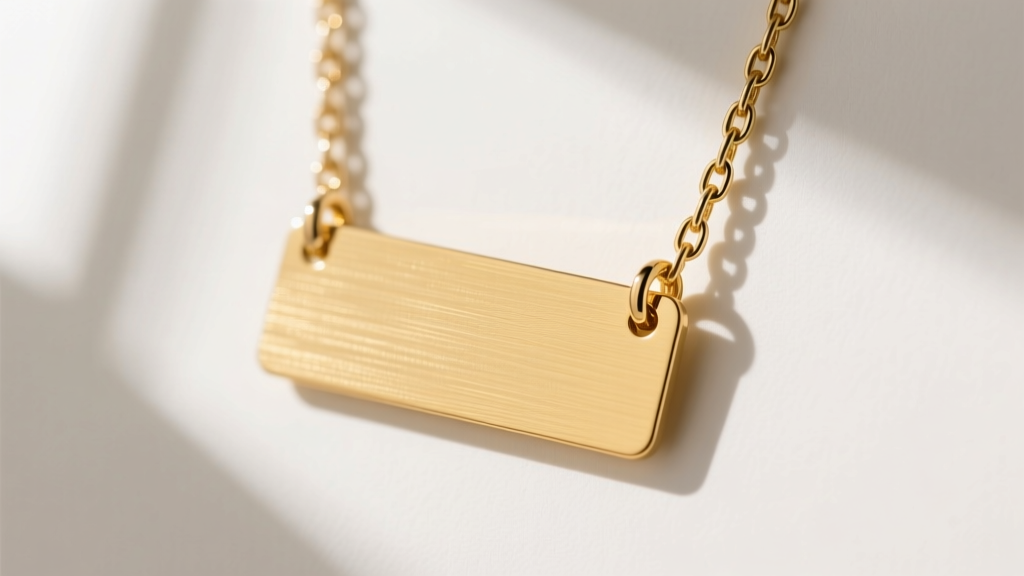
Additionally, pay close attention to the font weight. Block letters and bold serif fonts have wide structural bridges that distribute stress evenly. Thin, sweeping cursive scripts create 'pinch points' where the metal is barely a millimeter wide. If you prefer a thin cursive font, avoid 18k gold entirely, as the soft alloy will easily bend at these pinch points. Opt for 14k gold and ensure the jeweler solders a reinforcing backing bar behind the longest sweeping letters.
How to Choose the Right Gold for Your Lifestyle
Selecting the right material goes beyond aesthetics; it requires matching the metal's properties to your daily habits.
- For the Active Wearer: If you plan to wear your nameplate to the gym, in the shower, or while traveling, choose 14k solid gold. It will not tarnish from sweat or chlorine, and its hardness will resist bending if the chain gets snagged on athletic wear.
- For the Luxury Collector: If the necklace is for occasional evening wear and you prioritize a rich, deep yellow color, 18k gold is the superior choice. Just be mindful to take it off before sleeping to avoid crushing the delicate letter loops against your mattress.
- For the Budget-Conscious Trendsetter: If you want to test out a bold, oversized nameplate trend without committing to the price of solid gold, gold vermeil offers the best visual approximation. The sterling silver base ensures the piece feels substantial and heavy, unlike cheap brass alternatives.
Finally, always inspect the hardware. A heavy solid gold nameplate should never be attached to a chain with a standard open jump ring, as the weight of the pendant will eventually pull the ring apart. Insist on a soldered jump ring or a reinforced lobster clasp to ensure your custom piece remains secure for a lifetime.


