Resin Pendant Necklace Buying Guide: What to Look For
Discover how to choose the perfect resin pendant necklace. Learn about epoxy vs. UV resin, inclusion techniques, chain pairings, and quality markers.


The Evolution of Resin Jewelry in 2026
Once relegated to the realm of amateur crafting and cheap souvenir shops, resin jewelry has undergone a massive renaissance. In 2026, the resin pendant necklace is a staple of contemporary artisan jewelry, prized for its unparalleled versatility, lightweight comfort, and glass-like clarity. However, the market is flooded with varying qualities of synthetic polymers, making it crucial for buyers to understand what separates a mastercrafted heirloom piece from a mass-produced trinket. Whether you are looking for a botanical encapsulation, a metallic swirl, or a minimalist clear geometric drop, this comprehensive buying guide will equip you with the technical knowledge to evaluate resin pendants like a seasoned gemologist.
Understanding Resin Types: Epoxy vs. UV vs. Bio-Resin
Not all resins are created equal. The chemical composition of the pendant dictates its clarity, durability, and resistance to yellowing over time. When evaluating a resin jewelry piece, the first question to ask the artisan or retailer is what type of resin was used in the casting process.
Two-Part Epoxy Resin
Epoxy is the gold standard for high-end artisan pendants. It requires a precise 1:1 or 2:1 mixing ratio of resin and hardener, curing slowly over 24 to 72 hours. This slow cure time allows trapped air bubbles to escape, resulting in crystal-clear, deep-cast pendants. Premium epoxies are formulated with Hindered Amine Light Stabilizers (HALS) and UV absorbers to delay the inevitable yellowing process caused by ultraviolet light exposure.
UV-Cure Resin
UV resin is a single-part formula that cures in minutes when exposed to ultraviolet light. While excellent for shallow, quick-turnaround pieces, it is inherently more brittle than epoxy and prone to shrinking. UV resin is typically poured in thin layers (no more than 3-5mm at a time) to prevent overheating and cracking. It is frequently used in cheaper, mass-market pendants.
Bio-Resins and Eco-Polymers
A major trend in 2026 is the shift toward bio-resins, which replace a portion of the petroleum-based epoxies with plant-derived alternatives like soy or pine derivatives. While slightly less optically clear than pure synthetic epoxy, bio-resins offer a lower carbon footprint and are highly sought after by eco-conscious consumers.
| Resin Type | Cure Mechanism | Max Pour Depth | Yellowing Resistance | Market Price Tier |
|---|---|---|---|---|
| Epoxy Resin | Chemical (2-part) | 2 to 4 inches | High (with HALS) | $45 - $150+ |
| UV Resin | UV Light (1-part) | 3mm to 5mm layers | Low to Moderate | $15 - $40 |
| Polyurethane | Chemical (2-part) | Varies | Moderate | $25 - $60 |
| Bio-Resin | Chemical (2-part) | 1 to 2 inches | Moderate | $60 - $180 |
Evaluating Inclusions and Encapsulations
The true magic of a resin pendant necklace lies in its ability to suspend three-dimensional objects in a transparent matrix. However, encapsulating organic matter requires rigorous preparation to prevent degradation.

The Botanical Desiccation Rule
If you are purchasing a pendant featuring real flowers, leaves, or wood, you must verify that the artisan properly desiccated the materials. Organic matter contains water. If a flower is sealed in resin without being completely dehydrated using silica gel or a specialized freeze-drying process, the trapped moisture will cause the botanical to rot, turn brown, and eventually cloud the resin from the inside out. Always look for sellers who explicitly state their preservation and dehydration methods.
Metallic and Synthetic Additives
For pendants featuring mica powders, alcohol inks, or metallic leafing, check for even distribution and colorfastness. Cheap alcohol inks can bleed or fade when exposed to direct sunlight. High-quality artisans use UV-stable pigment pastes and seal metallic leafs with a protective spray before encapsulation to prevent oxidization and tarnishing inside the pendant.
Hardware and Chain Pairings for Resin Pendants
One of the most overlooked aspects of buying a resin pendant necklace is the hardware. Resin has a specific gravity of approximately 1.1 to 1.2 g/cm³, making it significantly lighter than glass (2.5 g/cm³) or natural gemstones like quartz (2.65 g/cm³). Because the pendant is lightweight, pairing it with the wrong chain can ruin the drape and aesthetic.
- Chain Weight and Gauge: Avoid heavy, thick cable chains. They will overpower the delicate nature of the resin and cause the pendant to flip backward. Opt for delicate box chains, wheat chains, or serpentine chains in the 1.2mm to 2.0mm width range.
- Bail Construction: Examine how the pendant connects to the chain. Embedded pin bails (where a metal loop is cast directly into the resin) offer the highest security. Glue-on bails are common but can fail over time if the artisan did not properly score the resin surface and use a flexible jewelry adhesive like E6000 or a two-part jeweler's epoxy.
- Alternative Cords: For a more organic, bohemian look, resin pendants pair beautifully with 1.5mm to 2.0mm waxed cotton cords, hemp, or leather thongs, secured with sterling silver or brass end caps.
Spotting Quality: How to Avoid Cheap Imitations
When shopping for a resin pendant necklace, particularly when attempting to distinguish high-end artisan work from factory-molded plastics or synthetic amber imitations (a common issue noted in GIA's amber identification guides), you must look closely at the physical finish and optical clarity.
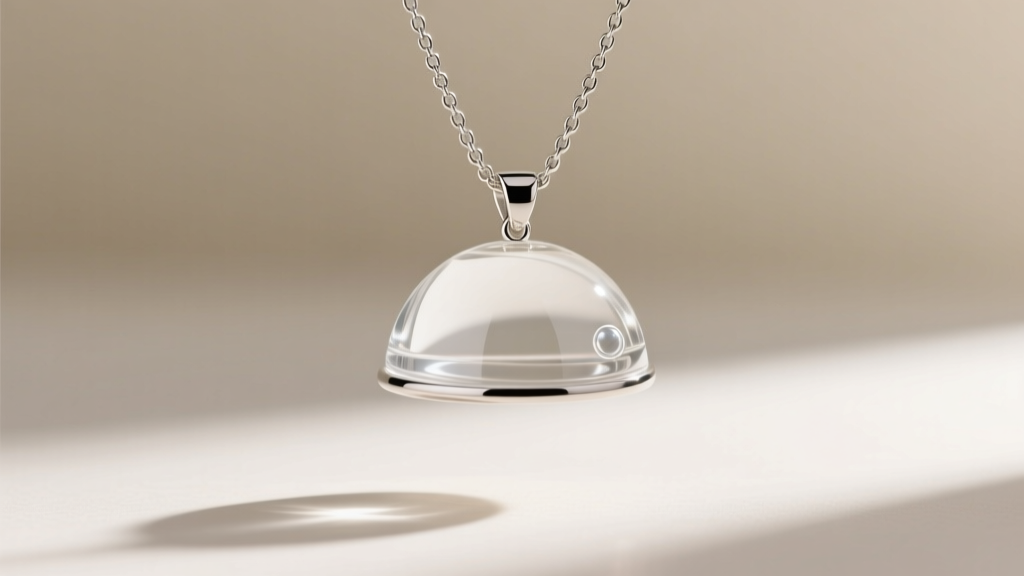
The Clarity and Bubble Test
Hold the pendant up to a direct light source. While some artisans intentionally use micro-bubbles for a 'sea glass' or 'effervescent' effect, a high-quality clear cast should be largely free of large, distracting air pockets. Look out for 'bubble trails' that indicate the resin was poured too quickly or mixed too vigorously.
Edge Finishing and Polishing
Run your thumb along the edges and back of the pendant. Mass-produced resin is often popped out of silicone molds and left with sharp, unfinished edges or a matte, textured back. Master artisans spend hours wet-sanding their pieces through progressive grits (from 400 up to 10,000 grit) and finishing with a plastic polish to achieve a smooth, glass-like, domed surface that feels seamless against the skin.
Checking for Amine Blush
Epoxy resin can develop 'amine blush'—a waxy, sticky, or cloudy film on the surface—if it cures in an environment with high humidity. A high-quality artisan will wash and lightly sand the cured piece to remove any blush before final polishing. If a pendant feels perpetually tacky or has a cloudy, uneven sheen, it likely suffers from uncorrected amine blush or improper mixing ratios.
Care and Maintenance for Longevity
Resin is durable but not indestructible. To ensure your pendant necklace remains pristine for years, adhere to the care standards recommended by organizations like Jewelers of America for alternative jewelry materials:
- UV Protection: Even with HALS stabilizers, prolonged exposure to direct sunlight will eventually cause clear resin to yellow. Store your necklace in a dark jewelry box or pouch when not in use.
- Chemical Avoidance: Remove your pendant before swimming in chlorinated pools or using household cleaners. Chlorine and harsh solvents can chemically etch the polished surface of the resin, leaving it permanently dull.
- Cleaning Protocol: Never use ultrasonic jewelry cleaners or steamers on resin. The high-frequency vibrations and heat can cause micro-fractures. Simply wipe the pendant with a damp microfiber cloth and a drop of mild dish soap, then dry thoroughly.
- Scratch Prevention: Resin ranks relatively low on the Mohs hardness scale (usually around 2.0 to 3.0). It will scratch easily if tossed into a bag with keys or harder gemstones. Always store it separately in a soft velvet pouch.
Conclusion
Investing in a resin pendant necklace is an exercise in appreciating modern material science mixed with artistic expression. By understanding the differences between epoxy and UV resins, scrutinizing the dehydration methods of botanical inclusions, and demanding high-quality edge finishing and appropriate chain pairings, you can confidently select a piece that is both visually stunning and structurally sound. Whether you are drawn to the deep, glassy pools of clear epoxy or the eco-conscious appeal of modern bio-resins, armed with this knowledge, your next jewelry purchase will be a masterclass in informed curation.


