Caring for Mathilde the Necklace: Expert Maintenance Guide
Discover expert cleaning and maintenance tips for your delicate Mathilde necklace. Learn how to protect gold vermeil, prevent tarnish, and store fine chains.

The Delicate Art of Fine Chain Maintenance
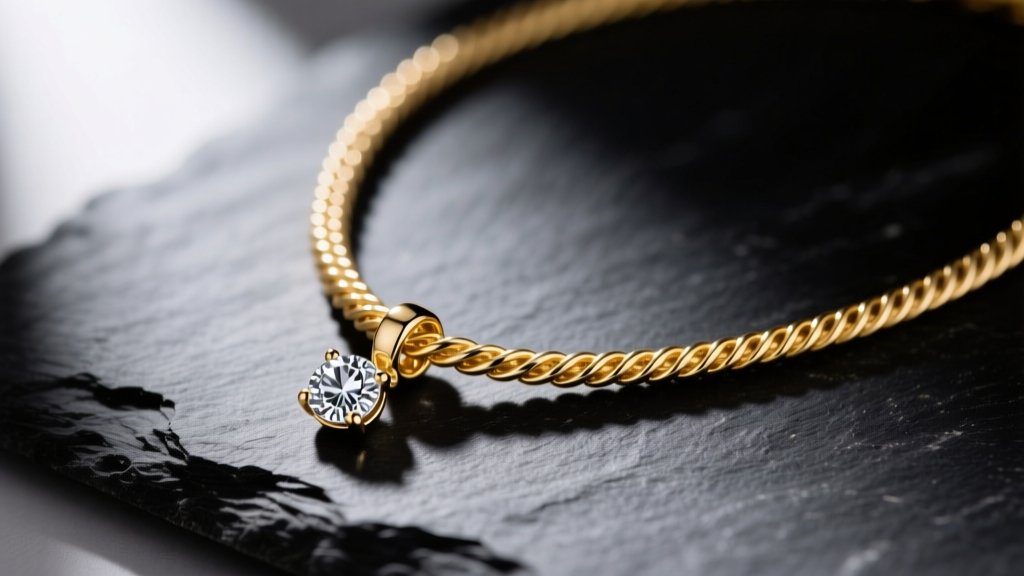
In the landscape of contemporary fine jewelry, few pieces capture the essence of understated elegance quite like artisan-crafted cable chains. When collectors and stylists refer to Mathilde the necklace, they are typically referencing a masterclass in delicate wirework, often featuring 0.8mm to 1.0mm 18k gold vermeil links and hand-set pavé pendants. However, the very attributes that make this piece so breathtaking—its gossamer weight and intricate link geometry—also render it highly susceptible to environmental degradation, mechanical kinking, and chemical tarnish.
As we navigate the jewelry care standards of 2026, the days of harsh chemical dips and aggressive polishing are firmly behind us. Modern preservation relies on an understanding of metallurgy, skin pH interactions, and microscopic abrasion. This comprehensive guide will walk you through the exact protocols required to maintain the structural integrity and luminous finish of your delicate chains, ensuring they remain a staple in your rotation for decades.
Understanding Your Materials: The Vermeil Standard
To properly care for your jewelry, you must first understand its metallurgical composition. High-end pieces utilize gold vermeil, which is distinctly different from standard flash plating. According to the Federal Trade Commission (FTC), vermeil must consist of a sterling silver base coated with a minimum of 2.0 microns of gold (typically 14k or 18k). Premium artisan brands often push this to 2.5 or even 3.0 microns to ensure longevity.
The vulnerability of vermeil lies in the galvanic relationship between the gold exterior and the sterling silver interior. Sterling silver is an alloy composed of 92.5% silver and 7.5% copper. When the microscopic gold layer is compromised by friction or acidic skin pH, the underlying copper and silver are exposed to atmospheric sulfur and moisture. This triggers a chemical reaction that produces silver sulfide—the black, tarnished film that dulls your jewelry.
The Role of Skin pH and Cosmetics
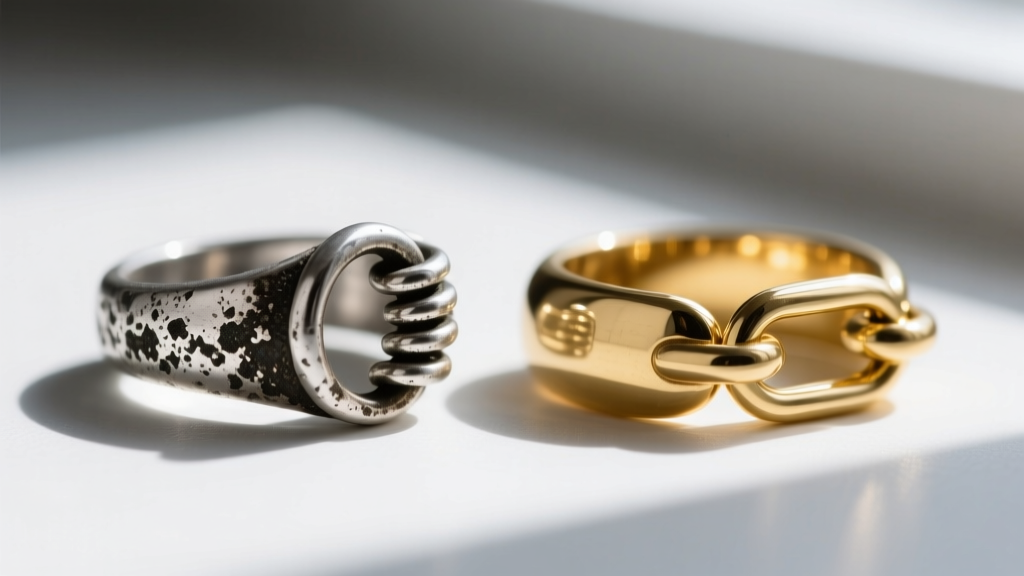
Human skin has a natural pH ranging from 4.5 to 5.5, but this can become more acidic due to diet, stress, or the use of certain skincare acids (like AHAs and BHAs). Acidic sweat accelerates the microscopic wear of the gold layer. Furthermore, modern cosmetics, particularly those containing titanium dioxide or zinc oxide (common in physical sunscreens), act as mild liquid abrasives. When these compounds become trapped in the crevices of a cable chain, they create a grinding paste that slowly erodes the vermeil finish with every movement.
The Step-by-Step Cleaning Protocol
When it is time to clean your piece, abandon commercial jewelry dips. These solutions often contain thiourea, a toxic chemical that strips tarnish but also microscopically etches the gold surface, leaving it porous and more prone to future tarnishing. Instead, utilize a gentle, pH-neutral surfactant method.
Materials Required
- Distilled Water: Never use tap water, as dissolved chlorine and heavy minerals can cause localized galvanic corrosion.
- pH-Neutral Dish Soap: A basic, clear dish soap (free of citrus extracts or added moisturizers) acts as a mild surfactant to lift sebum and cosmetic oils.
- Ultra-Soft Baby Toothbrush: Look for bristles rated at 0.1mm or softer. Standard toothbrushes will scratch 18k gold.
- Untreated Microfiber Cloth: Avoid rouge-treated polishing cloths on vermeil, as the mild abrasives will eventually strip the gold layer.
The Cleaning Procedure
- Prepare the Solution: Mix 250ml of lukewarm distilled water with exactly two drops of pH-neutral dish soap in a glass bowl (avoid metal or plastic bowls that can harbor residual chemicals).
- The Soak: Submerge the necklace for no more than 3 to 5 minutes. Prolonged soaking can weaken the adhesive used in pavé gemstone settings.
- Agitation: Gently sweep the baby toothbrush along the chain links, moving strictly in the direction of the chain's grain. Pay special attention to the clasp mechanism and the bail of the pendant, where sebum accumulates most heavily.
- The Rinse: Rinse thoroughly under a gentle stream of distilled water.
- Drying: Lay the piece flat on an untreated microfiber cloth. Pat it dry—never rub. Use a hairdryer on the 'cool' setting to blow water out of the microscopic crevices of the spring-ring clasp.
Expert Insight: The Gemological Institute of America (GIA) emphasizes that gentle, consistent cleaning is vastly superior to infrequent, aggressive polishing. By removing oils weekly, you prevent the chemical catalysts that lead to deep tarnish.
The Ultrasonic Danger: What to Avoid
Many consumers assume that ultrasonic cleaners are the gold standard for jewelry maintenance. However, for delicate chains measuring under 1.2mm in thickness, ultrasonic waves are a mechanical hazard. Standard ultrasonic cleaners operate at frequencies around 42kHz. These high-frequency cavitation bubbles create microscopic shockwaves that can easily cause micro-fractures in fine wire links, warp delicate jump rings, and violently shake pavé diamonds out of their prong or bezel settings.
| Cleaning Agent / Method | Safety for 18k Vermeil | Safety for Pavé Settings | Expert Verdict |
|---|---|---|---|
| pH-Neutral Soap & Distilled Water | Excellent | Excellent | Primary weekly cleaning method. |
| Commercial Silver Dips | Poor | Hazardous | Avoid entirely; strips gold and loosens glue. |
| 42kHz Ultrasonic Cleaner | Moderate | Hazardous | Avoid; causes metal fatigue and stone loss. |
| Rouge-Treated Polishing Cloths | Poor | Moderate | Avoid on vermeil; use only on solid 14k/18k gold. |
| Baking Soda & Aluminum Foil | Hazardous | Hazardous | Avoid; creates an electrolytic reaction that ruins plating. |
Storage and Tarnish Prevention Framework
Proper storage is not merely about organization; it is an active chemical defense mechanism. The primary enemy of your jewelry is atmospheric sulfur and ambient humidity. To combat this, you must create a controlled micro-environment for your pieces.
The Anti-Tarnish Protocol
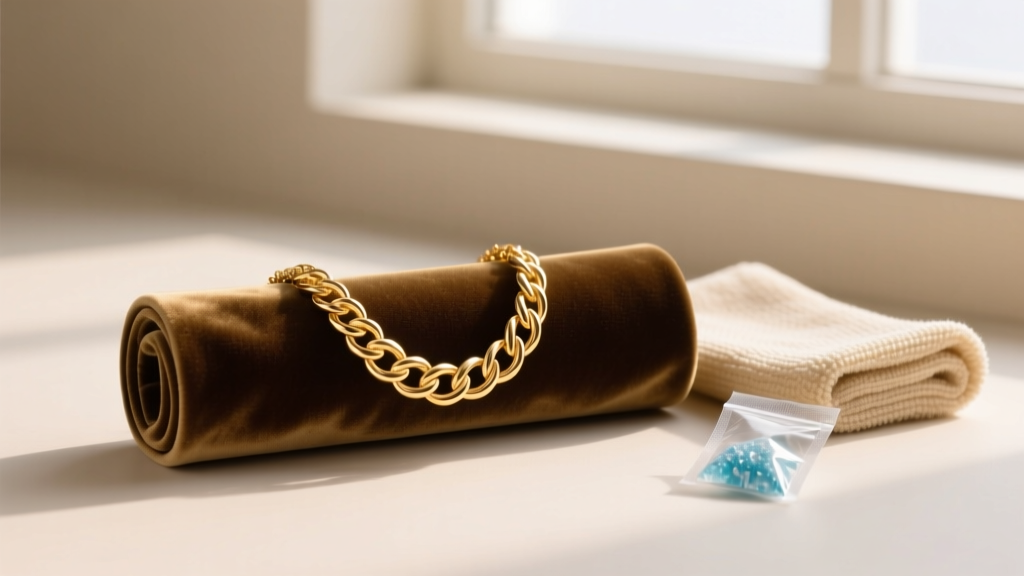
- Activated Carbon & Silica: Store your necklace in an airtight, UV-blocking ziplock bag alongside a 3M anti-tarnish strip and a small silica gel desiccant packet. The strip absorbs airborne sulfur compounds, while the silica reduces ambient moisture below the threshold required for silver sulfide formation.
- Isolation: Never store multiple chains together. The Mohs hardness of 18k gold is roughly 2.5 to 3, meaning it can easily be scratched by harder gemstones or even the friction of another metal chain.
- The Clasp Rule: Always store the necklace with the clasp unfastened and laid completely flat. Storing a spring-ring clasp in the closed position keeps the internal steel spring under constant tension, eventually leading to mechanical fatigue and a failure to retract.
Troubleshooting Common Chain Failures
Even with meticulous care, fine 0.8mm cable chains are prone to kinking and tangling. When a delicate chain knots upon itself, the instinct is to pull. This is a critical error that will permanently deform the circular geometry of the links, creating a weak point that will eventually snap.
The Baby Powder Untangling Method
If your chain becomes severely knotted, lay it flat on a glass or ceramic surface (avoid wood or fabric, which create static and friction). Liberally dust the knot with talc-free baby powder or cornstarch. The powder acts as a dry lubricant, reducing the coefficient of friction between the microscopic metal links. Using two fine sewing needles, gently work the center of the knot outward, using the needles to push the links apart rather than pulling the chain ends. Once the knot is resolved, use the pH-neutral soap protocol outlined above to wash away the powder residue.
Conclusion
Maintaining a signature piece requires a shift in mindset from reactive cleaning to proactive preservation. By understanding the metallurgical realities of gold vermeil, avoiding the hidden dangers of ultrasonic cavitation, and implementing a strict, low-humidity storage protocol, you ensure that the intricate wirework and brilliant pavé settings remain flawless. Treat your jewelry not just as an accessory, but as a delicate mechanical artifact, and it will reward you with a lifetime of effortless elegance.
For further reading on the metallurgical properties of precious alloys, consult the GIA's comprehensive guide on silver and alloy care.


