Parker Necklace Value Guide: Is the Demi-Fine Hype Worth It?
Is the Parker necklace worth the investment? We break down material costs, pricing tiers, and cost-per-wear to determine its true value.


The Parker necklace has firmly established itself as a staple in the demi-fine jewelry market. Recognized by its distinct medium-weight link chain and customizable geometric or initial drop pendant, it bridges the gap between everyday minimalism and statement layering. But as the market floods with iterations ranging from $40 to $800, consumers are left asking a critical question: Are you paying for enduring craftsmanship, or just a viral silhouette?
In this 2026 value assessment, we deconstruct the Parker necklace from a metallurgical and financial perspective. We will analyze material grades, evaluate the true cost-per-wear, and identify the common failure points that separate a lifelong heirloom from a disposable trend.
Defining the Parker Silhouette
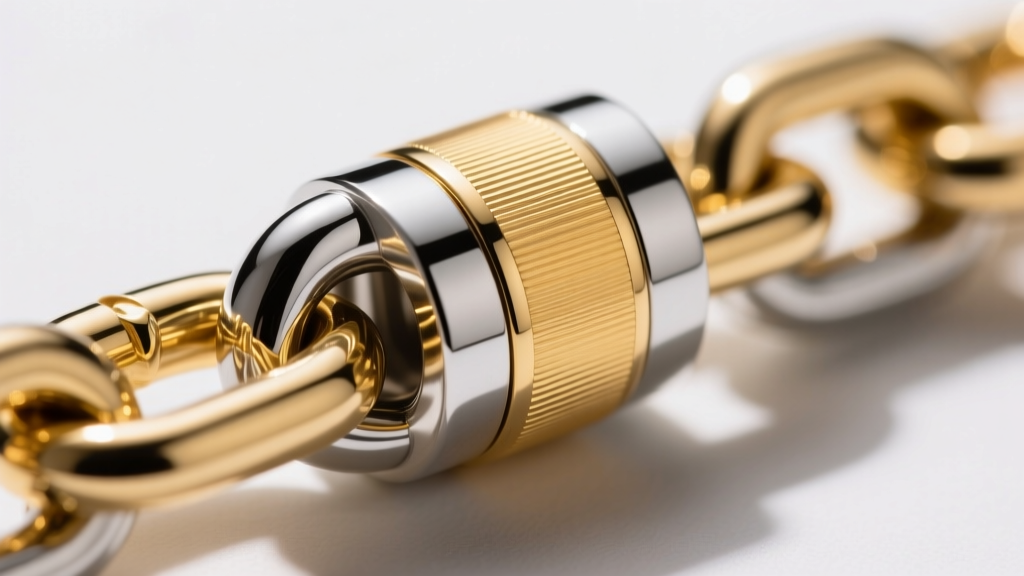
Before assessing value, we must define the benchmark. The authentic Parker style is characterized by a 3mm to 5mm curb or figaro link chain, typically terminating in a secure lobster or custom-cast toggle clasp. The focal point is the pendant—often a bezel-set gemstone, a textured gold disc, or an enamel-filled initial—hanging from a reinforced jump ring.
The versatility of this design is its primary value driver. It is engineered to sit perfectly at the collarbone (usually 16 to 18 inches), making it an ideal anchor piece for layering with thinner snake chains or longer rope chains. However, its popularity has led to a bifurcated market: heritage demi-fine brands producing high-quality pieces, and fast-fashion retailers churning out hollow, poorly plated knockoffs.
Material Breakdown: Vermeil vs. PVD Steel vs. Solid Gold
The price of a Parker necklace is almost entirely dictated by its metallurgy. Understanding these tiers is essential for accurate budget assessment.
18k Gold Vermeil (The Demi-Fine Standard)
True vermeil is not standard gold plating. According to the Federal Trade Commission (FTC) Jewelry Guides, vermeil must consist of a sterling silver (925) base coated with a minimum of 2.5 microns of 10k, 14k, or 18k gold. High-end Parker necklaces utilize 18k gold over sterling silver. This provides a rich, warm hue and is generally hypoallergenic. However, the 2.5-micron layer is still subject to friction wear over time.
PVD Coated 316L Stainless Steel (The Budget Alternative)
Physical Vapor Deposition (PVD) is a vacuum-plating process that bonds titanium nitride or gold dust to a surgical steel base at a molecular level. PVD Parker necklaces are incredibly resistant to tarnish, sweat, and water. While they lack the intrinsic precious metal value of vermeil or solid gold, their sheer durability makes them a high-value proposition for daily, low-maintenance wear.
14k Solid Gold (The Heirloom Investment)
Solid 14k gold Parker necklaces eliminate the threat of plating wear entirely. 14k is preferred over 18k for chain links because the higher alloy content (usually copper and zinc) increases tensile strength, preventing the links from stretching under the weight of the pendant.
The 2026 Pricing Matrix: Are You Overpaying?
To determine if you are getting a fair deal, compare the retail price against the intrinsic material value and expected lifespan. Below is the current market matrix for a standard 18-inch Parker chain with a mid-sized pendant.
| Material Tier | Expected Retail Price | Intrinsic Melt Value | Expected Lifespan (Daily Wear) |
|---|---|---|---|
| PVD Stainless Steel | $45 - $85 | < $2 | 3 - 5 Years (Coating degradation) |
| 18k Gold Vermeil | $130 - $220 | $8 - $15 (Silver base) | 2 - 4 Years (Before re-plating needed) |
| 14k Solid Gold | $650 - $1,100 | $250 - $450 | Lifetime (Generational) |
Note: Intrinsic melt value does not account for brand markup, design labor, or gemstone inclusions. However, it highlights the steep premium paid for demi-fine brand names.
Cost-Per-Wear Analysis: A Practical Framework
Budgeting for jewelry should not rely solely on the initial price tag. The true metric of value is Cost-Per-Wear (CPW).
The Formula: Total Price / (Wears per week × 52 weeks × Years of usable life)
- Scenario A (Vermeil): A $180 vermeil Parker necklace worn 4 times a week for 3 years before the gold wears off at the clasp and back-of-neck friction points. CPW = $180 / 624 wears = $0.28 per wear.
- Scenario B (Solid 14k): An $800 solid 14k gold Parker necklace worn 6 times a week for 20 years. CPW = $800 / 6,240 wears = $0.12 per wear.
Counterintuitively, the higher initial investment in solid gold yields a vastly superior long-term financial value, provided you have the upfront capital. If your budget is strictly capped under $100, PVD steel offers a CPW of roughly $0.15, making it the undisputed winner of the budget tier.
Common Failure Points & Maintenance Costs
When assessing the Parker necklace, you must account for the inevitable maintenance costs associated with its specific design mechanics. The Gemological Institute of America (GIA) notes that jewelry degradation is rarely uniform; it targets high-stress areas.

1. The Lobster Clasp Spring Fatigue
The standard 12mm lobster clasp relies on a tiny internal steel spring. In gold vermeil pieces, this spring is often made of base metal to maintain tension. When exposed to moisture, the internal spring rusts and fails, even if the exterior gold plating looks pristine. Fix cost: $15-$25 for a jeweler to solder on a replacement clasp.
2. Friction Wear on the Nape
The links resting against the back of the neck endure constant friction against skin, hair, and clothing. On vermeil Parker chains, this is the first area to reveal the silver underlayer. Fix cost: $40-$75 for professional electroplating and re-polishing.
3. Pendant Jump Ring Thinning
If the pendant hangs from a single, unsoldered jump ring, the friction of the chain moving back and forth will eventually saw through the metal. Always inspect the jump ring upon purchase. If it is not laser-soldered shut, factor in a $10 jeweler visit to seal it before you lose the pendant.
Final Verdict: Who Should Buy the Parker Necklace?
The Parker necklace is a masterclass in versatile design, but its value is entirely dependent on your personal wearing habits and budget constraints.
Buy PVD Stainless Steel ($50-$85) if: You want a trendy, waterproof accessory for gym sessions, travel, and daily abuse without the anxiety of ruining a precious metal. It is the ultimate low-stakes investment.
Buy 18k Gold Vermeil ($130-$220) if: You have sensitive skin that reacts to steel alloys, you prefer the authentic luster of 18k gold, and you are willing to perform diligent aftercare (wiping with a microfiber cloth after wear, avoiding perfumes) to extend its 2-4 year lifespan.
Buy Solid 14k Gold ($650+) if: You view jewelry as a permanent capsule wardrobe investment. The Parker silhouette is timeless enough to warrant the heirloom-tier expense, ensuring the piece will outlast seasonal trends and retain residual melt value.


