How to Clean and Maintain Your Aesthetic Cross Necklace
Learn expert cleaning and maintenance tips for your aesthetic cross necklace. Protect oxidized finishes, vermeil, and enamel from damage.


The "aesthetic cross necklace" has evolved far beyond traditional religious jewelry. Today, these pieces are staple accessories in streetwear, gothic, Y2K, and minimalist wardrobes, often featuring intricate designs like oxidized silver, micro-pavé cubic zirconia, black enamel inlays, or distressed gold vermeil. However, the very details that make these necklaces visually striking also make them highly vulnerable to improper cleaning.
Whether you are wearing a chunky 316L stainless steel puffer cross or a delicate 925 sterling silver dagger-cross pendant, maintaining the piece requires a nuanced understanding of metallurgy and gemstone settings. In this comprehensive guide, we break down the exact protocols for cleaning, maintaining, and storing your aesthetic cross necklaces to ensure they retain their edge and structural integrity for years to come.
Why Aesthetic Cross Necklaces Require Specialized Care
Standard jewelry cleaning advice often falls short when applied to aesthetic crosses. Many of these designs rely on intentional oxidation—a process where the recessed areas of the silver are chemically darkened to create contrast and highlight the engraved or cast details. If you use a commercial silver dip or an abrasive polishing cloth on an intentionally oxidized cross, you will strip away the dark patina, leaving the piece looking flat, washed out, and overly shiny.
Furthermore, aesthetic crosses frequently incorporate mixed media. You might find cold enamel, epoxy resins, or glue-set rhinestones adorning the arms of the cross. Submerging these pieces in hot water or harsh chemical baths will degrade the adhesives, causing stones to cloud or fall out entirely. According to the Gemological Institute of America (GIA), porous materials and treated surfaces require strictly pH-neutral, non-abrasive cleaning methods to prevent irreversible surface damage.
Material Breakdown & Vulnerabilities
Before applying any cleaning solution, you must identify the base metal and the finish of your necklace. Below is a diagnostic table to help you determine the safest approach for your specific piece.
| Material / Finish | Common Aesthetic Style | Primary Vulnerability | Safe Cleaning Agent |
|---|---|---|---|
| 925 Sterling Silver (Oxidized) | Gothic, Grunge, Vintage | Stripping of intentional black patina | Dry microfiber cloth only |
| 316L Stainless Steel | Streetwear, Puffer, Chunky | Water spotting, surface scratches | Mild dish soap & distilled water |
| Gold Vermeil (2.5μm over Silver) | Y2K, Minimalist, Fairycore | Wearing through the gold layer to base silver | pH-neutral soap, no brushing |
| Brass with Enamel / Epoxy | Y2K, Colorful, Pop-Art | Enamel chipping, brass verdigris (green corrosion) | Damp cloth, avoid soaking |
Step-by-Step Cleaning Protocols
The Daily Wipe-Down (For All Materials)
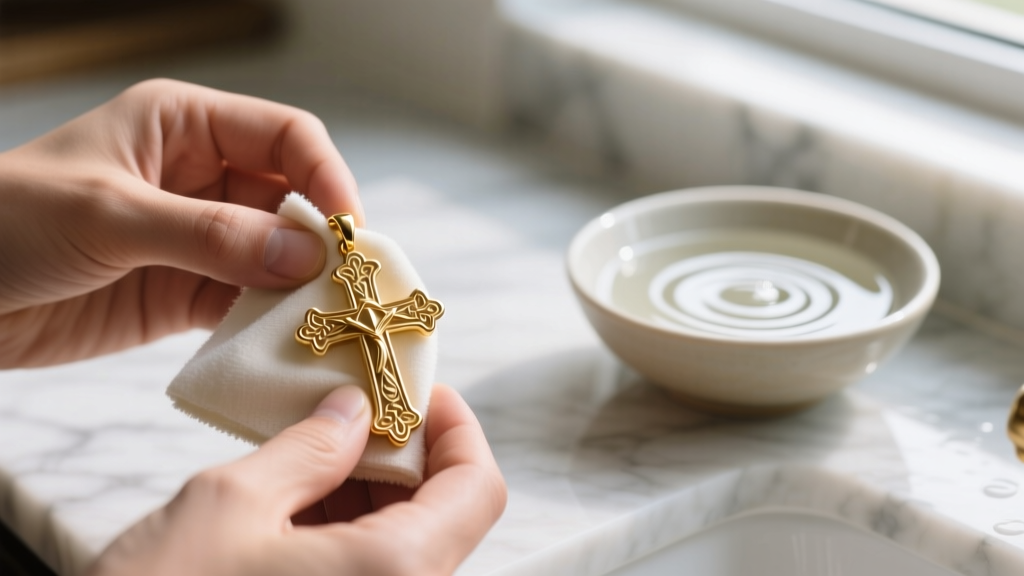
The most effective maintenance is preventative. Human sebum, sweat (which is highly acidic), and lotions create a film that accelerates tarnishing and dulls the sparkle of micro-pavé stones. After every wear, gently wipe your aesthetic cross necklace with a clean, dry, lint-free microfiber cloth. This removes acidic residues before they can etch into gold vermeil or accelerate the oxidation of raw brass and copper cores.
Deep Cleaning 316L Stainless Steel & Solid Silver (Non-Oxidized)
For stainless steel puffer crosses or highly polished silver crosses without intentional patinas, a gentle bath is the safest method.
- Line a small glass bowl with a soft towel.
- Fill it with lukewarm distilled water (tap water contains chlorine and minerals that can cause spotting).
- Add two drops of a pH-neutral, phosphate-free dish soap (such as original Dawn).
- Let the necklace soak for exactly 3 to 5 minutes. Do not exceed this, especially if the chain links have microscopic soldering points.
- Use a soft-bristled baby toothbrush to gently agitate dirt from the crevices of the cross pendant and the chain clasp.
- Rinse under a gentle stream of distilled water and pat completely dry with a microfiber cloth. Ensure the jump ring and clasp mechanism are 100% dry to prevent rust in the internal spring.
Rescuing Heavily Tarnished Solid Silver (The Electrochemical Method)
If your solid silver aesthetic cross has developed severe, yellowish-brown sulfur tarnish, avoid abrasive polishes. Instead, use an electrochemical reduction reaction that converts silver sulfide back into pure silver without removing any metal.
- Line a glass dish with aluminum foil (shiny side up).
- Place the tarnished silver cross on the foil, ensuring direct contact.
- Sprinkle two tablespoons of baking soda over the jewelry.
- Pour boiling water into the dish. You will immediately smell sulfur (rotten eggs) as the chemical reaction occurs.
- After 2 minutes, remove the cross with wooden tongs, rinse in distilled water, and buff dry.
Critical Warning: Never use this method on oxidized, blackened, or antiqued aesthetic crosses, as it will reverse the intentional darkening.
What to Avoid: Common Cleaning Mistakes
Misinformation regarding jewelry care is rampant on social media. To protect your investment, avoid these destructive practices:
The Toothpaste Myth
Applying toothpaste to a tarnished necklace is a widespread but terrible idea. Modern toothpastes contain hydrated silica, an abrasive designed to scrub enamel teeth. On jewelry, this silica creates thousands of micro-scratches. On gold vermeil, it will strip the 2.5-micron gold layer right off the sterling silver base, ruining the piece permanently.
Ultrasonic Cleaners and Glued Settings
While ultrasonic cleaners are excellent for solid diamond and platinum jewelry, they are devastating to aesthetic crosses featuring glued-in rhinestones, cold enamel, or resin inlays. The high-frequency acoustic cavitation bubbles will shatter brittle enamel and dissolve cyanoacrylate adhesives. As noted by jewelry insurance and care experts at Jewelers Mutual, ultrasonic waves should never be used on porous gems, treated stones, or mixed-media fashion jewelry.
Commercial Silver Dips
Liquid silver dips rely on thiourea, a highly toxic and corrosive chemical. While it removes tarnish instantly, it leaves behind a chalky residue that actually accelerates future tarnishing. Furthermore, it will instantly strip the black oxidation from gothic-style crosses.
Storage & Preventative Maintenance
How you store your aesthetic cross necklace is just as critical as how you clean it. Silver tarnishes when exposed to hydrogen sulfide in the air, while brass and copper react with oxygen and moisture to form verdigris (a green, crusty corrosion).
The Anti-Tarnish Storage Protocol
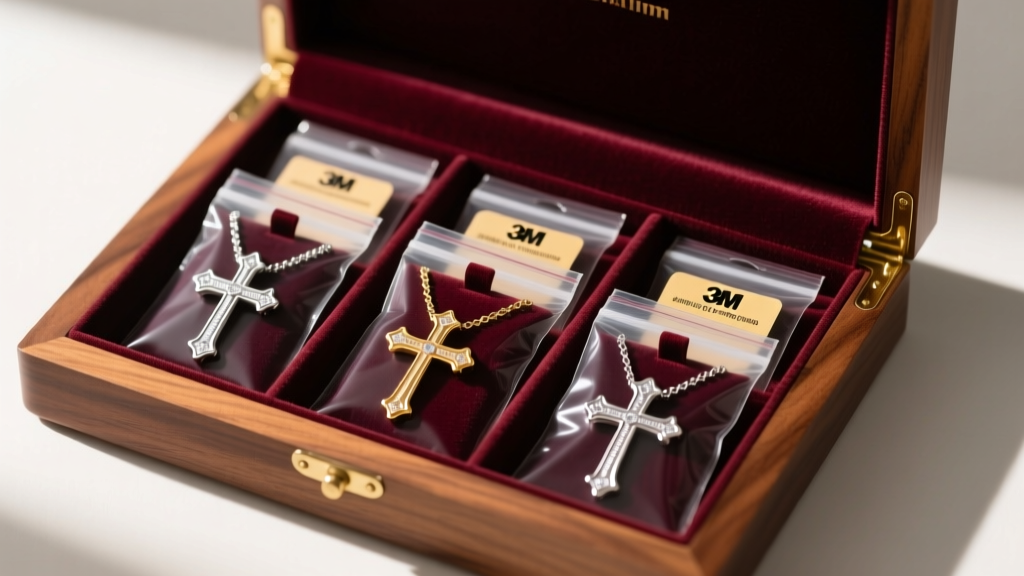
- Individual Containment: Never toss multiple necklaces into a single drawer. The friction will scratch softer metals and tangle delicate cable chains. Store each cross necklace in its own sealed, airtight polyethylene ziplock bag.
- Anti-Tarnish Strips: Place a 3M anti-tarnish strip inside each bag. These strips absorb airborne sulfur compounds and will protect your silver for up to 12 months.
- Avoid PVC Plastics: Never store silver in polyvinyl chloride (PVC) plastic bags or organizers. PVC off-gasses chlorine, which reacts with silver to form silver chloride, causing rapid, severe tarnishing that is difficult to reverse.
- Humidity Control: If you live in a high-humidity environment, include a small silica gel desiccant packet in your jewelry box to keep ambient moisture below 40%, drastically slowing the oxidation process.
By understanding the specific metallurgical needs of your aesthetic cross necklace and avoiding harsh, generalized cleaning methods, you can preserve the intricate details, intentional patinas, and structural integrity of your favorite pieces. Treat your jewelry with the precision it deserves, and it will continue to anchor your aesthetic wardrobe for years to come.


