Analyzing the Most Expensive Necklace in the World: Buyer's Guide
Discover what makes the most expensive necklace in the world so valuable and learn how to evaluate investment-grade high jewelry for your collection.

Decoding the Apex of High Jewelry
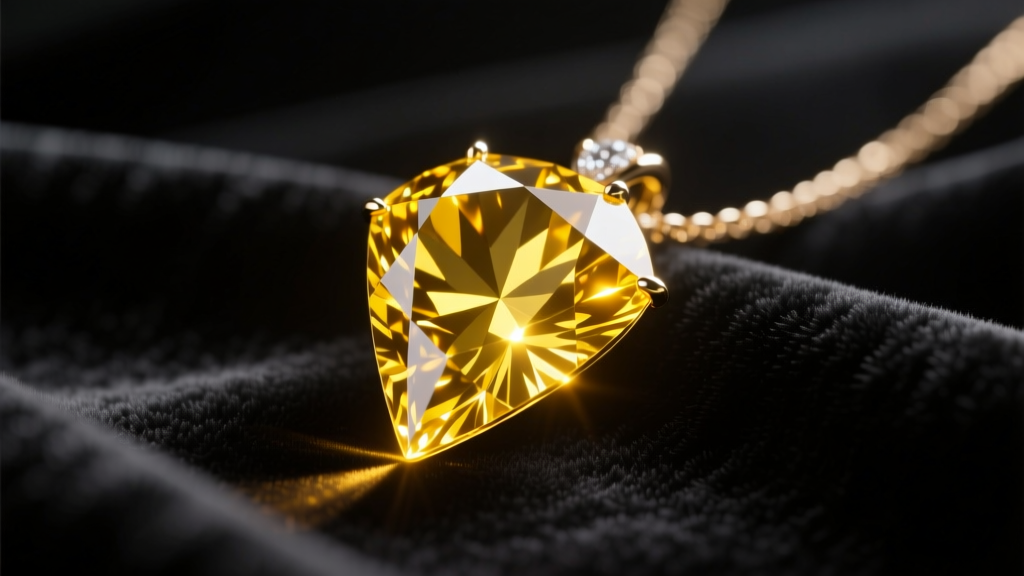
When discussing the most expensive necklace in the world, the conversation inevitably turns to Mouawad’s L'Incomparable Diamond Necklace, valued at an astonishing $200 million. At its center hangs a 407.48-carat Internally Flawless (IF) Fancy Brownish-Yellow diamond, supported by a rose gold lattice of 90 additional white diamonds. However, for high-net-worth collectors, auction veterans, and jewelry investors, the true value lies not just in headline-grabbing price tags, but in understanding the rigorous gemological, historical, and structural metrics that drive these valuations.
This guide decodes the anatomy of ultra-high jewelry. Whether you are preparing to bid at a premier auction house or sourcing an investment-grade piece through a private broker, understanding these hyper-specific thresholds is critical for capital preservation and portfolio growth.
The Gemological Threshold: Beyond the Standard 4 Cs
Standard retail grading falls drastically short at the apex of the market. At the investment tier, buyers demand absolute chemical purity and exceptional color saturation.
The Type IIa Diamond Mandate
According to the Gemological Institute of America (GIA), Type IIa diamonds are chemically pure and structurally flawless, containing virtually no nitrogen impurities. Representing less than 2% of all gem-quality diamonds, Type IIa stones possess a superior transparency that creates an unmatched "icy" brilliance. When evaluating a white diamond necklace priced above $100,000 per carat, a Type IIa classification is practically mandatory for long-term value retention.
Colored Diamonds and the Saturation Cliff
For colored diamonds, the prefix "Fancy Vivid" or "Fancy Deep" is the baseline for serious collectors. The price differential between saturation grades is exponential. A 10-carat Fancy Yellow diamond might fetch $15,000 per carat, but a Fancy Vivid Yellow of identical clarity and cut can command upwards of $45,000 per carat. Always verify the color origin on the lab report; natural irradiation is acceptable, but artificial treatments instantly destroy investment value.
Provenance and the Historical Premium
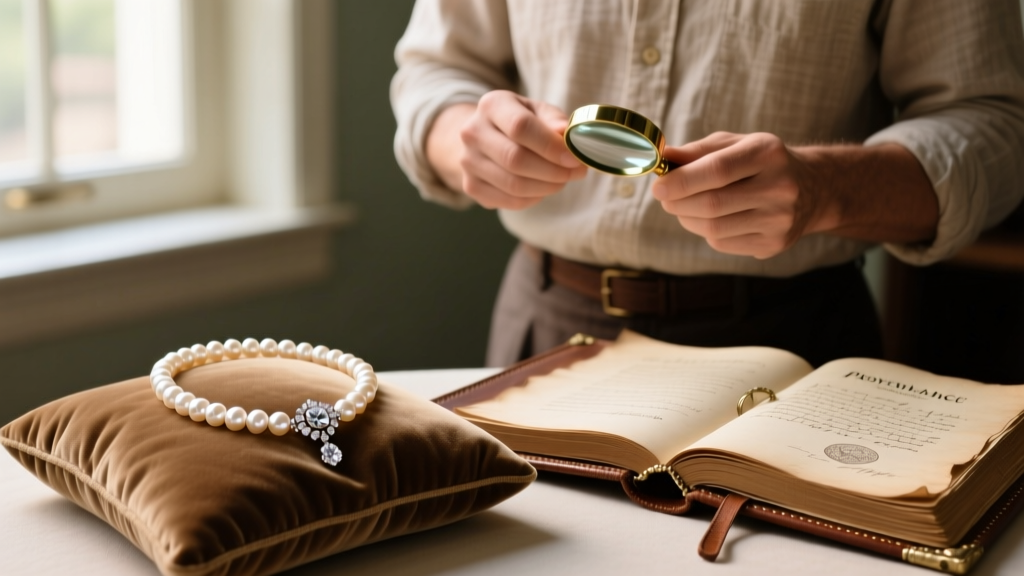
A necklace's history can inflate its hammer price by 30% to over 300%. The La Peregrina pearl necklace, once owned by Mary Tudor and later Elizabeth Taylor, sold for $11.8 million at Christie's in 2011, vastly exceeding its pre-sale estimate due to its royal and Hollywood lineage.
Verifying the Chain of Custody
When buying historical high jewelry, demand an unbroken chain of custody. Acceptable documentation includes:
- Archival Invoices: Original purchase receipts from heritage maisons like Cartier, Boucheron, or Van Cleef & Arpels.
- Exhibition Records: Catalogs from museum retrospectives or world fairs.
- Original Sketches: Hand-drawn design gouaches from the maison's archives, proving the piece is a unique bespoke commission rather than a production run.
Rare Gemstone Alternatives: Sapphires, Rubies, and Emeralds
While diamonds dominate the record books, colored gemstone necklaces offer incredible scarcity. When evaluating these, the focus shifts from cut precision to origin and treatment.
| Gemstone | Ideal Origin | Treatment Tolerance | Investment Grade Indicator |
|---|---|---|---|
| Ruby | Mogok, Myanmar | Strictly No Heat | "Pigeon's Blood" color with strong UV fluorescence |
| Sapphire | Kashmir / Burma | Strictly No Heat | Velvety "Cornflower Blue" saturation without extinction |
| Emerald | Muzo, Colombia | Minor Oil Only | High clarity with "Jardin" inclusions, no resin fillers |
| Padparadscha | Sri Lanka | No Heat / No Beryllium | Exact 50/50 pink-orange hue, verified by SSEF or Gübelin |
For colored gemstones, a GIA report is excellent, but reports from the Swiss Gemmological Institute (SSEF) or Gübelin are often preferred by elite auction houses like Sotheby's for their rigorous origin determination and treatment detection.
Evaluating the Setting: Metallurgy and Structural Integrity
In ultra-high jewelry, the setting must serve the stone without distracting from it. The structural integrity of a $500,000 necklace must be flawless.
The Invisible Setting and Platinum Lattices
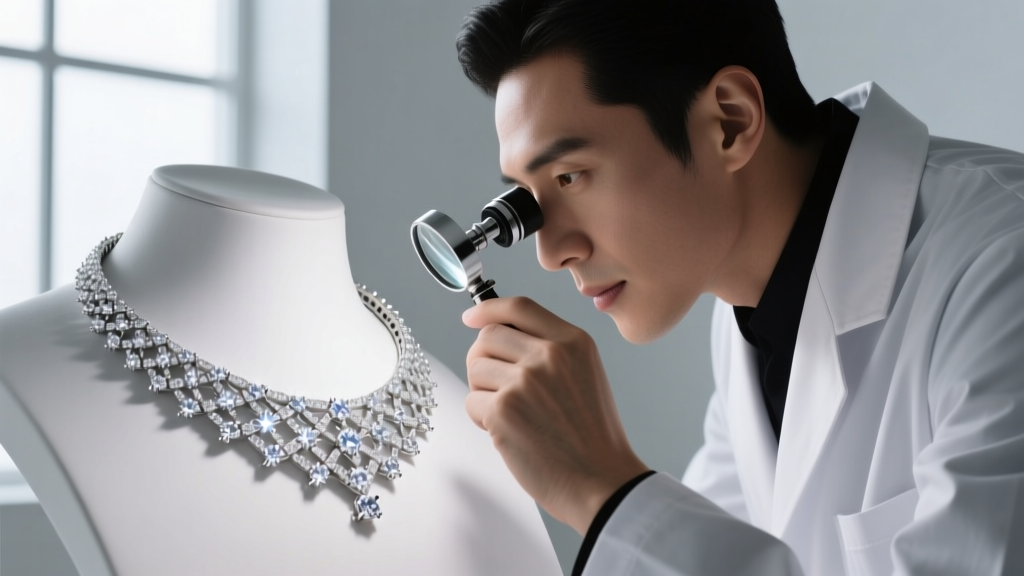
The "invisible setting" (serti invisible), pioneered by Van Cleef & Arpels, requires stones to be precisely grooved and slid onto a microscopic gold lattice. This technique takes hundreds of hours and requires stones to be calibrated to within a fraction of a millimeter. When inspecting such pieces, use a 10x loupe to ensure the rails are perfectly flush and the stones show no lateral movement.
For diamond-heavy collars and rivière necklaces, Platinum 950 is the absolute standard. Unlike 18k white gold, which requires periodic rhodium plating to maintain its white luster, platinum's natural white color will never fade, and its high tensile strength prevents the micro-prongs from wearing down and dropping multi-million-dollar stones.
The Anatomy of a High-Jewelry Clasp
A common failure point in luxury jewelry is the clasp. An investment-grade necklace will never rely on a simple lobster or spring-ring clasp. Look for a double-box clasp equipped with twin figure-eight safety wires. The box mechanism should engage with a distinct, audible click, and the safety wires must be forged from the same high-tensile metal as the chain, not soldered on as an afterthought.
Sourcing Channels: Where to Acquire Investment-Grade Necklaces
Where you buy is just as important as what you buy. Each channel carries distinct financial and logistical implications.
- Major Auction Houses (Christie's, Sotheby's, Phillips): Best for historical pieces and rare colored diamonds. Expect to pay a buyer's premium of 15% to 25% on top of the hammer price. The advantage is absolute transparency and rigorous vetting by in-house gemologists.
- Private High-Jewelry Brokers: Ideal for discreet acquisitions and off-market stones. Premiums are lower (typically 5% to 10%), but the burden of independent verification falls heavily on the buyer. Always hire an independent appraiser before closing a private sale.
- Heritage Maisons (Direct Commissions): Purchasing directly from brands like Graff or Harry Winston guarantees authenticity and unparalleled craftsmanship, but you are paying a significant retail markup for the brand prestige. These pieces often depreciate the moment they leave the boutique, unless they are unique, one-of-a-kind high jewelry creations.
Final Thoughts on High Jewelry Acquisition
Understanding the mechanics behind the most expensive necklace in the world transforms high jewelry from a mere luxury purchase into a tangible, portable asset class. By strictly adhering to Type IIa diamond classifications, demanding unheated colored gemstones with elite laboratory provenance, and scrutinizing the metallurgical integrity of the setting, collectors can build a portfolio that withstands both market fluctuations and the test of time. Always prioritize the gemological data over the brand name, and never compromise on the chain of custody.


