Expert Care Guide for Your Daily Heart on Necklace Pendant
Discover expert cleaning and maintenance tips for your heart on necklace. Learn how to safely polish gold, silver, and gemstone heart pendants.

The Sentimental Value and Vulnerability of Heart Pendants
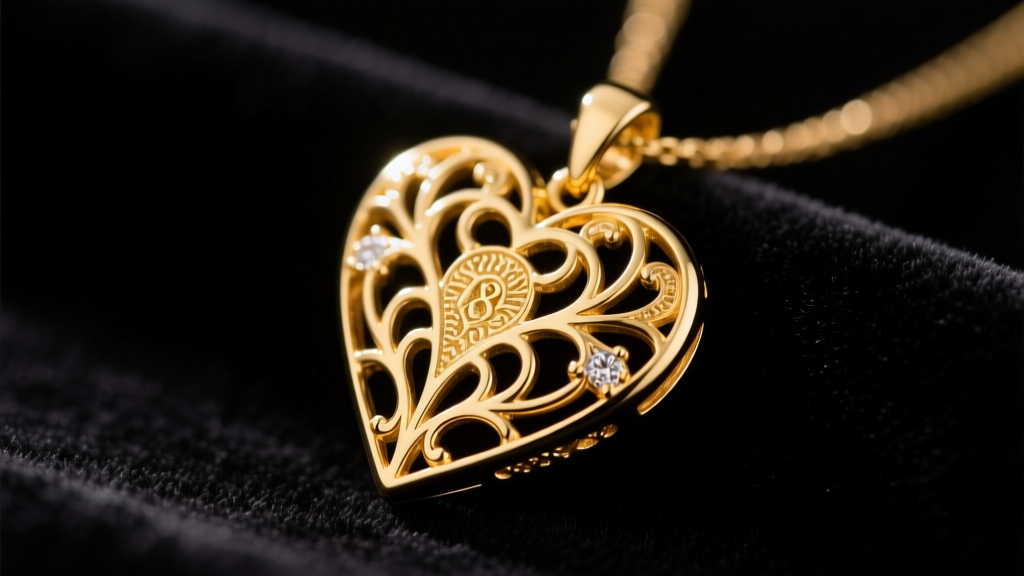
A heart on necklace is more than just a piece of jewelry; it is a profound symbol of love, connection, and personal milestones. Whether it was a gift for an anniversary, a Mother’s Day keepsake, or a self-purchase to mark a personal achievement, a heart pendant often becomes a daily-wear staple. However, the very anatomy that makes a heart shape so visually appealing also makes it uniquely susceptible to dirt accumulation, tarnish, and structural wear.
Unlike simple geometric pendants like circles or squares, the traditional heart silhouette features a deep cleft at the top and a sharp vertex at the bottom. These intricate angles act as natural traps for sebum (skin oils), cosmetic powders, lotions, and environmental dust. Over time, this buildup not only dulls the brilliance of your metal and gemstones but can also accelerate localized tarnishing and degrade delicate settings. In this comprehensive 2026 care guide, we will break down the exact metallurgical and gemological protocols required to clean, maintain, and protect your favorite heart on necklace, ensuring it remains as radiant as the day you received it.
The Anatomy of a Heart Pendant: Why Crevices Trap Debris
Before applying any cleaning solution, it is crucial to understand the structural vulnerabilities of a heart-shaped pendant. The 'cleft' (the inward curve at the top) and the 'point' (the bottom vertex) are the primary debris traps. When you wear your necklace, the cleft sits directly against the hollow of the throat or collarbone, an area that naturally accumulates sweat and perfume.
Furthermore, many modern heart pendants feature 'halo' or 'pave' settings that follow the curved perimeter of the heart. The microscopic prongs holding these melee diamonds (typically 0.01 to 0.02 carats each) are incredibly fragile. Aggressive scrubbing in these curved crevices is the leading cause of stone loss in heart-shaped jewelry. Understanding this anatomy dictates a gentle, targeted approach to maintenance rather than brute-force polishing.
Material Identification: Know Your Metal and Stones
The cleaning protocol for your heart on necklace must be strictly tailored to its specific material composition. Using the wrong chemical or mechanical action can cause irreversible damage.
Solid Gold (14k and 18k) and Platinum
Solid gold and platinum are highly durable, but they are not scratch-proof. 18k gold (75% pure gold) is softer than 14k gold (58.3% pure gold) due to its higher pure gold content. While both can withstand mild soap and warm water, platinum develops a 'patina' over time—a satin-like finish caused by microscopic surface scratches. Polishing a platinum heart pendant too frequently will remove metal mass; therefore, reserve professional polishing for once every few years, relying on gentle home washing for routine maintenance.
Sterling Silver and Gold Vermeil
Sterling silver (92.5% silver, 7.5% copper) is highly reactive to sulfur compounds in the air, leading to black silver sulfide tarnish. This tarnish aggressively targets the deep cleft of a heart pendant where air circulation is poor. Gold vermeil, which consists of a sterling silver base coated with a thick layer of gold (legally required to be at least 2.5 microns in the US), requires extreme caution. Many contemporary fashion brands utilize 'flash plating' (less than 0.5 microns), which can easily wear off in the crevices if scrubbed with abrasive pastes or stiff brushes.
Enamel Inlays and Porous Gemstones
Heart pendants frequently feature guilloché or cold enamel inlays to add vibrant color. Enamel is essentially fused glass and is highly susceptible to chipping if struck against hard surfaces or exposed to sudden temperature changes. Similarly, if your heart pendant features porous gemstones like pearls, opals, or turquoise, it must never be submerged in water, as the stones can absorb liquids and crack or discolor.
The Step-by-Step Cleaning Protocol
For standard solid gold, platinum, and diamond-set heart pendants, follow this meticulous cleaning routine recommended by the Gemological Institute of America (GIA).
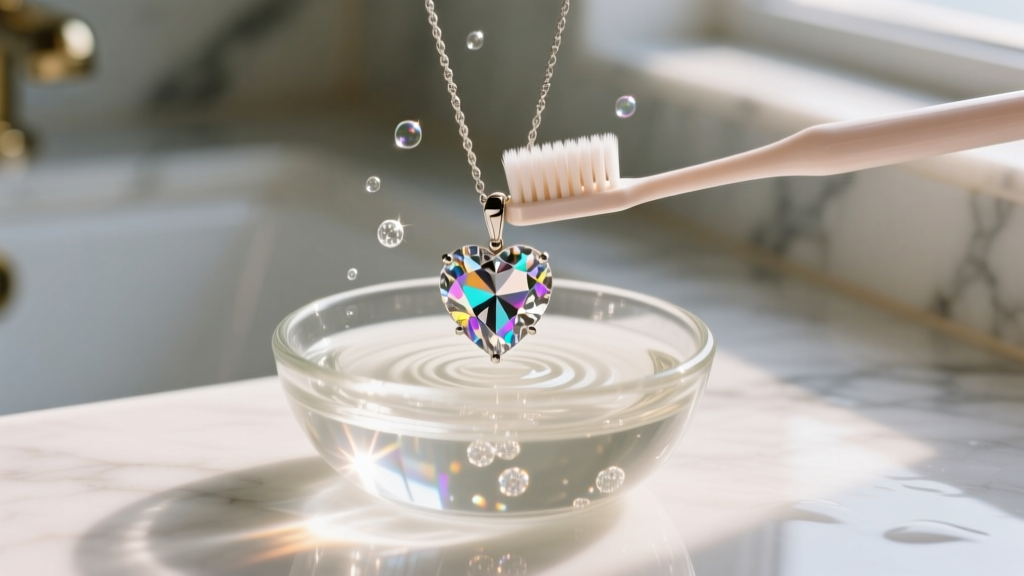
- Prepare the Solution: Fill a small glass bowl with lukewarm distilled water. Add three drops of a mild, phosphate-free dish soap (such as original Dawn). Avoid hot water, which can shock certain gemstones or weaken resin-based setting adhesives.
- Soak: Submerge your heart on necklace in the solution for exactly 15 to 20 minutes. This allows the surfactant to break down the lipid bonds of skin oils trapped in the cleft and point of the heart.
- Targeted Agitation: Using an extra-soft baby toothbrush (bristle diameter of 0.05mm or less), gently brush the pendant. Always brush in the direction of the metal grain or setting. Pay special attention to the back of the pendant, where the gallery (the underside of the setting) collects the most debris.
- Crevices and Prongs: For stubborn dirt lodged deep in the top cleft, use a wooden toothpick. Never use metal needles or safety pins, as steel is harder than gold and will leave permanent, unsightly scratches.
- Rinse and Dry: Rinse the necklace under a gentle stream of lukewarm distilled water. Ensure the drain is securely plugged. Pat dry with a lint-free microfiber cloth, and use a hair dryer on the 'cool' setting to blow water out of the microscopic prong gaps.
Troubleshooting Common Heart Pendant Issues
Even with diligent care, specific issues can arise due to the unique shape and wear patterns of heart jewelry. Below is a diagnostic framework for addressing common problems.
| Issue | Probable Cause | Actionable Solution |
|---|---|---|
| Dark Tarnish in the Cleft | Sulfur exposure combined with trapped moisture and poor air circulation in the pendant's dip. | Apply a silver-specific liquid dip only to the tarnished area using a cotton swab. Rinse immediately and neutralize with a baking soda/water bath. |
| Dull or Cloudy Diamonds | Buildup of hand lotions and cosmetics on the pavilion (underside) of the stones. | Use a specialized jewelry cleaning pen with a built-in microfiber tip to clean the underside of the diamonds without stressing the prongs. |
| Fading Vermeil on the Point | Friction against clothing and skin acids wearing away the thin gold micron layer at the bottom vertex. | Stop wearing the piece during high-sweat activities. Take it to a professional jeweler for a fresh electroplating bath (request at least 2.0 microns). |
| Rattling Sound in Pave Heart | A microscopic prong has bent back, allowing a melee diamond to move freely within its bezel. | Stop wearing the necklace immediately to prevent stone loss. Have a jeweler perform a prong-tightening service under a 10x loupe. |
What to Avoid: The Damage Checklist
When researching how to clean a heart on necklace, you will encounter numerous 'hacks' on the internet. Many of these are highly destructive to fine jewelry. According to guidelines from Jewelers of America, you must strictly avoid the following:
- Ultrasonic Cleaners for Treated Stones: While modern 2026 ultrasonic cleaners offer adjustable frequencies (e.g., 80kHz for delicate items), they should never be used on fracture-filled diamonds, emeralds, or opals. The high-frequency vibrations can shatter these stones or shake loose the delicate pave settings commonly found on the perimeter of heart pendants.
- Toothpaste as a Polish: Toothpaste contains hydrated silica, which has a Mohs hardness of around 7. Since 14k gold has a hardness of roughly 3.5 to 4, scrubbing your gold heart with toothpaste is essentially sanding it with microscopic rocks, leading to severe micro-scratching and loss of luster.
- Chlorine and Bromine Exposure: Never wear your gold or silver heart necklace in a swimming pool or hot tub. Chlorine reacts with the alloy metals (like copper and zinc) in 14k and 18k gold, causing a phenomenon called 'stress corrosion cracking,' which can cause the bail (the loop connecting the pendant to the chain) to snap unexpectedly.
- Paper Towels for Drying: Paper towels and tissues are made from wood pulp and contain rough fibers that will leave micro-scratches on high-polish metals. Always use a dedicated, clean microfiber jewelry cloth.
Storage and Daily Wear Best Practices
Proper storage is just as critical as the cleaning process itself. The sharp point of a heart pendant can easily scratch other jewelry, and the chain can become hopelessly tangled in the pendant's bail if thrown loosely into a jewelry box.
The 'Last On, First Off' Rule: Always put your heart on necklace on after applying makeup, perfume, and hairspray, and remove it before showering or exercising. Cosmetic powders are highly abrasive and can lodge permanently into the crevices of the heart shape, while the acids in sweat will rapidly degrade the rhodium plating on white gold pendants.
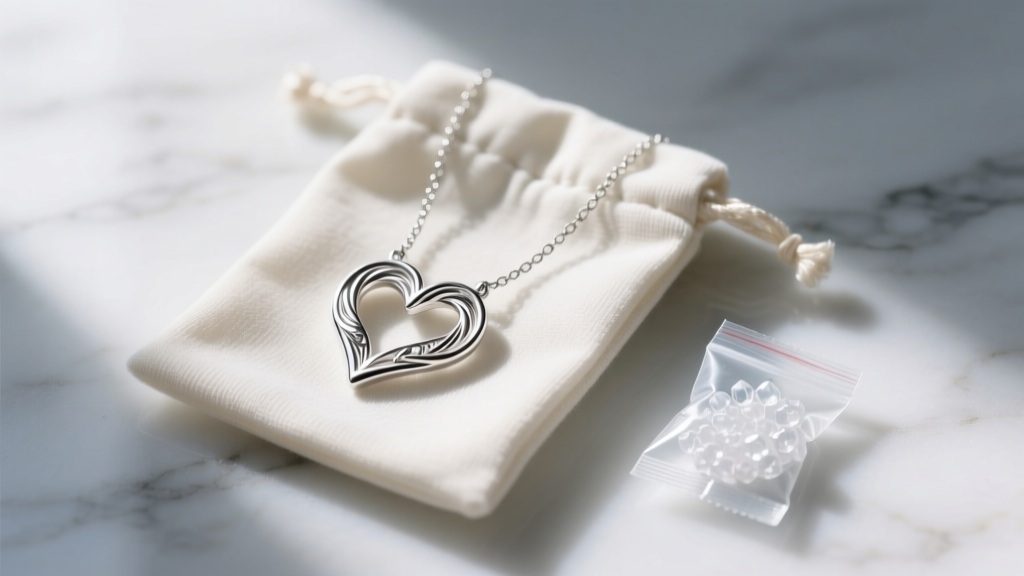
Anti-Tarnish Storage: For sterling silver and white gold heart pendants, store them in an airtight polyethylene bag or a specialized anti-tarnish cloth pouch (such as Pacific Silvercloth). Include a small silica gel packet or a 3M anti-tarnish strip inside the pouch to absorb ambient moisture and neutralize sulfur gases. Always fasten the clasp and lay the chain flat or hang it vertically to prevent the chain from threading through the pendant's bail and creating a knot.
Conclusion
Maintaining the brilliance of a heart on necklace requires a blend of gentle chemistry, precise mechanical action, and proactive storage. By understanding the unique debris-trapping anatomy of the heart silhouette and respecting the metallurgical limits of your specific gold, silver, or gemstone materials, you can prevent premature wear and keep your sentimental piece looking flawless. Implement this targeted cleaning protocol every two to three weeks, and schedule an annual prong-and-bail check with a certified jeweler to ensure your heart pendant remains secure and radiant for decades to come.


