The Dainty Flower Necklace Trend: 2026 Styling & Material Guide
Discover 2026 dainty flower necklace trends. Explore micro-floral styling, material grades, enamel vs. gemstone choices, and expert layering techniques.

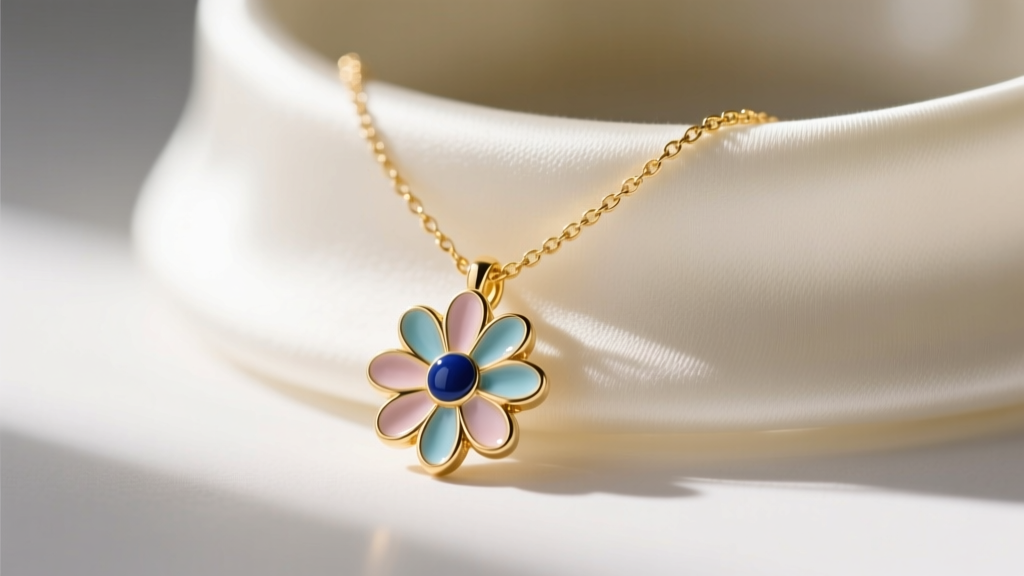
The jewelry landscape of 2026 has decisively pivoted from the heavy, oversized Y2K botanicals of the early 2020s toward a refined aesthetic known as 'micro-romanticism.' At the absolute center of this movement is the dainty flower necklace. No longer just a staple of junior department stores, the micro-floral pendant has been elevated by fine jewelers into a sophisticated study of scale, metallurgy, and subtle self-expression. According to recent luxury market analyses by Bain & Company, consumers are increasingly investing in 'quiet luxury' pieces that offer daily wearability with high emotional resonance—precisely the niche the dainty floral motif occupies.
However, the market is saturated with poorly constructed replicas that tarnish, tangle, and break within months. This guide deconstructs the anatomy, material science, and advanced styling techniques of the dainty flower necklace to help you invest in pieces that endure.
The Anatomy of a 2026 Dainty Flower Necklace
What separates a truly 'dainty' piece from a merely 'small' one? In 2026, the industry standard for a micro-floral pendant dictates a motif diameter between 6mm and 9mm. Anything larger crosses into standard pendant territory, losing the delicate, skin-grazing effect that defines the trend.
Chain Gauge and Tensile Strength
The most common failure point of a dainty necklace is the chain. To maintain the visual illusion of a floating flower, brands often use ultra-fine 0.4mm or 0.5mm chains. This is a structural mistake. A 0.4mm cable chain has a tensile breaking point of roughly 1.5 lbs, meaning a simple snag on a sweater will snap it instantly.
For 2026, expert jewelers recommend a 0.7mm to 0.9mm box chain or rounded cable chain. These gauges provide a breaking strength of 4 to 7 lbs while remaining visually unobtrusive. Furthermore, the clasp must be proportionate: a 4mm lobster clasp is vastly superior to a standard spring-ring clasp, which suffers from internal spring fatigue and accidental unclasping over time.
Material Showdown: Enamel, Gemstone, or Openwork?
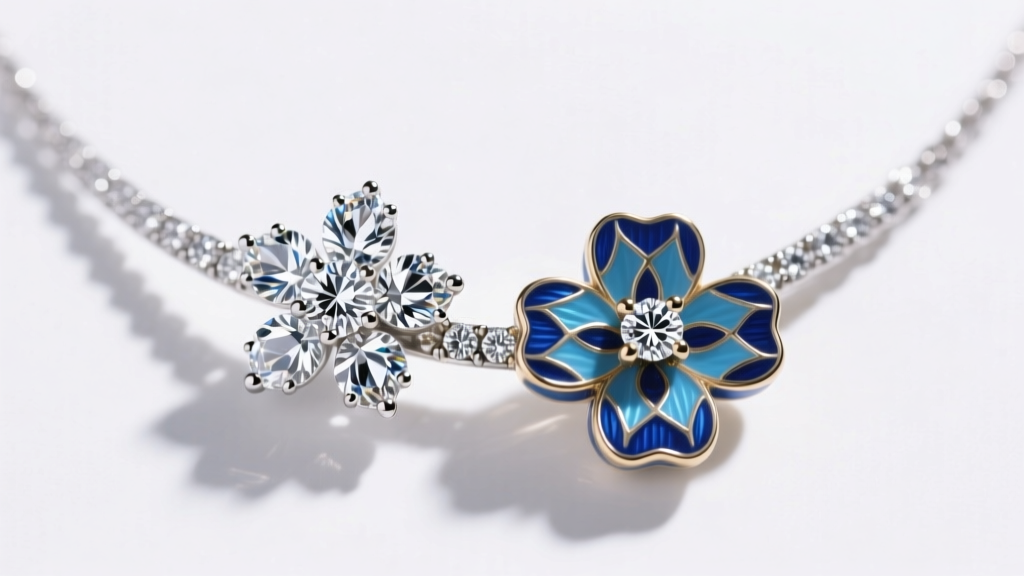
The visual impact of your dainty flower necklace depends entirely on how the petals are rendered. The GIA Gem Encyclopedia notes that the interplay of light and texture at a micro-scale requires precise material selection. Below is a comparative analysis of the three dominant techniques used in fine jewelry today.
| Material Technique | Durability & Wear | Price Range (14k Gold) | Best For |
|---|---|---|---|
| Vitreous Enamel | Exceptional. Fired at 800°C, it is essentially glass fused to metal. Will not yellow or chip under normal wear. | $350 - $600 | Vivid color blocking, vintage-inspired heirlooms. |
| Cold Epoxy Enamel | Poor to Fair. A painted resin that will yellow from UV exposure and scratch easily within 12-18 months. | $80 - $150 | Trend-chasing, temporary fashion styling. |
| Micro-Pavé Gemstones | High, but requires maintenance. Uses 0.01ct melee diamonds or 1mm calibrated sapphires. Prongs can catch on silk. | $800 - $2,500+ | Evening wear, bridal layering, high-luxury gifting. |
| Openwork Metal | Moderate. Relies on negative space. Thin petal tips (under 0.5mm) can bend if slept in. | $200 - $450 | Minimalist everyday wear, mixed-metal stacking. |
The Tarnish Factor: Base Metals to Avoid
If you are purchasing a dainty flower necklace for daily wear, avoid gold vermeil over brass or copper cores. Because the chains are so thin, the microscopic friction against your collarbone wears away the 2.5-micron gold plating in a matter of months, exposing the reactive base metal to your skin's natural oils and resulting in rapid, irreversible oxidation. Always opt for solid 14k gold, 18k gold, or platinum for the chain and jump rings.
Masterclass: Layering Micro-Florals Without Tangling
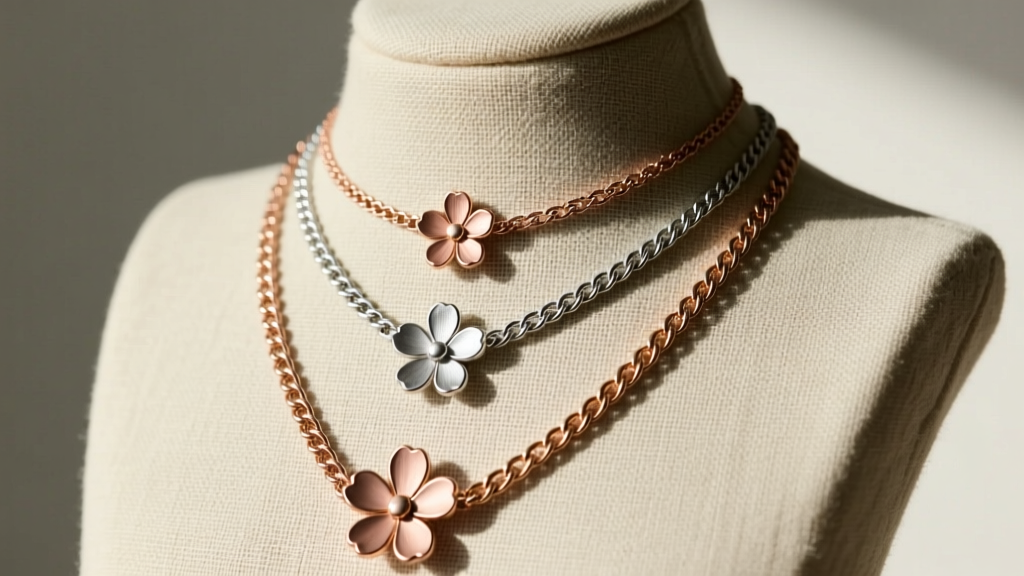
Layering is the cornerstone of the 2026 botanical trend, but thin chains are notorious for knotting. The physics of chain tangling comes down to friction and uniform geometry. If you layer three identical cable chains, the uniform links act like gears, interlocking and twisting into complex knots.
To achieve a flawless, tangle-free layered dainty flower necklace stack, follow this structural framework:
- Length Variance: Maintain a strict 2-inch gap between layers. A 14-inch choker, a 16-inch collarbone grazer, and an 18-inch décolletage drop ensure the pendants never collide.
- Texture Mixing: Alternate chain styles. Pair a 0.8mm box chain with a 0.7mm bead chain and a 0.9mm flat cable chain. The differing geometric profiles physically prevent the links from slipping inside one another.
- Pendant Weight Distribution: Place the heaviest pendant (e.g., micro-pavé diamond) on the longest chain, and the lightest (e.g., openwork metal) on the shortest. This creates a center of gravity that keeps the layers laying flat against the sternum.
- The Extender Rule: Ensure every chain has a 2-inch extender with a silicone or metal stopper. This allows you to micro-adjust the drape based on the neckline of your top.
Neckline Pairing Matrix
A dainty flower necklace can easily get lost if the neckline is too busy, or look awkward if the drop length is miscalculated. Use this stylist matrix to pair your jewelry with your wardrobe:
The Sweetheart & Scoop Neck
Optimal Drop: 15 to 16 inches.
Strategy: The curve of a sweetheart neckline perfectly mirrors the circular geometry of a floral pendant. Choose a single, 8mm vitreous enamel daisy or rose on a delicate chain. The pendant should rest exactly one inch above the fabric line to frame the collarbone without competing with the hem.
The Deep V-Neck
Optimal Drop: 18 to 20 inches.
Strategy: This requires a vertical cascade. Layer two dainty flower necklaces—one 16-inch openwork metal lotus, and one 18-inch gemstone-set floral drop. The elongated silhouette draws the eye downward, complementing the aggressive plunge of the V-neck.
The Crew Neck & Turtleneck
Optimal Drop: 14 inches (Choker) or 22+ inches (Long Lariat).
Strategy: Avoid the 16-inch 'dead zone' where the chain will awkwardly rub against the high fabric hem. Instead, wear a tight 14-inch dainty floral choker to sit entirely above the collar, or use a long 22-inch chain to let the flower pendant rest on the sternum, breaking up the heavy fabric block.
Investment Pieces vs. Fast Fashion: What to Expect
When shopping for a dainty flower necklace in 2026, price is a direct indicator of structural integrity. Fast fashion pieces in the $20–$50 range utilize stamped alloy bases with cold enamel and hollow jump rings. These are disposable accessories meant for a single season.
Conversely, investment pieces in the $300–$800 range from specialized fine jewelry ateliers feature cast or die-struck solid gold components, laser-welded jump rings (which will never pull apart under tension), and ethically sourced melee diamonds or kiln-fired enamel. When evaluating a piece, always inspect the bail—the loop connecting the flower to the chain. If the bail is a simple open 'C' hook, it will eventually bend and drop your pendant. A fully soldered, closed bail is the hallmark of a necklace built to last a lifetime.
Ultimately, the dainty flower necklace has transcended its whimsical origins to become a masterclass in precision jewelry design. By prioritizing correct chain gauges, permanent material techniques, and intentional layering physics, you can curate a botanical collection that is as resilient as it is beautiful.


