The Necklace Mickey Mouse Fans Need: Casting & Tech
Discover the metallurgy behind the necklace Mickey Mouse collectors love. Explore enamel types, casting methods, and chain gauge specs.

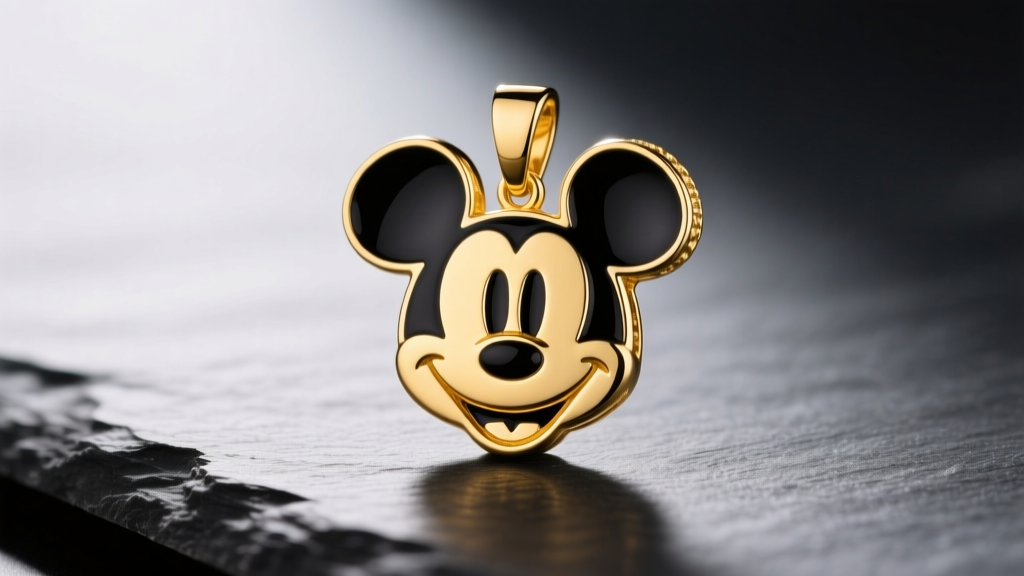
The Metallurgy of Character Jewelry
Character jewelry bridges the gap between nostalgic fandom and fine metallurgy. When evaluating a vintage or modern necklace mickey mouse enthusiasts often overlook the complex manufacturing techniques required to translate a 2D cartoon silhouette into a durable, three-dimensional wearable object. Unlike standard geometric pendants, character silhouettes demand precise undercutting, specialized enamel inlay techniques, and careful weight distribution to ensure the pendant rests flush against the sternum without flipping.
The foundation of any high-quality Disney-licensed pendant lies in its base metal. Fine jewelry editions typically utilize 14k gold (58.5% pure gold alloyed with copper and silver for tensile strength) or 18k gold (75% pure gold, favored in European and Japanese markets for its richer hue but softer structure). Sterling silver (92.5% silver, 7.5% copper) remains the most common base for mass-market pieces, though the copper content makes it highly susceptible to oxidation when exposed to the sulfur in human sweat and environmental pollutants.
Die-Striking vs. Lost-Wax Casting
The manufacturing method dictates the pendant's structural integrity and level of detail. There are two primary techniques used in the production of character pendants:
- Die-Striking: This method involves using a high-pressure hydraulic press (often exceeding 150 tons) to stamp a silhouette out of a flat sheet of metal. Die-struck pendants are incredibly dense, highly resistant to bending, and feature razor-sharp edges. They are ideal for flat, 2D profile silhouettes.
- Lost-Wax Casting: For 3D sculpted faces or intricate multi-layered designs, jewelers use the lost-wax method. A wax model is injected into a rubber mold, encased in a plaster investment, and burned out in a kiln at 1350°F. Molten metal is then forced into the cavity via centrifugal or vacuum casting. This allows for complex undercuts and rounded, organic shapes that die-striking cannot achieve.
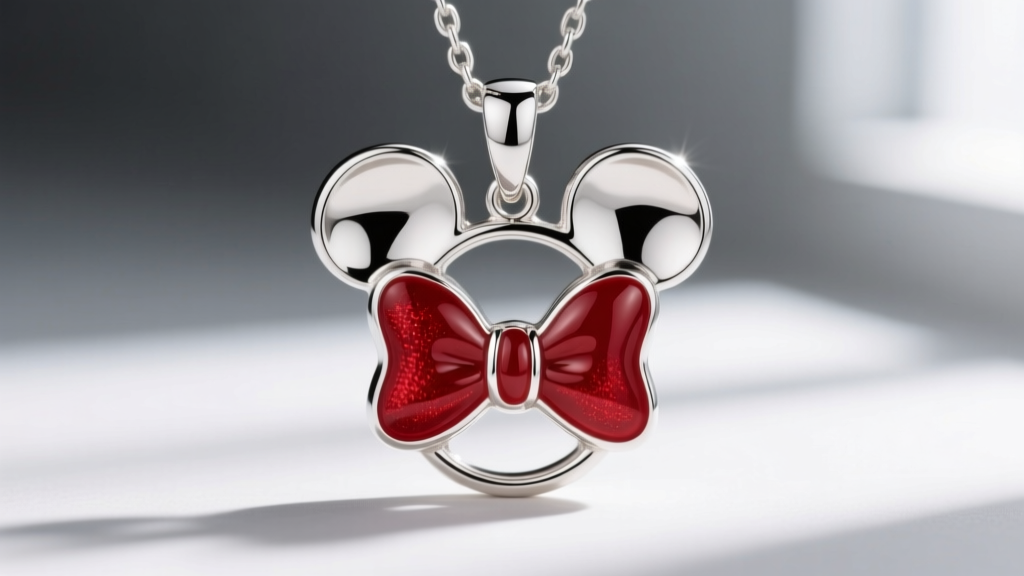
Enamel Applications: Vitreous vs. Cold Epoxy
Coloration in character jewelry is rarely achieved through paint; it relies on enamel. Understanding the difference between vitreous and cold enamel is critical for assessing the longevity of your piece.
Vitreous Enamel: Also known as champlevé or guilloché depending on the metal preparation, vitreous enamel is essentially powdered glass. It is packed into carved recesses in the metal and fired in a kiln at approximately 1400°F. The glass melts, fuses to the metal substrate, and cools into a hard, scratch-resistant surface that will never fade or yellow. High-end collaborations, such as those by Tiffany & Co. or specialized Disney Park fine jewelry boutiques, utilize vitreous enamel.
Cold Enamel (Epoxy Resin): The vast majority of character jewelry sold in theme parks and mid-tier retail chains uses cold enamel. This is a bisphenol-A based epoxy resin that is hand-painted or syringe-injected into the metal recesses and left to air-cure. While it allows for a broader spectrum of vibrant, opaque colors (like the iconic red of a bowtie or yellow of character shoes), cold enamel is fundamentally a plastic. It is susceptible to micro-scratches, chemical degradation from perfumes, and UV-induced yellowing over a 5 to 10-year period.
"Cold epoxy enamel provides excellent initial color saturation for character silhouettes, but collectors must avoid ultrasonic cleaners, as the high-frequency cavitation can fracture the bond between the resin and the metal substrate." — Master Bench Jeweler Technical Notes
Chain Gauge and Tensile Strength Data
A pendant is only as secure as the chain supporting it. Character silhouettes, particularly those cast in solid 14k gold, can be surprisingly heavy due to the density of the metal and the surface area of the design. Pairing a heavy pendant with an undersized chain is the leading cause of jewelry loss.
Below is a technical breakdown of chain gauges and their maximum recommended pendant weights:
| Chain Style | Gauge (mm) | Max Pendant Weight | Structural Notes |
|---|---|---|---|
| Cable Chain | 1.0 - 1.2 | 3g - 4g | Round links; prone to kinking under heavy, unbalanced loads. |
| Box Chain | 1.5 - 1.8 | 8g - 10g | Interlocking square links; excellent tensile strength and fluid drape. |
| Rope Chain | 2.0 - 2.5 | 12g+ | Twisted links; highly durable but can trap skin and body hair. |
| Wheat Chain | 1.5 | 6g - 8g | Braided oval links; very strong but difficult to repair if snapped. |
Clasp Mechanics and Failure Points
The clasp is the most common mechanical failure point on any necklace. When investing in a heavy character pendant, the choice of clasp is a critical security consideration.
Spring Ring Clasps: Commonly found on mass-market sterling silver chains, spring rings rely on a tiny internal coil spring. These are notorious for failing; the spring can easily jam, or the hollow tubing can dent and collapse, rendering the clasp useless. They are not recommended for pendants exceeding 5 grams.
Lobster Claw Clasps: These feature a solid, spring-loaded lever mechanism. A high-quality lobster clasp is forged from a single piece of metal or heavily soldered at the joint, providing superior resistance to lateral pulling forces. For any solid gold character pendant, a lobster clasp is the minimum acceptable standard.
Hallmarking and Authenticity Verification
The secondary market for character jewelry is flooded with counterfeit pieces, often cast from low-grade brass or zinc alloys and heavily plated with a microscopic layer of gold. Verifying authenticity requires a close inspection of the hallmarking on the reverse side of the pendant or the clasp tag.
According to the Federal Trade Commission Jewelry Guides, any piece marketed as gold or silver must bear a legally recognized purity mark (e.g., 14k, 585, 925). Furthermore, authentic Disney-licensed fine jewelry will feature a microscopic laser-engraved copyright symbol (©) alongside the word "Disney" or the manufacturer's trademark (such as Pandora or Alex and Ani).
Counterfeit pieces often exhibit "porosity"—tiny pinholes on the surface of the metal caused by trapped gas during cheap, uncontrolled casting processes. As noted in manufacturing analyses by the Gemological Institute of America (GIA), porosity severely weakens the structural integrity of the metal and prevents a high-polish finish. If your character silhouette looks dull, pitted, or lacks a crisp, deeply stamped purity mark, it is likely a counterfeit alloy disguised by flash plating.
Maintenance and Long-Term Care
To preserve the structural and aesthetic integrity of your character jewelry, adhere to a strict maintenance protocol. Remove the necklace before swimming in chlorinated pools, as chlorine reacts violently with the copper alloys in 14k gold and sterling silver, causing irreversible stress corrosion cracking. Store the piece in an anti-tarnish cloth pouch to limit exposure to ambient sulfur, and polish only with a non-abrasive microfiber cloth to avoid wearing away the rhodium plating often applied to white gold and silver editions.


