The Beginner's Guide to Buying a Women's Silver Chain Necklace
Discover how to choose the perfect women's silver chain necklace. Learn about silver grades, chain styles, gauges, and durability tips.

Introduction: Why Silver is the Ultimate Starter Metal
When building a foundational jewelry wardrobe, a women's silver chain necklace is universally recognized as the most versatile anchor piece. Unlike gold, which commands a premium that limits experimentation, or platinum, which is often reserved for high-stakes bridal jewelry, silver offers an accessible entry point into luxury metallurgy. However, the market is flooded with misleading terminology, fragile constructions, and deceptive plating. For a beginner, distinguishing between a lifelong staple and a disposable accessory requires understanding the metallurgy and mechanics of chain construction.
This guide strips away the marketing fluff, providing a data-driven framework to help you evaluate silver purity, link durability, and gauge sizing. Whether you are looking for a delicate 0.8mm cable chain for a lightweight solitaire pendant or a robust 3.5mm curb chain for everyday standalone wear, the specifications matter.
Decoding the Hallmarks: Sterling vs. Plated vs. Argentium
The term "silver" is heavily regulated by the Gemological Institute of America (GIA) and the Federal Trade Commission, yet retailers frequently exploit loopholes. Understanding the exact alloy composition is the first step in making an informed purchase.
Standard Sterling Silver (.925)
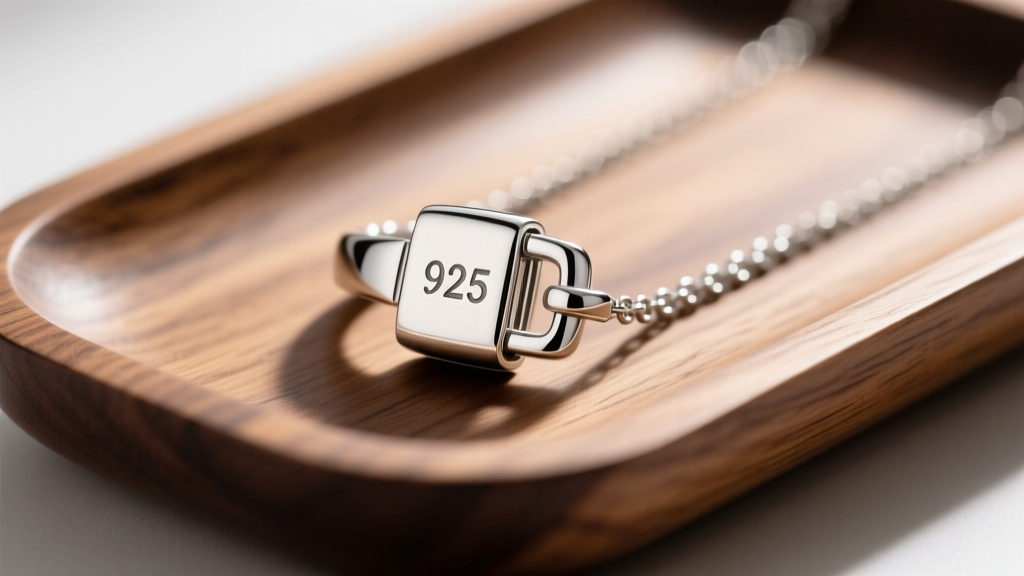
Sterling silver is an alloy consisting of 92.5% pure silver and 7.5% other metals, almost always copper. Pure silver (99.9%) is too malleable for chain links; it would stretch and deform under the weight of a pendant. The copper addition provides necessary tensile strength. However, copper is highly reactive to sulfur and moisture, which is why .925 sterling silver is prone to developing silver sulfide (tarnish) over time.
Argentium Silver (.935 or .960)
Argentium is a modern, patented alloy that replaces a portion of the copper with germanium. This structural change creates a transparent germanium oxide layer on the surface, making it highly tarnish-resistant and hypoallergenic. According to the Jewelry Shopping Guide, Argentium is also fused using heat rather than solder, eliminating the visible solder lines often found on standard sterling chains.
Silver-Plated and Silver-Filled
Plated chains feature a microscopic layer of silver (often less than 0.5 microns) electroplated over a base metal like brass or copper. Once this layer wears away from friction, the base metal oxidizes, turning your skin green. "Silver-filled" is a step up, containing a thicker mechanical bond of silver (usually 5% to 10% of the total weight), but it still lacks the longevity of solid alloys.
| Silver Type | Composition | Tarnish Resistance | Avg. Price Range | Best Use Case |
|---|---|---|---|---|
| .925 Sterling | 92.5% Ag, 7.5% Cu | Moderate (Requires polishing) | $40 - $120 | Everyday pendants, layering |
| Argentium | 93.5%+ Ag, Germanium | High (Slow to tarnish) | $80 - $250 | Low-maintenance daily wear |
| Silver-Plated | Brass core, <1% Ag | Low (Wears off quickly) | $15 - $35 | Trendy, short-term fashion |
Chain Link Profiles: Matching Style to Durability
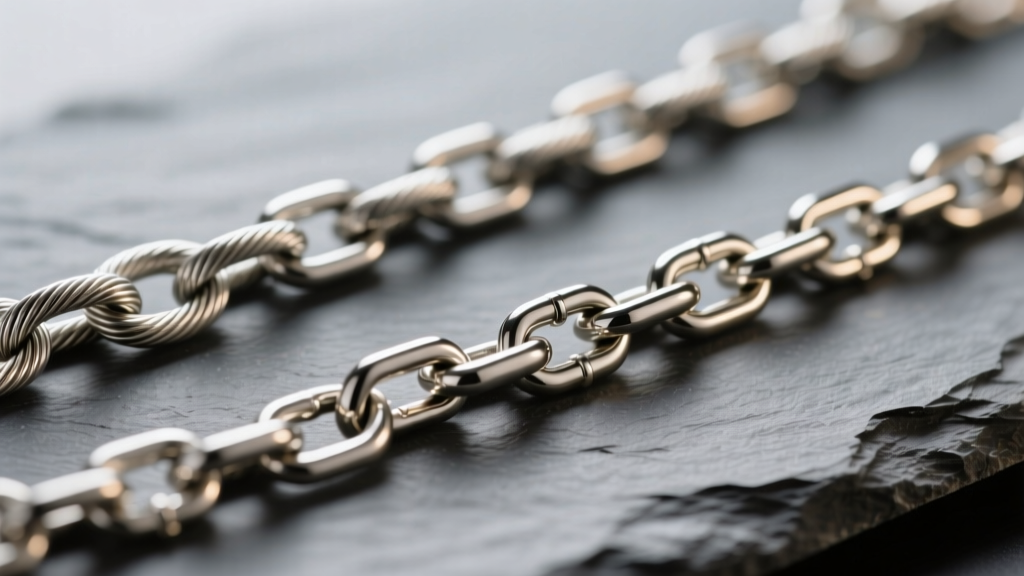
The structural integrity of a women's silver chain necklace is dictated by its link profile. Some chains are engineered for fluid drape, while others prioritize sheer tensile strength. Here is a breakdown of the four most common beginner-friendly chain styles.
1. The Cable Chain (The Classic)
Composed of uniform oval or round links connected in a simple alternating pattern. Cable chains are lightweight and ideal for holding pendants because the uniform links allow the pendant bail to slide freely. Failure Mode: Thin cable chains (under 1.0mm) are highly susceptible to kinking. Once a link bends out of its planar alignment, it creates a weak point that will eventually snap.
2. The Curb Chain (The Workhorse)
Curb chains feature links that have been flattened and twisted so they interlock and lay perfectly flat against the skin. This interlocking geometry distributes tension evenly across multiple links, making curb chains significantly stronger than cable chains of the same gauge. They are excellent for standalone wear or supporting heavier gemstone pendants.
3. The Box Chain (The Modernist)
Constructed from square, box-like links that create a smooth, geometric, and highly reflective surface. Box chains offer a contemporary aesthetic and a beautiful drape. Failure Mode: The hollow nature of the links makes them prone to denting if crushed or slept in. Repairing a dented box chain is notoriously difficult for jewelers, often requiring complete link replacement.
4. The Rope Chain (The Statement)
Small metal links are twisted and woven together to mimic the appearance of a twisted rope. This multi-dimensional weaving makes rope chains incredibly strong and highly reflective. However, if a link does break, the complex weaving pattern makes soldering and repair nearly impossible without leaving a visible scar.
Gauge and Length: The Mathematics of Fit
Beginners often overlook gauge (thickness) and length, leading to chains that either snap under a pendant's weight or sit awkwardly on the neckline. Use this framework to dial in your exact specifications.
Gauge Sizing Guide
- 0.8mm - 1.2mm (Ultra-Delicate): Best for lightweight pendants (under 5 grams) and subtle, barely-there layering. Not recommended for standalone wear as they can easily catch on clothing and snap.
- 1.5mm - 2.5mm (The Sweet Spot): The most versatile range. Thick enough to wear alone as a minimalist statement, yet refined enough to hold medium-weight pendants (5 to 15 grams) without overpowering them.
- 3.0mm - 5.0mm+ (Heavyweight): Strictly for standalone statement wear. The links are too thick to accommodate standard pendant bails. Ideal for curb or rope chains meant to be the focal point of an outfit.
Length and Neckline Mapping
- 16 Inches (Choker): Sits tightly at the base of the neck. Best for open-neck blouses and V-necks.
- 18 Inches (Princess): The industry standard. Rests perfectly on the collarbone, making it universally flattering for almost all necklines, from crewnecks to scoop necks.
- 20 to 24 Inches (Matinee): Falls below the collarbone to the upper chest. Ideal for layering over turtlenecks, button-down shirts, or pairing with longer, heavier pendants.
Troubleshooting Common Silver Chain Failures
Even high-quality .925 or Argentium chains will fail if their mechanical components are neglected. Understanding these failure points will save you from losing a cherished piece.
Expert Insight: "The chain itself rarely breaks; the jump ring does. Always inspect the split jump ring that connects the clasp to the chain. If the gap in the ring is wide enough to catch a fingernail, it is wide enough to slip off the clasp loop and lose your necklace. Have a jeweler solder the jump ring shut for permanent security."

Managing Tarnish and Sulfides
Silver tarnish is not a defect; it is a chemical reaction between the copper alloy and sulfur compounds in the air, sweat, and cosmetics. To mitigate this, store your women's silver chain necklace in an anti-tarnish cloth bag (infused with silver nitrate to absorb ambient sulfur) rather than a standard plastic ziplock, which can trap moisture and accelerate oxidation. For cleaning, avoid abrasive dips. Use a dedicated silver polishing cloth that contains microscopic jeweler's rouge to gently lift the sulfide layer without scratching the surrounding metal.
Final Verdict: Building Your Core Collection
A beginner's journey into silver jewelry should begin with intentionality. Skip the silver-plated impulse buys and invest in a solid .925 sterling or Argentium silver chain. For your first purchase, an 18-inch, 1.5mm cable or curb chain offers the perfect equilibrium of durability, versatility, and elegance. It will seamlessly transition from a standalone minimalist piece to a reliable foundation for your growing pendant collection. By prioritizing metallurgical integrity and precise gauge sizing, you ensure that your silver chain remains a permanent fixture in your jewelry wardrobe for decades to come.


