What Do the Mood Necklace Colors Mean? The Science Guide
Discover what do the mood necklace colors mean. Learn the thermochromic science, temperature charts, and how to choose skin-safe mood pendants.

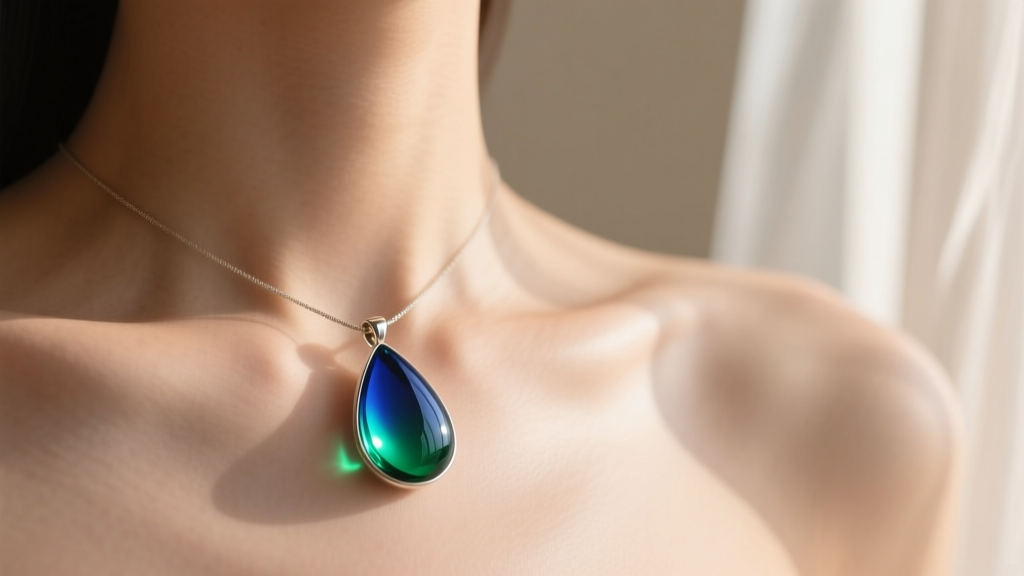
Since their explosive debut in the 1970s, mood necklaces have captivated jewelry lovers with their seemingly magical ability to change color. But as we look at these nostalgic pieces through a modern lens, a common question arises: what do the mood necklace colors mean in reality? While the marketing of the past claimed these pendants could read your deepest emotional states, the truth is rooted in fascinating chemistry and human physiology. In this comprehensive guide, we will decode the thermochromic science behind mood stones, provide an accurate temperature-to-color chart, and explain how to choose a skin-safe, high-quality mood pendant that will actually last.
The Thermochcomic Science: How Mood Stones Actually Work
To understand the color shifts, we first have to look inside the stone. A mood necklace pendant does not contain magic; it contains thermochromic liquid crystals (TLCs). Specifically, these are cholesteric (or chiral nematic) liquid crystals, which are organic compounds that possess properties of both liquids and solid crystals.
These molecules are arranged in a helical (spiral) structure. The distance between the layers of this spiral—known as the 'pitch'—is highly sensitive to temperature changes. When the temperature of the stone changes, the pitch of the helix expands or contracts. This physical shift alters the wavelength of light that is reflected back to your eye, a phenomenon known in physics as Bragg reflection. When the stone is cooler, the pitch is tighter, reflecting shorter wavelengths like violet or blue. When the stone is warmer, the pitch expands, reflecting longer wavelengths like green, yellow, or red. As HowStuffWorks explains, the mood ring is essentially a highly sensitive, wearable thermometer.
Decoding the Spectrum: What Do the Mood Necklace Colors Mean?
The emotional associations tied to mood jewelry are based on the physiological concept of vasodilation and vasoconstriction. When you are excited, passionate, or stressed, your body redirects blood flow to your core and major muscle groups, but localized emotional flushing can also increase skin temperature. Conversely, fear, anxiety, or simply being in a cold room causes vasoconstriction, pulling blood away from the skin's surface and dropping your peripheral temperature.
Below is the definitive guide to what the colors indicate regarding both surface temperature and the loosely associated emotional state.
| Stone Color | Surface Temperature | Associated Emotional State | Physiological Reality |
|---|---|---|---|
| Black / Gray | Below 22°C (72°F) | Stressed, anxious, or fearful | Poor circulation, cold ambient environment, or the stone is damaged. |
| Amber / Orange | 22°C - 25°C (72°F - 77°F) | Uneasy, mixed emotions, or nervous | Slightly below average resting skin temperature. |
| Yellow-Green | 25°C - 28°C (77°F - 82°F) | Normal, average, or alert | Standard resting peripheral skin temperature for most adults. |
| Bright Green | 28°C - 30°C (82°F - 86°F) | Relaxed, comfortable, at peace | Optimal blood flow to the skin; warm and comfortable environment. |
| Blue / Cyan | 30°C - 32°C (86°F - 90°F) | Happy, engaged, sociable | Elevated skin temperature due to mild excitement or physical activity. |
| Violet / Pink | Above 32°C (90°F) | Passionate, romantic, ecstatic | Significant localized vasodilation; skin is physically very warm. |
The 'Black Stone' Anomaly
If your mood necklace remains stubbornly black or dark gray even when you feel perfectly relaxed, it is rarely a sign of deep depression. Instead, it usually indicates that the ambient room temperature is quite cold, or that the glass capsule containing the liquid crystals has developed a micro-fracture, allowing moisture to enter and destroy the crystalline alignment.
Variables That Skew Your Mood Pendant's Accuracy
While it is fun to use these necklaces as conversational icebreakers, relying on them as genuine bio-feedback devices is flawed due to several external variables:
- Ambient Temperature Interference: If you are sitting in an air-conditioned room set to 68°F, your mood stone will likely default to yellow-green or amber, regardless of how happy you feel.
- Skin Thickness and Calluses: The skin on your chest (where a pendant rests) is generally thinner and more sensitive to temperature shifts than the skin on your fingers. However, if you apply thick body butters or lotions to your décolletage, you create a thermal barrier that insulates the stone from your actual body heat.
- Circulation Conditions: Individuals with conditions like Raynaud's syndrome or naturally poor peripheral circulation will find that their mood jewelry almost always reads 'cold' (black or amber), skewing the emotional reading entirely.
Material Safety: Choosing a Skin-Safe Bezel
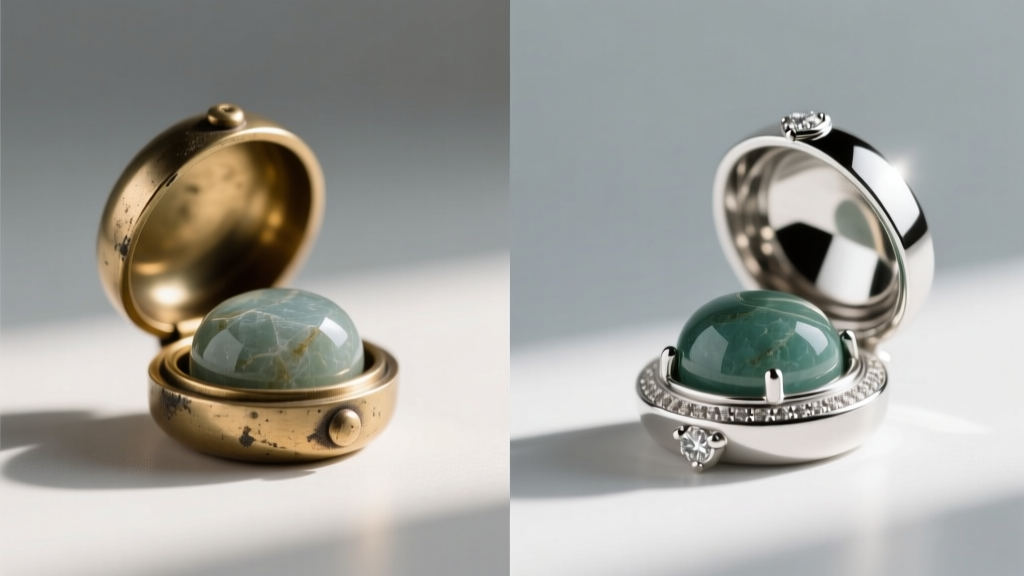
When shopping for a mood necklace, the thermochromic stone itself is usually safely sealed inside a quartz or glass capsule. The real danger to your skin lies in the metal setting holding the stone. Because mood jewelry is often mass-produced as novelty items, many manufacturers use cheap Zamak (a zinc alloy) or low-grade brass that contains high levels of nickel and lead.
According to the National Center for Biotechnology Information (NCBI), nickel is the most common cause of allergic contact dermatitis worldwide. When a cheap base-metal bezel rests against the sensitive skin of your neck and mixes with sweat, it leaches nickel salts, resulting in an itchy, red, and flaky rash. To avoid this, always look for pendants crafted in specific, hypoallergenic grades:
- 925 Sterling Silver: Composed of 92.5% pure silver and 7.5% copper. It is naturally hypoallergenic, highly durable, and provides a beautiful, bright backdrop that makes the shifting colors of the liquid crystals pop.
- 316L Surgical Stainless Steel: An excellent, budget-friendly alternative to silver. The 'L' stands for low carbon, and this specific grade binds its nickel content so tightly that it rarely causes reactions, even on sensitive skin.
Troubleshooting and Care: Why Mood Stones Turn Black and Die
The most common complaint among mood jewelry owners is that the stone eventually 'dies,' turning permanently black and refusing to change color. This is not a reflection of your mood, but rather a failure of the materials. Here is how to prevent premature failure:
1. Prevent Water Ingress
The liquid crystals inside the capsule are highly sensitive to moisture. If you wear your mood necklace in the shower, the pool, or the ocean, water pressure and temperature fluctuations can compromise the adhesive seal of the glass capsule. Once water seeps inside, it disrupts the chiral nematic phase of the crystals, permanently ruining the stone. Always remove your pendant before bathing.
2. Protect Against UV Degradation
The organic compounds that make up thermochromic liquid crystals are susceptible to photodegradation. Leaving your necklace on a sunny windowsill for weeks will cause the UV rays to break down the molecular structure of the crystals, leading to a loss of color vibrancy and eventual failure.
3. Proper Storage Protocols
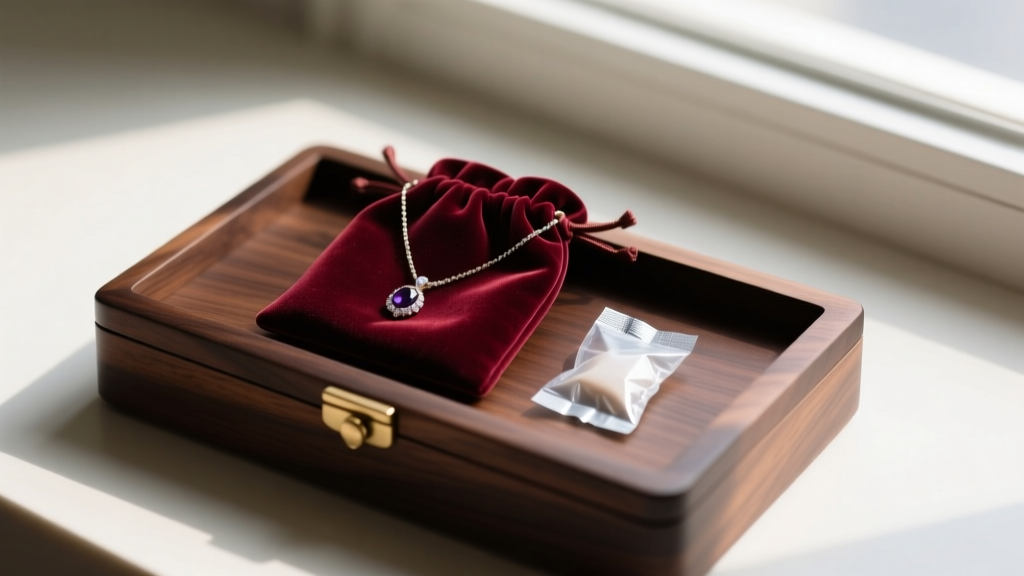
When you are not wearing your mood pendant, store it in a dark, airtight environment. Placing the necklace in a velvet jewelry pouch alongside a small silica gel desiccant packet will draw away ambient humidity, protecting the capsule's seal and ensuring the thermochromic chemicals remain stable for years.
The Final Verdict: Mood necklaces are a brilliant intersection of wearable art and organic chemistry. While they may not be perfect lie detectors or emotional barometers, understanding the thermochcomic science behind what the mood necklace colors mean allows you to appreciate the complex physics resting right against your skin.


