White Gold Moonstone Necklace: 2026 Value & Pricing Guide
Discover the true value of a white gold moonstone necklace in 2026. We break down pricing tiers, gem grading, and metal alloys to help you buy smart.

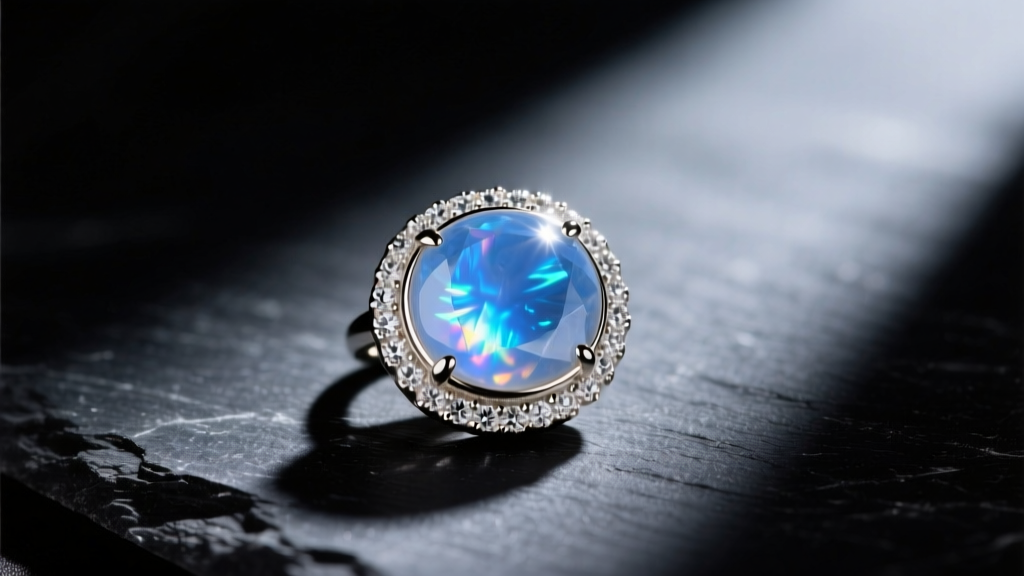
The Allure and Economics of Moonstone in 2026
The celestial jewelry trend has firmly cemented the moonstone as a must-have gemstone, but navigating the market for a white gold moonstone necklace requires a sharp eye for both gemology and metallurgy. Unlike diamonds, which are graded on a rigid, universally standardized scale, moonstones derive their value from subjective optical phenomena and specific geological origins. In 2026, with precious metal markets fluctuating and ethical sourcing becoming a primary consumer demand, assessing the true budget and value of these ethereal necklaces is more complex than ever.
Whether you are evaluating a vintage estate piece or a modern artisan pendant, understanding the intersection of moonstone adularescence and white gold alloy composition is critical. This guide strips away the marketing fluff to provide a硬核 (hardcore) value assessment, helping you determine exactly what you should pay—and what hidden maintenance costs to expect over the next decade.
Decoding Moonstone Value: Sheen, Body Color, and Clarity
The primary driver of a moonstone’s price is its adularescence—the billowing, floating light effect caused by the diffraction of light through alternating layers of orthoclase and albite feldspar. According to the Gemological Institute of America (GIA), the most valuable moonstones possess a colorless, transparent body with a vivid, electric blue sheen that covers the entire surface of the cabochon when viewed from multiple angles.
Conversely, stones with a milky or opaque white body color and a weak, silvery-white sheen are abundant and command significantly lower prices. These are often sourced from India and are heavily used in commercial-grade, budget-friendly jewelry. Rainbow moonstone (which is technically labradorite) features multicolor flashes and sits in the mid-tier price bracket, appealing to buyers who want vibrant play-of-color without the premium price tag of top-tier Sri Lankan blue moonstone.
Expert Insight: Beware of "centipedes." These are tension cracks inside the stone that resemble the legs of a centipede. While minor inclusions are expected in natural gems, deep centipedes compromise the structural integrity of the stone, making it highly susceptible to splitting if the pendant is dropped or subjected to ultrasonic cleaning. Always deduct 20-30% from the estimated value if prominent centipedes are present.
White Gold Metallurgy: Alloys, Karats, and Hidden Costs
When budgeting for a white gold moonstone necklace, the karat weight and the specific alloy used dramatically impact both the upfront cost and long-term maintenance. White gold is not naturally white; it is created by alloying pure yellow gold with white metals. The American Gem Society notes that the choice of alloy dictates the metal's durability, color, and hypoallergenic properties.
- Nickel-Alloyed White Gold (Budget Tier): Typically 14k (58.5% gold) mixed with nickel and copper. It has a slight yellowish undertone and requires a thick coating of rhodium plating to appear bright white. Nickel is a common allergen, making this a poor choice for sensitive skin.
- Palladium-Alloyed White Gold (Premium Tier): Usually 18k (75% gold) mixed with palladium. This alloy is naturally whiter, denser, hypoallergenic, and requires less frequent rhodium replating. It commands a 30-50% premium over nickel alloys.
The Hidden Maintenance Cost: Rhodium plating wears off over time, especially on the back of the pendant and the chain clasp where friction is highest. In 2026, professional rhodium replating costs between $65 and $120 per session. If you buy a nickel-alloyed necklace, you must factor in this recurring cost every 12 to 24 months to maintain its aesthetic value.
2026 Market Pricing Tiers for White Gold Moonstone Necklaces
To accurately assess value, we must segment the market into three distinct tiers based on material quality, craftsmanship, and gemstone origin. The table below outlines what you should expect to pay in the current retail landscape.
| Tier | Price Range (USD) | Moonstone Quality | Metal & Chain Specs | Value Verdict |
|---|---|---|---|---|
| Commercial | $90 – $280 | Opaque Indian origin; white/silver sheen; visible inclusions. | 10k or 14k nickel white gold; thin 1.0mm cable chain; mass-cast prong settings. | Poor long-term value. High risk of chain breakage and stone chipping. |
| Fine Artisan | $450 – $950 | Semi-transparent Sri Lankan origin; strong blue adularescence; eye-clean. | 14k or 18k palladium white gold; sturdy 1.5mm box chain; custom bezel settings. | Excellent value. Balances premium optics with everyday durability. |
| Luxury / Estate | $1,200 – $3,500+ | Glass-clear body; electric blue or rare rainbow sheen; flawless cut. | 18k+ palladium white gold; diamond melee accents; heavy 2.0mm+ rolo chain. | High investment value. Retains resale value well if properly documented. |
Setting Architecture and Chain Durability
Moonstone ranks between 6 and 6.5 on the Mohs hardness scale, making it significantly softer than quartz or sapphire. More importantly, moonstone has two directions of perfect cleavage, meaning a sharp impact can cause the stone to split cleanly along internal planes. This geological reality makes the setting style a massive factor in the necklace's overall value and lifespan.
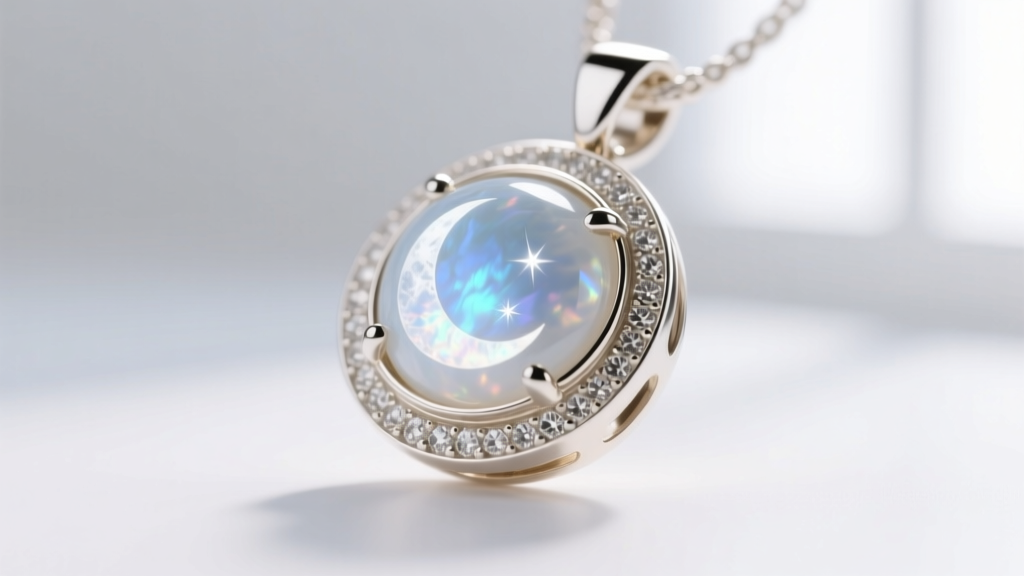
Prong settings, while allowing more light to enter the stone, leave the vulnerable edges of the cabochon exposed to daily knocks. A high-value white gold moonstone necklace will almost always feature a bezel setting or a heavy gallery wire halo that protects the gem's girdle. While bezel settings require more precious metal and skilled labor (increasing the upfront cost by 15-20%), they drastically reduce the risk of catastrophic stone failure.
The Chain-to-Pendant Weight Ratio
A common failure point in mid-tier necklaces is a mismatched chain. If a heavy, solid 18k white gold bezel pendant weighing 8 grams is suspended on a delicate 1.2mm cable chain weighing only 2 grams, the bail will act as a saw, slowly grinding through the chain links. For optimal value and durability, the chain should weigh at least 60% of the pendant's total weight and feature reinforced jump rings soldered shut.
Spotting Synthetics: Opalite vs. Natural Moonstone
As the demand for ethereal jewelry has surged, so has the market for imitations. The most common culprit is "Opalite," a trade name for a man-made glass that exhibits a milky, bluish glow remarkably similar to low-grade moonstone. Unscrupulous sellers often market Opalite as "synthetic moonstone" or "Opalite moonstone" to justify inflated prices.
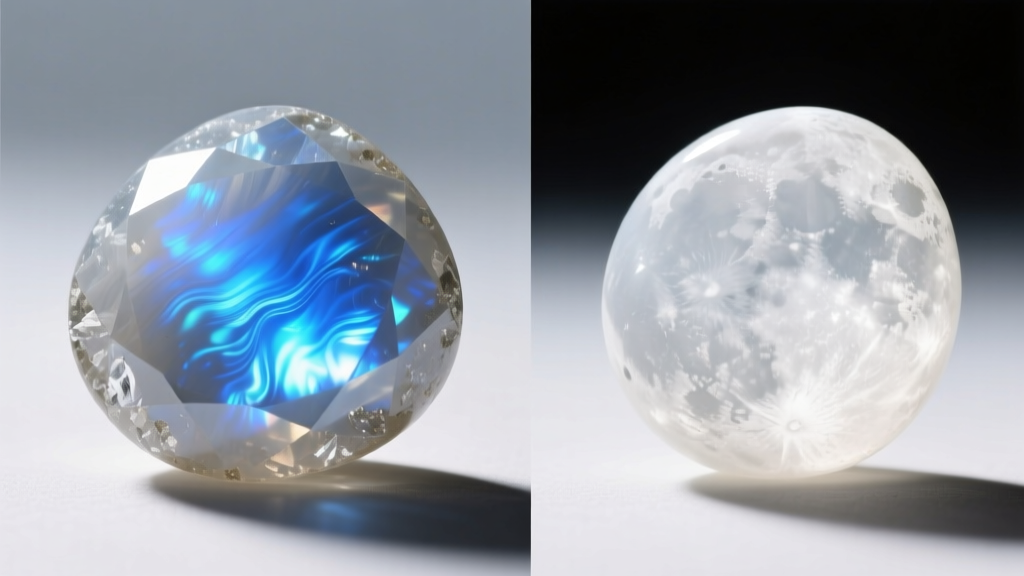
To protect your budget, you must know how to differentiate the two. Natural moonstone will almost always contain minor internal characteristics, such as tiny tension cracks, mineral inclusions, or slight variations in the sheen pattern. Opalite, being glass, is entirely flawless and may contain perfectly spherical gas bubbles visible under a 10x jeweler's loupe. Furthermore, Opalite will feel noticeably warmer to the touch than natural feldspar. If a "white gold moonstone necklace" is priced at $40 and features a massive, flawlessly glowing stone, you are purchasing glass set in plated brass, not a fine jewelry investment.
Final Assessment: Is It Worth the Investment?
A white gold moonstone necklace is a phenomenal purchase when evaluated through the lens of wearable art rather than strict financial appreciation. To maximize your budget, bypass the commercial tier entirely. Target the $500 to $900 range, insist on a palladium-alloyed 14k or 18k white gold to eliminate rhodium maintenance costs, and demand a bezel setting to protect the stone's cleavage planes. By prioritizing optical phenomena (blue sheen) over sheer carat weight, you secure a piece that offers enduring beauty, structural longevity, and genuine horological and gemological value.


