Brass Bead Necklace Guide: Metallurgy, Patina, and Styling
Discover the technical details of brass bead necklaces, from alloy compositions and patina control to expert stringing techniques and styling tips.

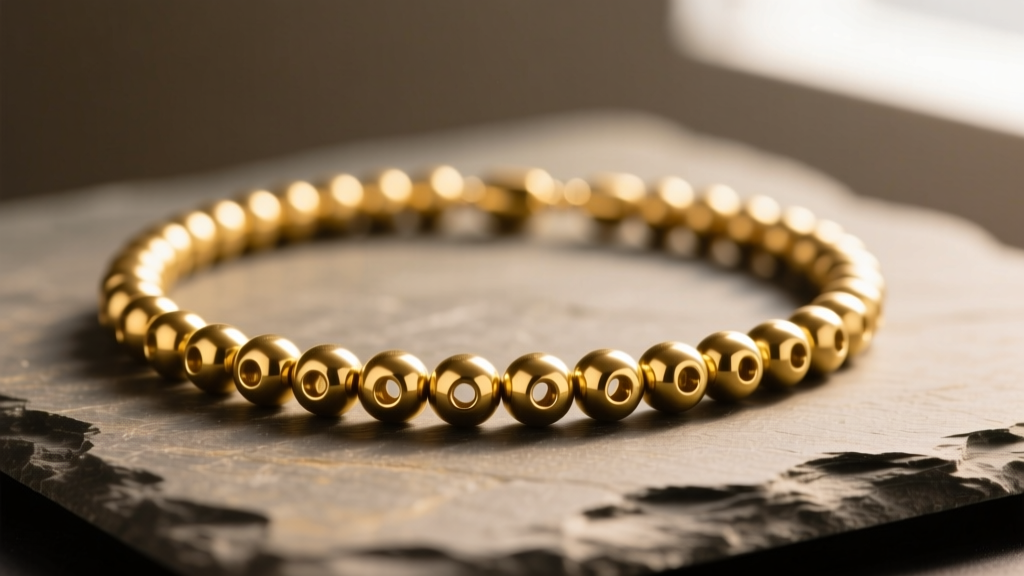
When evaluating a brass bead necklace, most consumers focus solely on the aesthetic warmth of the golden-yellow alloy. However, from a bench jeweler's perspective, brass is a complex metallurgical system that demands specific handling, stringing mechanics, and finishing protocols. Unlike inert metals such as platinum or high-karat gold, brass is a reactive copper-zinc alloy that interacts dynamically with its environment, the wearer's skin chemistry, and adjacent metals. This expert deep dive explores the material science, structural engineering, and chemical finishing techniques required to design, assemble, and maintain a high-quality brass bead necklace that withstands the rigors of daily wear while developing a beautiful, controlled character over time.
The Metallurgy of Jewelry-Grade Brass
Brass is not a single metal, but a family of copper-zinc alloys. The specific ratio of these elements dictates the alloy's hardness, malleability, color, and corrosion resistance. According to the Copper Development Association, the two most common alloys used in jewelry manufacturing are C26000 and C28000.
- C26000 (Cartridge Brass): Composed of 70% copper and 30% zinc. This is the premier choice for high-end brass bead necklaces. It possesses excellent cold-working properties, allowing for intricate stamping and drawing processes without annealing. Its higher copper content yields a warmer, more golden hue and superior resistance to stress-corrosion cracking.
- C28000 (Muntz Metal): Composed of 60% copper and 40% zinc. This alloy is harder and more brittle, often used for cast beads or heavy structural findings. It has a slightly paler, more yellowish tint and is more susceptible to dezincification (the selective leaching of zinc) if exposed to chlorides or prolonged moisture.
Critical Compliance Note: Historically, C36000 (Free-Machining Brass) was popular for bead production because the addition of 2-3% lead made it easy to CNC machine. However, due to strict regulations like California Proposition 65, leaded brass is now strictly prohibited in jewelry. Always verify that your brass bead suppliers provide XRF (X-ray Fluorescence) testing certificates proving lead levels are below 100ppm.
Bead Sizing, Tolerances, and Stringing Mechanics
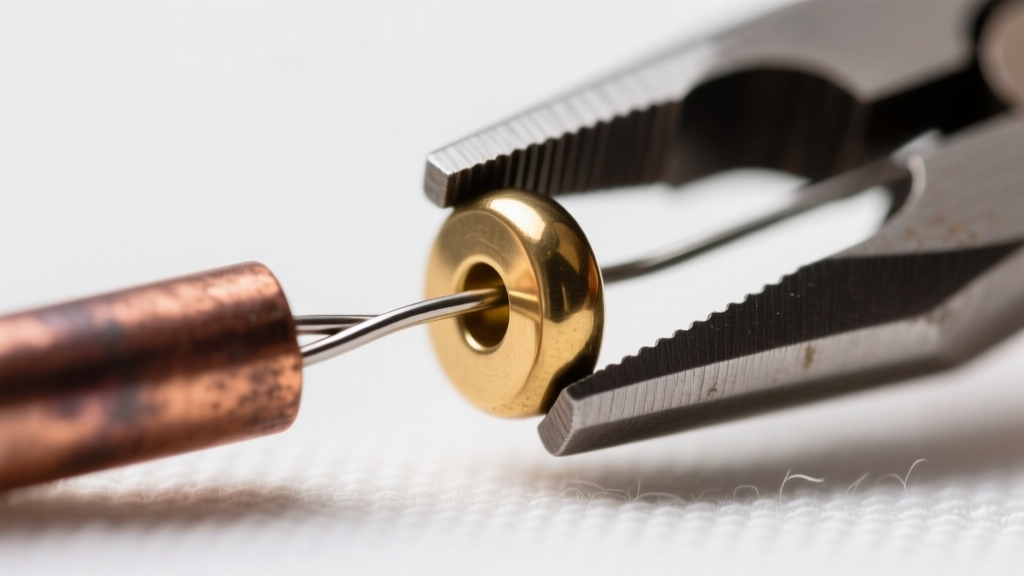
The structural integrity of a brass bead necklace relies heavily on the precision of the bead's drill holes and the tensile strength of the stringing material. Mass-produced, sand-cast brass beads often suffer from inconsistent hole tolerances, ranging from 0.8mm to 1.5mm, with rough internal burrs that can fray stringing threads. For professional-grade assemblies, always source CNC-machined or drawn-tube brass beads, which guarantee uniform 1.5mm to 2.0mm holes with smooth, polished interiors.
Selecting the Right Stringing Substrate
Because brass beads can be surprisingly dense—especially solid rondelles or geometric polyhedrons—silk thread is rarely appropriate unless the beads are very small and lightweight. The industry standard for heavy brass bead necklaces is 49-strand micro-woven stainless steel cable, coated in nylon.
| Wire Diameter | Strand Count | Best Application | Tensile Strength |
|---|---|---|---|
| 0.015" (0.38mm) | 49-strand | Small beads (<4mm), lightweight hollow brass | ~15 lbs |
| 0.018" (0.46mm) | 49-strand | Standard 6mm-8mm solid brass beads | ~20 lbs |
| 0.024" (0.61mm) | 49-strand | Heavy focal beads, large geometric brass shapes | ~30 lbs |
When terminating the necklace, use solid copper or brass crimp tubes rather than aluminum or base-metal alloys. Aluminum crimps will undergo galvanic corrosion when in direct contact with brass in the presence of ambient humidity, eventually turning to white powder and causing the necklace to fail.
The Chemistry of Patina: Oxidation vs. Sealed Finishes
Unsealed brass will naturally oxidize when exposed to oxygen, moisture, and sulfur compounds in the air. The copper content forms copper oxide (which ranges from dark brown to black), while the zinc forms zinc oxide (a chalky white residue). To control this aesthetic evolution, jewelers must decide between chemical antiquing, protective sealing, or a combination of both.
Accelerated Antiquing Techniques
To achieve a uniform, vintage look across a multi-strand brass bead necklace, bench jewelers use Liver of Sulfur (LOS). By dissolving a pea-sized amount of LOS gel in warm water (110°F / 43°C) and adding a few drops of ammonia to raise the pH, you can submerge the brass beads to achieve a deep, rich brown or black patina in minutes. The beads are then tumbled in a rotary tumbler with stainless steel shot to burnish the high points, leaving dark oxidation only in the recesses and textured surfaces.
Sealant Comparison for Brass Jewelry
If the goal is to maintain the bright, polished golden luster of the C26000 alloy, a physical barrier sealant is required. Below is a technical comparison of the most effective sealants used in modern jewelry fabrication:
| Sealant Type | Chemical Base | Durability | Application Method |
|---|---|---|---|
| Renaissance Wax | Microcrystalline wax | Low (requires monthly reapplication) | Buffing with lint-free cloth |
| ProtectaClear | Polyurethane resin | Medium (lasts 6-12 months) | Dipping or airbrushing |
| Cerakote (Clear) | Ceramic-polymer hybrid | High (semi-permanent, UV stable) | Spray gun, requires heat curing |
Integration: Pairing Brass Beads with Chains and Findings
Designing a mixed-metal brass bead necklace requires a strict understanding of the galvanic series. When two dissimilar metals are in physical contact in the presence of an electrolyte (like human sweat or high humidity), the less noble metal will corrode sacrificially to protect the more noble metal.
Brass is relatively noble compared to aluminum, zinc, and low-carbon steel, but it is anodic (less noble) to sterling silver, gold, and platinum. If you string raw brass beads directly onto a sterling silver chain, or use sterling silver crimp covers over brass crimp tubes, the brass will corrode at an accelerated rate, and the silver may develop localized black tarnish spots due to the copper migration.
Expert Fabrication Rule: When integrating brass beads with sterling silver or gold-filled chains, always use inert spacer beads—such as borosilicate glass, PTFE (Teflon) tubing, or anodized niobium rings—to create a physical, non-conductive barrier between the dissimilar metals.
Maintenance and Troubleshooting Verdigris
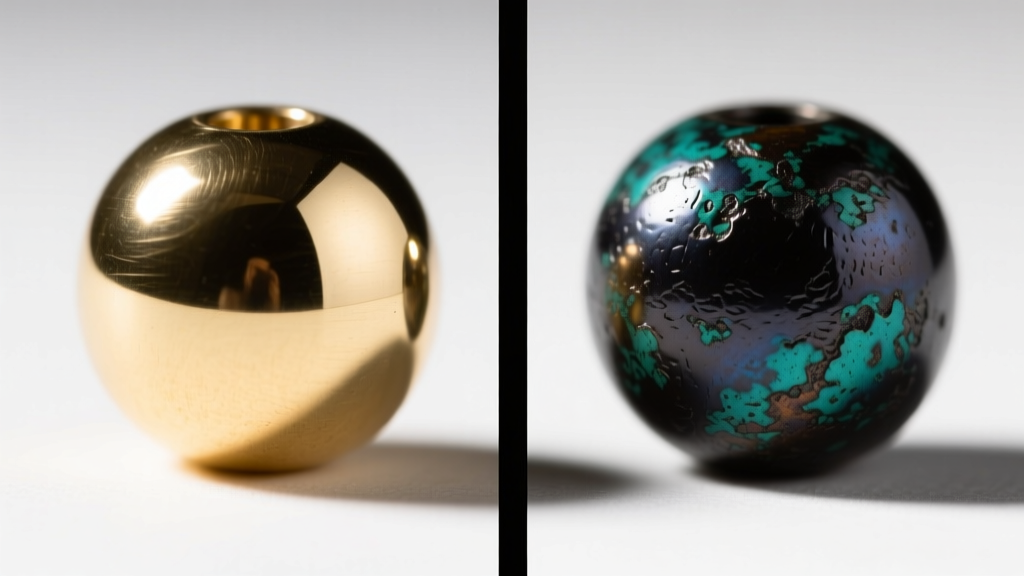
The most common complaint regarding brass jewelry is the development of verdigris—a toxic, blue-green crust composed of copper acetates and copper carbonates. This occurs when the copper in the brass reacts with the acetic acid and salts present in human sweat. Verdigris can stain clothing and cause contact dermatitis in sensitive individuals.
Professional Cleaning Protocols
If a client brings in a vintage brass bead necklace heavily encrusted with verdigris, do not use harsh commercial brass dips, as they will strip the zinc from the surface layer, leaving behind a porous, copper-rich 'pink' surface that tarnishes almost instantly. Instead, follow this bench protocol:
- Ultrasonic Degreasing: Place the necklace in an ultrasonic cleaner filled with a mild, ammonia-free alkaline jewelry detergent for 3 minutes to lift surface oils and loose debris.
- Targeted Acid Bath: For stubborn verdigris in the drill holes, use a cotton swab dipped in a 50/50 solution of distilled white vinegar and water. The mild acetic acid will dissolve the copper carbonates without attacking the base brass alloy.
- Neutralization: Immediately rinse the necklace in a baking soda and water bath to neutralize any residual acid.
- Final Polish: Tumble in a vibratory tumbler with dry corn cob media and a dash of jeweler's rouge to restore the micro-polish to the bead surfaces.
By understanding the metallurgical properties of C26000 and C28000 alloys, respecting the mechanics of stringing tolerances, and mastering the chemistry of oxidation, you can elevate the humble brass bead necklace from a cheap accessory to a masterclass in artisanal jewelry engineering. For further reading on jewelry metallurgy and tool specifications, consult technical resources provided by Rio Grande.


